Understanding prefixes Normal Writing Worksheets for Ages 5-9
6 filtered results
-
From - To
Explore the exciting world of prefixes with our "Understanding Prefixes Normal Writing Worksheets" designed for children ages 5-9! These engaging worksheets help young learners grasp the concept of prefixes by providing fun exercises that enhance their vocabulary and writing skills. Each activity is crafted to encourage creativity while reinforcing language development. Children will practice identifying and using prefixes, turning simple words into more complex ones. With visually appealing layout and age-appropriate content, these worksheets make learning enjoyable and effective. Perfect for classroom or home use, these resources set the foundation for strong writing skills through understanding key language concepts.
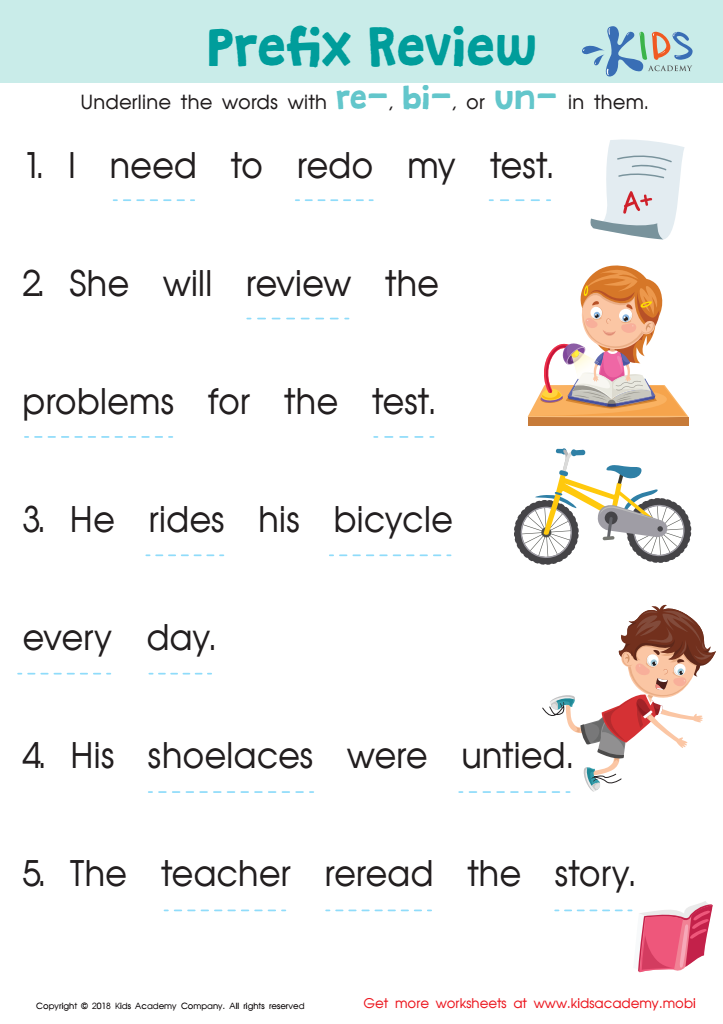
Prefix Review Worksheet
 Assign to My Students
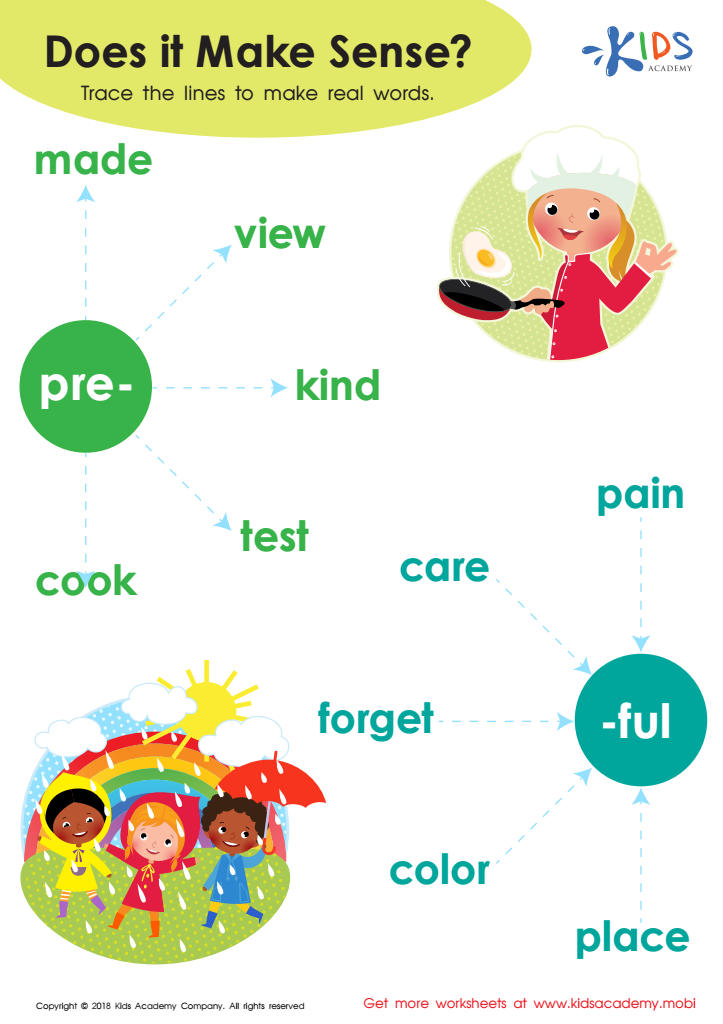
Prefix pre– and Suffix ful– Worksheet
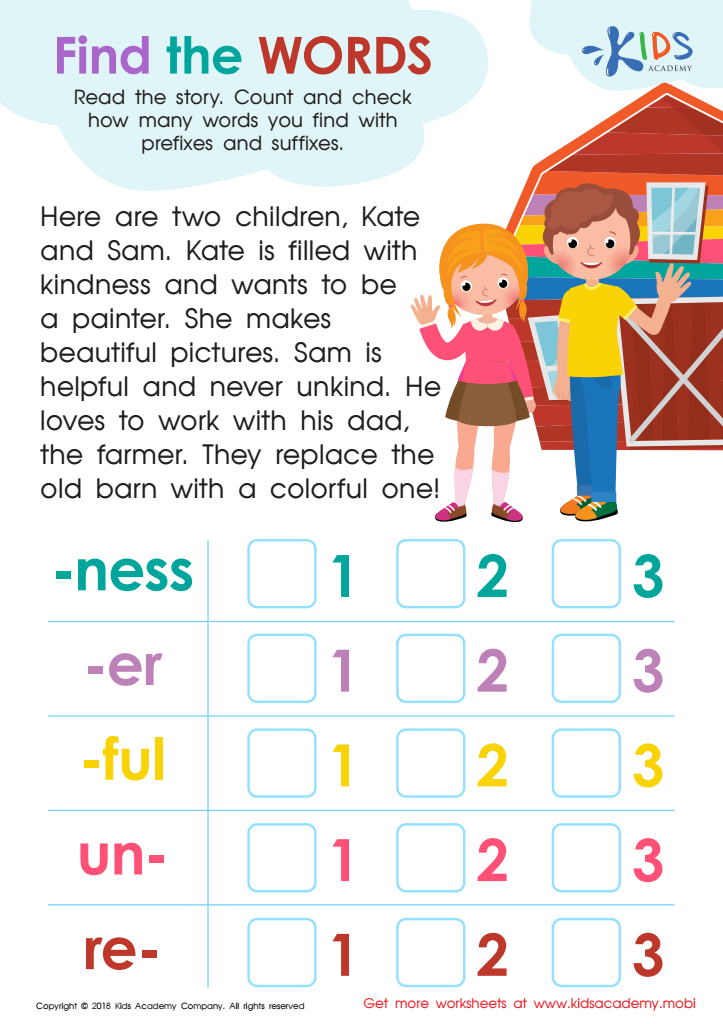
Prefix and Suffix Worksheet For Grade 3
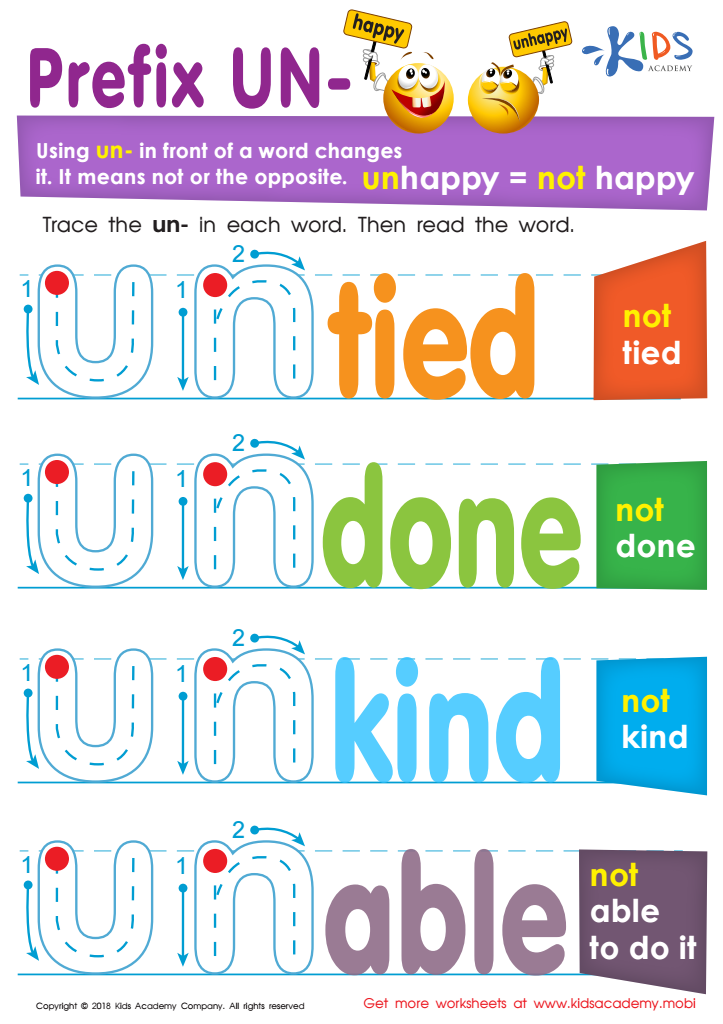
Prefix Un- Worksheet
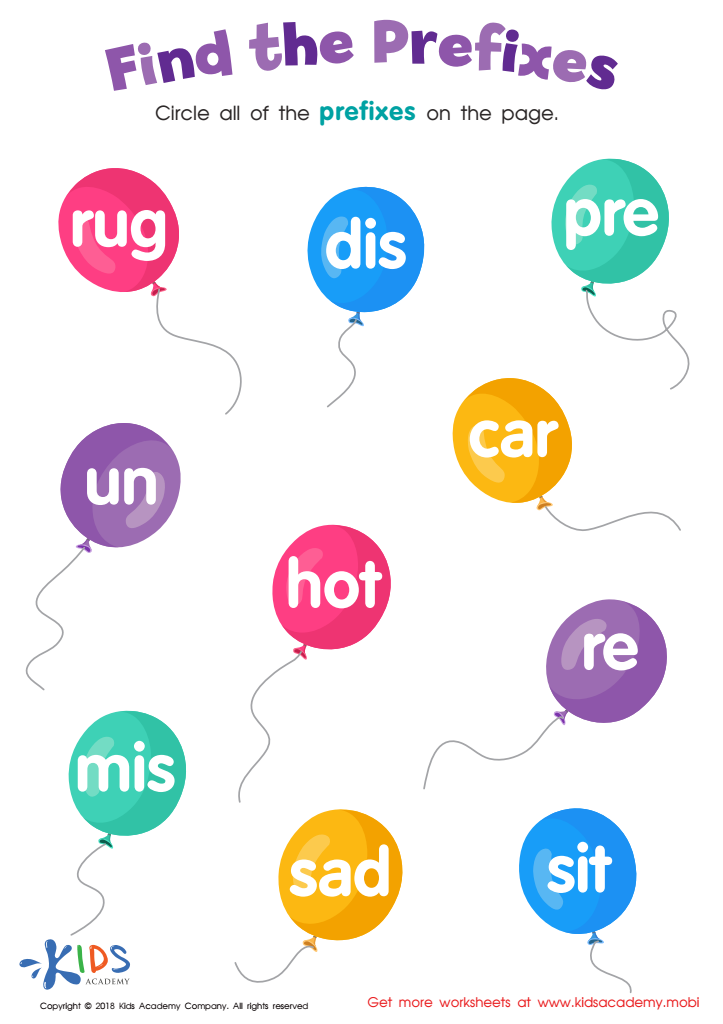
Reading: Find the Prefixes Worksheet
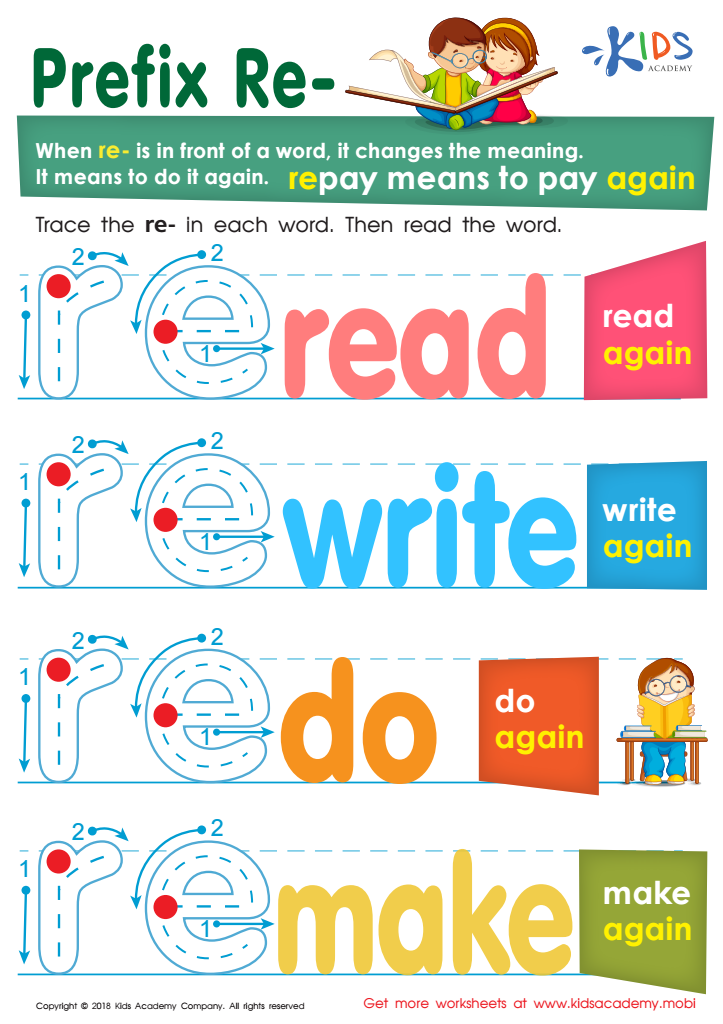
Prefix Re- Worksheet





.jpg)

Understanding prefixes is crucial for both parents and teachers because it lays the foundation for children's vocabulary development and reading skills. Prefixes are parts of words added to the beginning, and they alter the meanings of those words. For young learners aged 5-9, grasping how prefixes work can turn unfamiliar words into words they can understand, making reading more enjoyable and less intimidating.
When children know prefixes like "un," "re," or "dis," they can easily decipher new words. For example, from "happy," they can learn "unhappy," and from "do," they can recognize "redo." This skill builds their confidence and encourages them to take on more complex texts.
Moreover, early exposure to prefixes strengthens spelling skills, as children begin to notice patterns in words. This knowledge fosters a love for language, encouraging kids to experiment with words and create their own.
Parents and teachers play a vital role in this learning process by introducing prefixes through fun activities and games. By caring about their understanding, adults can help cultivate enthusiastic readers and effective communicators, paving the way for lifelong learning.