Understanding suffixes Normal Writing Worksheets for Ages 5-9
6 filtered results
-
From - To
Unlock your child's potential with our "Understanding Suffixes" Normal Writing worksheets designed specifically for ages 5-9. Our engaging printables make learning fun, helping young learners grasp the concept of suffixes effortlessly. Each worksheet is tailored to enhance writing and language skills through interactive exercises, promoting critical thinking. Perfect for both classroom and home use, these worksheets offer a step-by-step approach to understanding how suffixes change word meanings. Give your child a head start in literacy with Kids Academy's expertly crafted, educational resources. Download today and watch your child’s confidence and skills soar!
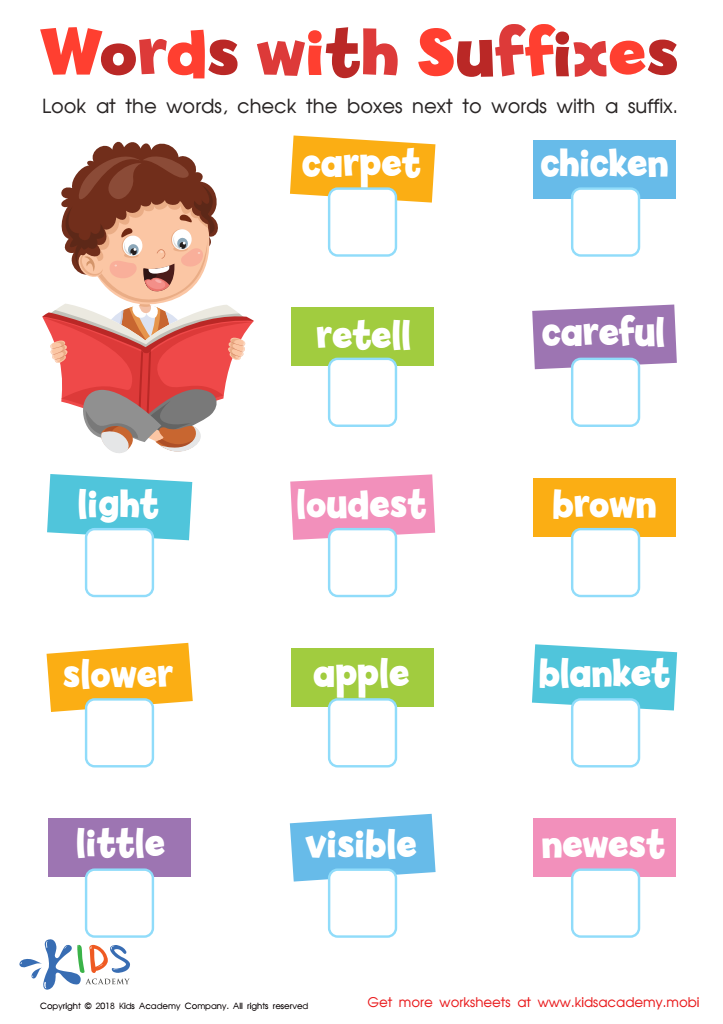
Reading: Words With Suffixes Worksheet
 Assign to My Students
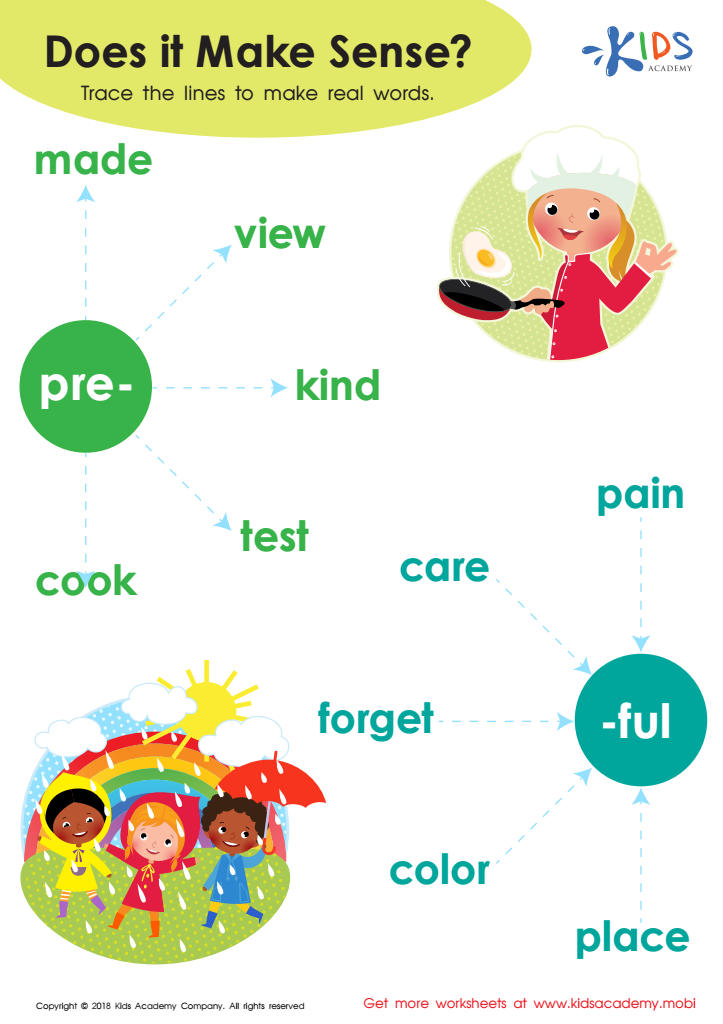
Prefix pre– and Suffix ful– Worksheet
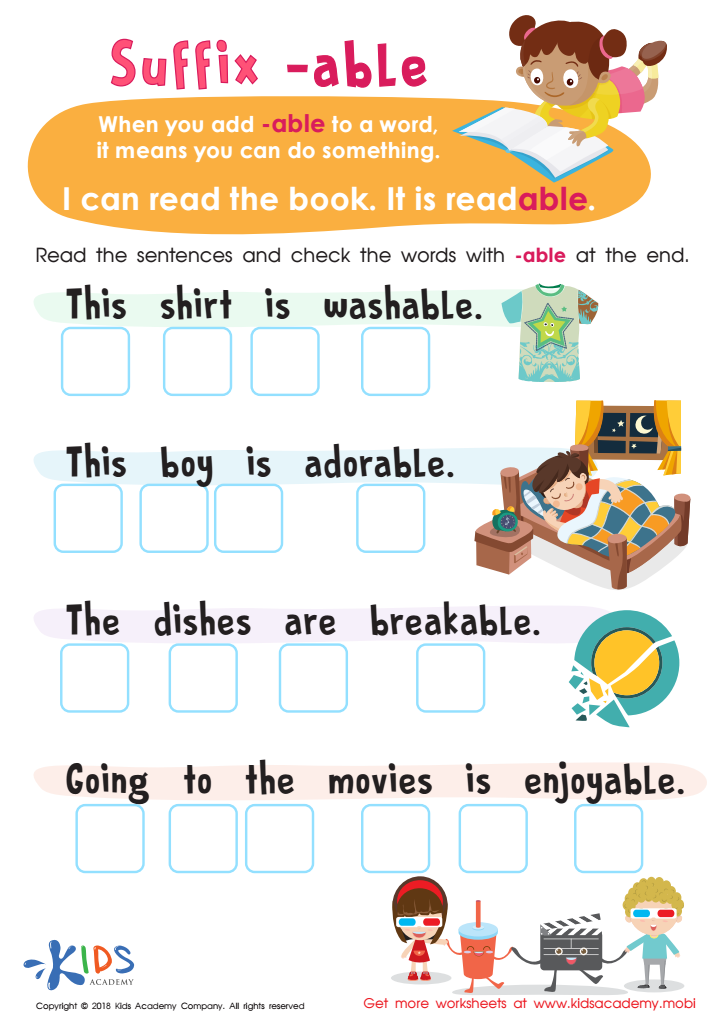
Suffix -Able Worksheet
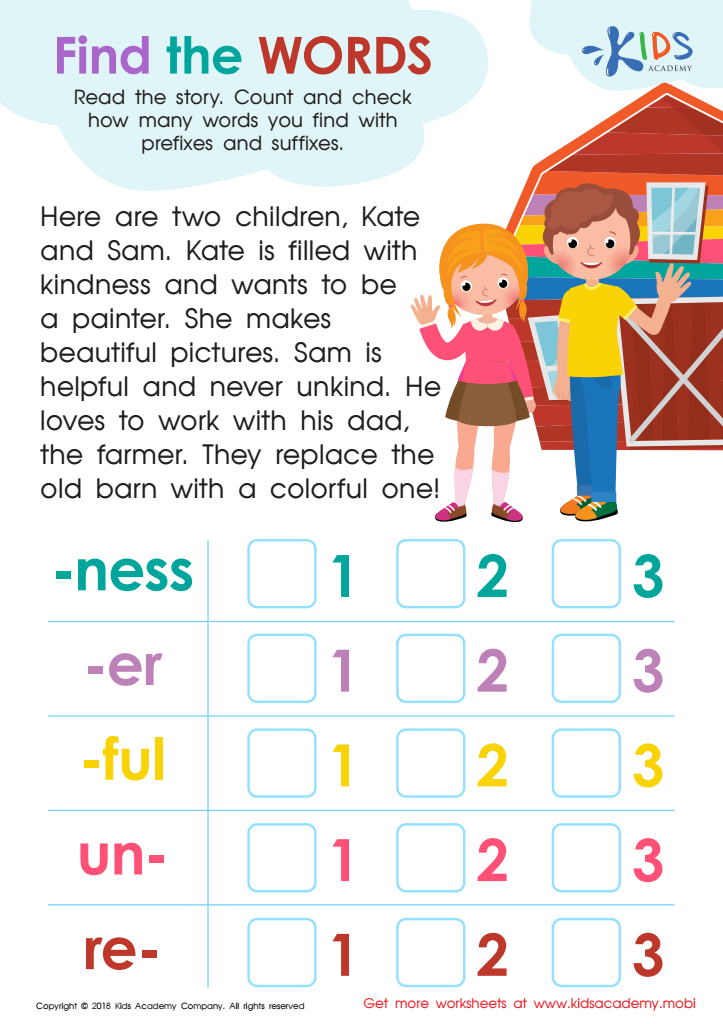
Prefix and Suffix Worksheet For Grade 3
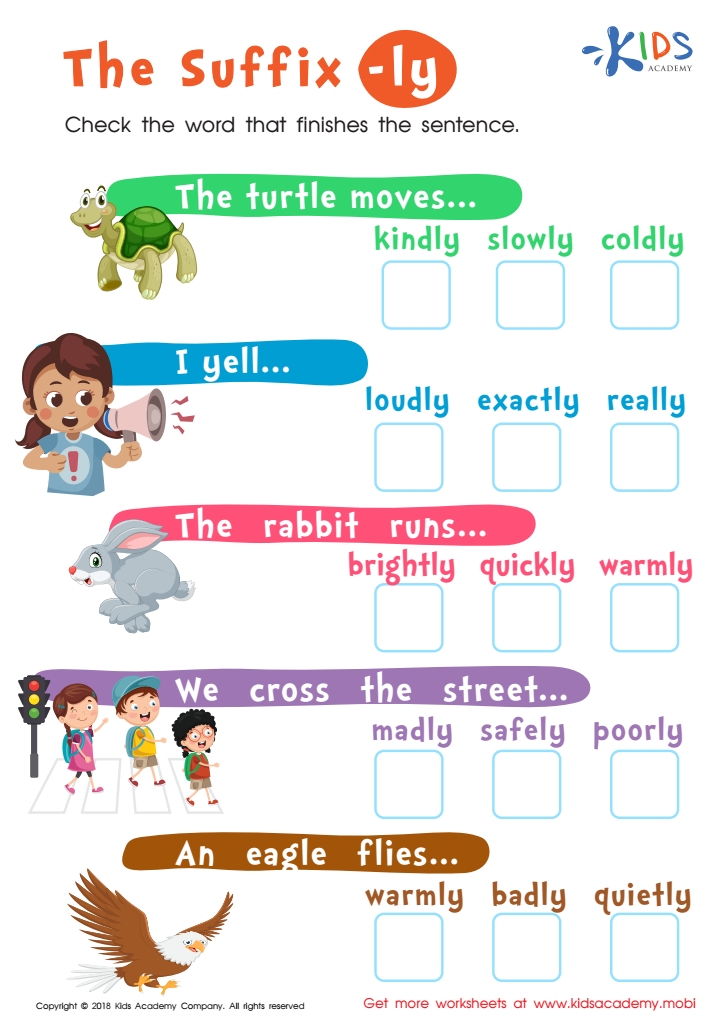
The Suffix -Ly Worksheet
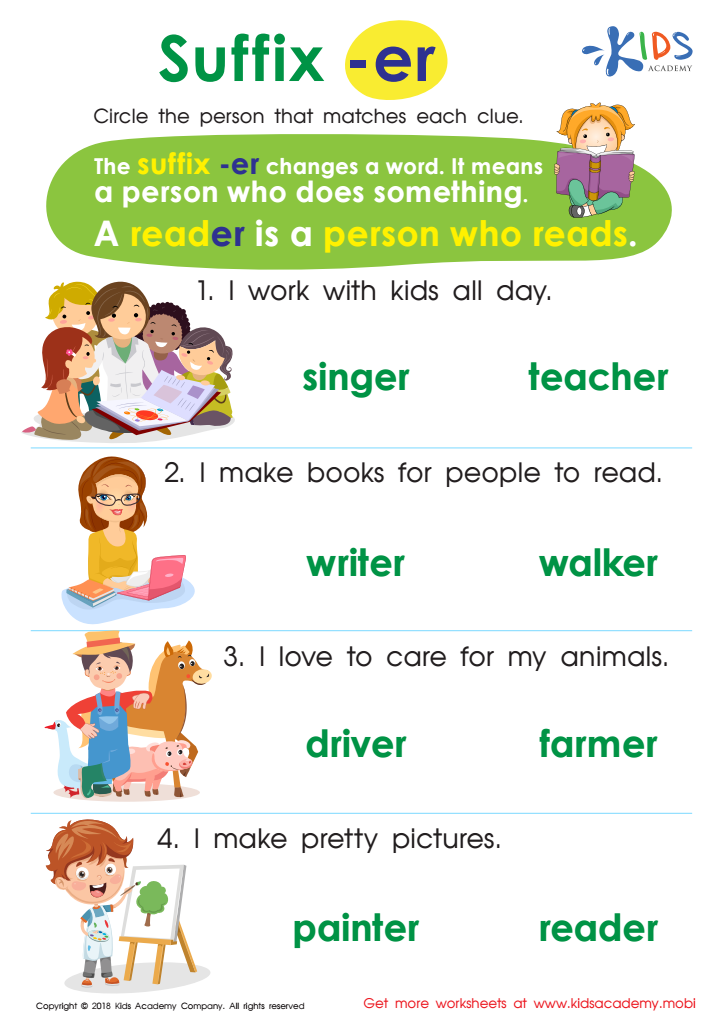
Suffix –er Printable Worksheet








Understanding suffixes is an important skill for young children (ages 5-9) as they begin developing their reading and writing abilities. Suffixes are word endings that change the meaning or function of the root word, such as "-ed," "-ing," "-s," and "-es." Recognizing and comprehending these endings can significantly boost a child's vocabulary and literacy skills.
For parents and teachers, the goal is to foster strong language development. When children understand suffixes, they can decode new words more easily and enhance their reading comprehension. Additionally, knowledge about suffixes helps children spell correctly and understand grammar rules, essential for effective written communication. For example, learning that adding "-ed" to a verb signifies past tense guides children in writing clear, accurate narratives.
Engaging in games and activities focused on suffixes can make learning fun and interactive, helping children see patterns in language. Moreover, mastering suffixes builds a foundation for future learning, including more complex language structures in upper grades. Therefore, parents and teachers should prioritize teaching suffixes to give children the tools they need for literacy success. Balancing structured instruction with playful learning will support holistic and enjoyable growth in language skills for children.