Lowercase letter writing Normal Alphabet Worksheets for 5-Year-Olds
3 filtered results
-
From - To
Welcome to our Lowercase Letter Writing Normal Alphabet Worksheets, designed specifically for 5-year-olds! These engaging worksheets provide young learners with a fun and interactive way to practice writing lowercase letters. Each worksheet features colorful illustrations and helpful prompts to guide your child as they trace and write each letter. This essential skill strengthens their handwriting, fine motor skills, and letter recognition. Perfect for home or classroom use, our worksheets encourage creativity and reinforce learning through repetition and play. Help your child build a solid foundation in literacy with our delightful printable resources that spark their interest in writing!
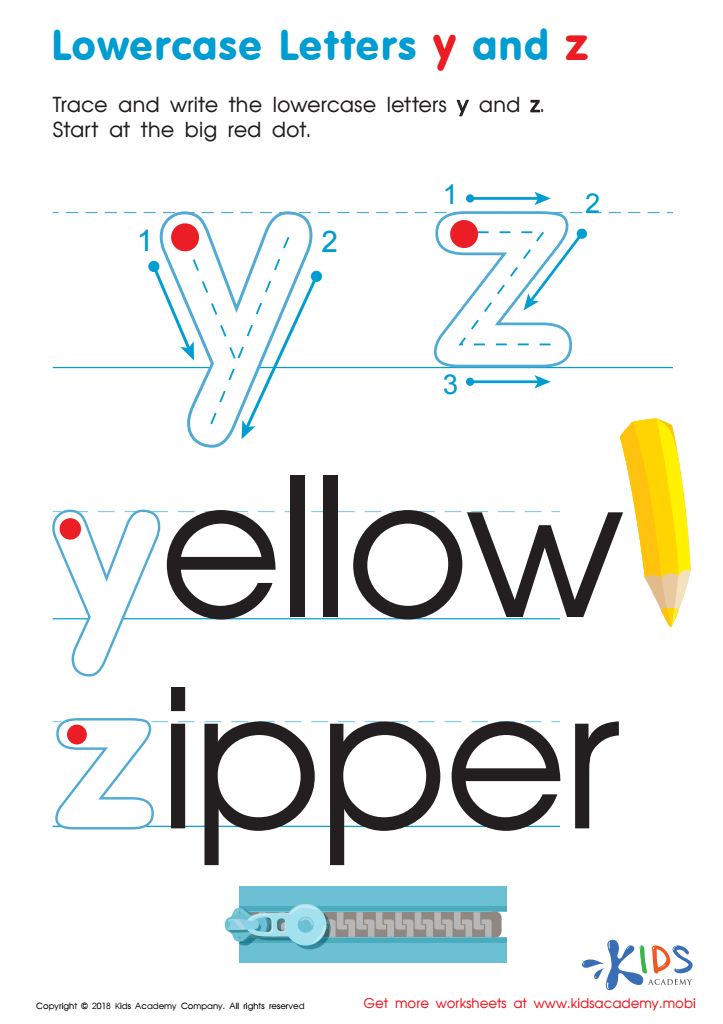
Lowercase Letters y z Worksheet
 Assign to My Students
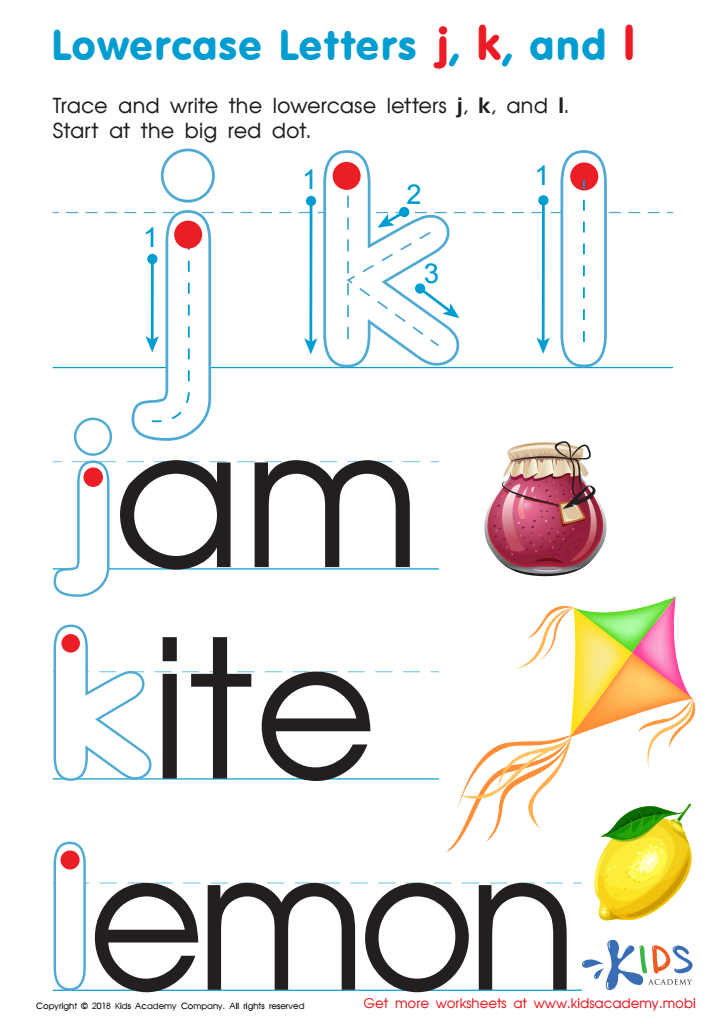
Lowercase Letters j k l Worksheet
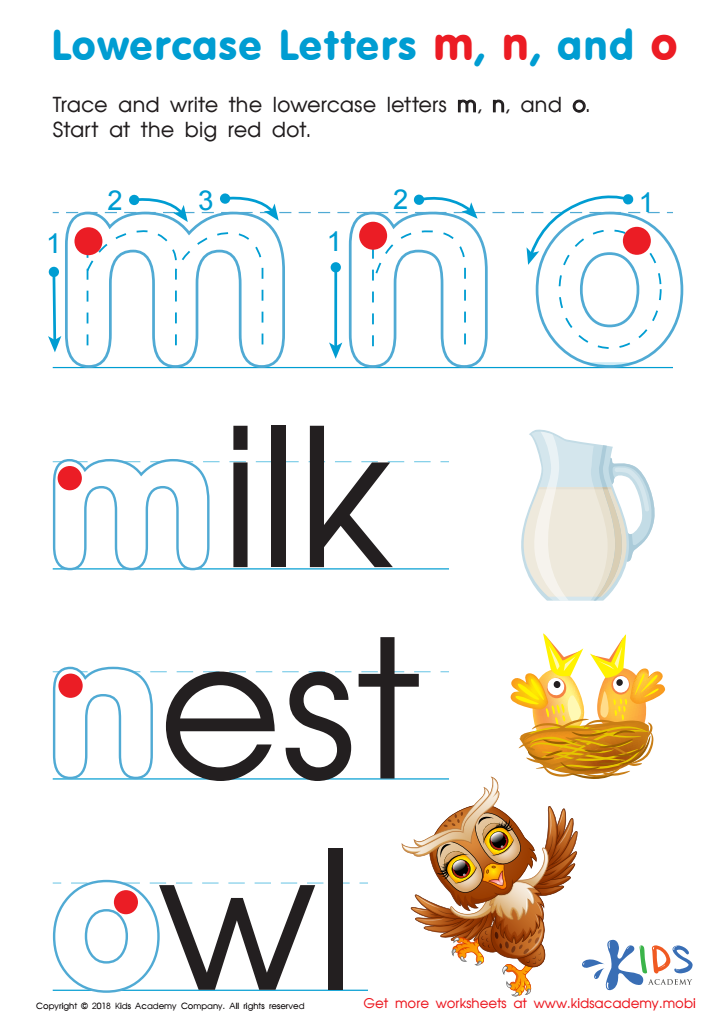
Lowercase Letters m n o Worksheet








Teaching 5-year-olds to write lowercase letters properly is fundamental for their literacy development and overall academic success. First, lowercase letters are often more commonly used in everyday writing than capital letters, making this knowledge essential for reading. Recognizing and writing lowercase letters helps children decode words and understand the structure of sentences.
Furthermore, mastering lowercase letter writing fosters fine motor skills and hand-eye coordination. The act of gripping a pencil and forming shapes reinforces muscle control, which is crucial for other tasks, like drawing or even using scissors. When children practice lowercase writing, they also develop their spatial awareness by learning to place letters properly within lines, improving their overall handwriting.
Additionally, writing lowercase letters enhances cognitive development. It encourages brain activity linked to memory and learning as children connect letters with sounds—a key aspect of developing phonemic awareness necessary for reading.
Leading by example and providing positive reinforcement during this learning process not only boosts children’s self-esteem but also creates a positive attitude towards writing. These foundational skills are not only vital for literacy but also for lifelong learning, making it essential for parents and teachers to prioritize lowercase letter writing in early education.







