
Phonics recognition Normal Alphabet Worksheets for 5-Year-Olds
5 filtered results
Difficulty Level
Grade
Age
-
From - To
Subject
Activity
Standards
Explore our Phonics Recognition Normal Alphabet Worksheets designed for 5-year-olds, perfect for early learners mastering the alphabet. These engaging and educational worksheets combine colorful illustrations with fun activities to enhance letter recognition, phonics skills, and reading readiness. Ideal for use at home or in the classroom, each worksheet encourages children to identify, match, and pronounce letters, fostering confidence in early literacy development. With a focus on interactive learning, our phonics worksheets create a solid foundation for a lifelong love of reading. Visit our website to browse and download our comprehensive collection today!
Favorites
With answer key
Interactive
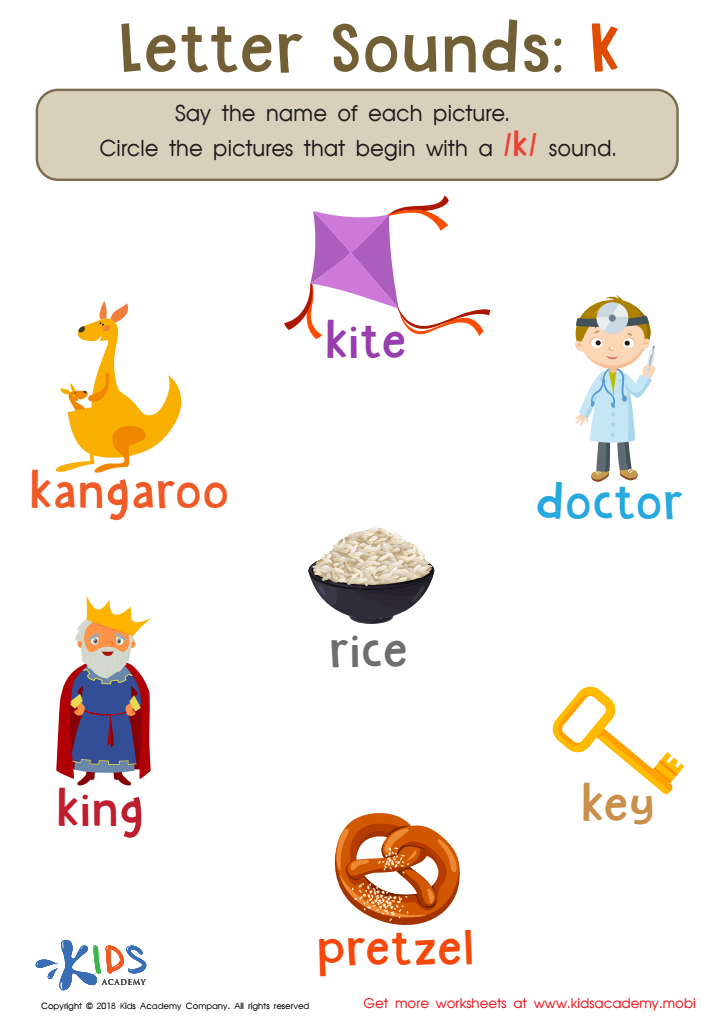
Letter K Sounds Worksheet
Help your child practice phonics with Kids Academy's illustrated worksheet! Have them look at the pictures, read the words and say them aloud. Only circle those that start with a hard 'K' sound. Perfect for preschoolers and kindergarteners! Plus, they'll learn the silent K used in a few words.
 Assign to My Students
Letter K Sounds Worksheet
Worksheet
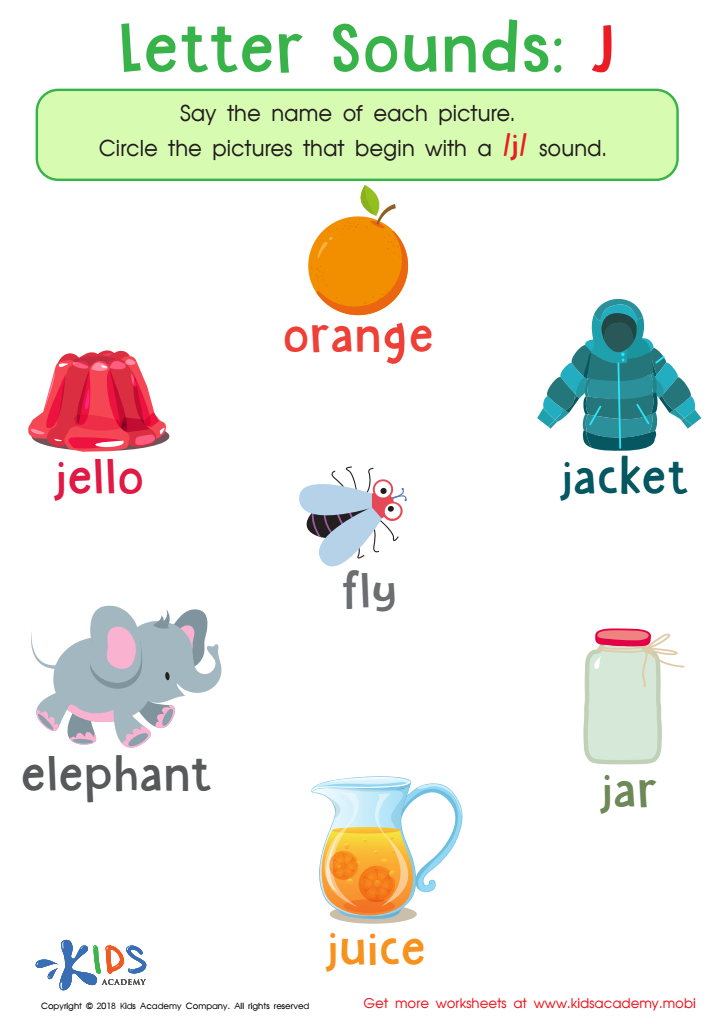
Letter Sounds: J Printable Worksheet
Preschoolers can learn to identify letter sounds by focusing on beginning sounds. This cute and colorful worksheet reviews the hard “j” sound. Kids can point it out by naming the words and circling only those starting with the “j” sound. Read the text out loud and listen closely!
Letter Sounds: J Printable Worksheet
Worksheet
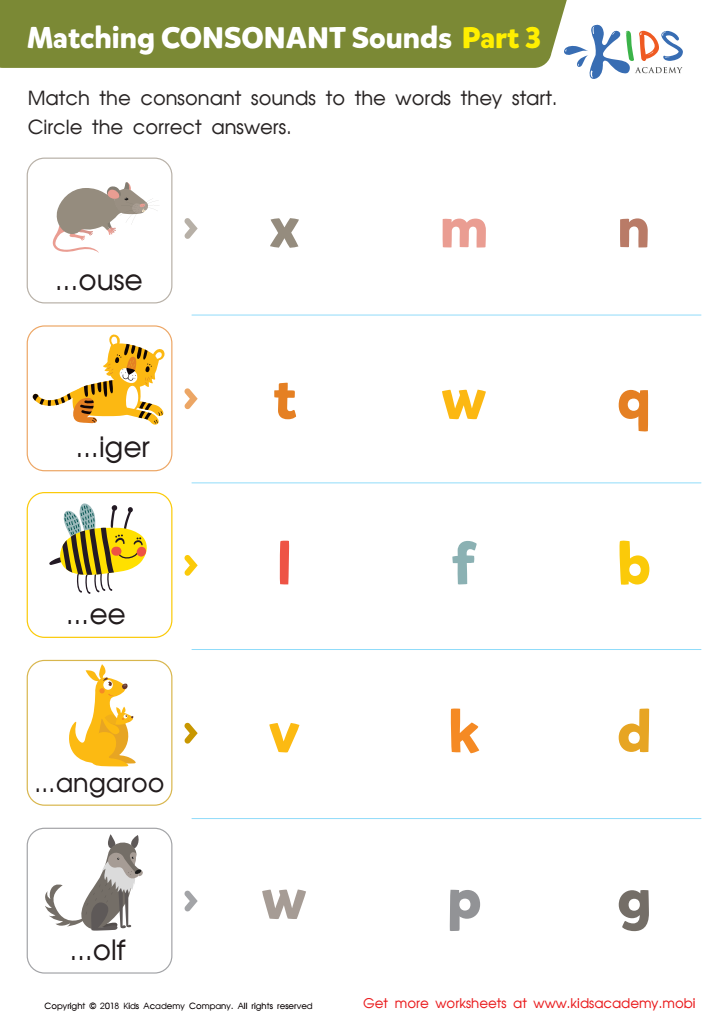
Matching Consonant Sounds: Part 3 Worksheet
Help your early learner match consonant sounds to words with this fun worksheet! Have them name the pictures and try out each letter in the corresponding column. When they hear the sound that matches, circle it. Have them write the letter in the box to complete the word. Work their way down the page until the critters' names all match with consonants!
Matching Consonant Sounds: Part 3 Worksheet
Worksheet
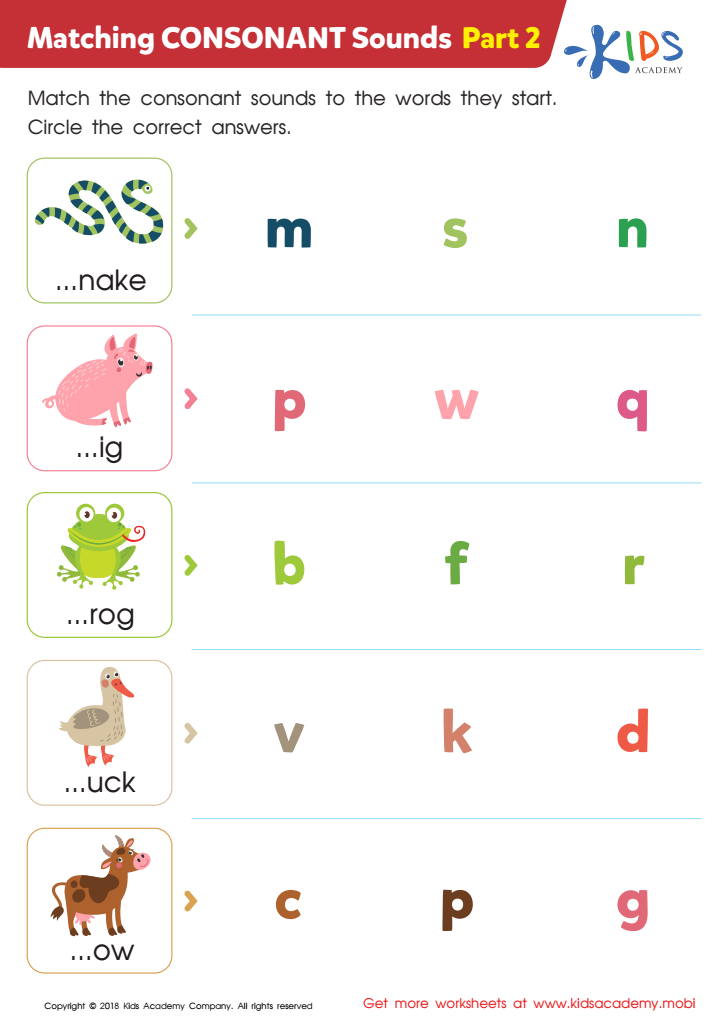
Matching Consonant Sounds: Part 2 Worksheet
Look at the picture, say the word and match the consonant sound with the letter. Coach your child to name the animal and complete the word. For extra challenge, write the missing letter in the box! This PDF worksheet helps kids learn to read words with familiar animal pictures.
Matching Consonant Sounds: Part 2 Worksheet
Worksheet
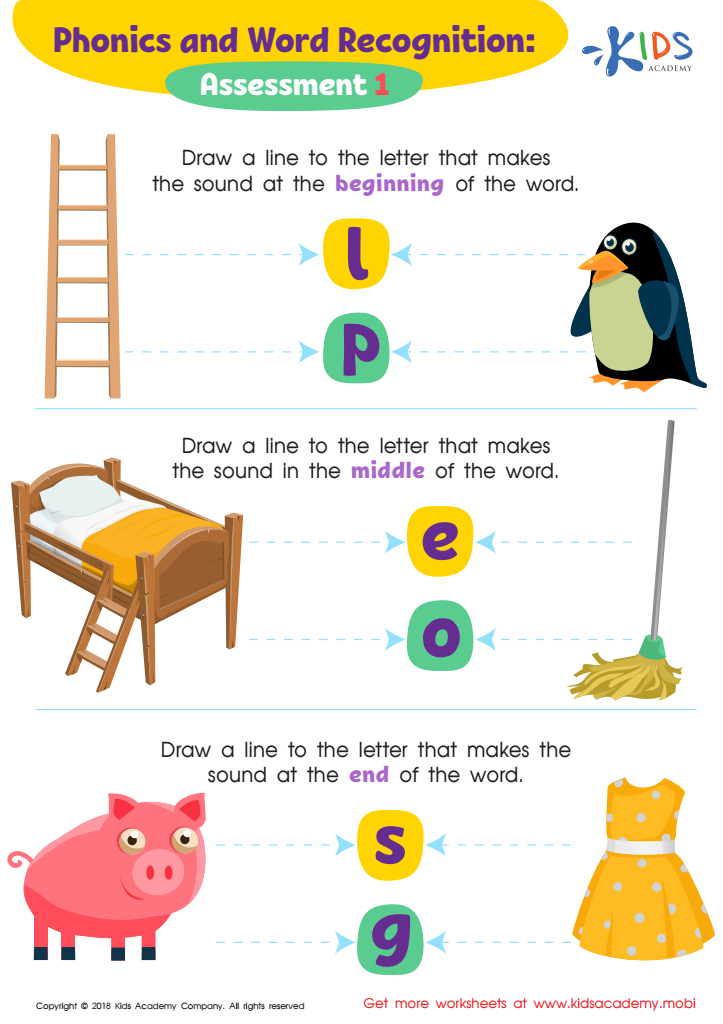
Phonics and Word Recognition: Assessment 1 ELA Worksheet
This fun worksheet tests your child's sound recognition skills for each part of a word. Ask your child to name each image and trace the line to match it with the corresponding letter. Listen for beginning sounds on 1st, middle sounds on 2nd, and ending sounds on 3rd. Encourage learning with this colorful and interactive activity!
Phonics and Word Recognition: Assessment 1 ELA Worksheet
Worksheet
Join Kids Academy for Free
Who is primarily going to use this learning content?






Phonics recognition and understanding the normal alphabet are foundational skills that form the bedrock of early literacy for 5-year-olds. Mastering these skills significantly impacts a child's future reading and writing abilities, setting the stage for academic success and enthusiasm for learning.
Phonics is the relationship between letters and the sounds they represent. When children grasp phonics, they can decode, or sound out, words effectively, leading to smoother reading experiences. This early literacy competence underpins reading comprehension, helping children to understand and enjoy stories, follow instructions, and learn new concepts.
Moreover, recognizing the normal alphabet helps 5-year-olds with letter identification, which is crucial for developing strong phonemic awareness. This awareness is the ability to hear, identify, and manipulate individual sounds in spoken words. By the time they start formal education, these children can already recognize and differentiate letters, giving them a substantial advantage.
For teachers, focusing on phonics and alphabet recognition early on means fewer struggles with reading and writing in later years. Parents who engage their children with playful phonics activities at home create a supportive learning environment that encourages curiosity and a positive attitude towards reading.
Investing in phonics and alphabet recognition equips children with essential tools for literacy, empowering them to become confident, capable learners who enjoy the rich world of books and beyond.







