Visual discrimination Normal Alphabet Worksheets for 5-Year-Olds
4 filtered results
-
From - To
Discover our engaging Visual Discrimination Normal Alphabet Worksheets designed specifically for 5-year-olds! These worksheets help young learners enhance their visual recognition skills while they explore the alphabet. Each activity is crafted to make learning enjoyable, encouraging children to identify, differentiate, and match letters effectively. By focusing on visual distinctions, these exercises contribute to foundational literacy skills, setting the stage for reading success. Perfect for at-home learning or classroom settings, our worksheets support young minds in developing critical observation and analysis skills. Download now and watch as your child gains confidence in their alphabet abilities through fun and interactive practice!
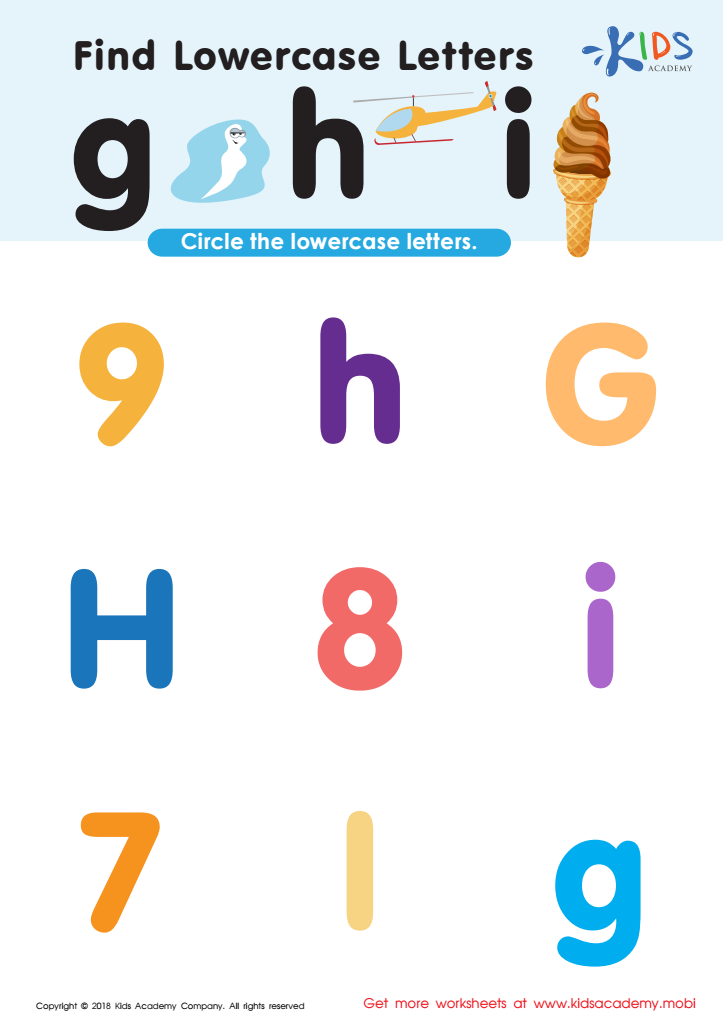
Find Lowercase Letters g h i Worksheet
 Assign to My Students
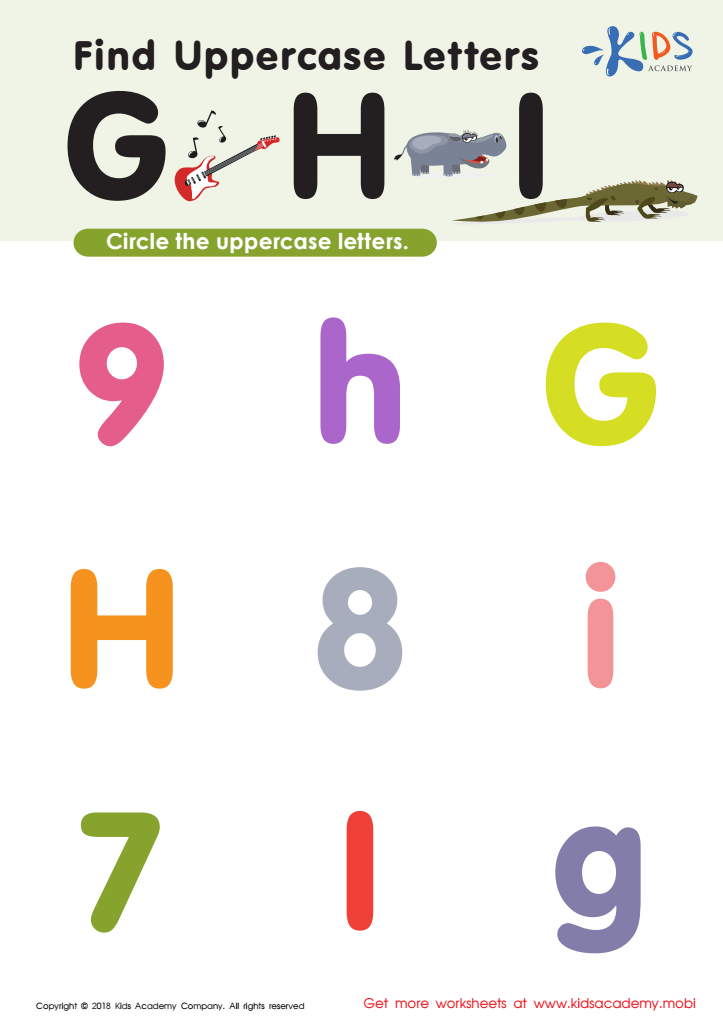
Find Uppercase Letters G, H, and I Worksheet
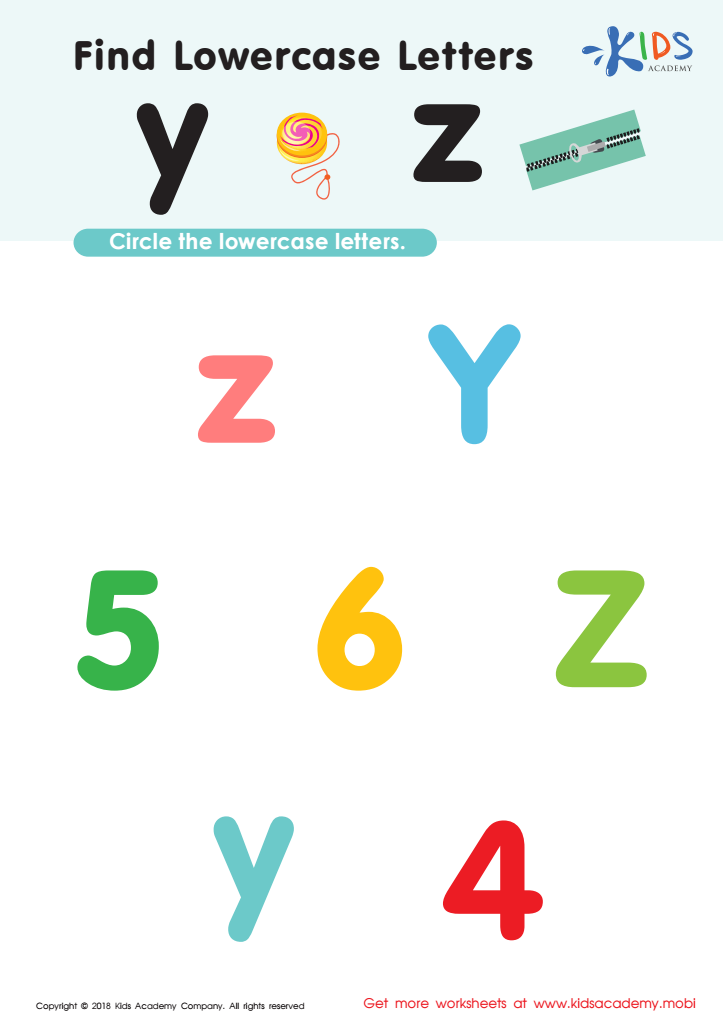
Find Lowercase Letters y z Worksheet
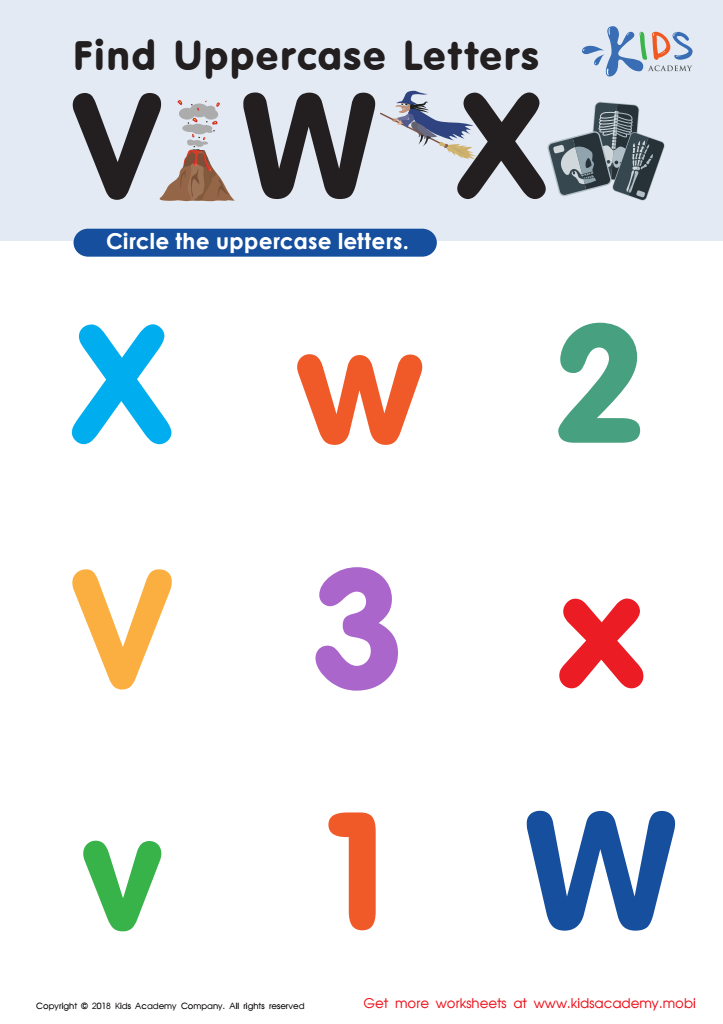
Find Uppercase Letters V, W, X Worksheet




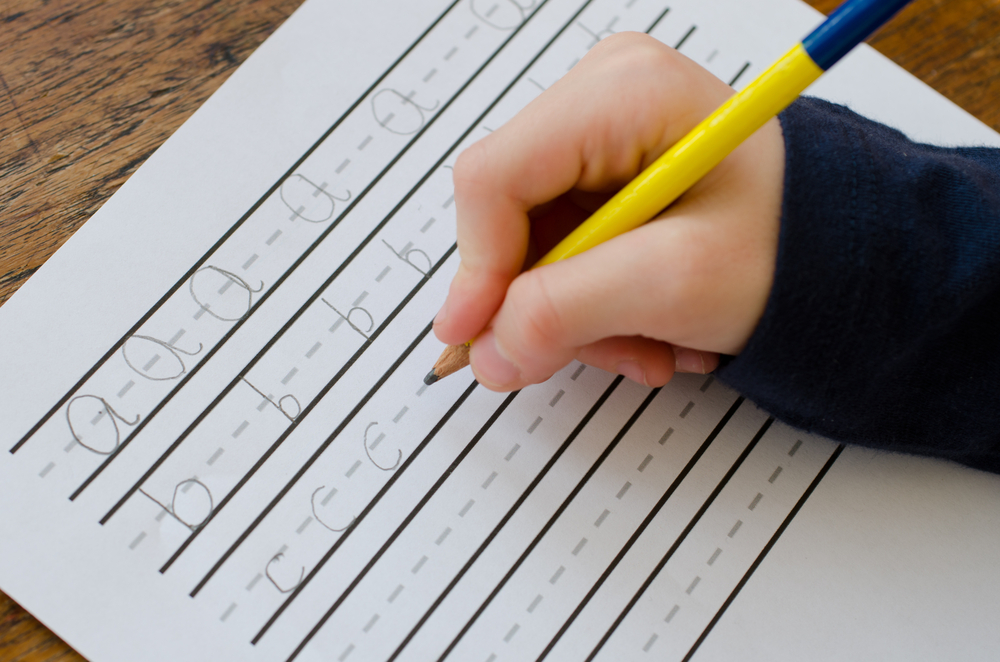

Visual discrimination is the ability to notice and compare the differences and similarities in visual details, which plays a crucial role in early childhood education, particularly for 5-year-olds learning the normal alphabet. Understanding visual discrimination helps children recognize letters accurately, which is essential for reading and writing.
When parents and teachers emphasize visual discrimination, they support children in developing strong foundational literacy skills. Children who can easily distinguish between similar looking letters (like "b" and "d" or "p" and "q") reduce the chances of confusion as they progress in their studies. This also boosts their confidence in recognizing words, ultimately enhancing their reading fluency.
Furthermore, improving visual discrimination can aid in other areas of learning, such as math, where recognizing shapes and numbers is pivotal. The skills developed through focused practices, games, or activities can foster a child's overall cognitive development.
By incorporating visual discrimination exercises into daily routines or classroom activities, adults can engage young learners in a fun and effective manner. This not only prepares them for formal education but also nurtures a love of learning, critical for future academic success. All in all, visual discrimination is a vital skill every parent and teacher should champion.







