Lowercase identification Normal Letter Recognition Worksheets for 5-Year-Olds
4 filtered results
-
From - To
Discover our engaging Lowercase Identification Normal Letter Recognition Worksheets designed specifically for 5-year-olds! These interactive activities help young learners recognize and differentiate lowercase letters, laying a strong foundation in literacy skills. Each worksheet is thoughtfully crafted to provide a fun learning experience, featuring colorful illustrations and relatable themes that capture children's interest. As kids engage with these worksheets, they will improve their letter recognition, enhance fine motor skills, and gain confidence in their reading abilities. Perfect for homeschooling or classroom use, our worksheets are a valuable resource for early childhood education. Start your child's literacy journey today with our printable resources!
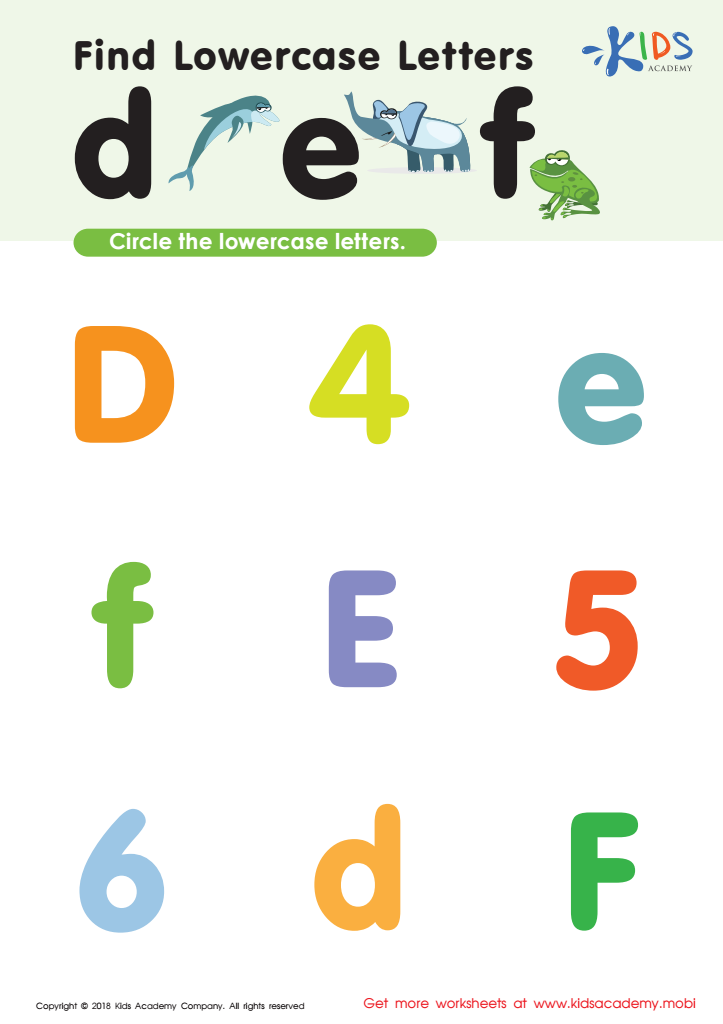
Find Lowercase Letters d e f Worksheet
 Assign to My Students
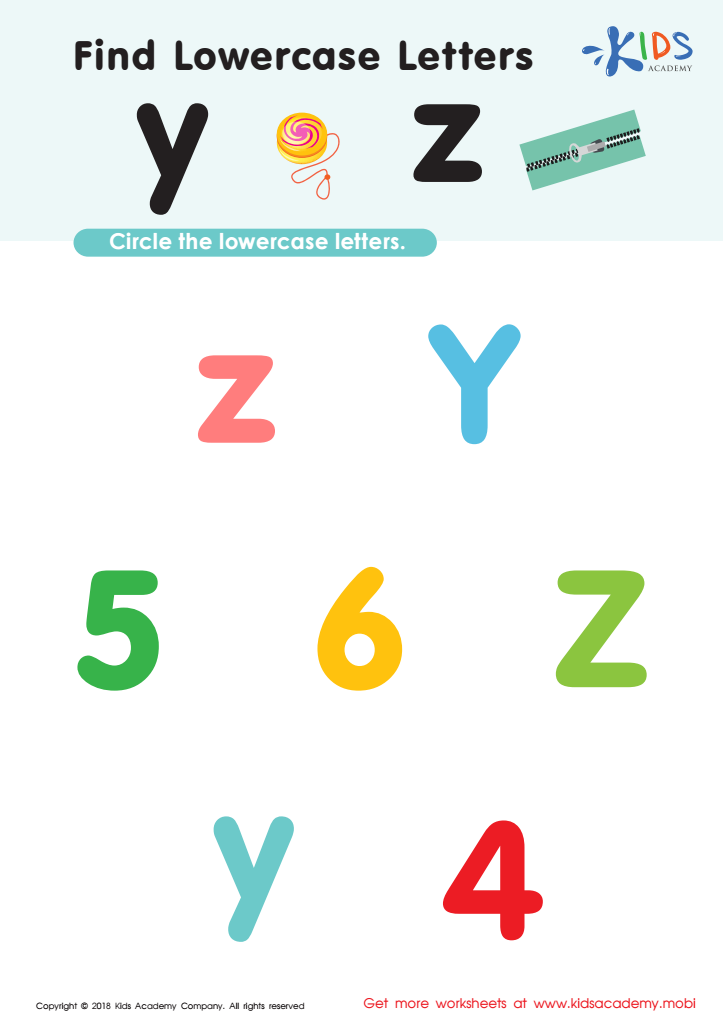
Find Lowercase Letters y z Worksheet

Find lowercase letters a b c Worksheet
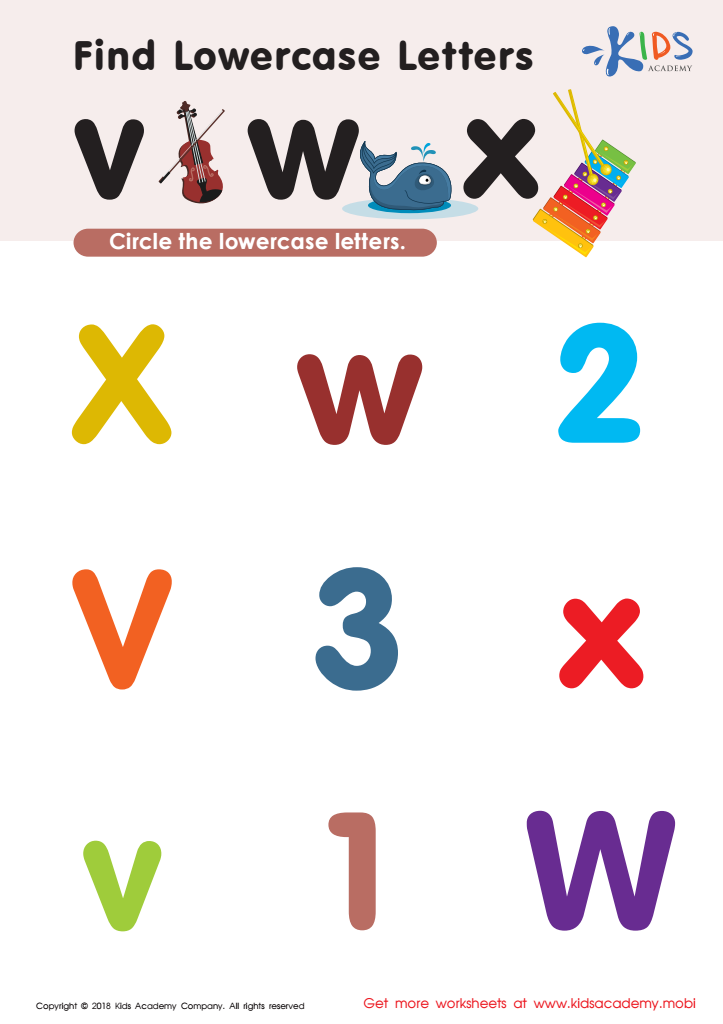
Find Lowercase Letters v w x Worksheet








Lowercase letter identification and normal letter recognition are fundamental skills for 5-year-olds that serve as the cornerstone for reading and writing development. When parents and teachers prioritize these skills, they help young learners develop the ability to recognize letters in everyday contexts, fostering their confidence and enthusiasm for learning.
Understanding lowercase letters is crucial because much of written language is in lower case. It enables children to read common words, and decode simple texts, enhancing their reading fluency. Furthermore, recognizing letters by their shapes strengthens a child’s phonemic awareness, allowing them to begin associating sounds with letters, which is essential for phonics.
Moreover, supporting lowercase letter identification encourages fine motor skills as children practice writing these letters. This multi-faceted approach not only boosts literacy skills but also nurtures cognitive and motor development.
Additionally, early recognition skills can identify children needing extra support, leading to timely intervention, which significantly influences their long-term academic trajectory. Therefore, teachers and parents should actively engage in activities that promote lowercase letter recognition, such as games, reading together, and using everyday materials to create a rich literacy environment. This proactive approach lays a strong educational foundation for a lifetime of learning.








