Enhance your child's reading skills with our Phonics Practice Normal Phonics Worksheets designed for 5-year-olds. These engaging and educational worksheets focus on building foundational phonics skills, including letter recognition, sound matching, and simple word construction. Ideal for young learners, these activities make learning fun and interactive, offering visually appealing content to maintain your child's interest. Perfect for use at home or in the classroom, our phonics worksheets foster essential literacy skills through structured practice and playful exercises tailored to young minds. Empower your child with the confidence to read through our easy-to-follow and enjoyable phonics practice resources!

Check out this FREE Trial Lesson on Phonics for age 5!

The Letter P Sound

Favorites
With answer key
Interactive
  • 5
  • Phonics practice
  • Phonics
  • Normal
short vowels Worksheet

short vowels Worksheet

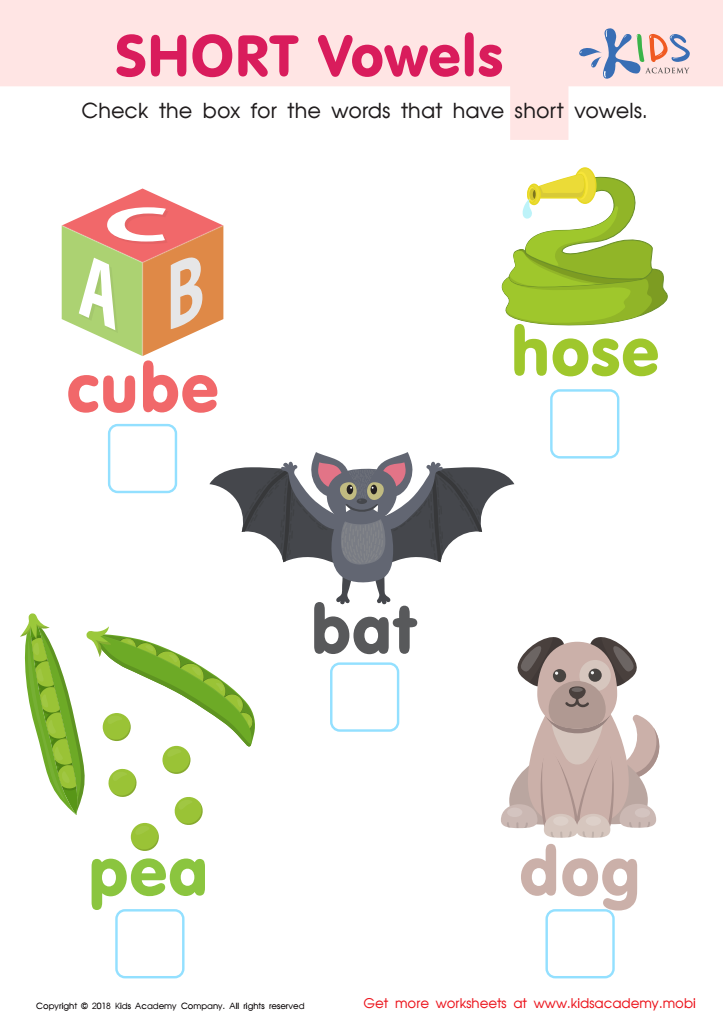
Say "dog" and notice how long it takes to pronounce the vowel. Is it short or long? Compare it to "pea" and use this worksheet to quickly assess your child's mastery. Have them name each picture and listen for the vowel sounds. Only check the boxes for words with short vowel sounds.
short vowels Worksheet
Worksheet
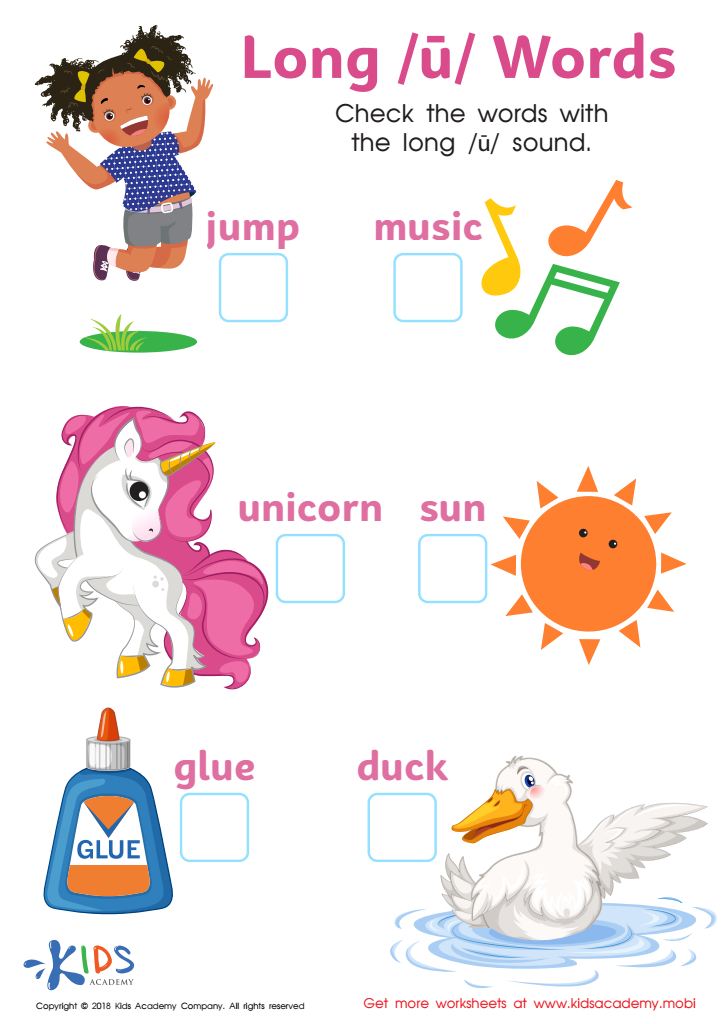
Long U Words Reading Worksheet

Long U Words Reading Worksheet

Emerging readers will love this free worksheet! It's a great way to practice distinguising between long and short vowel sounds, while identifying high-frequency words. They'll also get to develop fine motor skills and gain confidence in decoding and reading skills.
Long U Words Reading Worksheet
Worksheet
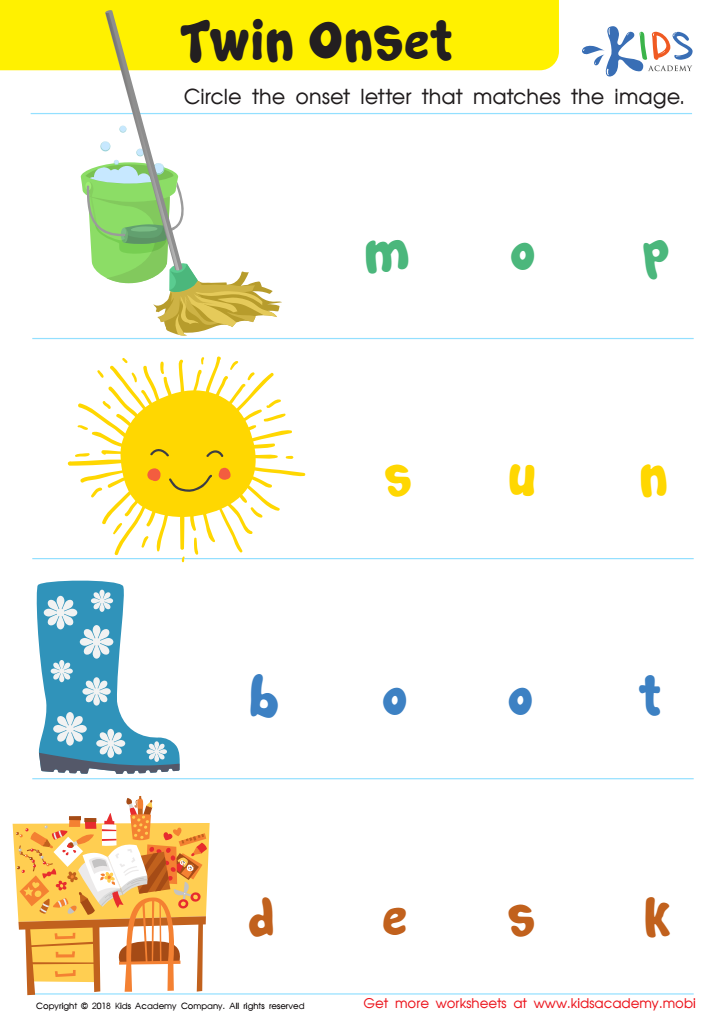
Twin Onset Worksheet

Twin Onset Worksheet

Children's phonological skills and reading/spelling strategies are strengthened by isolating initial consonants. This fun PDF worksheet encourages kids to trace the correct onset letter and hone fine motor skills. It's a great way to introduce early reading and spelling.
Twin Onset Worksheet
Worksheet
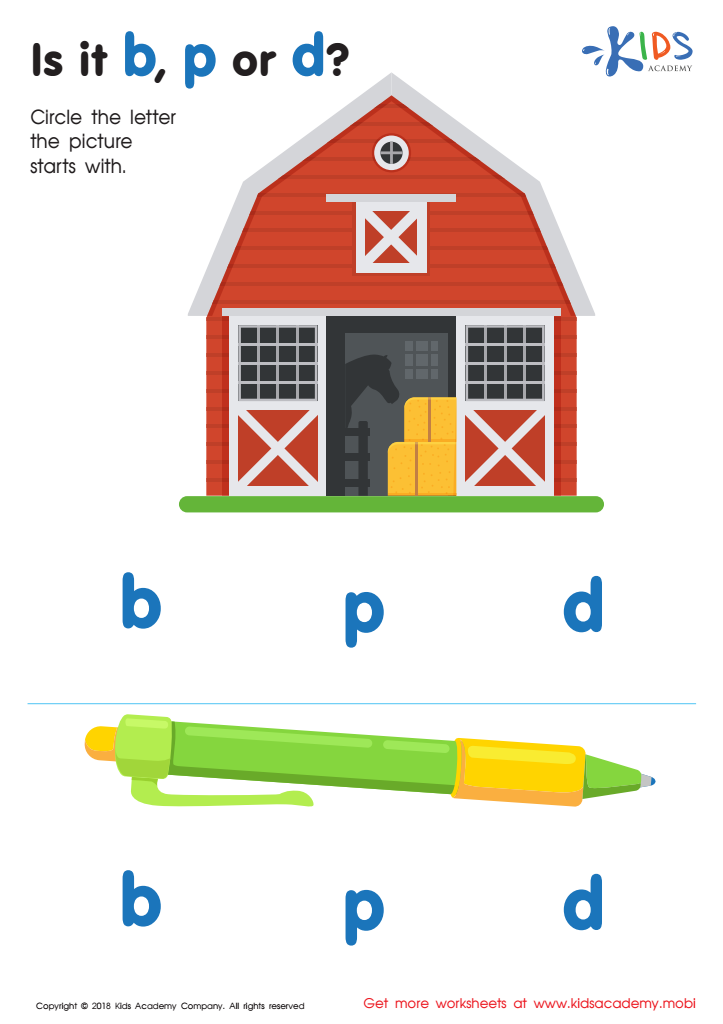
Is it b, p or d? Worksheet

Is it b, p or d? Worksheet

Test your child's identification skills with this worksheet. They must identify the image and then circle the letter it begins with: 'b', 'p', or 'd' (e.g. an image of the sun would mean they circle 's').
Is it b, p or d? Worksheet
Worksheet
Words with sound p Reading Worksheet

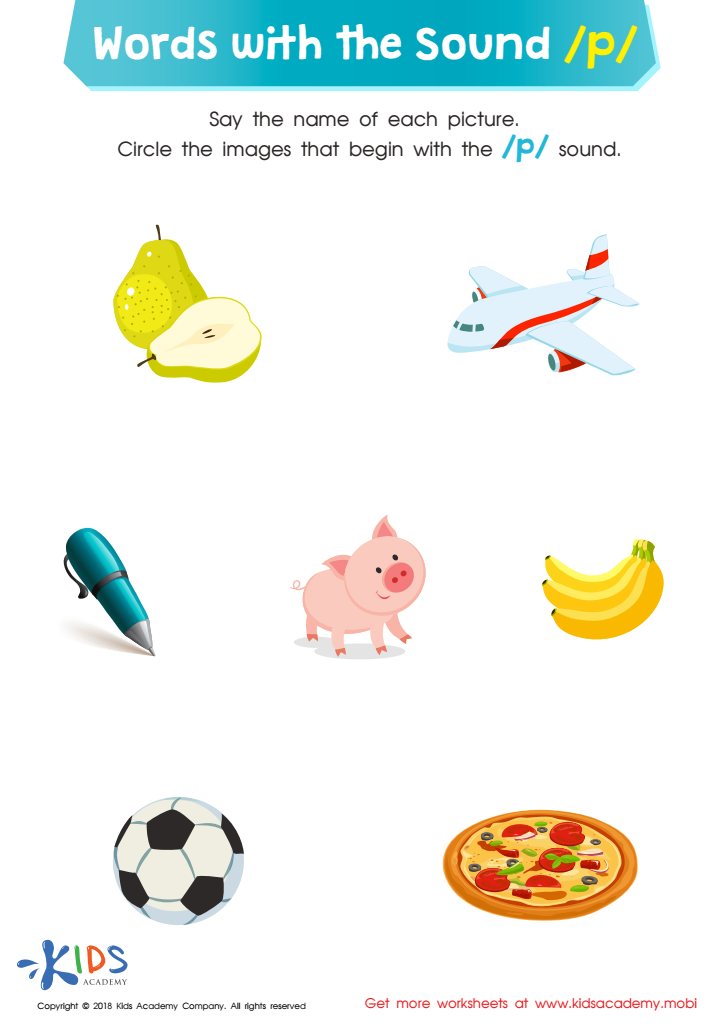
Words with sound p Reading Worksheet

Working on this fun worksheet? Name each picture aloud and listen carefully before circling those that start with the letter «p»! Pizza, pig, plane, or banana - practice phonics to help your child recognize the letter «p» sound for successful early reading and decoding!
Words with sound p Reading Worksheet
Worksheet
Words with sound f Reading Worksheet

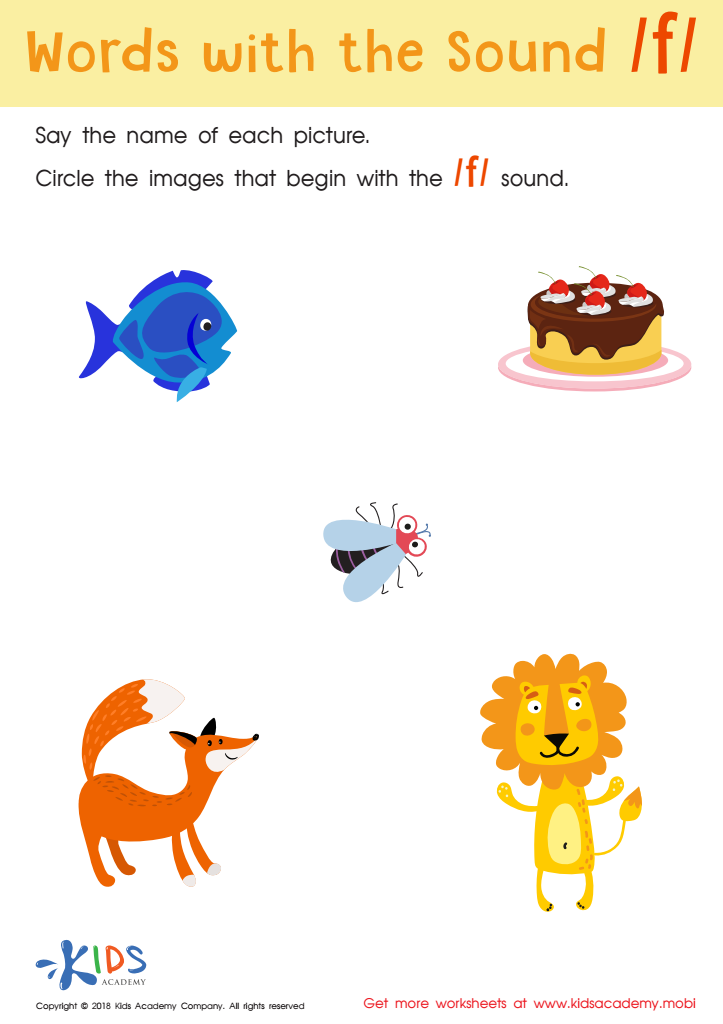
Words with sound f Reading Worksheet

This illustrated phonics worksheet is ideal for preschool or kindergarten. It helps boost learners' literacy skills with a focus on the letter "f". Ask your child to name all the pictures, listening for that sound. Examples are fish, fox, lion, bug. When they can identify which words start with "f", have them circle the images. Congratulate them on a job well done!
Words with sound f Reading Worksheet
Worksheet
Words with Sound M Reading Worksheet


Words with Sound M Reading Worksheet

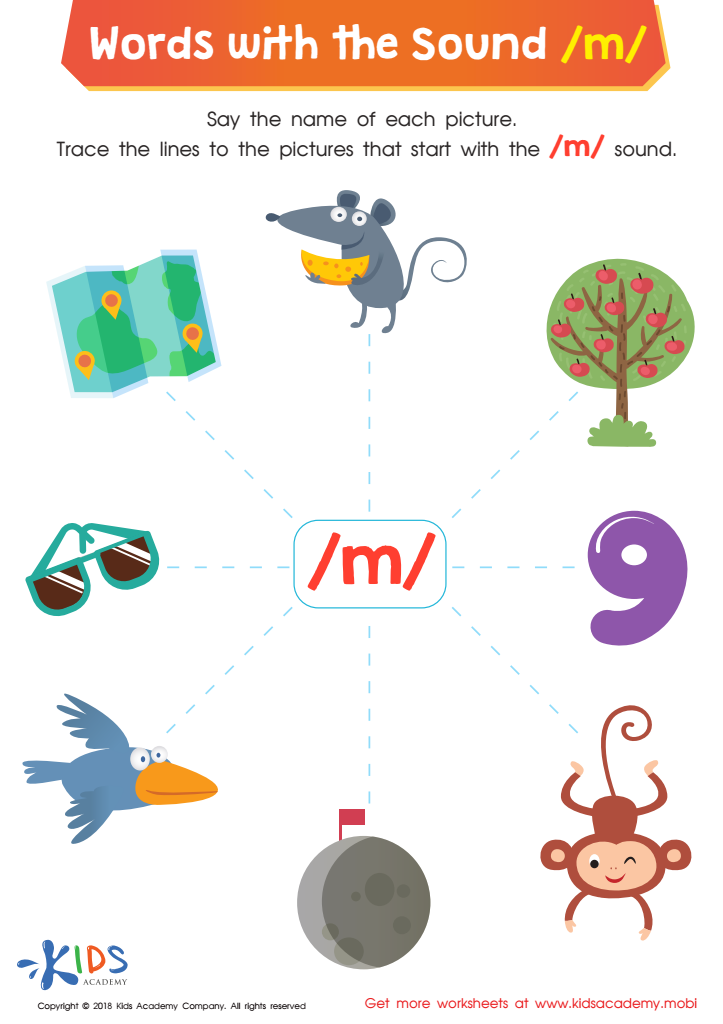
Emerging readers will use this traceable worksheet to name and trace pictures with the letter sound «m». Bright, engaging pictures make this fun and build confidence while strengthening fine motor skills. They won't even know they're also working on reading skills!
Words with Sound M Reading Worksheet

Worksheet


Phonics practice is essential for 5-year-olds because it serves as the foundation for successful reading and writing skills. Phonics helps children understand the relationship between letters and sounds, enabling them to decode words more efficiently. At this critical age, children's brains are highly receptive to learning new skills, making it an optimal time to introduce phonics practice.

When parents or teachers incorporate phonics into a child's daily routine, they are giving the child the tools needed to become confident and independent readers. This not only fosters a love for reading but also improves comprehension, which is crucial for academic success across all subjects. Early phonics practice can lead to a better understanding of language structure, thereby enhancing the child's ability to spell and write accurately.

Additionally, children who grasp phonics concepts early on tend to develop stronger vocabulary and better oral communication skills. Engaging in phonics activities can be fun and interactive, keeping young learners motivated and excited about learning. This enthusiasm can translate into a lifelong passion for reading, giving children a significant advantage as they progress through school.

In essence, phonics practice is a foundational step in a child's educational journey. By investing time and effort in teaching phonics to 5-year-olds, parents and teachers are setting up a trajectory towards academic success and a lifelong appreciation for the written word.