Rhyming skills development Normal Phonics Worksheets for 5-Year-Olds
3 filtered results
-
From - To
Boost your 5-year-old’s reading confidence with our Rhyming Skills Development Normal Phonics Worksheets. Designed by educational experts, these engaging worksheets help young learners grasp phonics through fun and interactive rhyming exercises. By recognizing rhyming words, children enhance their auditory discrimination and phonetic knowledge, crucial for reading success. Each worksheet incorporates colorful images and age-appropriate activities to keep kids motivated and eager to learn. Perfect for home or classroom use, our printables provide a solid foundation for literacy education. Start your child’s reading journey on the right note with our expertly crafted rhyming worksheets.
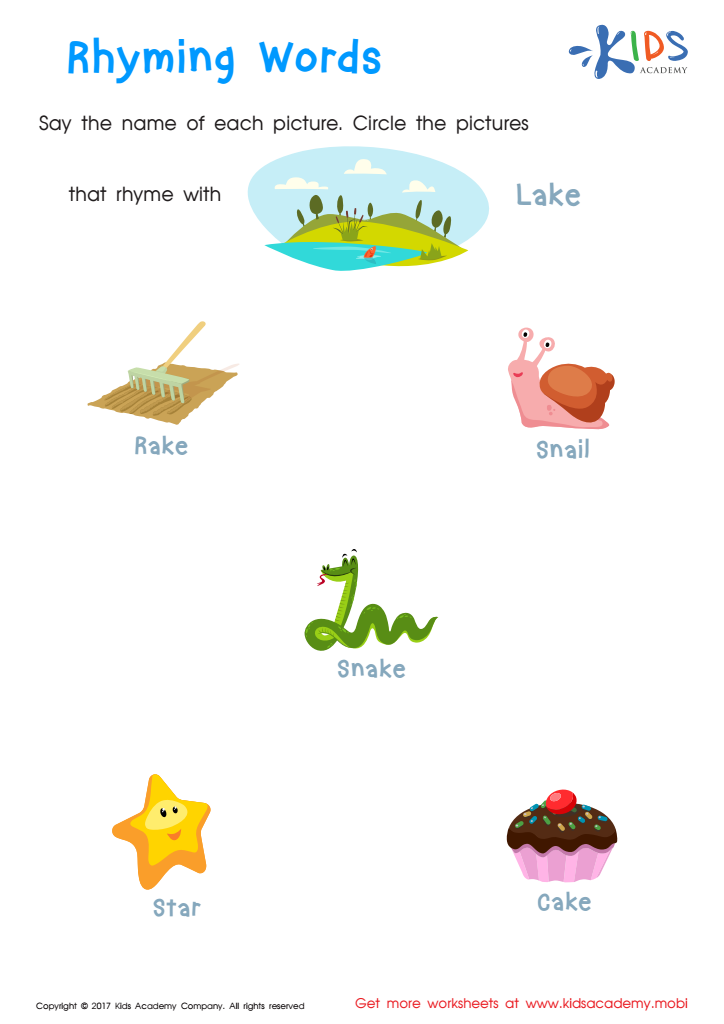
Rhyming Words Rhyming Worksheet
 Assign to My Students
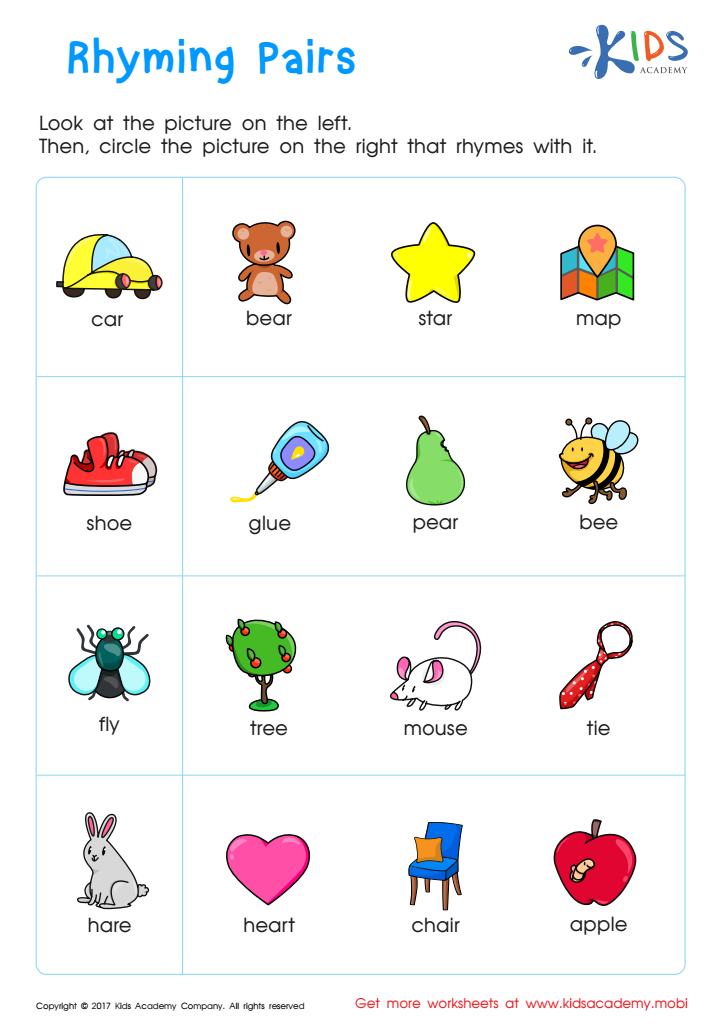
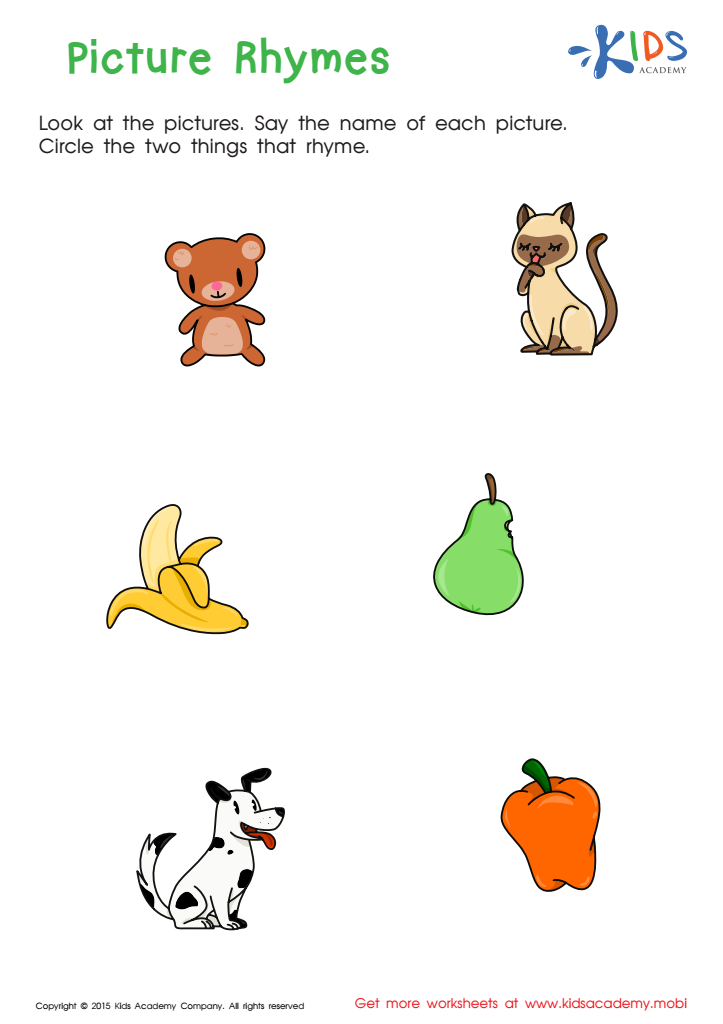
First Words: Picture Rhymes Worksheet








Developing rhyming skills and normal phonics in 5-year-olds is crucial for several foundational reasons. First, rhyming enhances phonemic awareness, which is the ability to recognize and manipulate sounds in words. This skill is essential for decoding words during reading. As children learn to discern patterns in rhyming words (like "cat," "hat," "bat"), they become more skilled at predicting and generating other words, fostering their reading fluency.
Additionally, normal phonics instruction teaches the relationship between letters and sounds, forming the basis for spelling and reading. By understanding phonics, children can decode new words beyond simple memorization, empowering them to become independent readers.
Moreover, rhyming and phonics develop auditory discrimination, helping kids differentiate between sounds. This auditory awareness is crucial not just for reading but also for effective communication and listening skills.
Engaging in rhyming activities and phonics can also make learning enjoyable and interactive, further encouraging a positive attitude toward reading. Parents and teachers should therefore focus on rhyming and phonics to build strong literacy skills, paving the way for academic success and fostering a life-long love of reading.







