
Alphabet Recognition Normal Upper & Lowercase Letters Worksheets for 5-Year-Olds
19 filtered results
Difficulty Level
Grade
Age
-
From - To
Subject
Activity
Standards
Introduce your child to the world of letters with our "Alphabet Recognition Normal, Upper, & Lowercase Letters Worksheets for 5-Year-Olds." These engaging, expertly designed worksheets help children recognize and differentiate between uppercase and lowercase letters, building a solid foundation for literacy development. Through fun activities, kids will strengthen their letter identification skills, improve handwriting, and boost their confidence in reading. Perfectly tailored for curious young learners, these resources make learning the alphabet a joyful adventure. Start your child's educational journey with our top-quality alphabet recognition worksheets and set them up for success!
Favorites
With answer key
Interactive
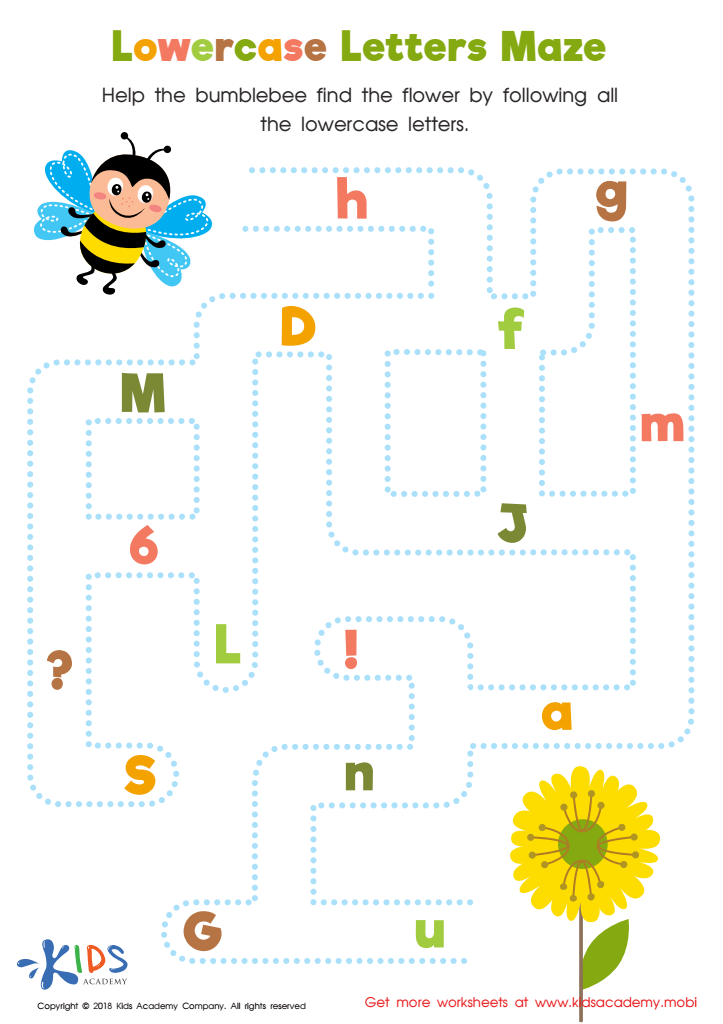
Lowercase Letters Maze Worksheet
Traceable pages can be great learning tools for children. For example, have them trace the path of lowercase letters to help a bumblebee pollinate flowers. Students will quickly learn the difference between uppercase and lowercase letters and numbers, and have fun doing it!
 Assign to My Students
Lowercase Letters Maze Worksheet
Worksheet

Uppercase Letters A, B, and C Worksheet
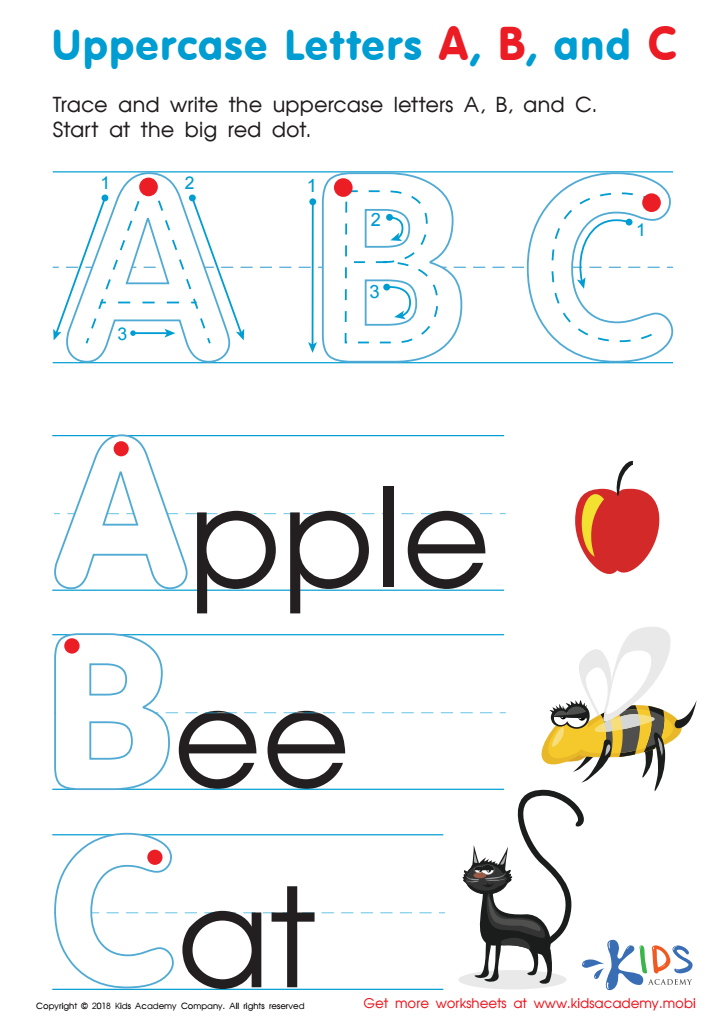
See that big red dot? Have your child use it as a guide to trace A, B and C on this fun worksheet. It features lively pictures to help link letter sounds. Have them practice proper pencil strokes on the letters at the top, then write beside each graphic. Let the learning and fun begin! 80 words
Uppercase Letters A, B, and C Worksheet
Worksheet
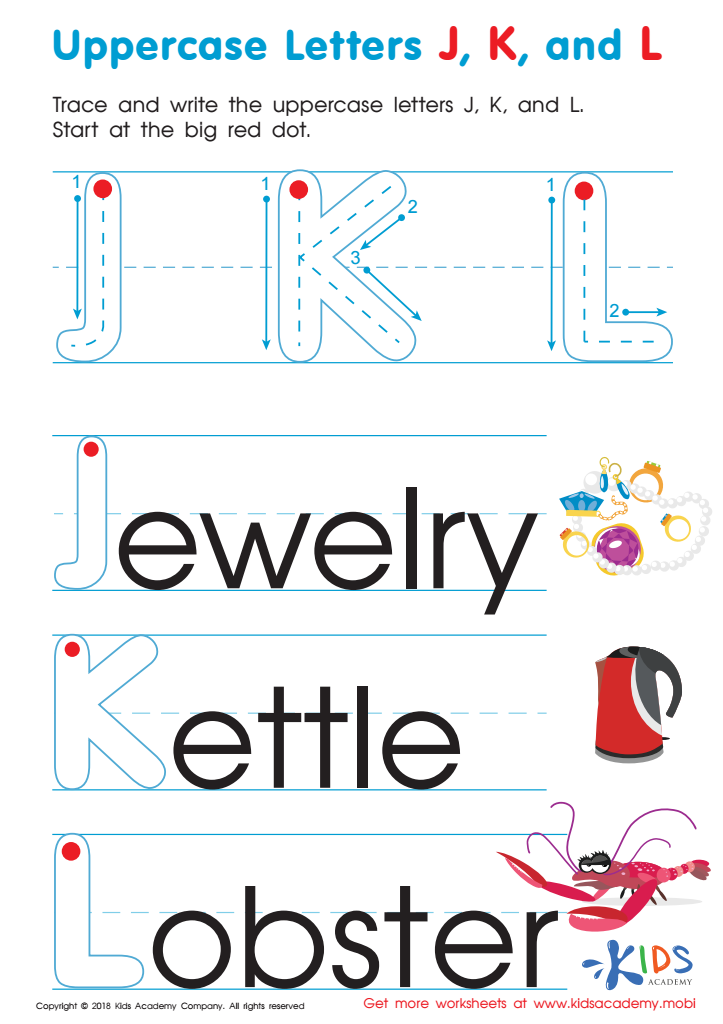
Uppercase Letters J, K, and L Worksheet
Jewelry, kettle and lobster share a common trait: their names start with J, K and L, 3 letter neighbors found in the middle of the alphabet. This traceable worksheet helps kids learn letter sounds and practice writing. Arrows and tracing lines make it easy to form neat pencil strokes. Red dot shows where kids should start. Perfect for preschoolers and kindergarteners!
Uppercase Letters J, K, and L Worksheet
Worksheet
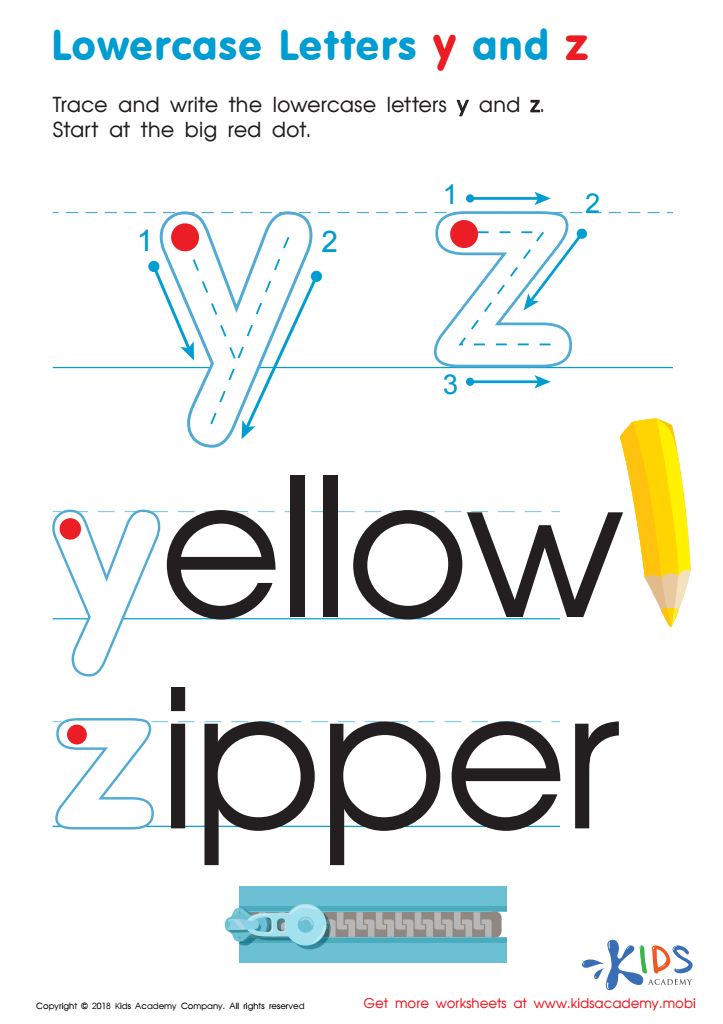
Lowercase Letters y z Worksheet
Help your child get a good start in writing and reading by tracing and writing the lowercase letters y and z. With this activity, they will learn the alphabet, which is essential for literacy success. Guide them through the worksheet and make sure they form the letters correctly. This will help them learn the basics needed to write and read fluently.
Lowercase Letters y z Worksheet
Worksheet
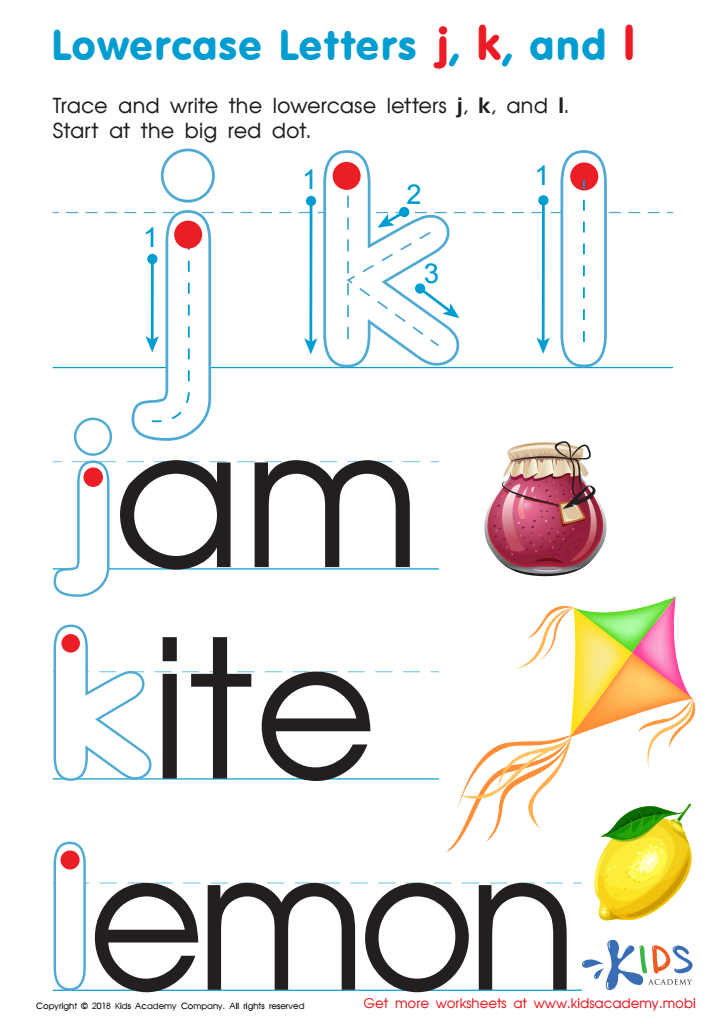
Lowercase Letters j k l Worksheet
Teach your child the difference between uppercase and lowercase letters. Have them trace and write the lowercase letters j, k, and l, starting at the red dot. Guide your child's hand to form the letters correctly.
Lowercase Letters j k l Worksheet
Worksheet
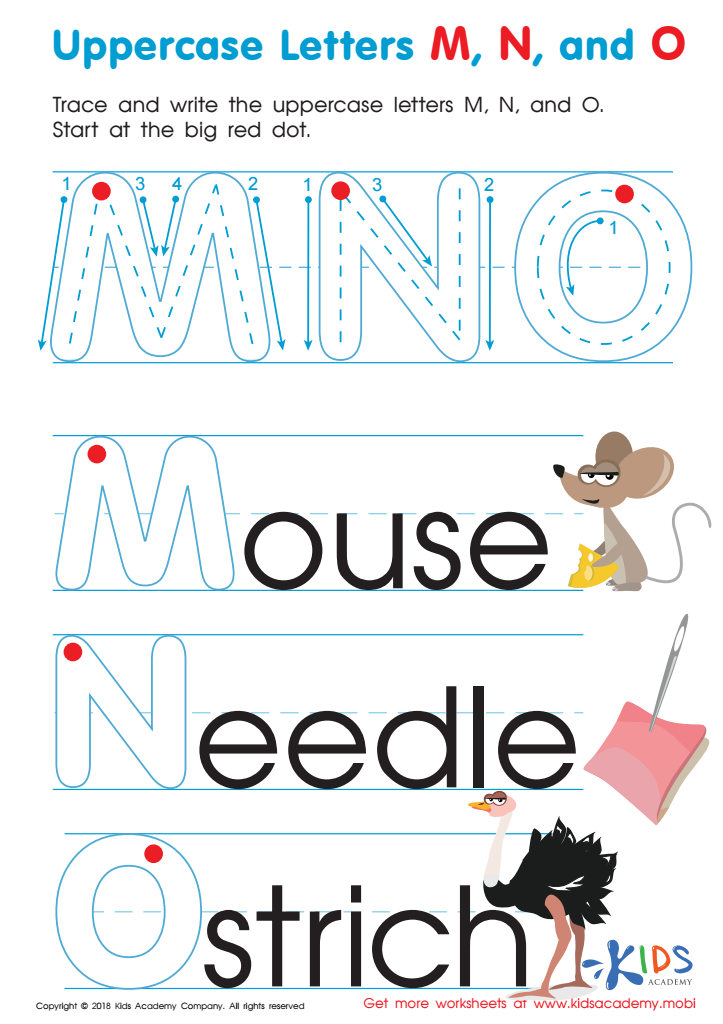
Uppercase Letters M, N, and O Worksheet
Download our easy-to-understand worksheet to help kids write M and N with ease! They'll trace dotted lines and follow arrows as they fill in the letters using a big red dot as a guide. The cute graphics will help them remember sounds too! Get your child writing quickly and confidently with this fun activity.
Uppercase Letters M, N, and O Worksheet
Worksheet
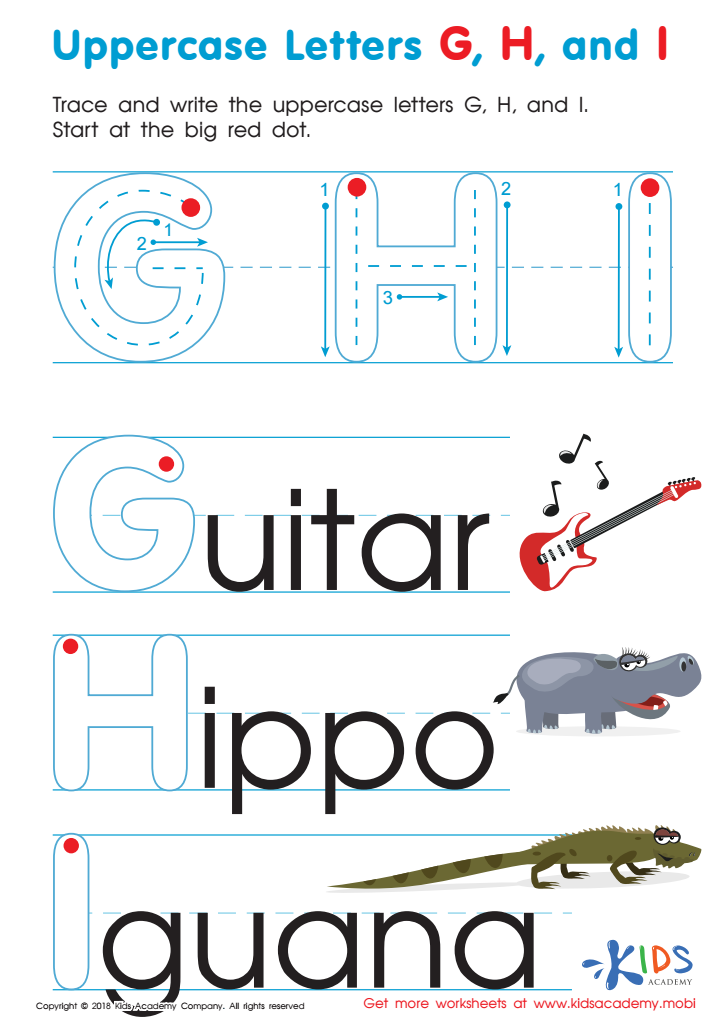
Uppercase Letters G, H, and I Worksheet
Trace each letter with the big red dot, connecting them to sounds as you go. Then write G to I. Congrats on a job well done! Rock on with a cute hippo and iguana while working on this delightful kindergarten worksheet!
Uppercase Letters G, H, and I Worksheet
Worksheet
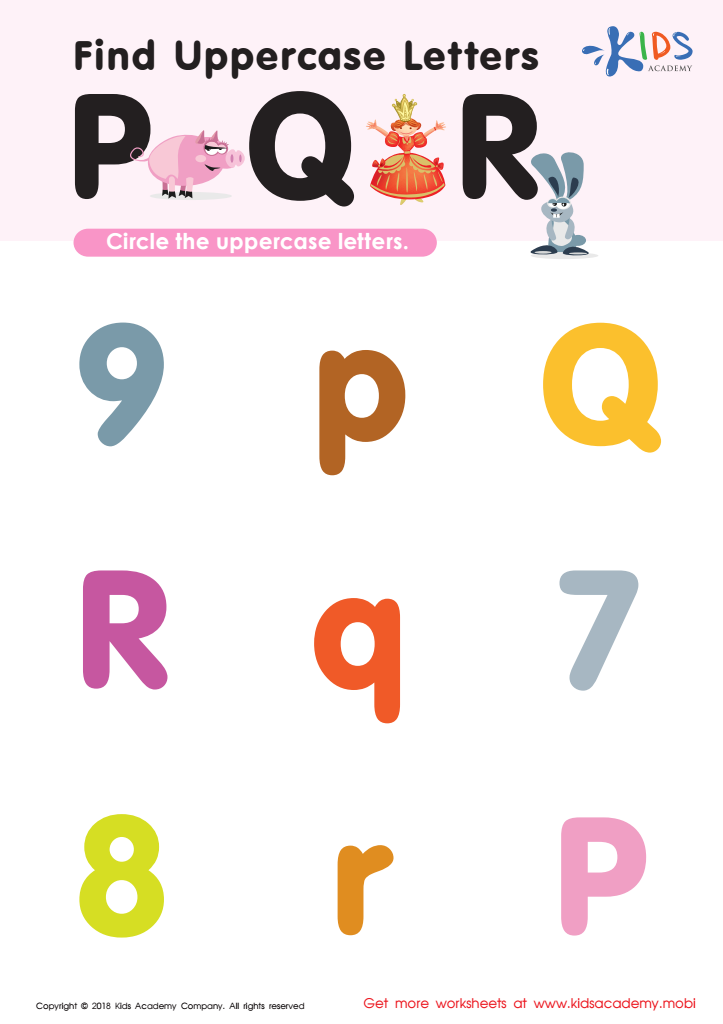
Find Uppercase Letters P, Q, and R Worksheet
Kids learn best when they can make connections. This free printable worksheet guides kids to solve the puzzle using the example letters P, Q, and R, supported by graphics and colors. Point out the page is pink, like the pig (which starts with P!) and solve by finding and circling the uppercase letters – be careful of the numbers!
Find Uppercase Letters P, Q, and R Worksheet
Worksheet
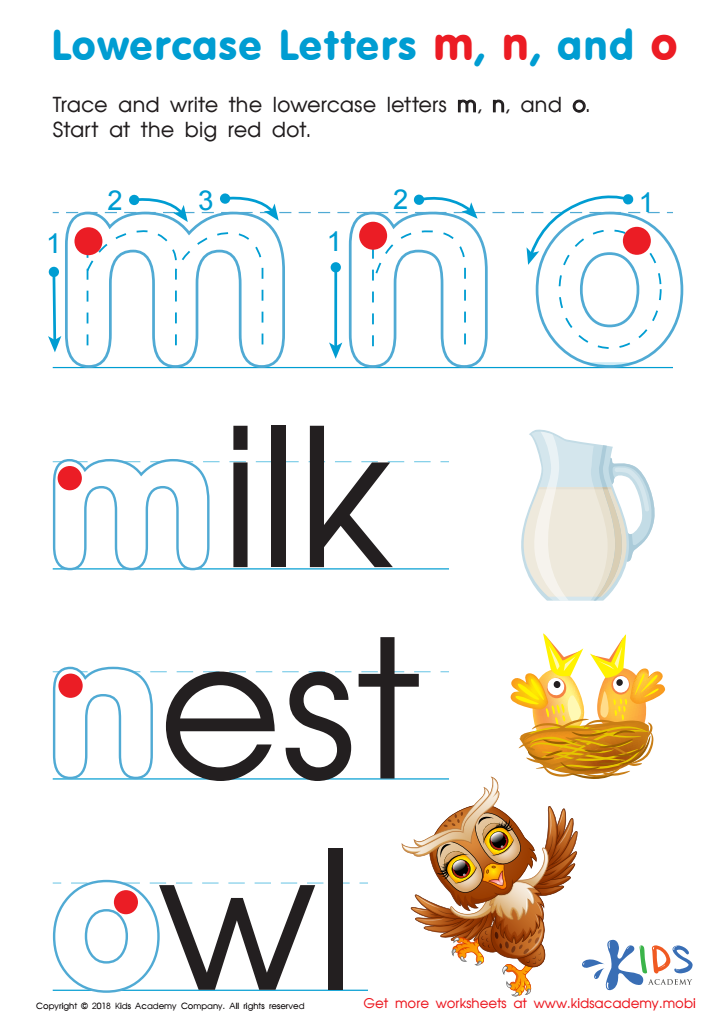
Lowercase Letters m n o Worksheet
Help your child learn the alphabet with letter tracing. Show them the difference between uppercase and lowercase letters by working through this free worksheet, tracing and writing lowercase m, n and o.
Lowercase Letters m n o Worksheet
Worksheet
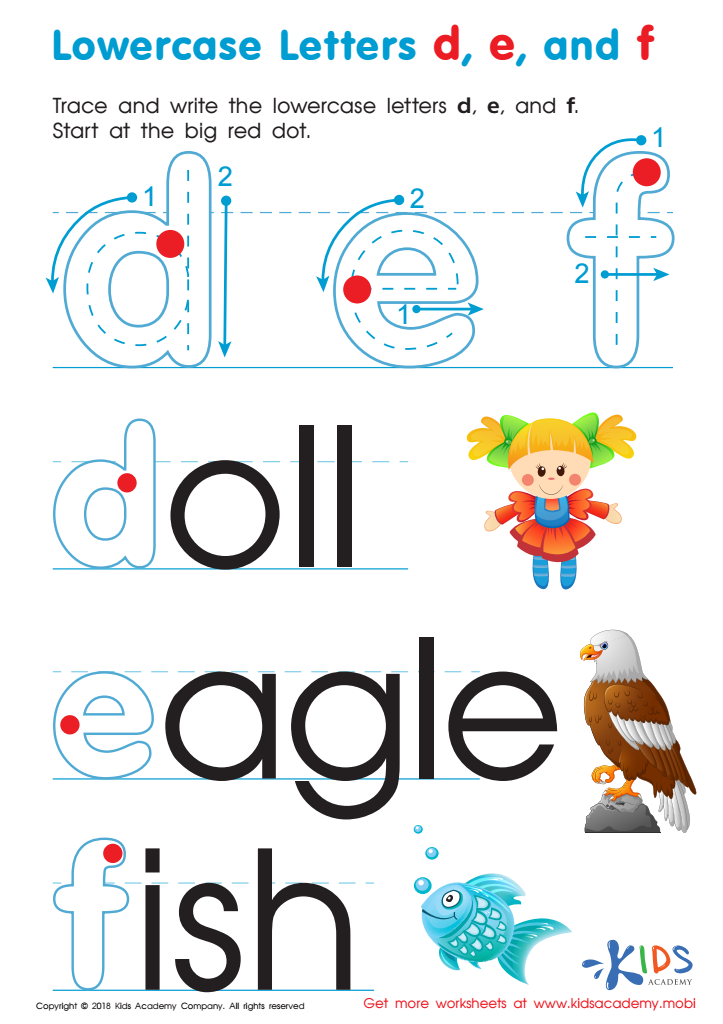
Lowercase Letters d e f Worksheet
Help your child learn the alphabet letters by tracing and writing the lowercase letters d, e, and f. Begin at the big red dot and follow the dots. This worksheet will help your little one gain a better understanding of the letters.
Lowercase Letters d e f Worksheet
Worksheet
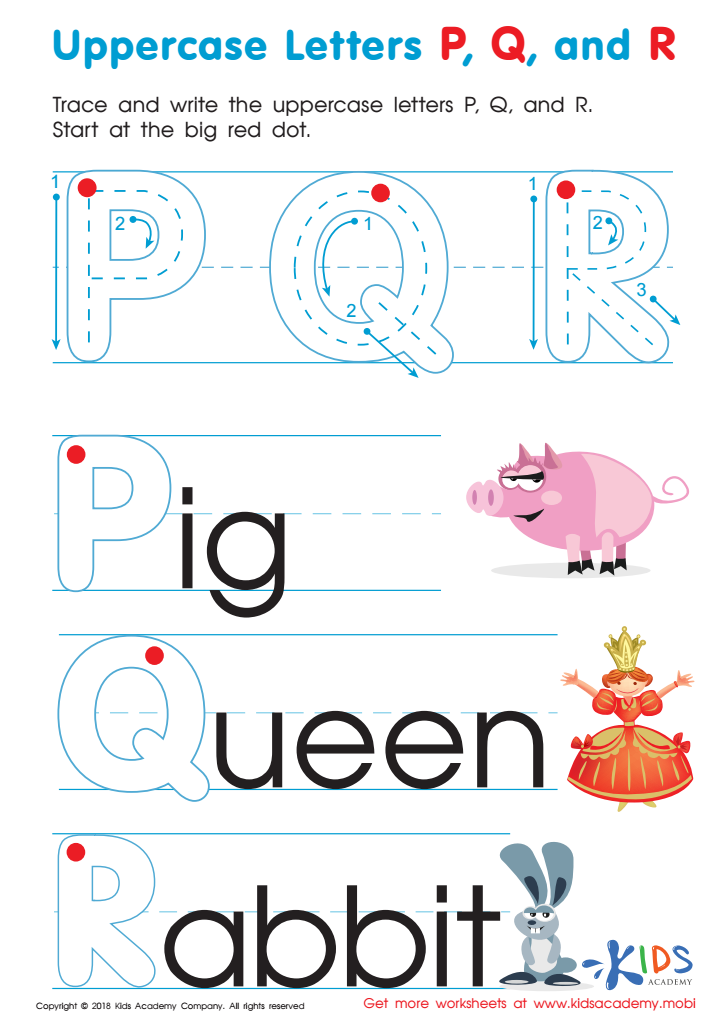
Uppercase Letters P, Q, and R Worksheet
Cute images of a pig, queen and rabbit make it fun to learn letter sounds. Follow the arrows to learn the strokes, then trace each letter from the big red dot. Perfect for kids to learn how to read and write P, Q, and R!
Uppercase Letters P, Q, and R Worksheet
Worksheet
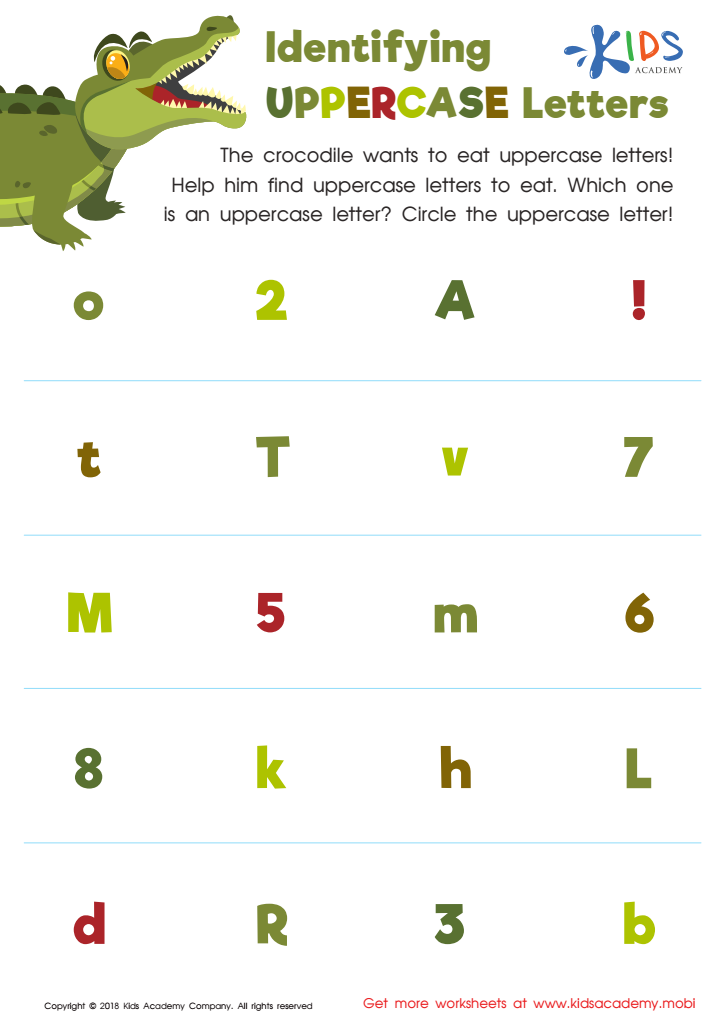
Identifying Uppercase Letters Worksheet
It's essential for kindergarteners to know the distinction between uppercase and lowercase letters. This skill will aid them when starting to write. They can practice by selecting the uppercase letters among a mix of lowercase, uppercase letters and numbers. Whatever their level of learning, give your child confidence with this PDF!
Identifying Uppercase Letters Worksheet
Worksheet
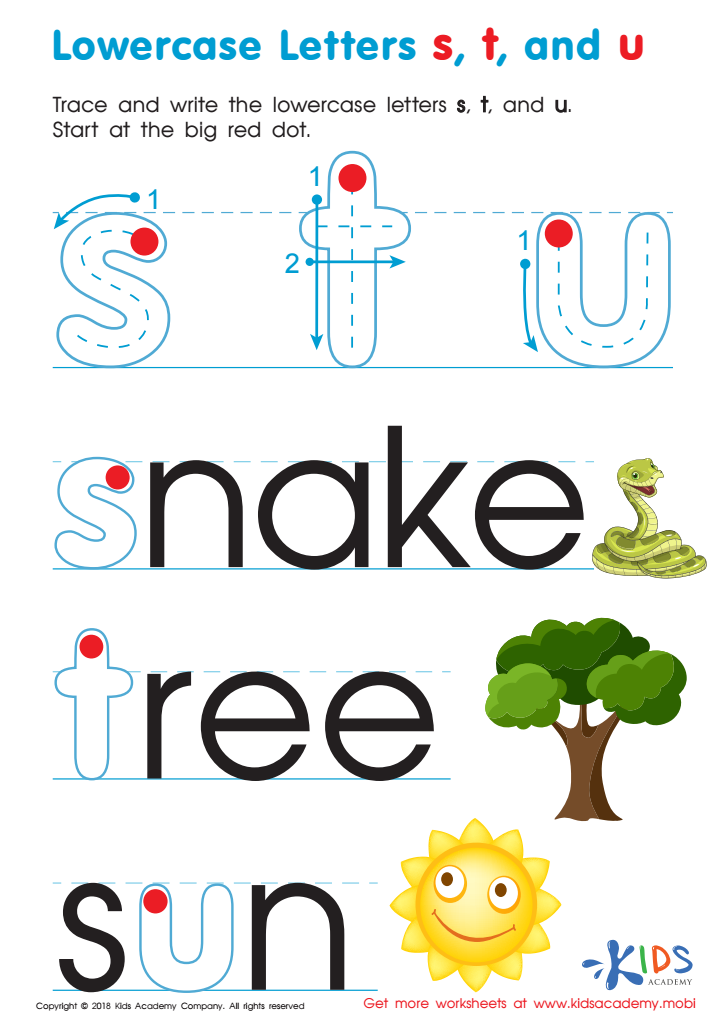
Lowercase Letters s t u Worksheet
Help your child trace lowercase letters s, t and u. Ask questions like: "What word starts with 's'? What about 't' and 'u'? Point out the snake, tree and sun pictures. Start tracing from the big red dot.
Lowercase Letters s t u Worksheet
Worksheet
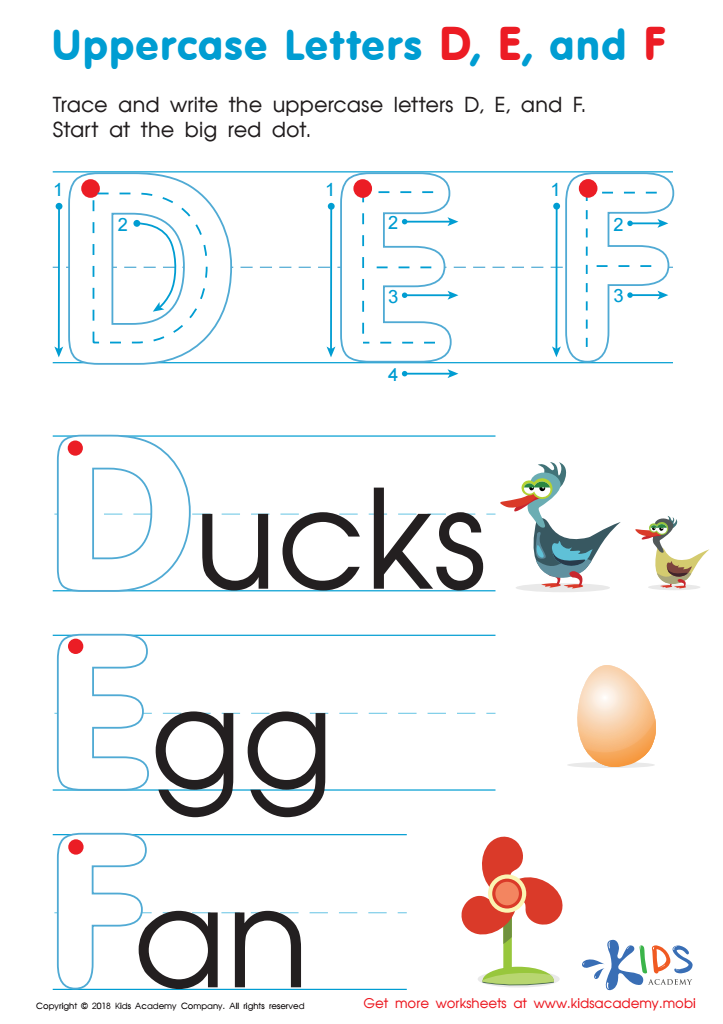
Uppercase Letters D, E, and F Worksheet
A-F are important letters! Get kids tracing with this free printable worksheet. Help them learn the right pencil strokes by following the tracing lines, starting at the big red dot. Reinforce letter sounds with the colorful pictures. 80 words.
Uppercase Letters D, E, and F Worksheet
Worksheet
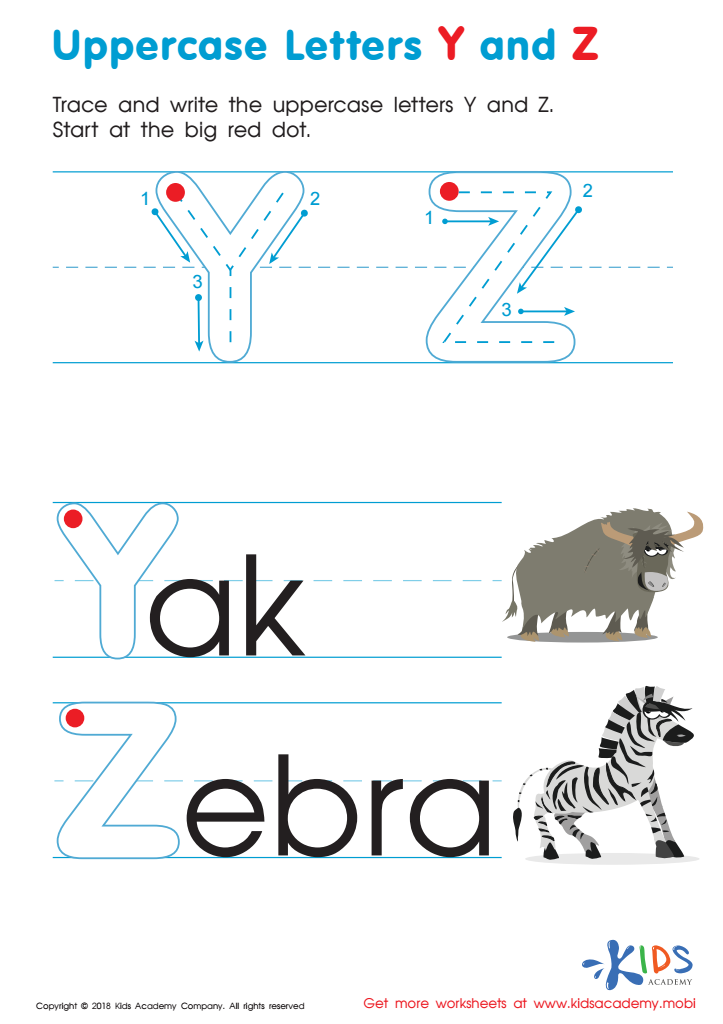
Uppercase Letters Y Z Worksheet
Help your child learn their ABCs with this fun tracing activity! They must trace and write Y and Z in uppercase form, starting from the red dot. Kids will love the fun images for extra engagement. Guiding their hand carefully will help them practice and perfect their writing skills.
Uppercase Letters Y Z Worksheet
Worksheet
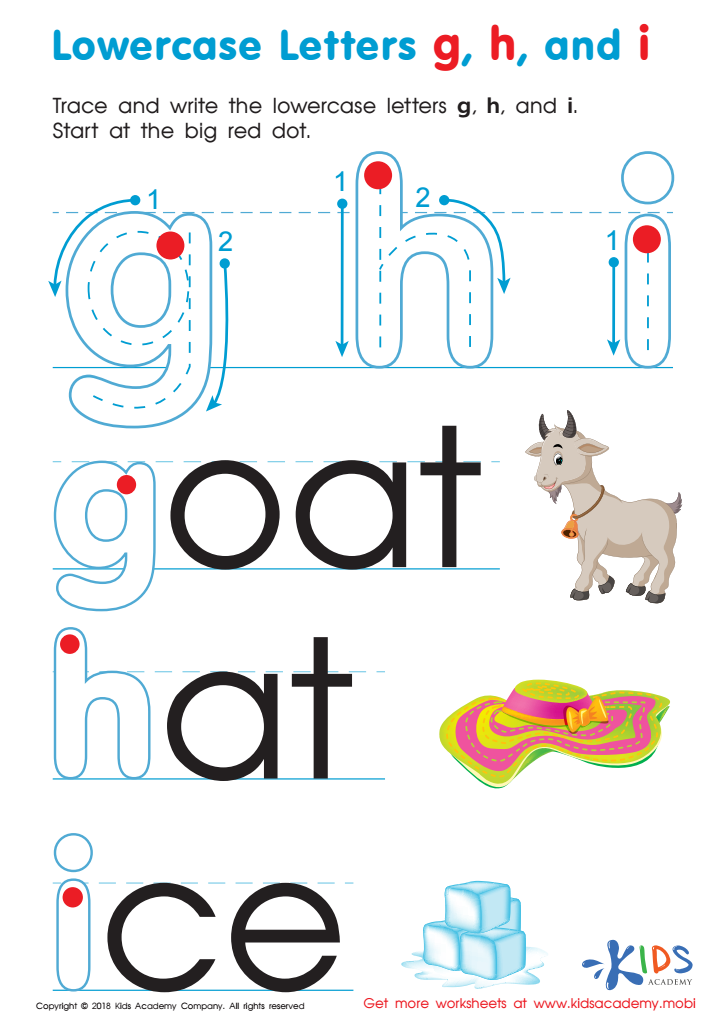
Lowercase Letters g h i Worksheet
Learning is fun for your youngster with color and an enjoyable exercise. Help them build their understanding of the alphabet by starting at the big red dot drawn on each letter and carefully following the dotted lines to draw g, h, and i.
Lowercase Letters g h i Worksheet
Worksheet
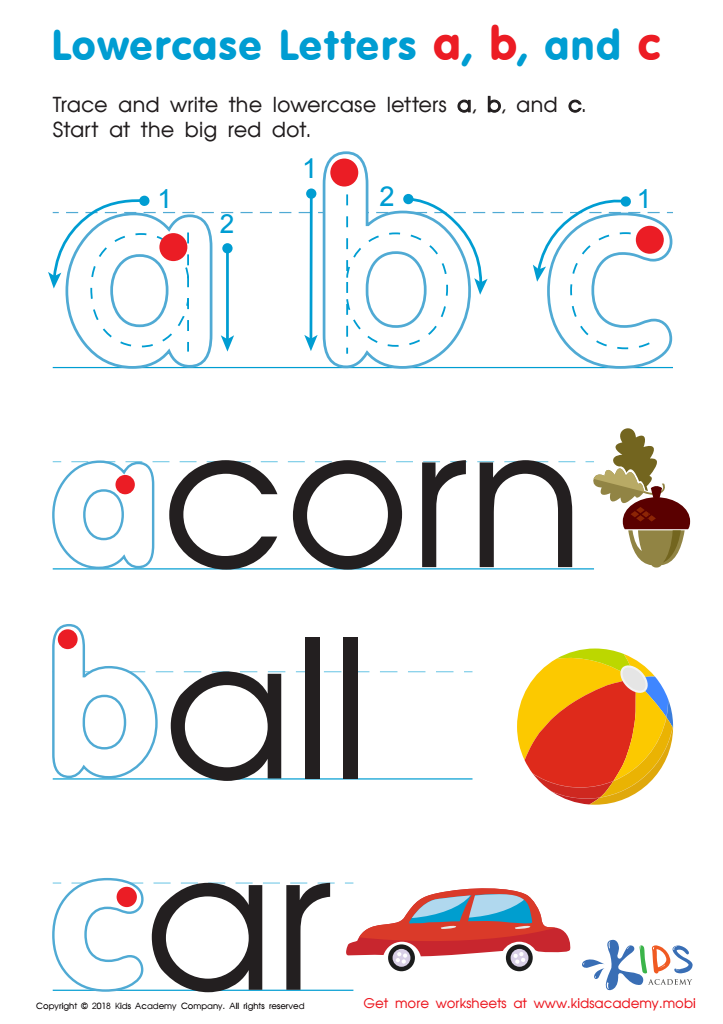
Lowercase Letters a b c Worksheet
Help your child trace and write the lowercase letters of the alphabet with this fun worksheet. Start by following the arrows and directions from the red dot, and watch them improve their writing skills! Vibrant illustrations make it easy and enjoyable.
Lowercase Letters a b c Worksheet
Worksheet
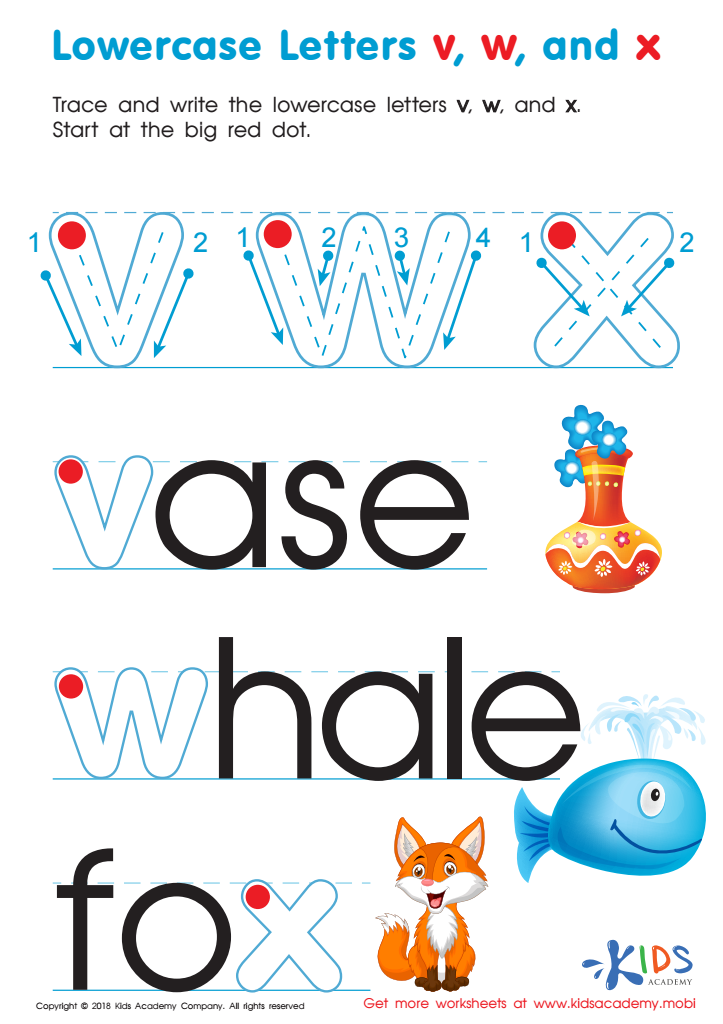
Lowercase Letters v w x Worksheet
Help your child learn to write lowercase letters v, w, and x, starting at the big red dot. This activity will help them develop writing skills and correctly identify the letters. Guide them as they trace the letters and enjoy watching them improve!
Lowercase Letters v w x Worksheet
Worksheet
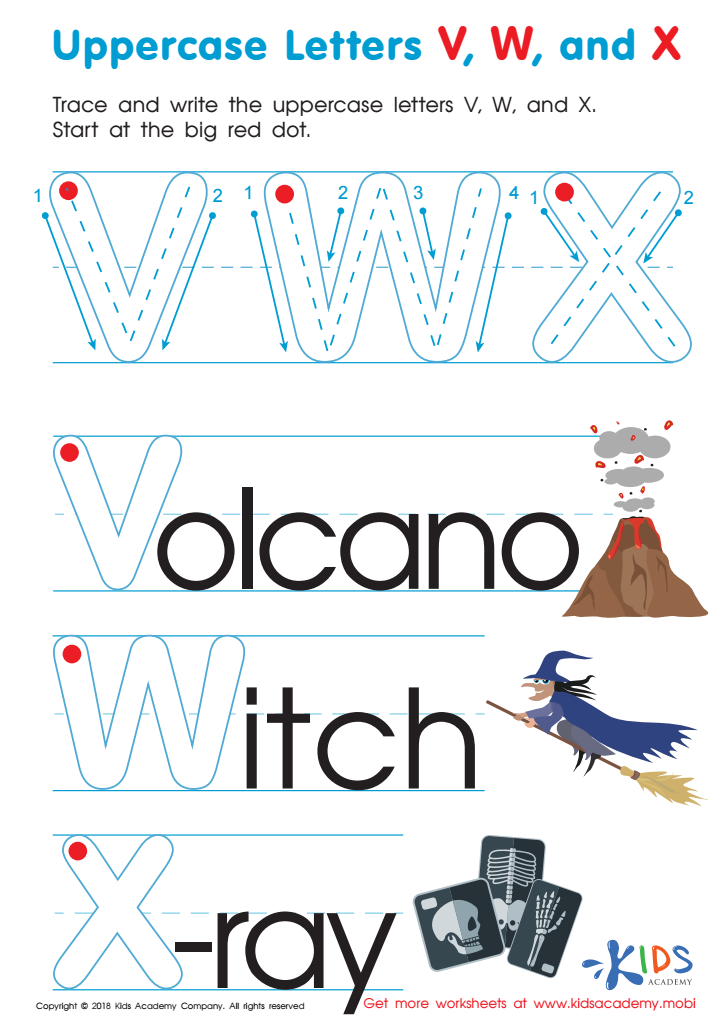
Uppercase Letters V, W, and X Worksheet
This worksheet is perfect for kids struggling to write uppercase letters V, W, and X. Warm up their brains first by having them name words starting with these letters. Then, help them trace and write each letter from the big red dot. With your assistance, they will quickly sharpen their writing skills.
Uppercase Letters V, W, and X Worksheet
Worksheet
Join Kids Academy for Free
Who is primarily going to use this learning content?






Alphabet recognition of both uppercase and lowercase letters is a fundamental milestone for 5-year-olds, serving as the cornerstone of early literacy development. For parents and teachers, focusing on this skill is crucial because it lays the groundwork for reading and writing, two essential components of further education.
At this age, children acquire and reinforce their ability to distinguish between upper and lowercase letters, which fosters literacy skills. Recognizing these differences not only aids in phonemic awareness—associating letters with their corresponding sounds—but also helps children understand more complex aspects of language, such as syntax and punctuation, as they grow.
Early mastery of alphabet recognition enhances children's confidence as budding readers and writers. When children are familiar with both upper and lowercase letters, they are better equipped to decode words, blend sounds, and eventually read sentences. This skill also aids in spelling, as they begin to notice letter patterns and word structures.
Moreover, alphabet recognition positively influences a child’s fine motor skills. Writing practice, coupled with recognizing and recalling letter forms, sharpens their pencil grip and control.
For parents and teachers, nurturing alphabet recognition ensures youngsters are not only prepared for kindergarten and elementary school but are also set on a pathway to academic success and lifelong learning.







