Letter tracing skills Normal Upper & Lowercase Letters Worksheets for 5-Year-Olds
3 filtered results
-
From - To
Discover engaging letter tracing worksheets designed for 5-year-olds that focus on normal uppercase and lowercase letters. These activities provide the perfect foundation for young learners to enhance their handwriting skills while having fun. Through step-by-step instructions and guided practice, children will master proper letter formation and build fine motor skills. Whether for classroom use or at-home learning, these worksheets make alphabet practice enjoyable and effective, helping kids gain confidence in their writing abilities. Encourage your child to succeed with our expertly crafted letter tracing resources, available now to support early literacy development.
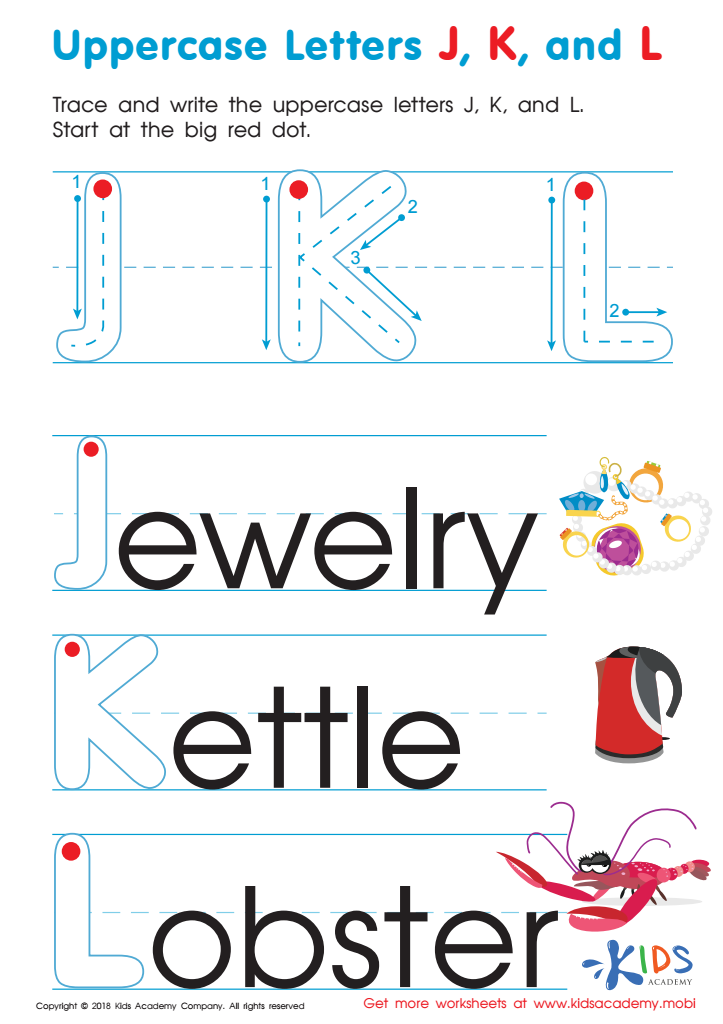
Uppercase Letters J, K, and L Worksheet
 Assign to My Students

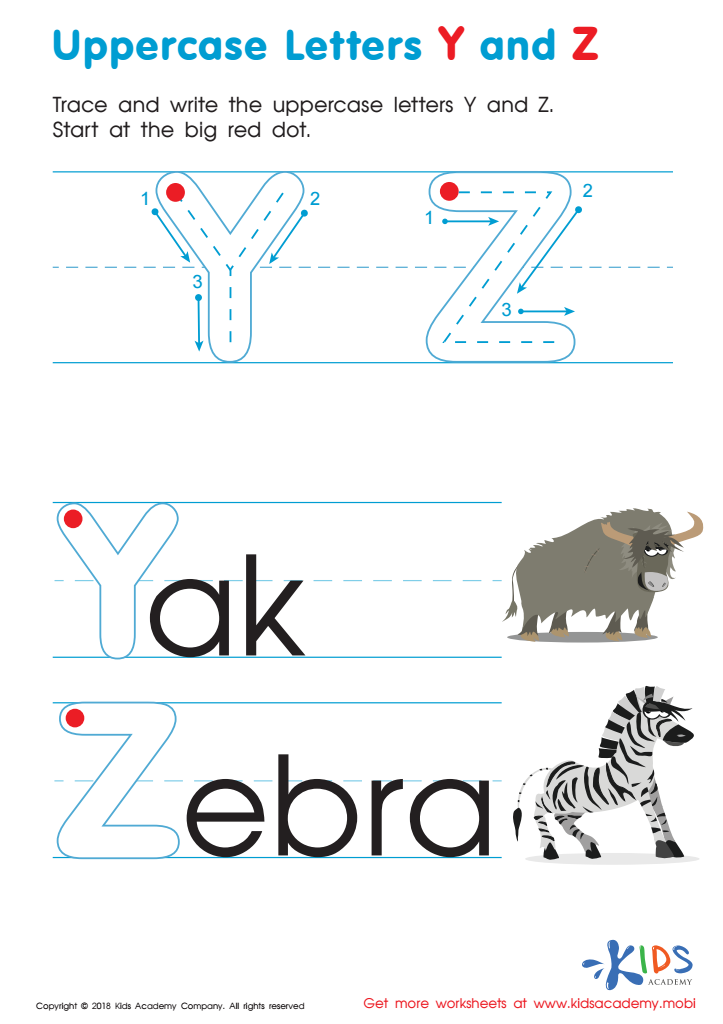
Uppercase Letters Y Z Worksheet
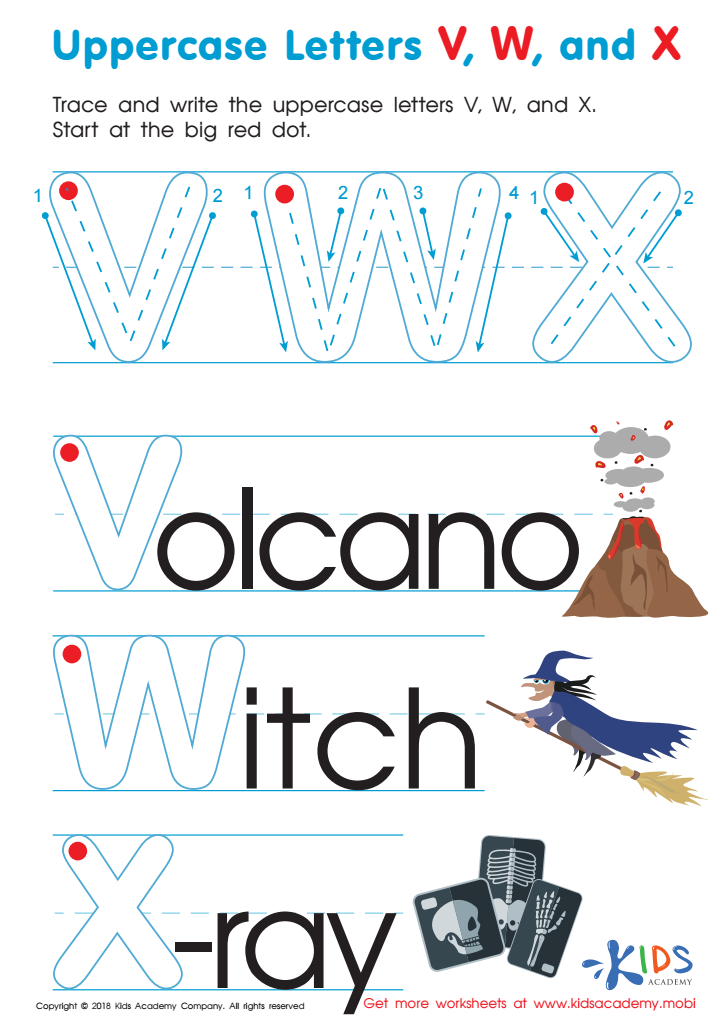
Uppercase Letters V, W, and X Worksheet






Parents and teachers should care about letter tracing skills in normal uppercase and lowercase letters for 5-year-olds because these skills form the foundational building blocks for literacy development. At this age, children are just beginning to understand the structure of written language. Engaging in letter tracing helps refine their fine motor skills, hand-eye coordination, and muscle memory critical for writing.
Mastering both uppercase and lowercase letters is essential as children frequently encounter both casings in their everyday reading and writing activities. Recognizing and forming these letters correctly ensures that children can accurately reproduce what they see in books, on signs, and in other written materials. This accurate reproduction fosters better reading fluency and comprehension, two crucial components of academic success.
Furthermore, letter tracing activities encourage patience, concentration, and attention to detail. When children successfully trace letters, it builds their confidence, reassuring them that they can learn and master new skills. By emphasizing both uppercase and lowercase letters, children become more versatile and adept at recognizing and writing them in any context.
Ultimately, proficient letter tracing is not just about neat handwriting; it’s about equipping children with the essential skills required for all future academic endeavors, making the investment in these activities extremely valuable.







