
Analytical skills Normal Worksheets for 5-Year-Olds
6 filtered results
Difficulty Level
Grade
Age
-
From - To
Subject
Activity
Standards
Enhance your 5-year-old's analytical skills with our engaging normal worksheets! Designed specifically for young learners, these worksheets promote critical thinking and problem-solving abilities through fun activities that capture their imagination. Each worksheet focuses on various skills, including pattern recognition, sequencing, and comparing objects, ensuring a comprehensive learning experience. Whether at home or in the classroom, our printable resources encourage creativity and self-expression while building foundational analytical skills. Guide your child on their educational journey with these specially crafted worksheets, fostering a love for learning that lasts a lifetime. Start exploring today and watch your child's confidence and skills grow!
Favorites
With answer key
Interactive
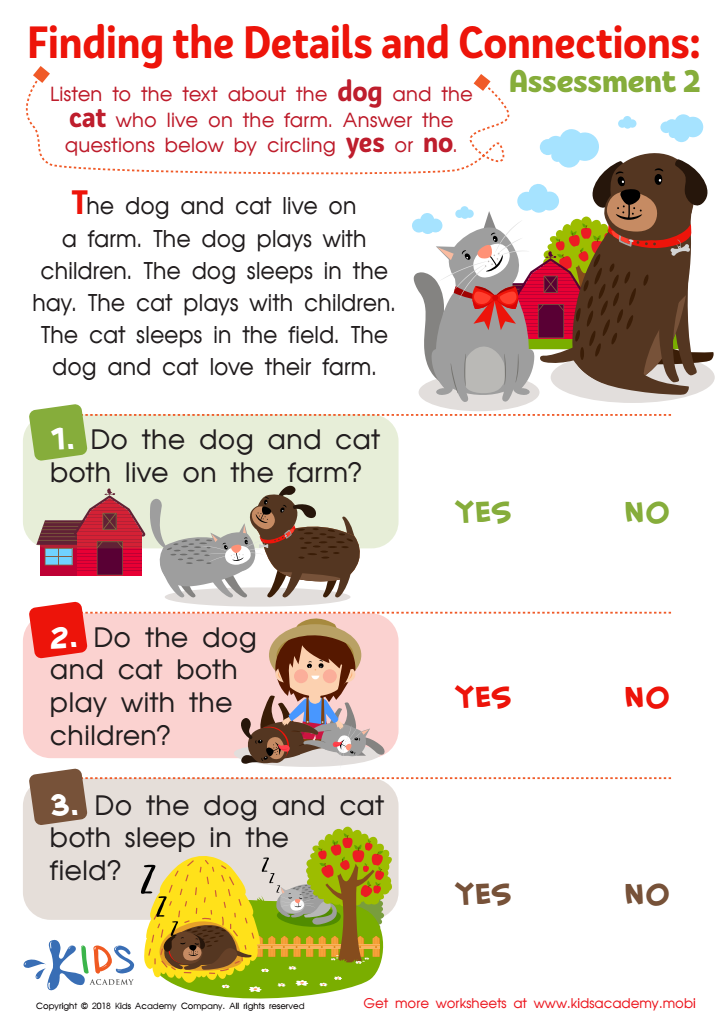
Finding the Details and Connections: Assessment 2 Worksheet
Does your child love animals? If you have pets, they'll relate to the text in this worksheet. Read it aloud to them and help them answer the simple questions by circling yes or no. The story is about a dog and cat living on a farm. Let your child read it aloud to you if they can.
 Assign to My Students
Finding the Details and Connections: Assessment 2 Worksheet
Worksheet
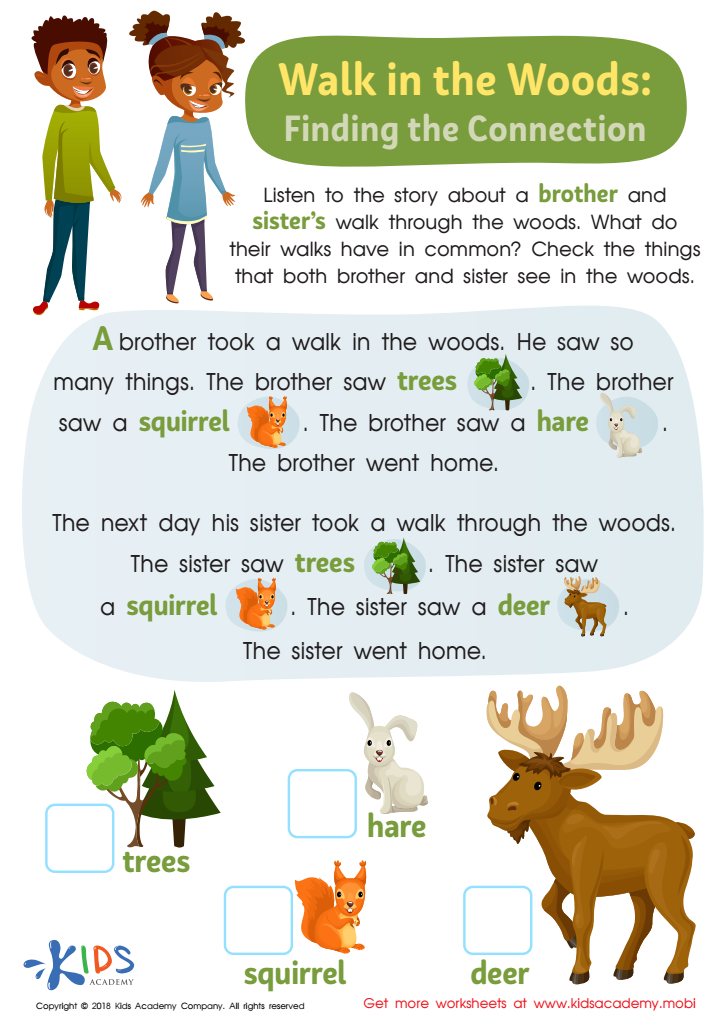
Walk In the Woods: Finding Connections Worksheet
Brother and sister took a walk in the woods to connect with nature and get some exercise. As they went, they noted different things like birds and plants, which they share in this story. Read it to your little ones, and help them check off the items the two saw. It's a great way to learn about nature and enjoy the outdoors.
Walk In the Woods: Finding Connections Worksheet
Worksheet
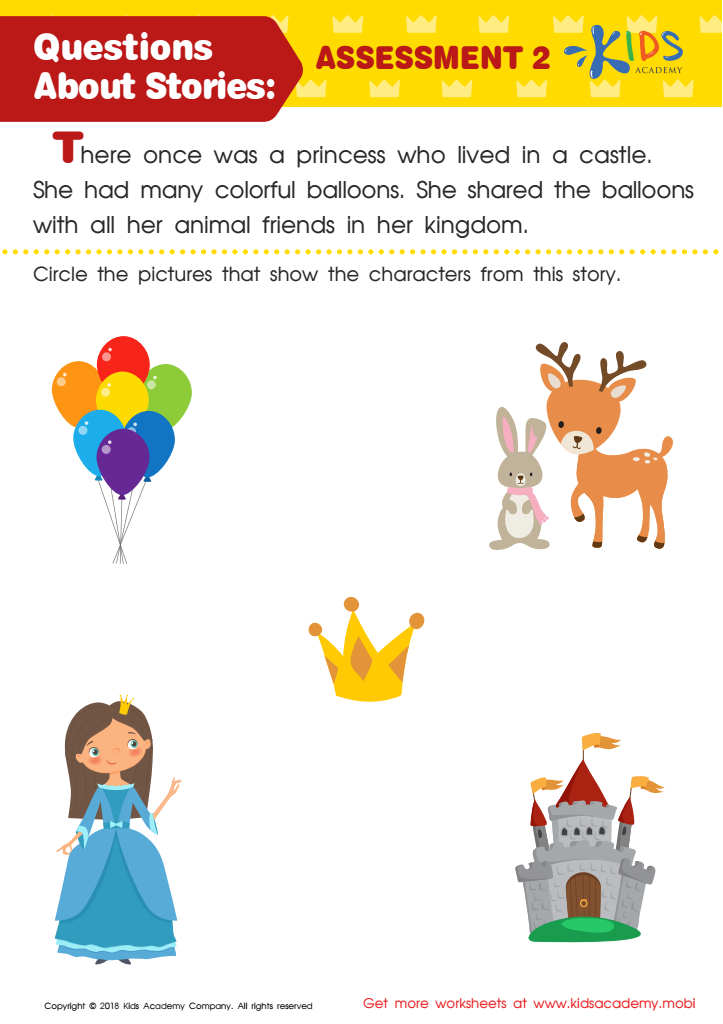
Questions About Stories: Assessment 2 Worksheet
Talk to your child about what a princess is and what activities they associate with that word. Then, read the story to them and help them identify characters in the pictures. Look out for details and ask them questions to ensure they understand.
Questions About Stories: Assessment 2 Worksheet
Worksheet
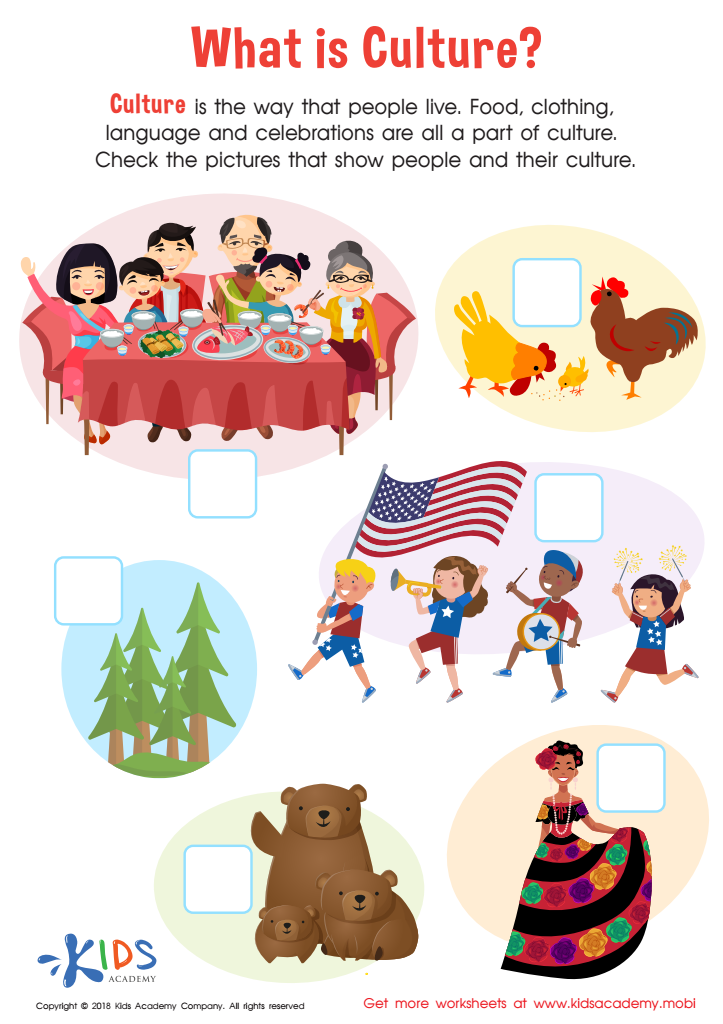
What Is Culture? Worksheet
Before beginning, talk to your kids about different cultures and how they may differ from yours. Explain that culture is the way of life and includes food, clothing, language and celebrations. Ask if they know any friends or classmates with a different culture and see if they can tell you about it. Then, help them look through this printout and check the pictures that show people and their culture.
What Is Culture? Worksheet
Worksheet
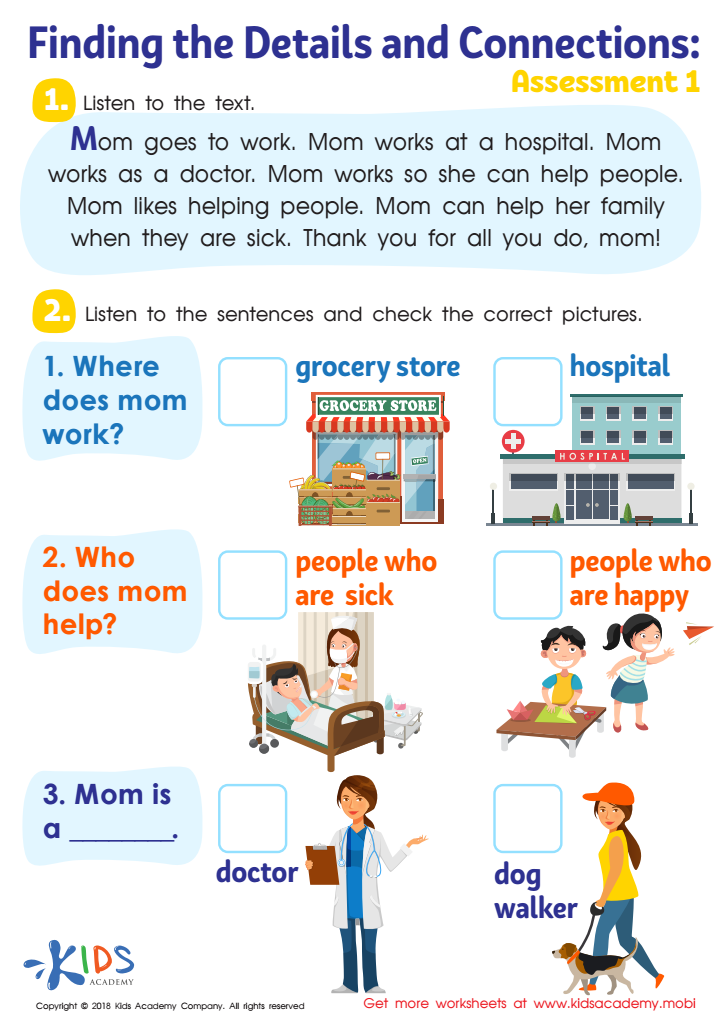
Finding the Details and Connections: Assessment 1 Worksheet
Ask your students what their parents do for a job. Do they know what profession their mom is in and where she works? Professionals have places they go to do their job. In this task, Mom goes to a hospital and is a doctor. Read the text and help them check the right pictures.
Finding the Details and Connections: Assessment 1 Worksheet
Worksheet
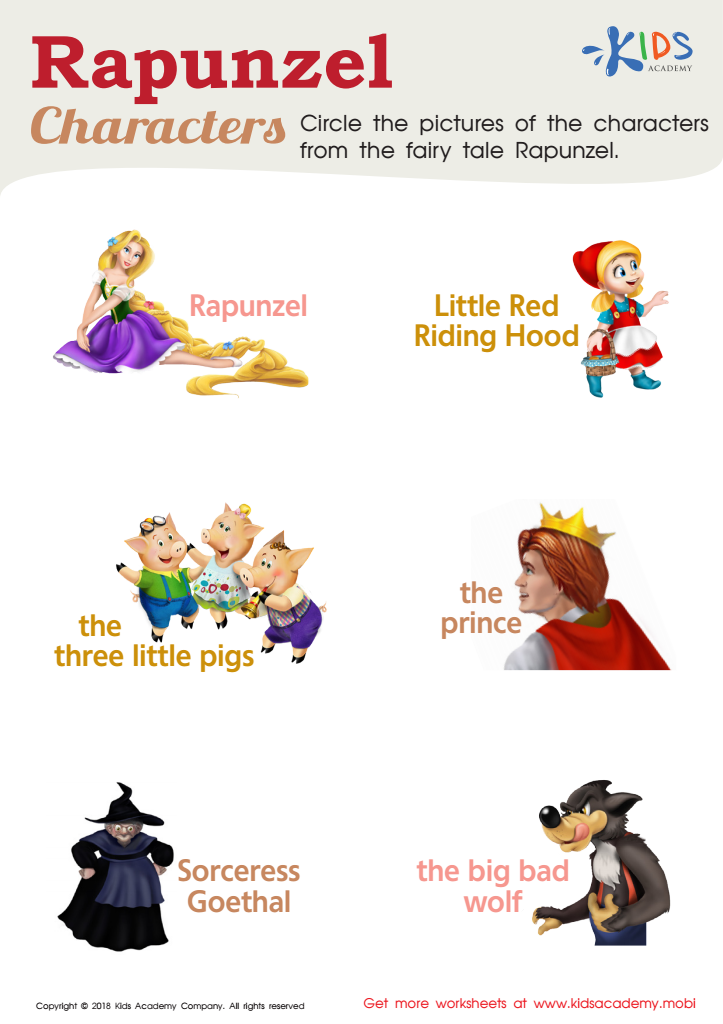
Rapunzel Characters Worksheet
This fun and colourful worksheet is perfect to see what your kids have learned from story time. Test their knowledge with a Rapunzel-themed exercise! Ask them to circle the pictures of the characters from the fairy tale. Helping them to remember the lessons taught in the stories you have read.
Rapunzel Characters Worksheet
Worksheet
Join Kids Academy for Free
Who is primarily going to use this learning content?








Parents and teachers should prioritize analytical skills in 5-year-olds because these skills lay the foundation for critical thinking and problem-solving abilities that are essential throughout life. At this age, children are naturally curious and eager to explore their surroundings. Fostering analytical skills helps them learn to observe, ask questions, and make connections between their experiences.
Developing analytical skills encourages a child’s cognitive growth, enabling them to analyze information, draw conclusions, and make predictions. This not only enhances their academic performance in subjects like math and science but also nurtures their creativity by encouraging them to seek innovative solutions to problems.
Moreover, analytical skills boost emotional and social development by enabling children to evaluate different perspectives and understand complex emotions in themselves and others. This can lead to improved communication skills and stronger relationships with peers.
In a world increasingly driven by technology and critical analysis, equipping young children with strong analytical skills ensures they are prepared for future challenges. By focusing on these skills early on, parents and teachers can help cultivate confident, independent thinkers who are adaptable and ready to navigate the complexities of the modern world. Investing time in developing these skills will benefit children across various aspects of their lives.








