Understanding Quantities Normal Worksheets for 5-Year-Olds
3 filtered results
-
From - To
Welcome to our "Understanding Quantities Normal Worksheets for 5-Year-Olds"! These engaging worksheets are designed to help young learners grasp the concept of quantities through fun and interactive activities. Tailored to enhance counting skills and number recognition, each worksheet encourages kids to connect numbers with corresponding objects, promoting a meaningful understanding of quantity. With colorful illustrations and age-friendly tasks, we make learning enjoyable and effective for early learners. Perfect for classroom settings or home practice, these worksheets empower children to build a strong foundation in math. Explore our collection and watch your child excel in understanding quantities!
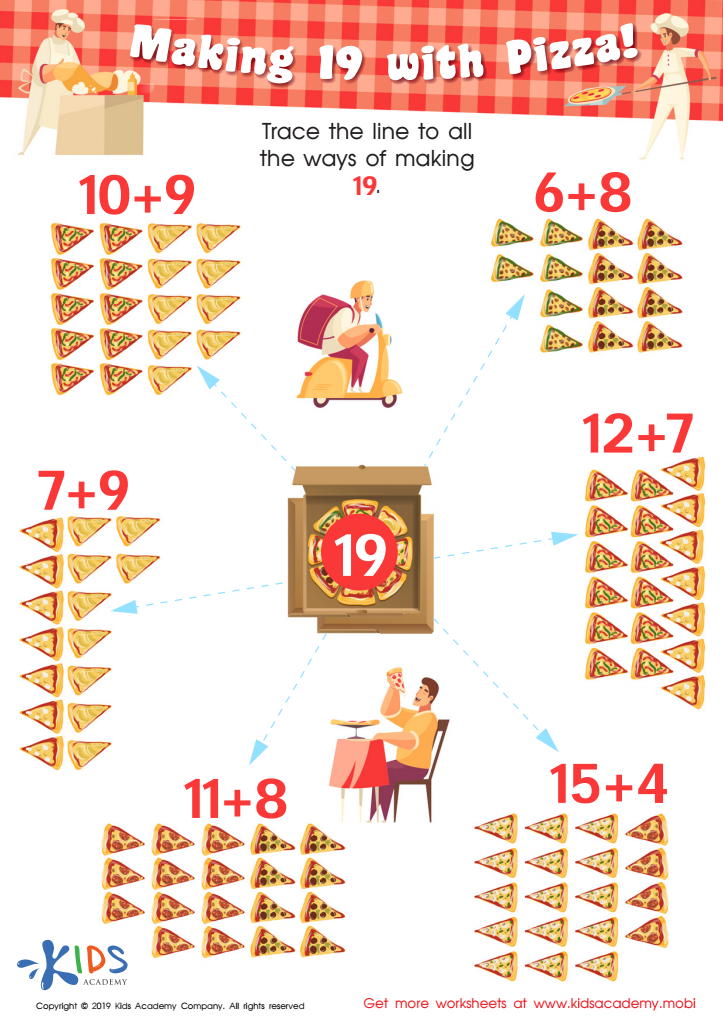
Making 19 with Pizza! Worksheet
 Assign to My Students
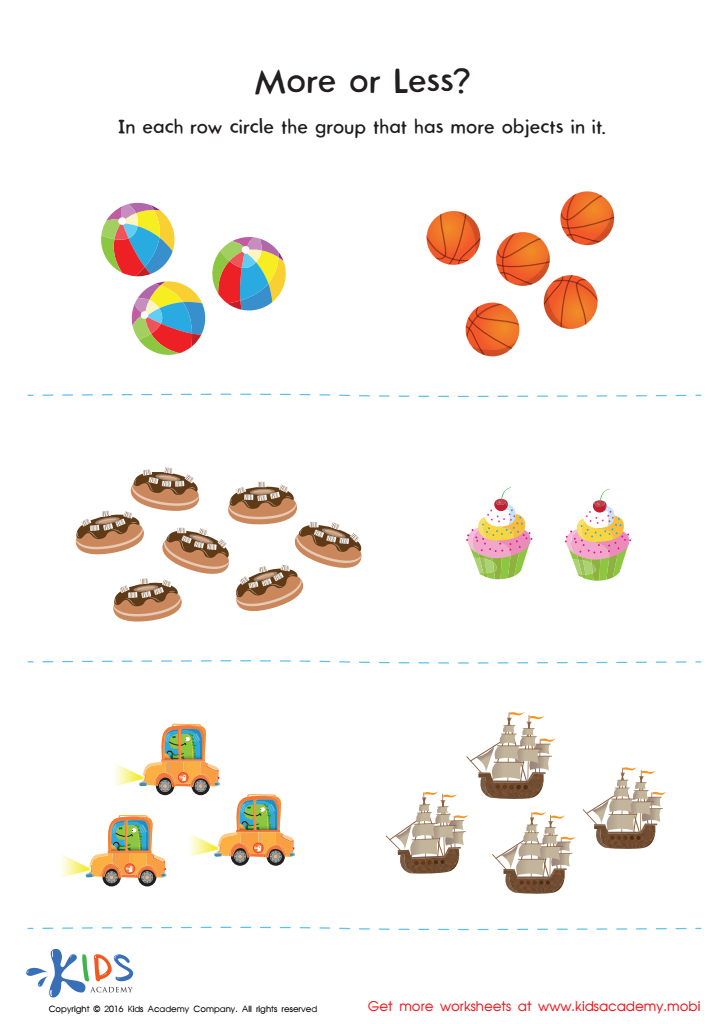
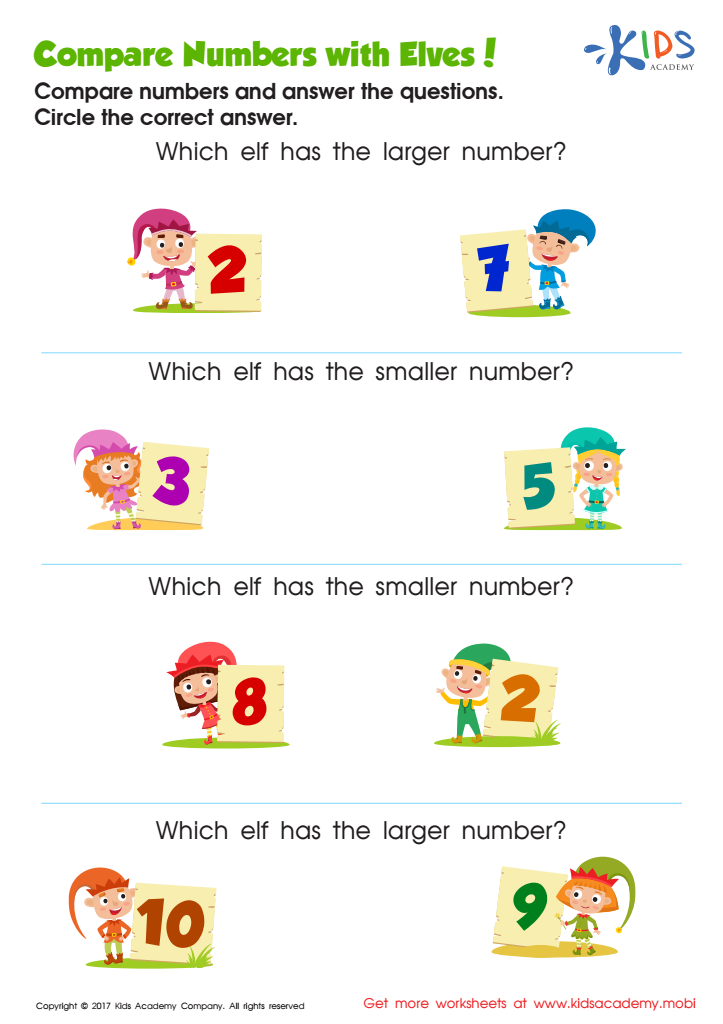
Comparing Numbers Worksheet for Kindergarten







Understanding quantities is a foundational skill for 5-year-olds that sets the stage for their future learning in mathematics and problem-solving. At this age, children are naturally curious and eager to explore the world around them, making it an ideal time for them to develop a grasp of basic mathematical concepts such as counting, comparing, and understanding numbers.
Parents and teachers should care about this development because early mastery of quantity concepts supports later academic success. Proficiency in understanding quantities helps children develop their abilities in addition, subtraction, and even more complex mathematical operations as they progress in school.
Moreover, this knowledge goes beyond academics; it enhances critical thinking and cognitive skills. Understanding quantities helps children make sense of their environment, supports everyday decision-making—like portion sizes during meals or the number of toys they can play with—and fosters a sense of confidence. Additionally, it promotes engagement and interaction through hands-on activities, further enriching a child's learning experience. By nurturing this understanding, caregivers play a crucial role in building a strong mathematical foundation, ultimately preparing children for lifelong learning and success in various areas, not just in math.








