Uppercase identification Normal Worksheets for 5-Year-Olds
5 filtered results
-
From - To
Discover our Uppercase Identification Normal Worksheets, specially designed for 5-year-olds to enhance their letter recognition skills! These engaging worksheets provide a variety of fun activities, including matching, tracing, and coloring uppercase letters. Perfect for preschool and kindergarten learning, our resources help young learners identify and differentiate uppercase letters in a playful manner. Each worksheet is thoughtfully crafted to pique children's interest, encouraging them to practice their writing and improve fine motor skills. Foster a love for literacy while building essential foundational skills. Explore our collection and support your child's early literacy journey today with our free printable resources!
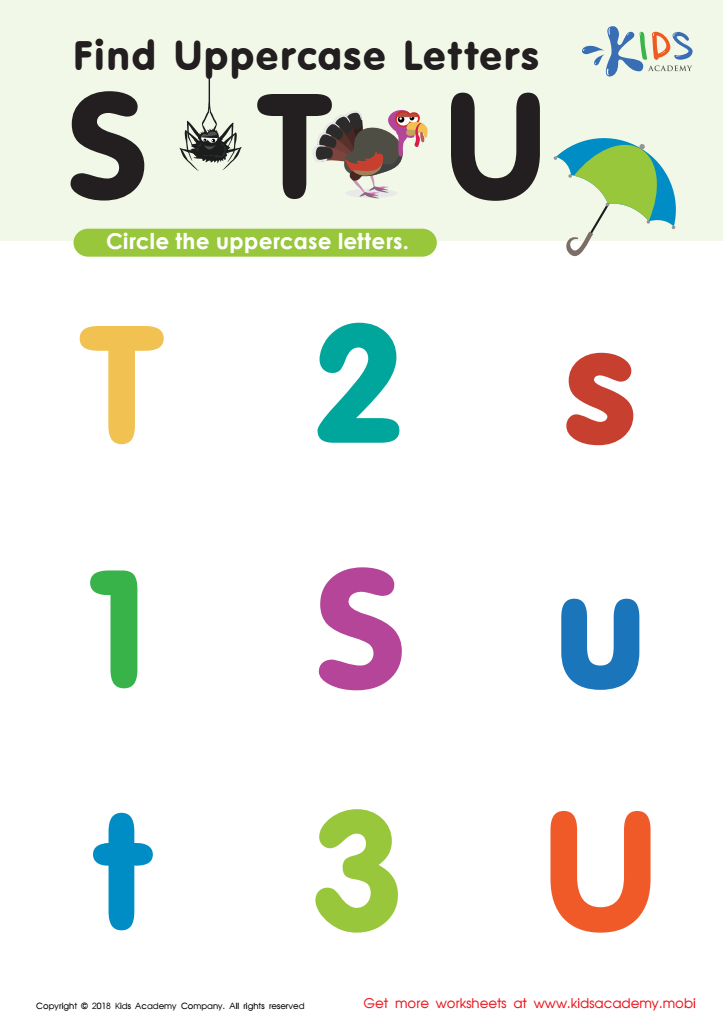
Find Uppercase Letters Worksheet
 Assign to My Students
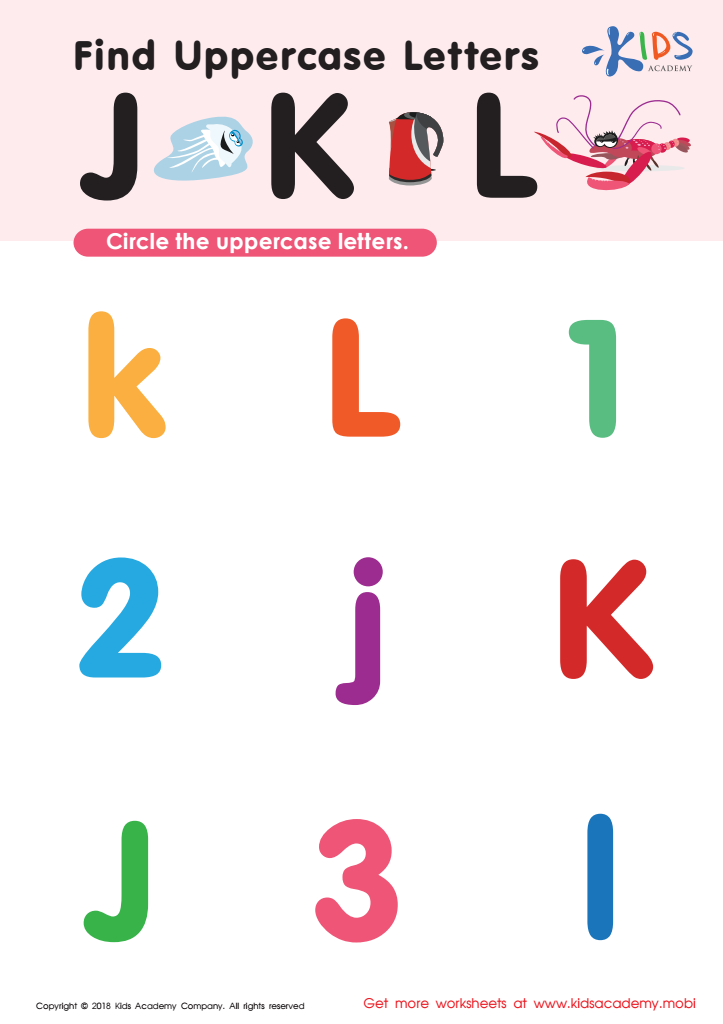
Find Uppercase Letters J, K, and L Worksheet

Find Uppercase Letters A, B, and C Worksheet
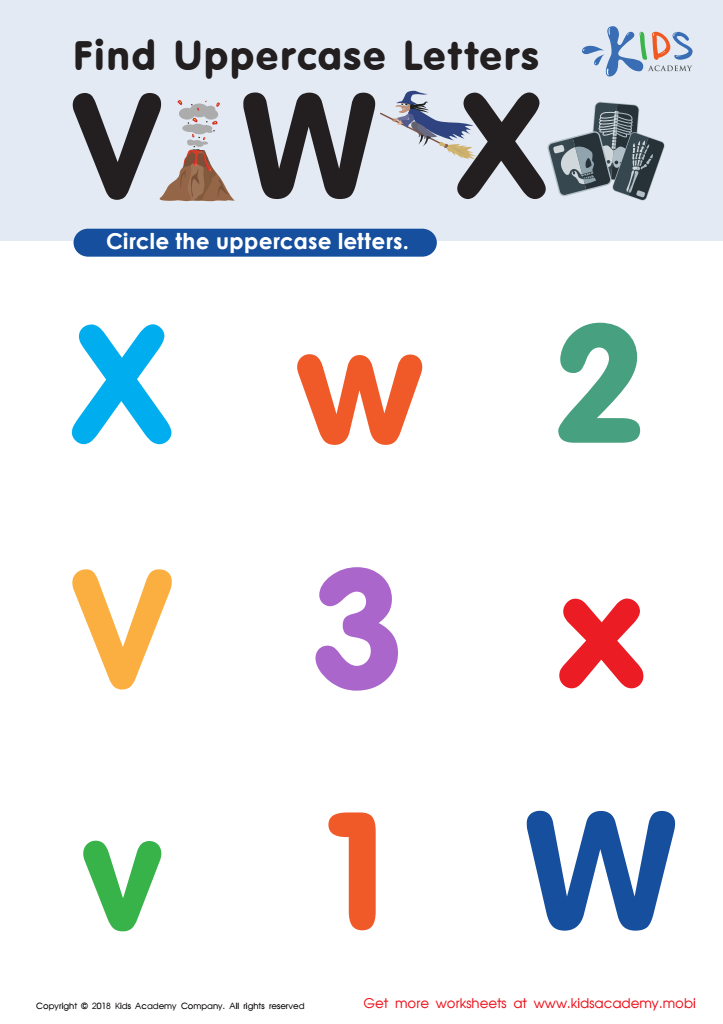
Find Uppercase Letters V, W, X Worksheet
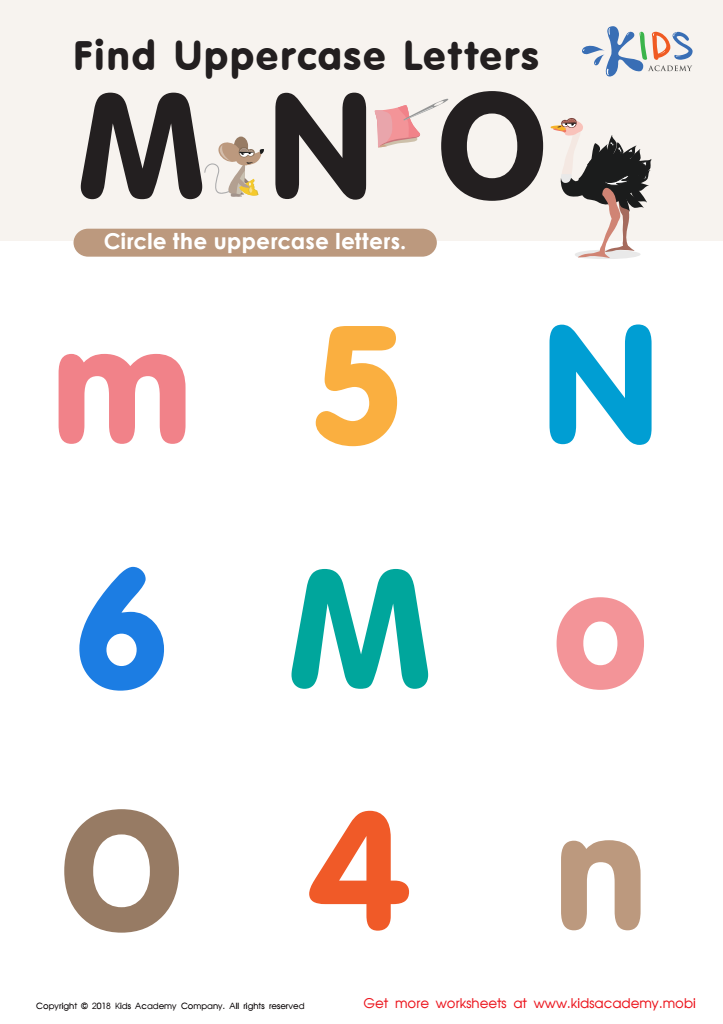
Find Uppercase Letters M, N, and O Worksheet






Uppercase letter identification is crucial for five-year-olds as it serves as a foundational skill in early literacy development. At this age, children are typically beginning to learn the alphabet, and recognizing uppercase letters is a significant milestone. By mastering uppercase identification, children can more easily connect the letters they see to sounds and words, facilitating their reading skills.
Moreover, uppercase letters are frequently used in various contexts—such as the beginning of sentences, names, and important signs—making this knowledge practical for daily life. Understanding these letters fosters vocabulary growth, enhances writing skills, and boosts confidence in language use.
For teachers and parents, fostering uppercase letter recognition can guide future reading acumen. It provides a stepping stone to more advanced language skills, which are critical as children progress through school. Additionally, engaging with uppercase letters can create enjoyable learning moments. This can encourage children to participate in activities, such as storytelling or games involving letters, thereby nurturing a love for reading. Ultimately, recognizing uppercase letters enhances a child's readiness for first grade and sets the tone for ongoing academic success.








