Shape identification Normal 2D Shapes Worksheets for 5-Year-Olds
4 filtered results
-
From - To
Enhance your child's learning with our engaging Shape Identification Normal 2D Shapes Worksheets, designed specifically for 5-year-olds. These worksheets introduce young learners to basic geometric shapes, fostering crucial early math skills in a fun and interactive way. Through captivating visuals and simple exercises, children in pre-K and kindergarten will explore circles, squares, triangles, and more, while developing their ability to recognize and identify shapes in their environment. Ideal for home or classroom use, these resources support visual learning and encourage creativity. Start your child's journey into the world of shapes today, making learning both enjoyable and effective!
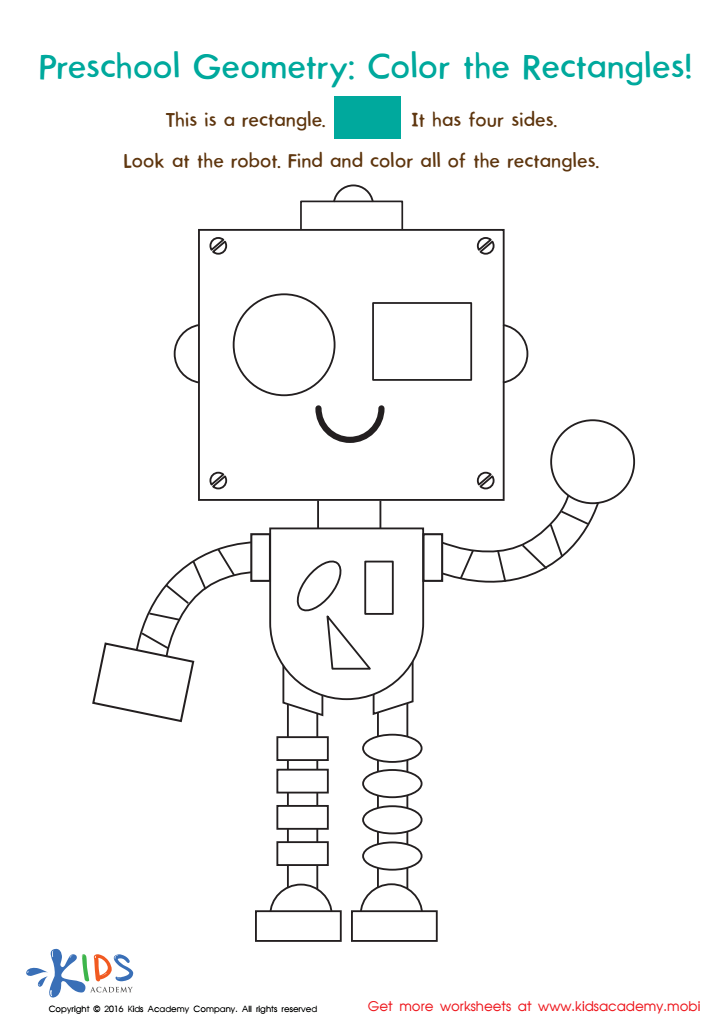
Geometry Worksheet
 Assign to My Students


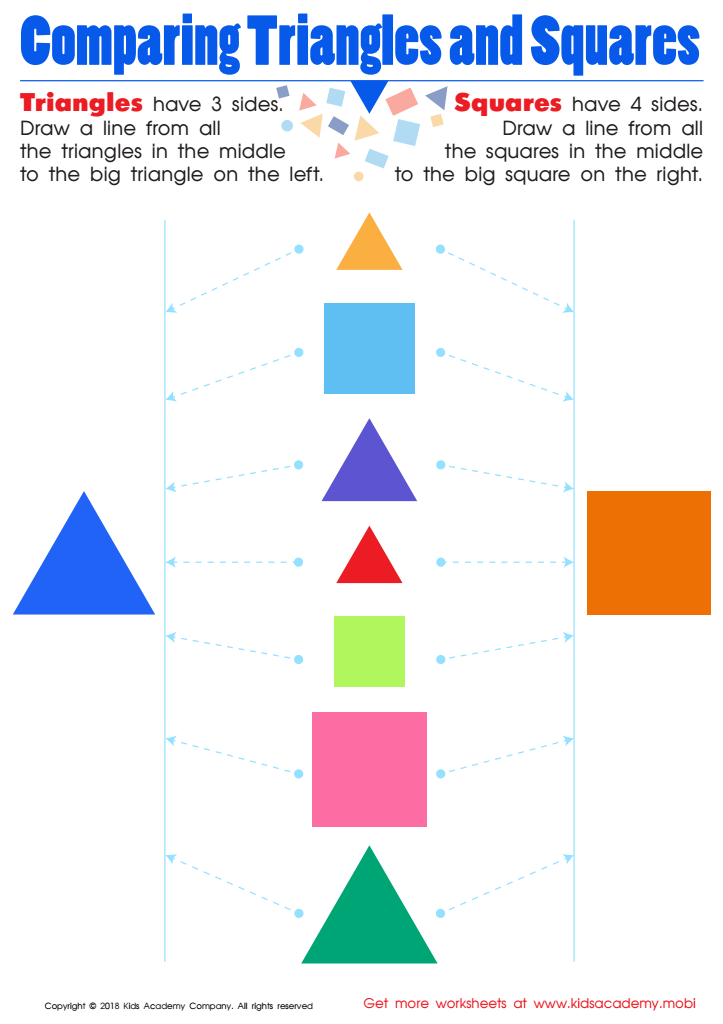
Comparing Triangles Squares Worksheet
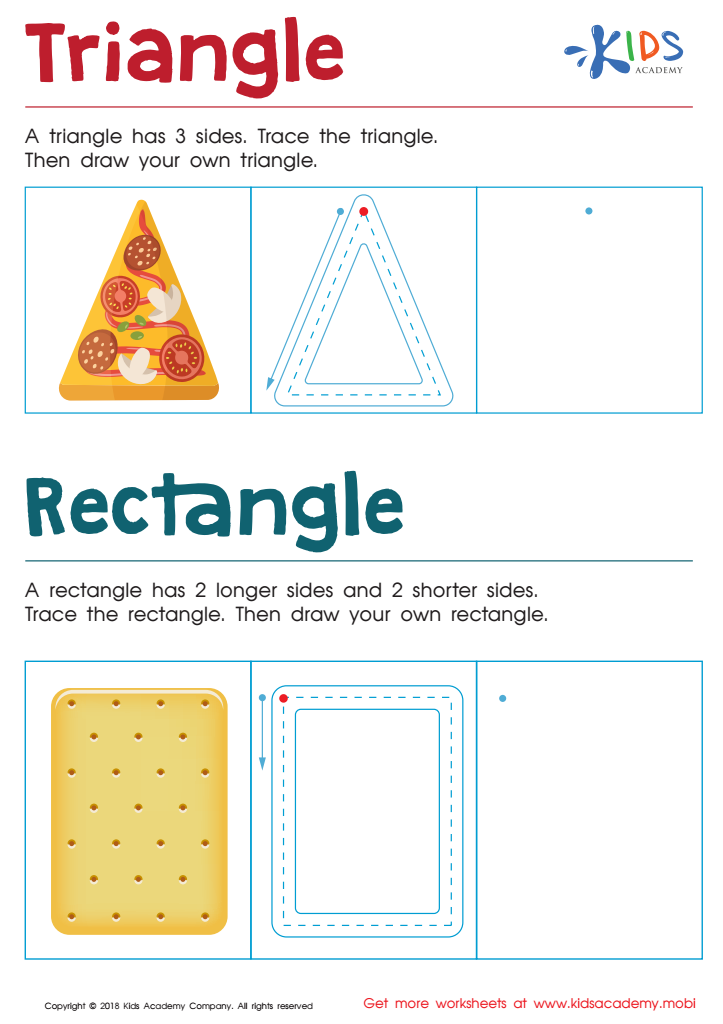
Triangle Rectangle Worksheet
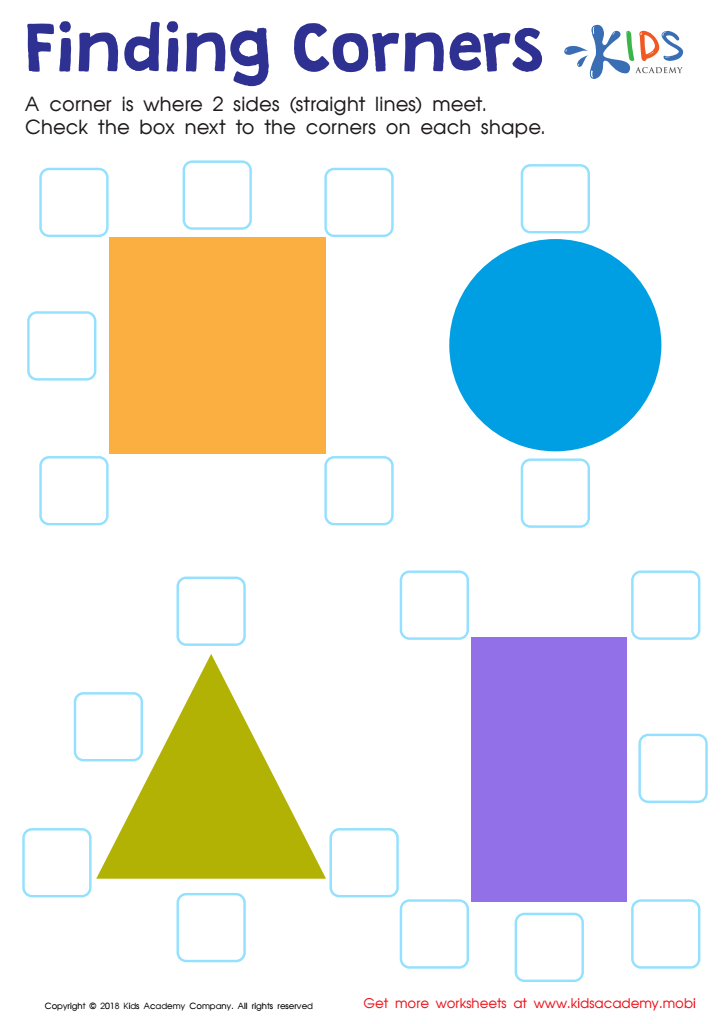
Finding Corners Worksheet








Shape identification is a fundamental aspect of early childhood education that plays a crucial role in a child's cognitive development. For 5-year-olds, understanding normal 2D shapes—such as circles, squares, triangles, and rectangles—builds a strong foundation for multiple skills. Firstly, shape recognition enhances mathematical abilities. It lays the groundwork for geometry, spatial awareness, and problem-solving as children begin to see relationships between different shapes and objects.
Additionally, identifying shapes fosters observational skills and critical thinking. When children learn to differentiate between various shapes, they develop an understanding of their properties, such as sides, angles, and symmetry, which can translate into stronger analytical skills later in life. Furthermore, shape identification is vital in enhancing language development. When parents and teachers engage children in conversations about shapes, they expand vocabulary and encourage communication skills, which are essential for literacy.
Incorporating shape identification into everyday activities, like playing with blocks or drawing, promotes active learning through play. This hands-on approach captivates children's attention, making education enjoyable. Ultimately, when parents and teachers prioritize shape identification, they equip children with essential skills that will benefit their academic journey and day-to-day interactions in the world around them.