Addition skills Normal Addition & Subtraction Worksheets for 5-Year-Olds
6 filtered results
-
From - To
Enhance your 5-year-old's math abilities with our engaging Addition and Subtraction Worksheets. Specifically designed for young learners, these colorful worksheets help develop essential math skills in a fun and interactive way. Children will practice basic addition and subtraction, improving their numerical fluency and problem-solving techniques. Each worksheet is structured to build confidence while making learning enjoyable. Perfect for at-home practice or supplementary classroom activity, our resources support early learners by laying a strong foundation in math. Join now and help your child excel in their first steps of mathematical discovery!
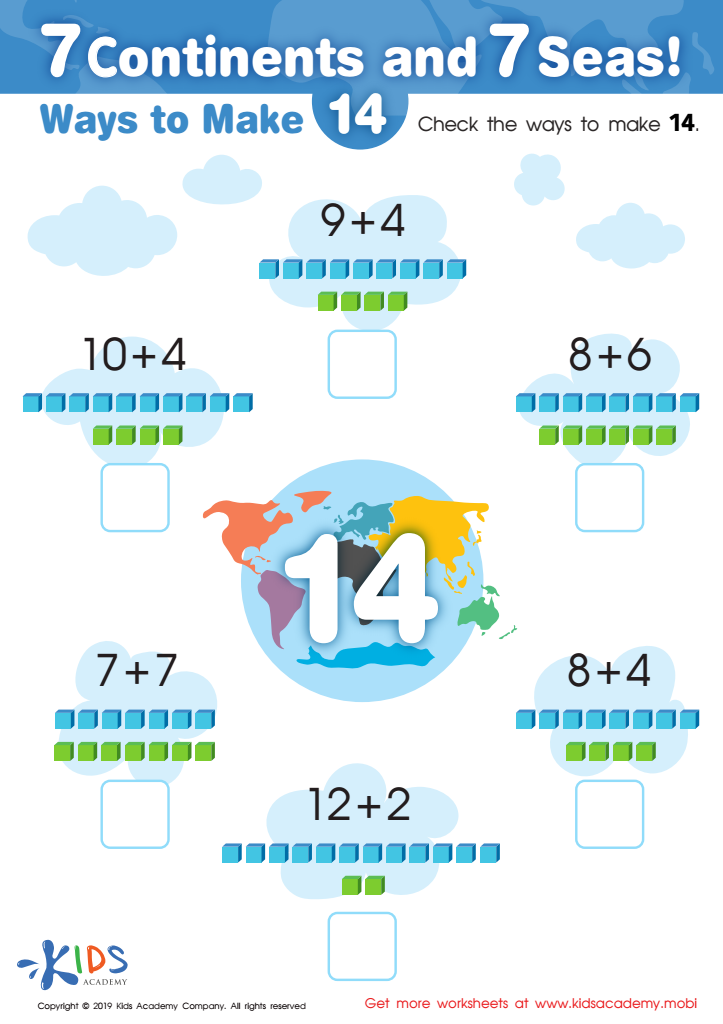
7 Continents and 7 Seas Worksheet
 Assign to My Students
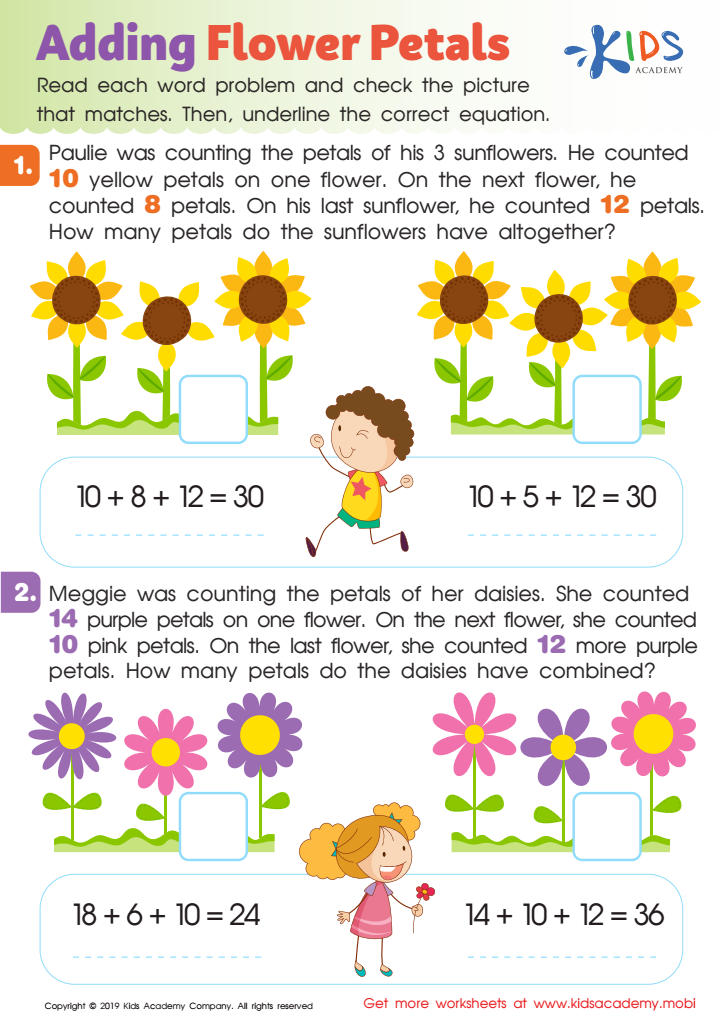
Adding Flower Petals Worksheet
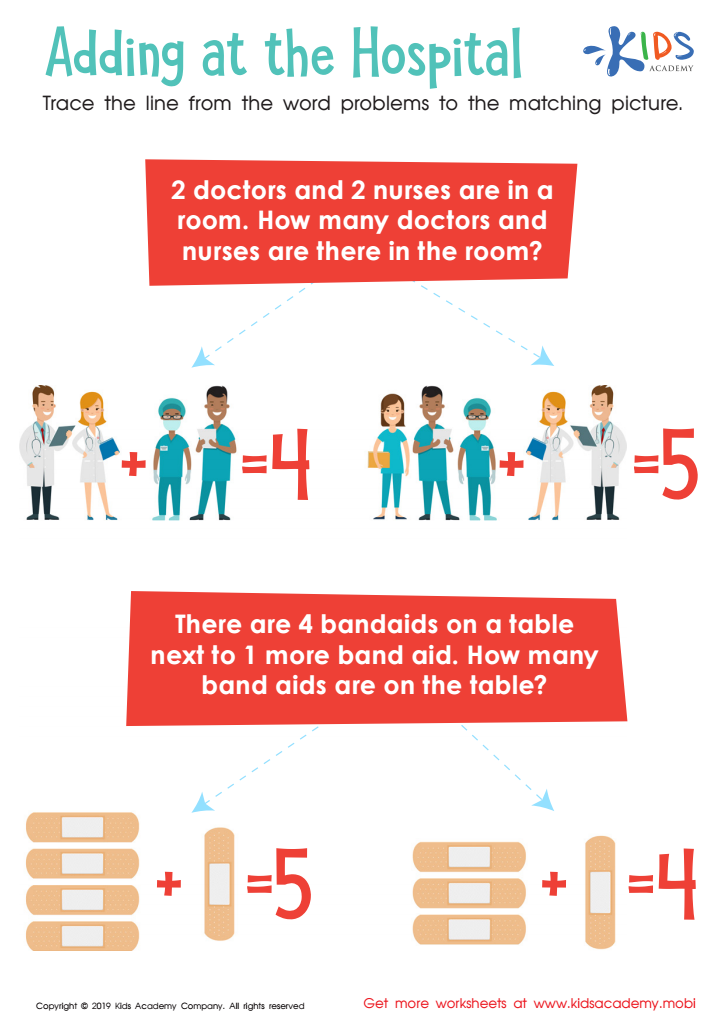
Adding at the Hospital Worksheet
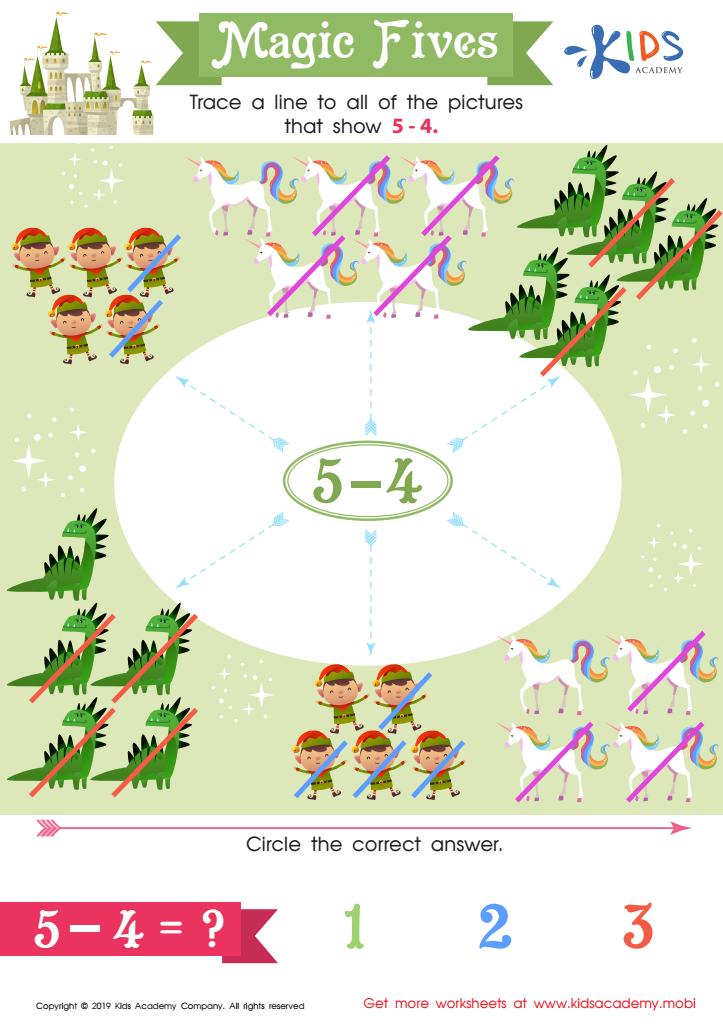
Magic Fives Worksheet
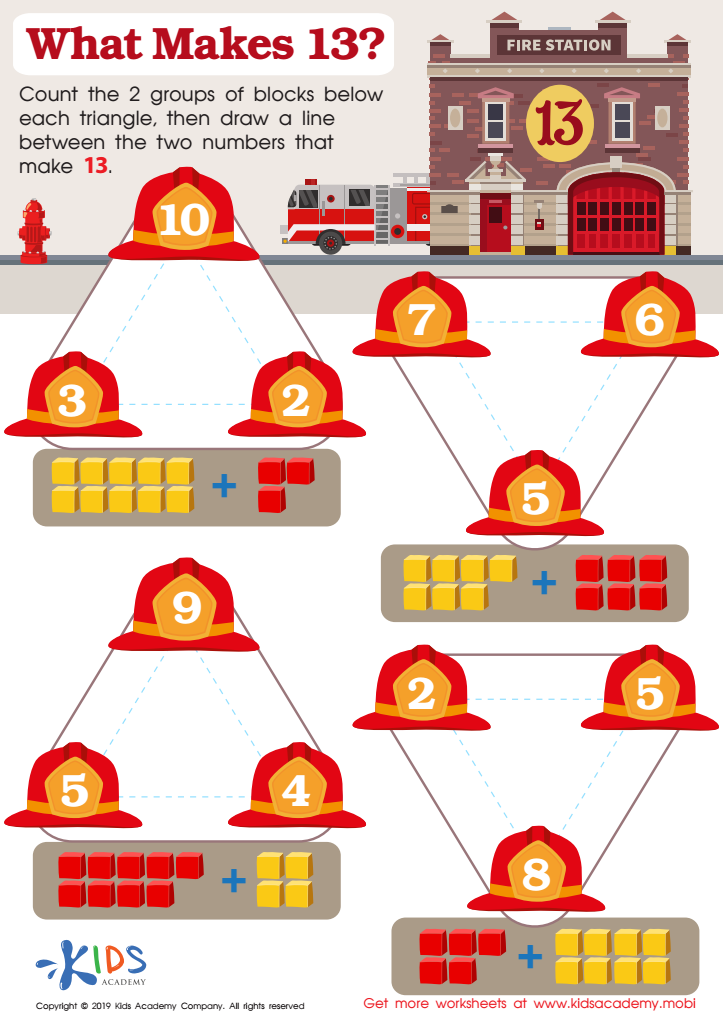
What Makes 13 Worksheet
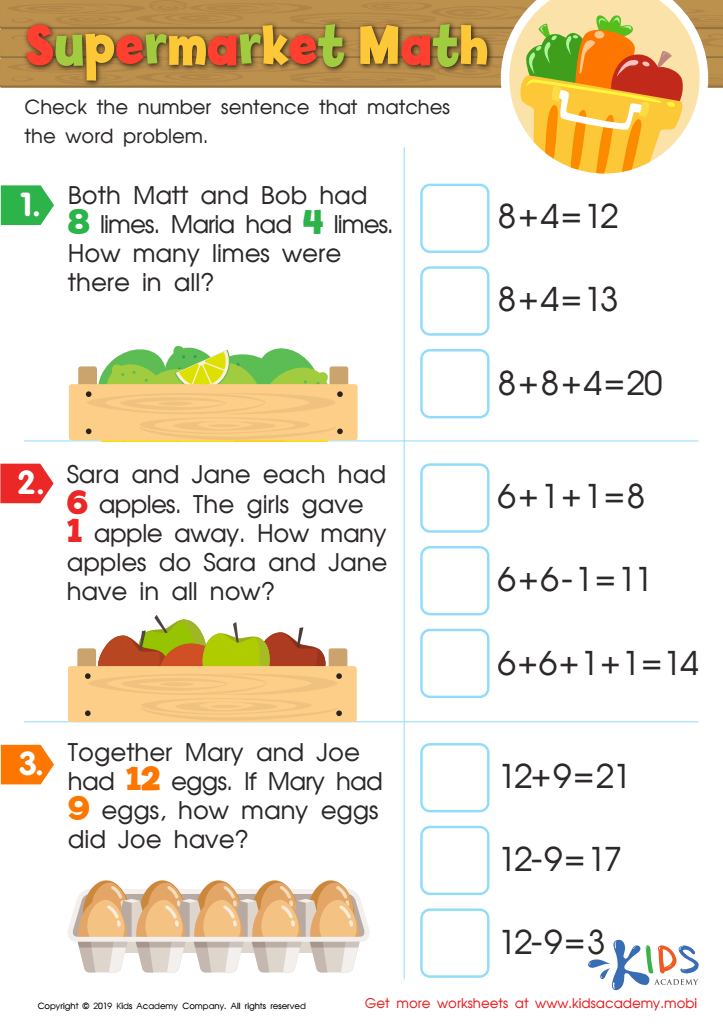
Supermarket Math Worksheet








Parents and teachers should care about teaching addition and subtraction skills to 5-year-olds because these foundational mathematical concepts form the bedrock for future academic success and daily problem-solving. At this developmental stage, young learners are naturally curious and absorb information rapidly. Introducing basic math skills early harnesses their inquisitiveness and lays a strong groundwork for more complex mathematical concepts, such as multiplication and division, that they will encounter in later grades.
Mastering normal addition and subtraction also enhances cognitive development. These operations involve skills like counting, number recognition, and understanding numerical relationships, which are crucial for brain growth. Furthermore, early math skills are linked to improved logical thinking and decision-making abilities. When children learn to manipulate numbers, they also improve their ability to follow multi-step instructions and develop stronger analytical capabilities.
Finally, proficiency in basic math fosters confidence and independence in children. Simple activities, like counting out change or sharing toys evenly, become more manageable as they grasp these essential concepts. Whether for academic advancement or daily life skills, a solid understanding of addition and subtraction empowers children, preparing them for future academic achievements and real-world tasks. Therefore, investing time and effort into developing these skills is invaluable for both parents and educators.








