Mathematical reasoning Normal Addition & Subtraction Worksheets for 5-Year-Olds
6 filtered results
-
From - To
Engage your young learner's critical thinking with our "Mathematical Reasoning Normal Addition & Subtraction Worksheets for 5-Year-Olds." Developed to align with early learning standards, these worksheets provide a fun and interactive way for preschoolers to grasp foundational math concepts. Featuring colorful visuals, simple problems, and engaging scenarios, each worksheet aims to enhance mathematical reasoning and problem-solving skills. From counting objects to basic addition and subtraction, our worksheets make learning math a delightful and rewarding experience. Boost your child's confidence and love for math with our expertly designed materials. Start building a strong mathematical foundation today!
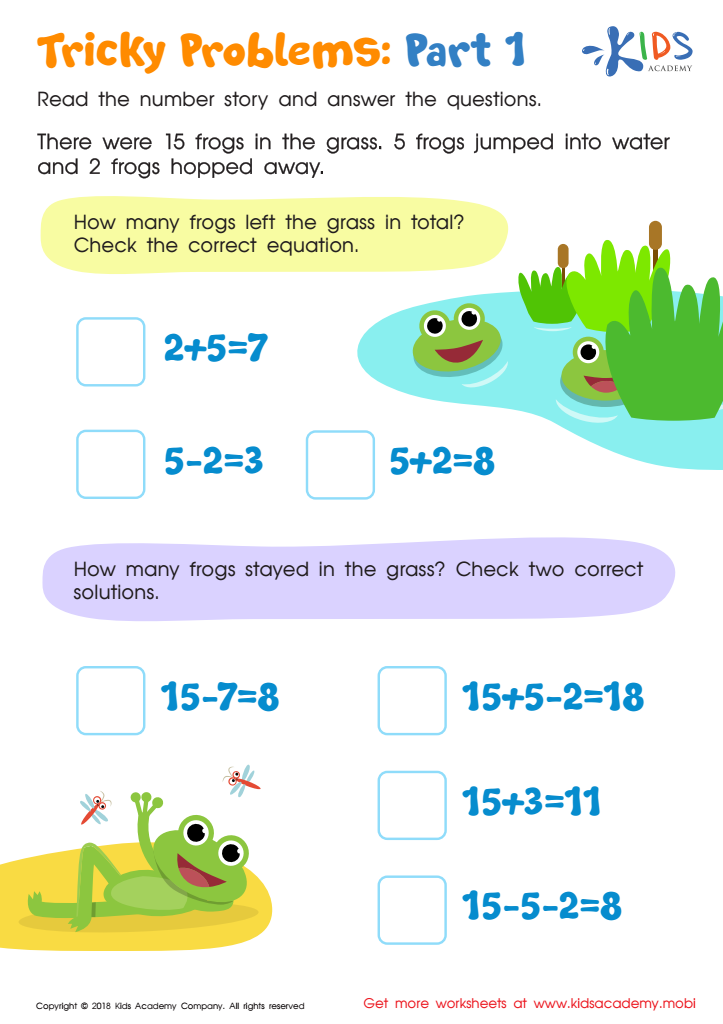
Tricky Problems Worksheet: Part 1
 Assign to My Students
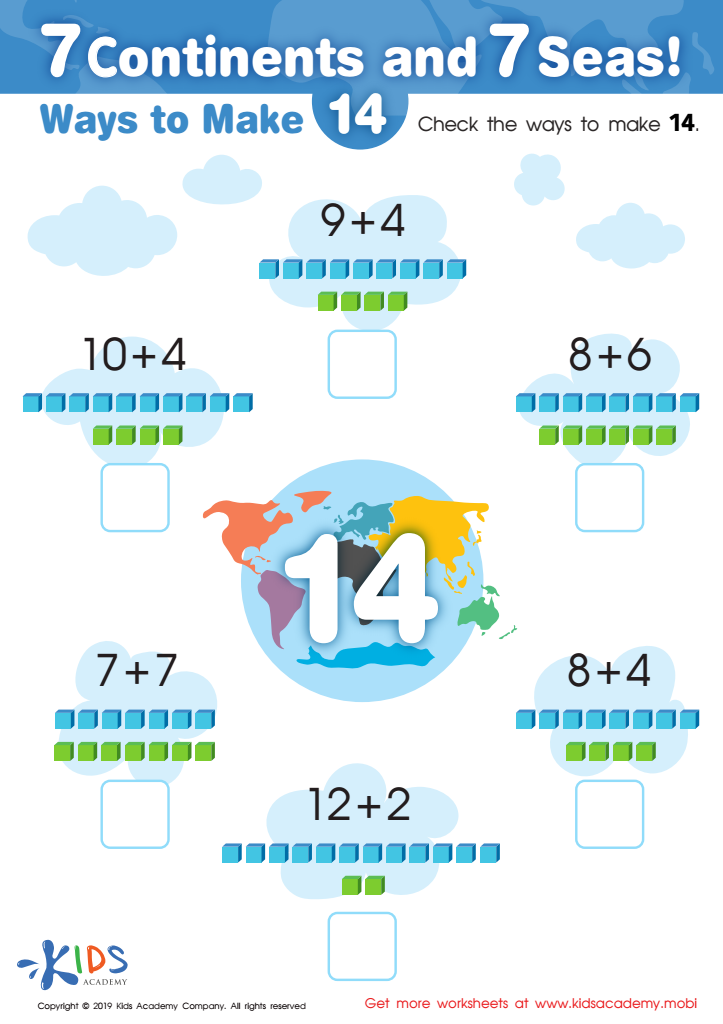
7 Continents and 7 Seas Worksheet
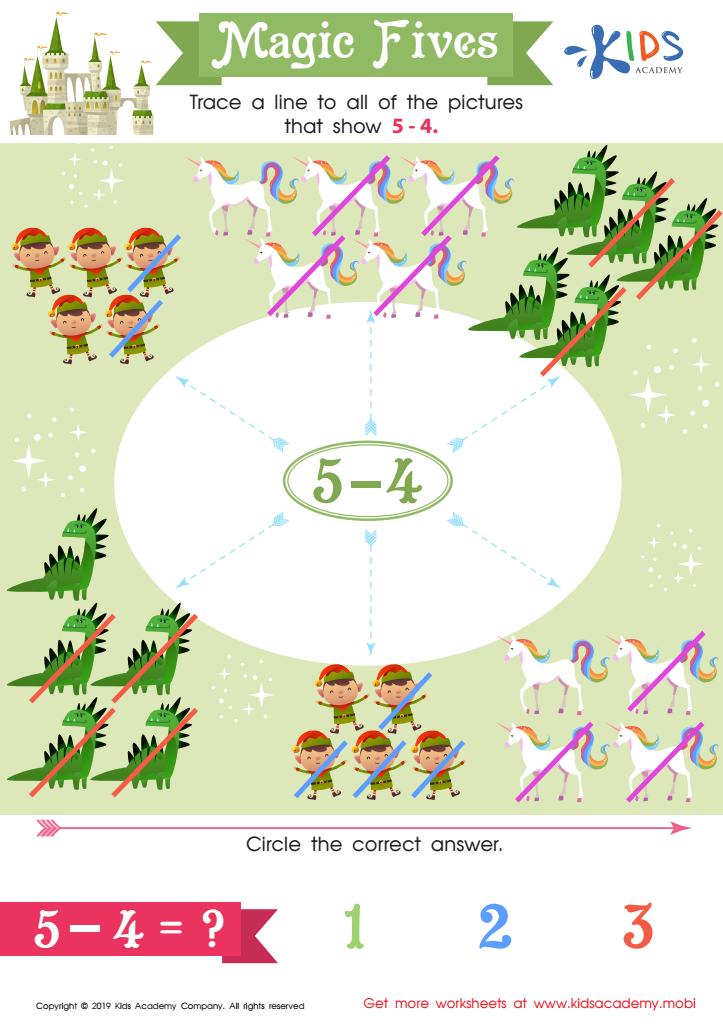
Magic Fives Worksheet
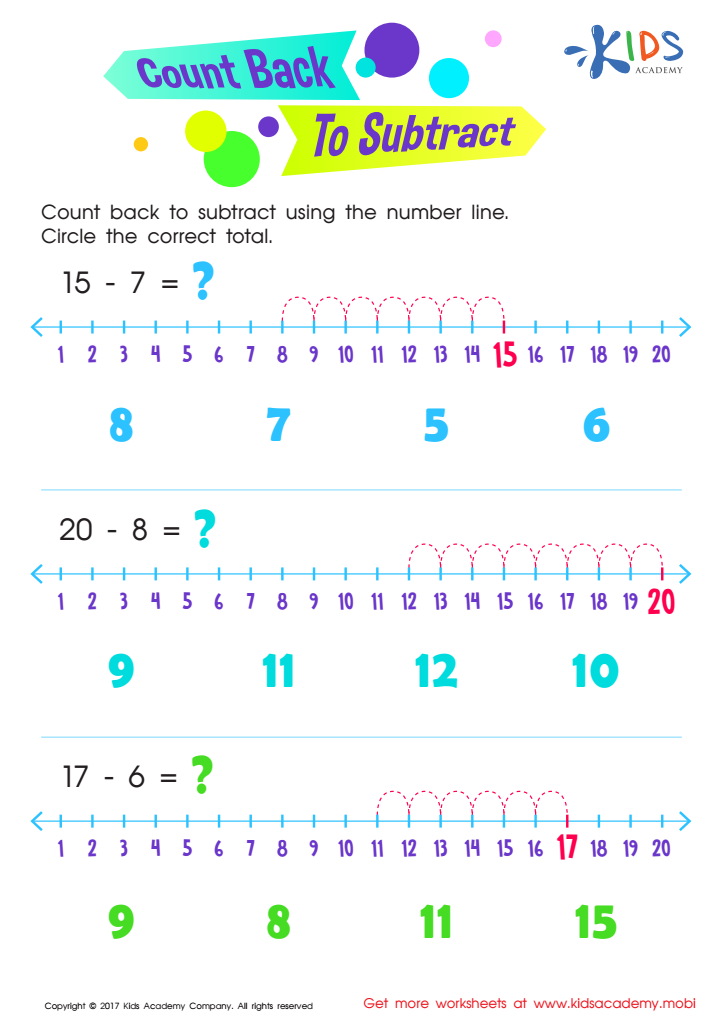
Count Back to Subtract Substraction Worksheet
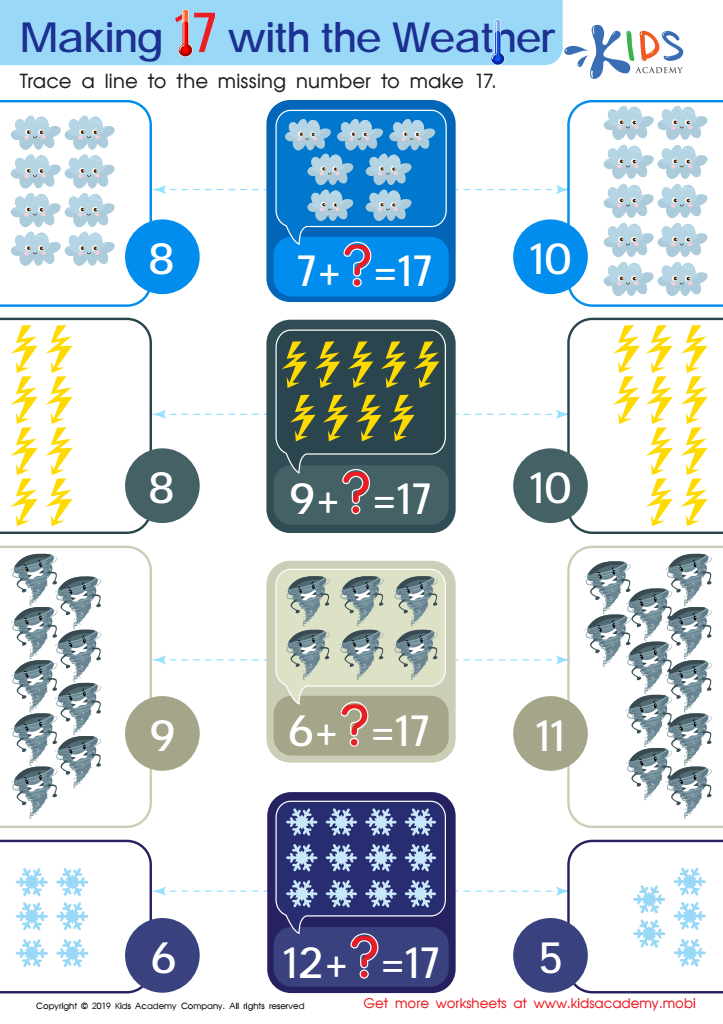
Making 17 with the Weather Worksheet
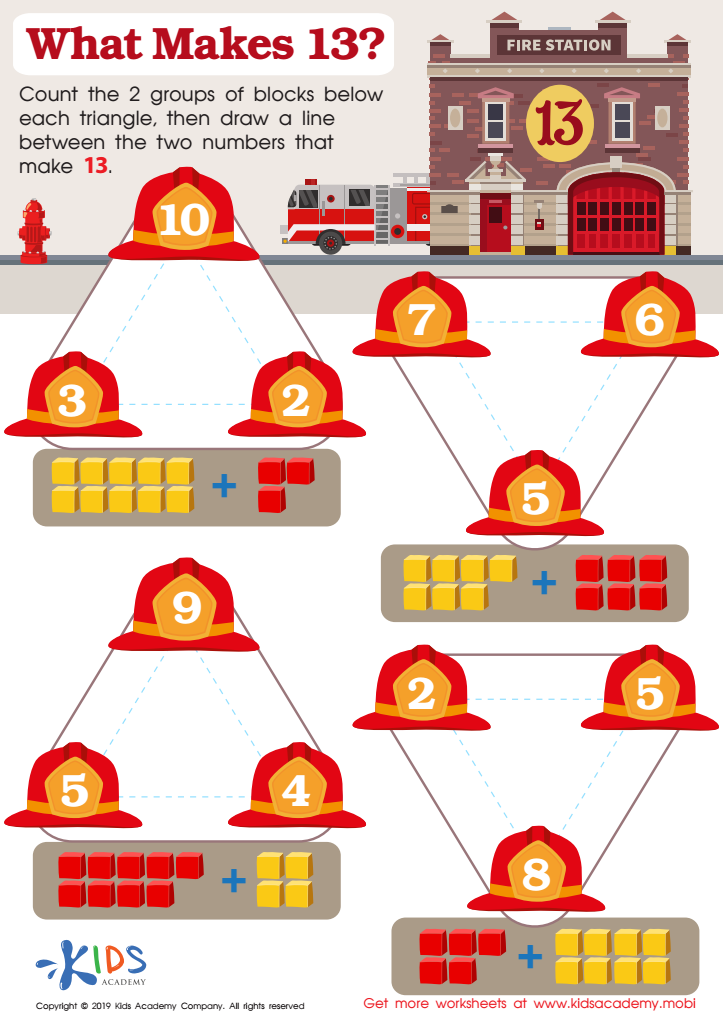
What Makes 13 Worksheet








Mathematical reasoning, specifically the ability to understand and perform basic addition and subtraction, is crucial for the cognitive development of 5-year-olds. Early engagement with these concepts forms a foundational cornerstone for more complex mathematical learning and problem-solving skills in the future. Parents and teachers should prioritize this aspect of education due to its wide-ranging benefits.
Firstly, mastering addition and subtraction fosters a child’s analytical thinking and logical reasoning abilities. These operations require children to recognize patterns, sequences, and numerical relationships, which are essential for understanding advanced mathematical concepts later on. Building a solid base in these fundamental skills can also boost a child’s confidence, reducing math anxiety and promoting a positive attitude towards the subject.
Secondly, early exposure to mathematical reasoning enhances overall cognitive development. It improves memory, attention, and the ability to follow multi-step processes, which are skills transferable to other academic areas such as reading comprehension and science.
Moreover, math skills are closely linked to everyday problem-solving. By understanding basic addition and subtraction, children start to grasp the concepts of quantity, measurements, and time, enabling them to make sense of their world. Such practical applications underscore the importance of caring about and supporting the development of basic mathematical reasoning in young children.








