Problem Solving Normal Addition & Subtraction Worksheets for 5-Year-Olds
3 filtered results
-
From - To
Enhance your 5-year-old's mathematical skills with our engaging Problem Solving Normal Addition and Subtraction Worksheets! Designed specifically for young learners, these worksheets provide an interactive way to tackle basic arithmetic through real-world scenarios. Each worksheet combines fun illustrations with simple problems, fostering critical thinking and problem-solving abilities. Perfect for at-home practice or classroom activities, our resources empower children to master addition and subtraction while building confidence. Watch as they develop essential math skills and learn to connect numbers to everyday situations. Browse our collection now and inspire your child’s love for math through creative problem-solving!
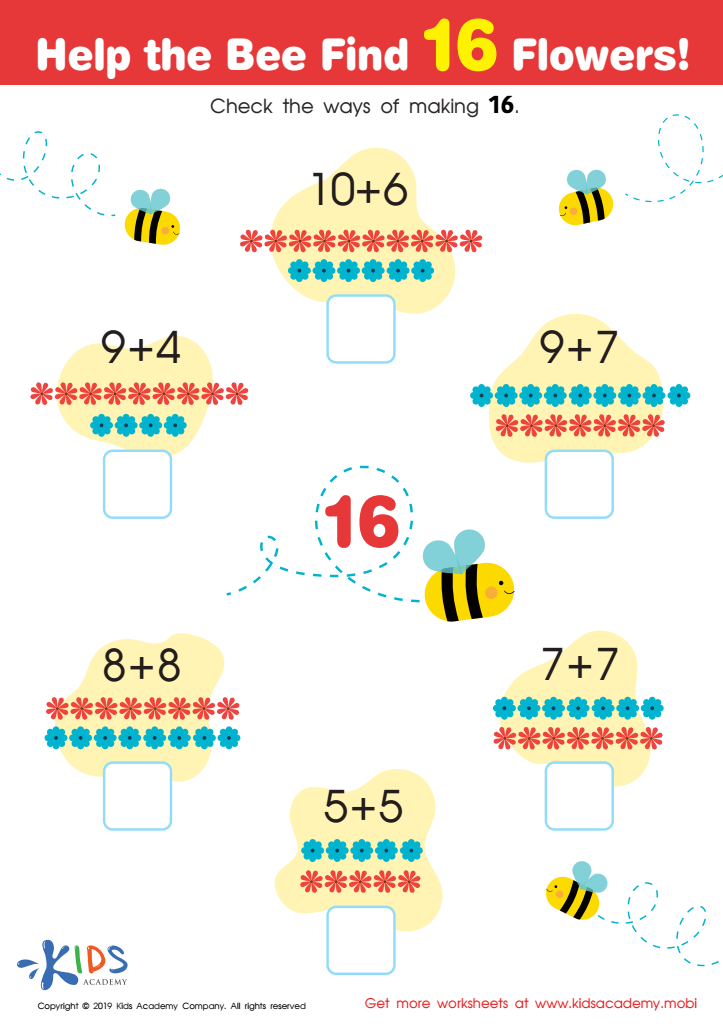
Help the Bee Find 16 Flowers Worksheet
 Assign to My Students
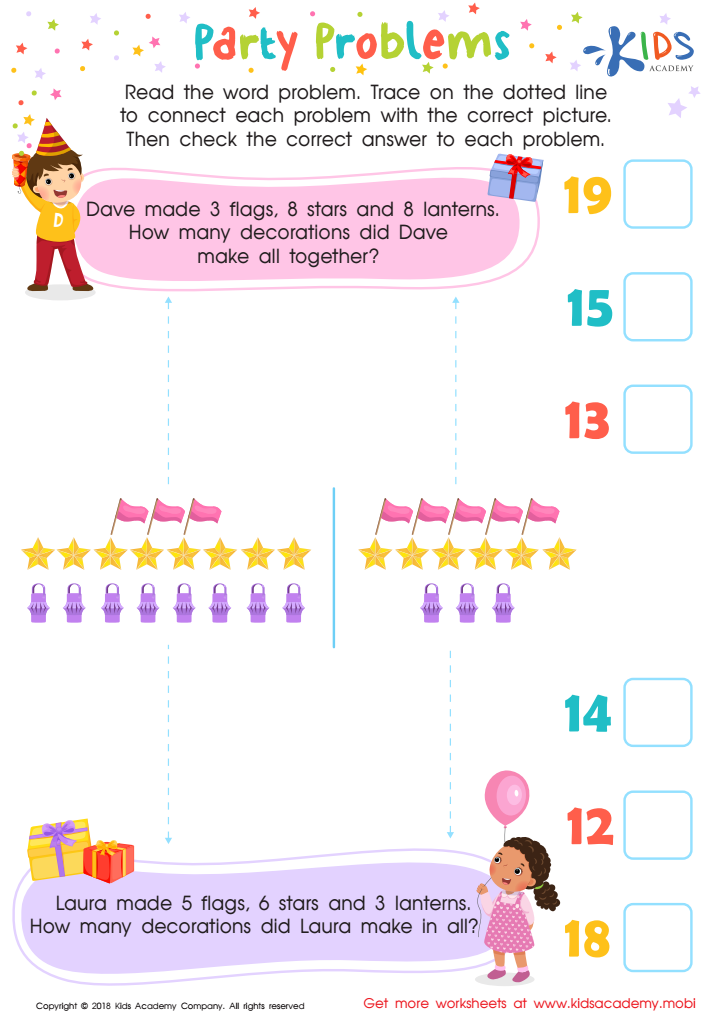
Party Problems Worksheet
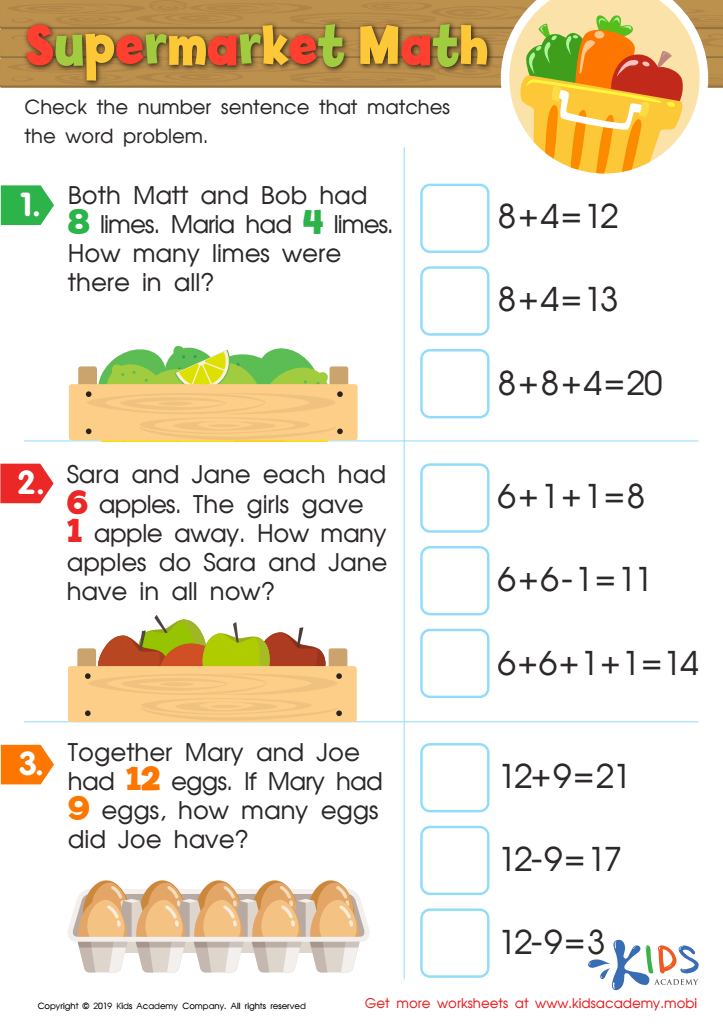
Supermarket Math Worksheet








Problem solving in normal addition and subtraction is essential for 5-year-olds as it lays the groundwork for critical thinking, numeracy skills, and cognitive development. At this age, children are naturally curious and eager to learn. Engaging them in problem-solving activities fosters their ability to think independently and approach challenges methodically.
When parents and teachers emphasize strong foundational math skills, it boosts children's confidence in their abilities. Mastering addition and subtraction through real-world situations, like sharing snacks or counting toys, makes learning meaningful and relatable. It nurtures essential life skills such as decision-making, patience, and perseverance.
Moreover, problem-solving in math promotes language development through discussions about how to arrive at answers. Conversations around strategies and reasoning enhance communication skills and help children articulate their thoughts clearly.
Lastly, today's educational landscape prioritizes STEM (Science, Technology, Engineering, and Math) competencies. By investing time in problem-solving activities now, parents and teachers prepare children for future academic success. Fostering a positive attitude toward math at this formative stage can lead to a lifelong appreciation for the subject, better performance in later grades, and an enhanced ability to navigate a complex world.








