Mental math practice Normal Math Worksheets for 5-Year-Olds
3 filtered results
-
From - To
Boost your child's confidence and numeracy skills with our engaging mental math practice worksheets designed specifically for 5-year-olds. These fun, interactive exercises help young learners build a strong foundation in basic math concepts such as addition and subtraction through colorful and easy-to-understand activities. Each worksheet is tailored to develop mental arithmetic skills while keeping children intrigued and motivated. With our expertly crafted resources, math becomes an enjoyable and rewarding experience. Visit Kid's Academy to kickstart your child's math journey today and witness the positive impact of regular mental math practice on their overall cognitive development.
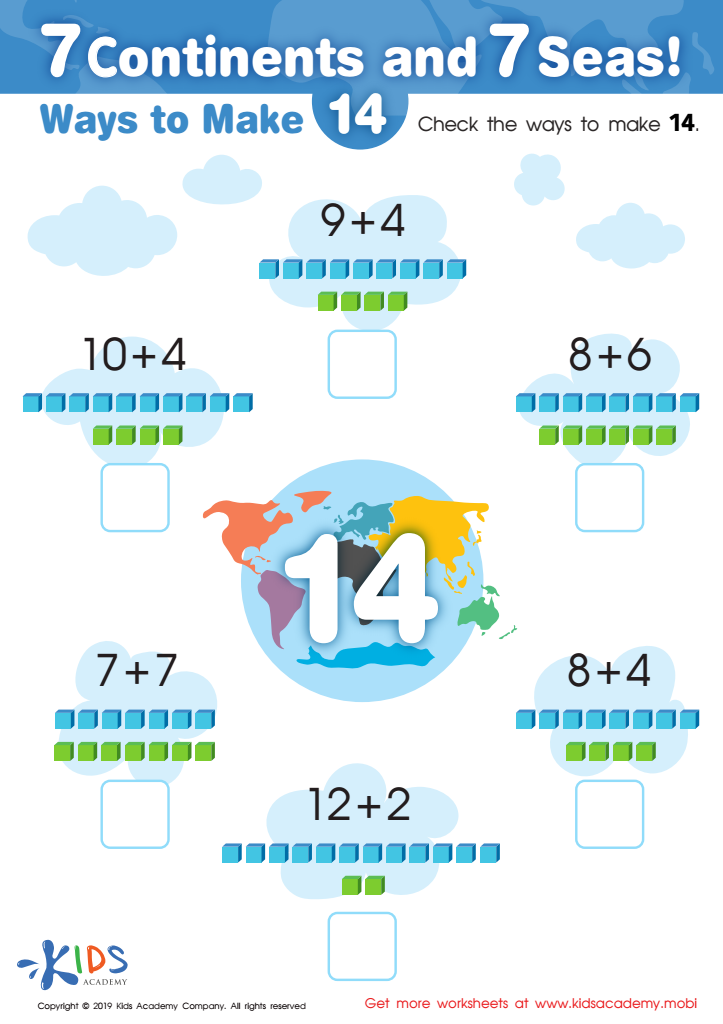
7 Continents and 7 Seas Worksheet
 Assign to My Students
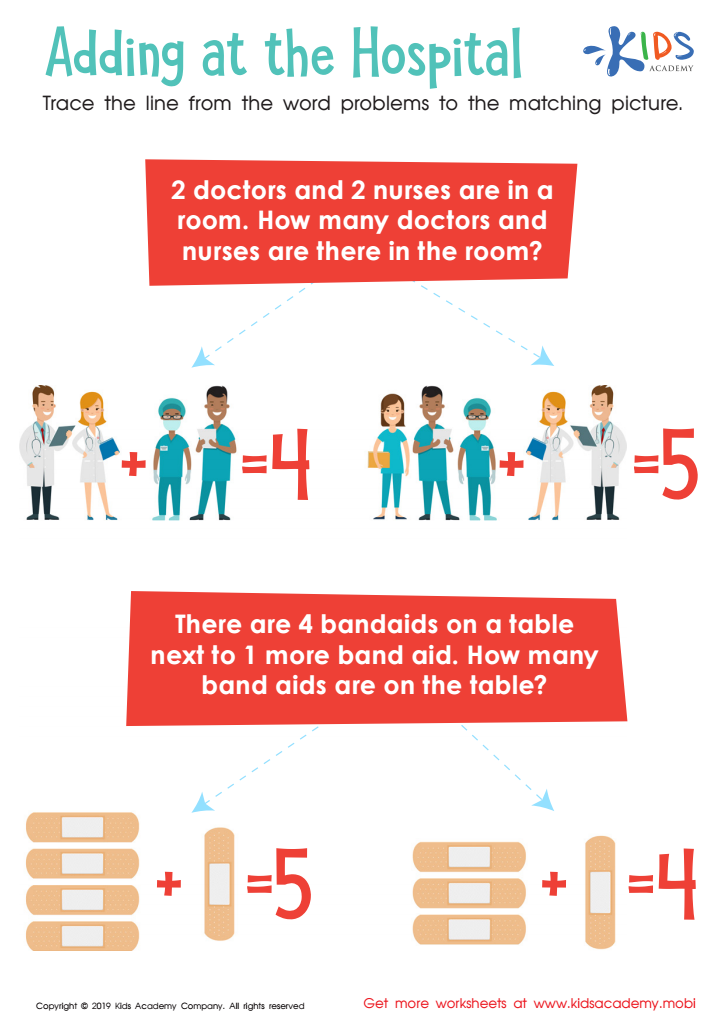
Adding at the Hospital Worksheet
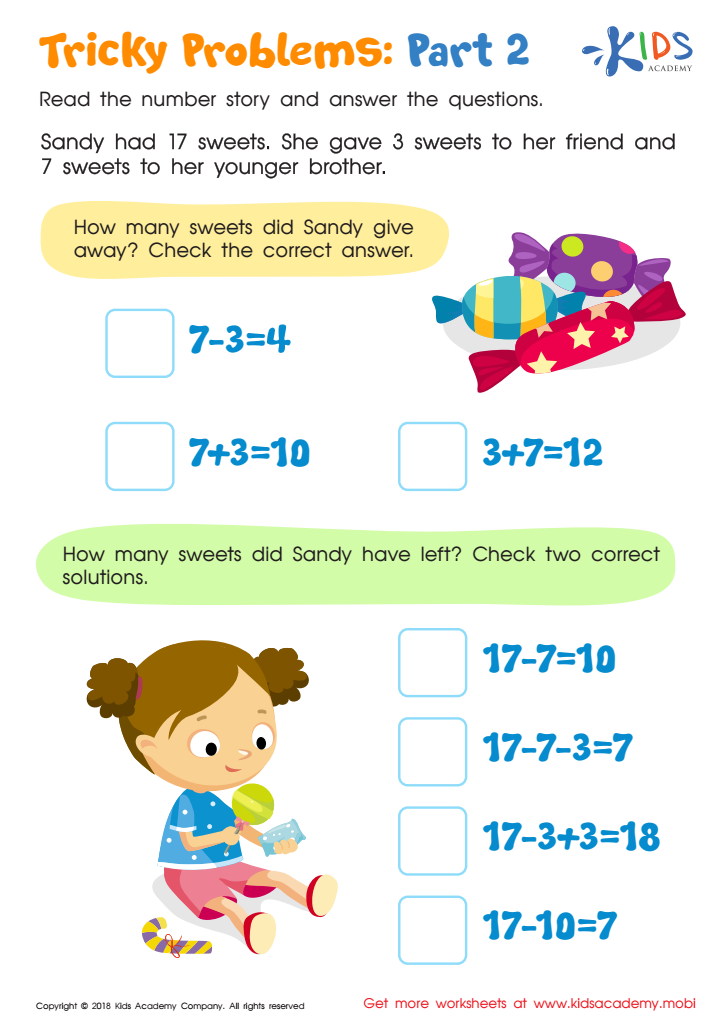
Tricky Problems Worksheet: Part 2








Parents and teachers should prioritize mental math practice for 5-year-olds because it lays the foundation for strong mathematical skills and cognitive development. Mental math encourages children to solve calculations in their minds without relying on external tools, fostering quicker problem-solving abilities and enhancing concentration. This practice helps develop numerical fluency, enabling young learners to understand numbers intuitively and recognize patterns, which are critical for more advanced mathematical concepts later on.
Engaging in mental math also boosts memory retention and improves a child's ability to mentally manipulate numbers, which is vital in everyday situations, such as making change or measuring ingredients. It encourages early learners to think critically, make decisions, and build confidence in their abilities.
Additionally, mental math promotes patience and perseverance. Children learn to tackle challenges methodically and rely on their reasoning capabilities, a skill beneficial across all areas of learning and life. As children advance, this foundation supports their mastery of more complex math topics, effectively easing future academic endeavors.
In essence, incorporating mental math into early education equips children with necessary analytical skills, fostering a positive attitude towards mathematics, reducing math anxiety, and building a stronger basis for lifelong learning and development.








