Visual Perception Skills Normal Math Worksheets for 5-Year-Olds
3 filtered results
-
From - To
Boost your 5-year-old's mathematical abilities with our Visual Perception Skills Normal Math Worksheets, thoughtfully curated to aid in early learning. These engaging worksheets from Kids Academy enhance visual discrimination, pattern recognition, and spatial awareness—all essential for developing foundational math skills. Fun and interactive exercises captivate young minds while reinforcing concepts like shapes, numbers, and sequences. Perfect for home or classroom use, these worksheets ensure a smooth transition into more complex math topics. Foster your child's love for math with our expert-designed resources that make learning both effective and enjoyable. Visit Kids Academy for a bright learning future.
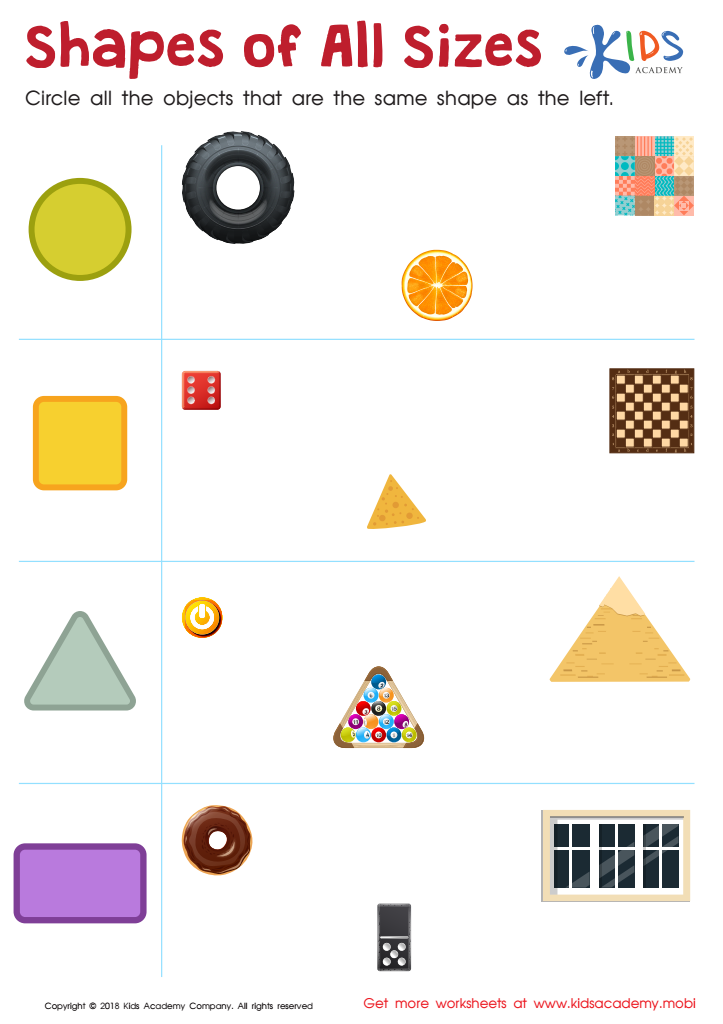
Shapes of All Sizes Worksheet
 Assign to My Students
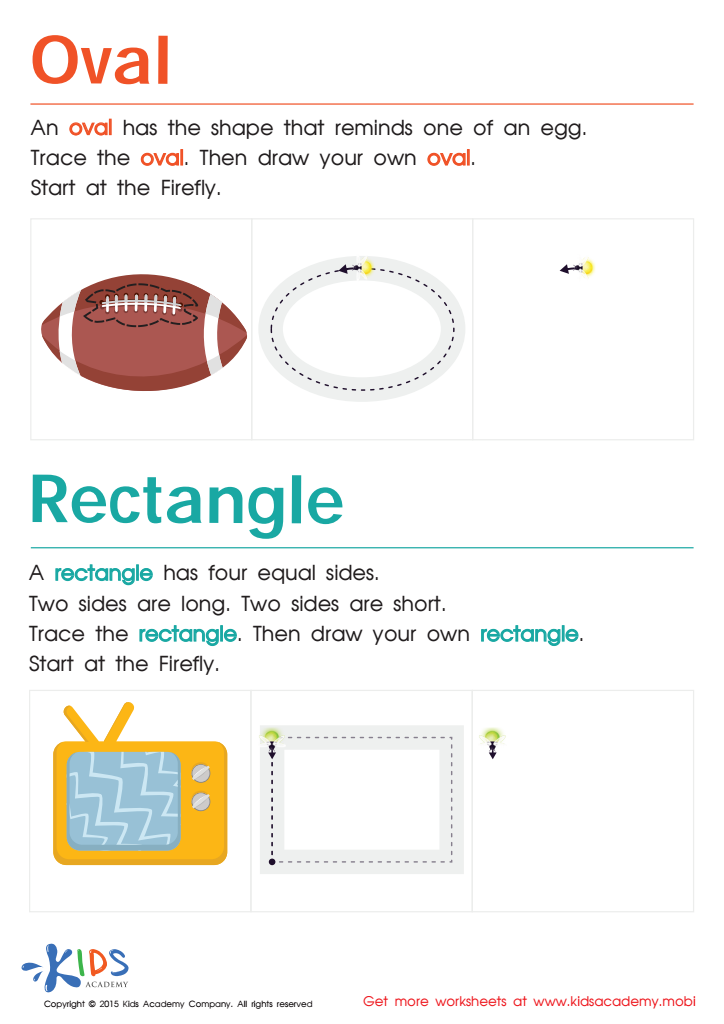
Easy Drawing of Ovals And Rectangles Worksheet
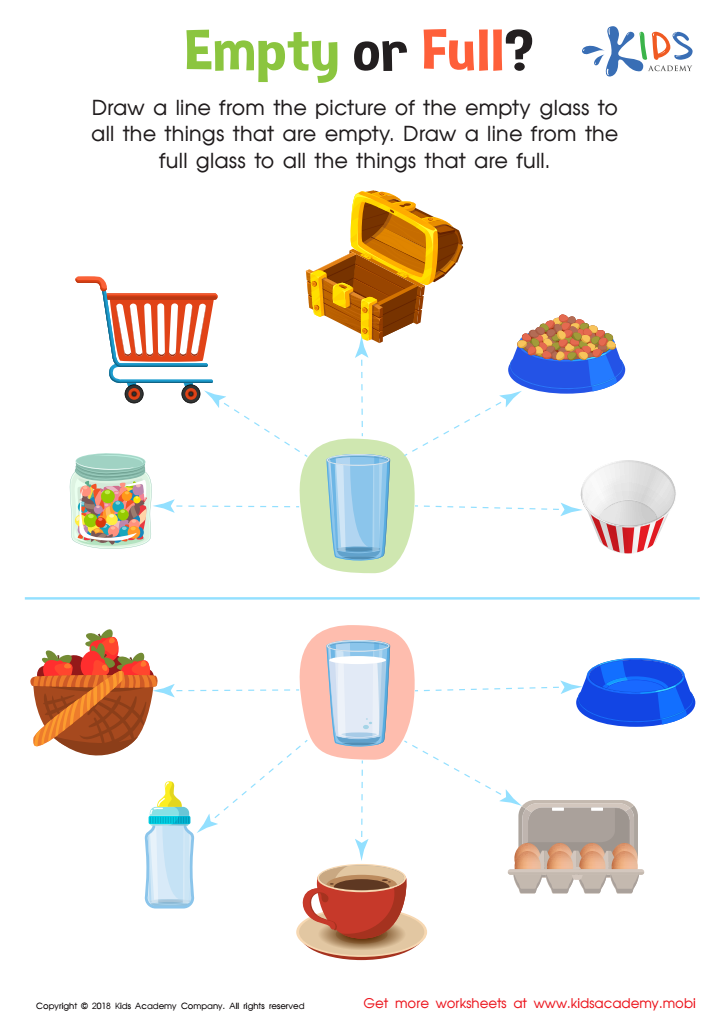
Empty or Full? Worksheet








Visual perception skills are crucial for the development of early math abilities in 5-year-olds, forming a foundational component of their learning journey. These skills enable children to recognize, remember, and interpret visual information, which is essential for understanding mathematical concepts. When children can identify shapes, patterns, and spatial relationships, they can more easily grasp basic math principles such as counting, sorting, and problem-solving.
Parents and teachers should be attentive to the development of visual perception skills because these abilities directly impact a child's readiness for more complex mathematics. For instance, recognizing the difference between numbers that look similar (like 6 and 9) or identifying patterns can help children understand the structure of math operations. Skills such as visual discrimination, spatial awareness, and the ability to perceive object relationships play a role in tasks like placing numbers in sequence or performing simple arithmetic.
Moreover, strong visual perception can enhance a child's overall academic confidence and success, allowing them to engage more fully with the learning materials and activities presented to them. By supporting young learners in developing these skills through playful activities, interactive lessons, and visual aids, parents and teachers can lay a solid foundation for future academic achievement in mathematics and beyond.








