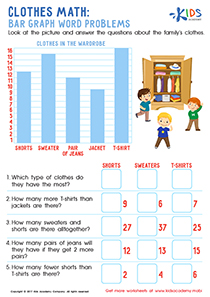
Reading comprehension Normal Two-step Word Problems Worksheets for 5-Year-Olds
3 filtered results
-
From - To
Introduce young learners to the exciting world of problem-solving with our "Reading Comprehension Normal Two-Step Word Problems Worksheets for 5-Year-Olds." These engaging activities help develop essential reading and math skills in one fun-filled package. Children will read simple stories and solve math problems by following clear, age-appropriate steps. Designed to challenge and entertain, our worksheets feature relatable scenarios that capture children's imagination while reinforcing addition, subtraction, and logical thinking. Ideal for kindergarteners eager to strengthen their reading comprehension and mathematical abilities, these worksheets provide a solid foundation for future academic success. Download now and see your child thrive!
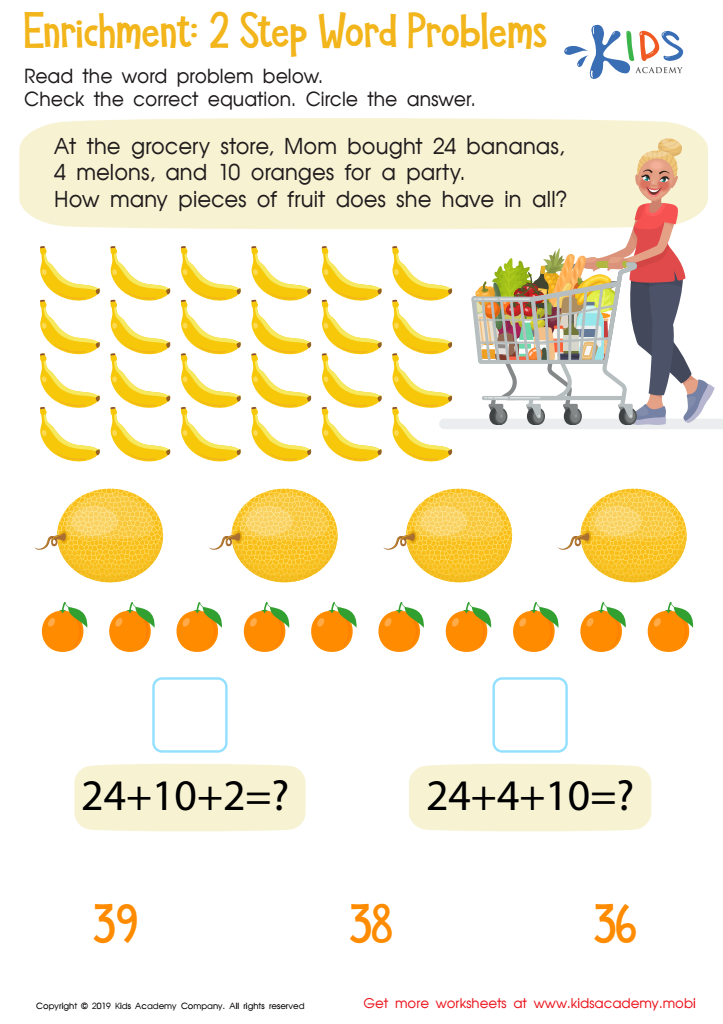
Enrichment -2 Step Word Problems Worksheet
 Assign to My Students
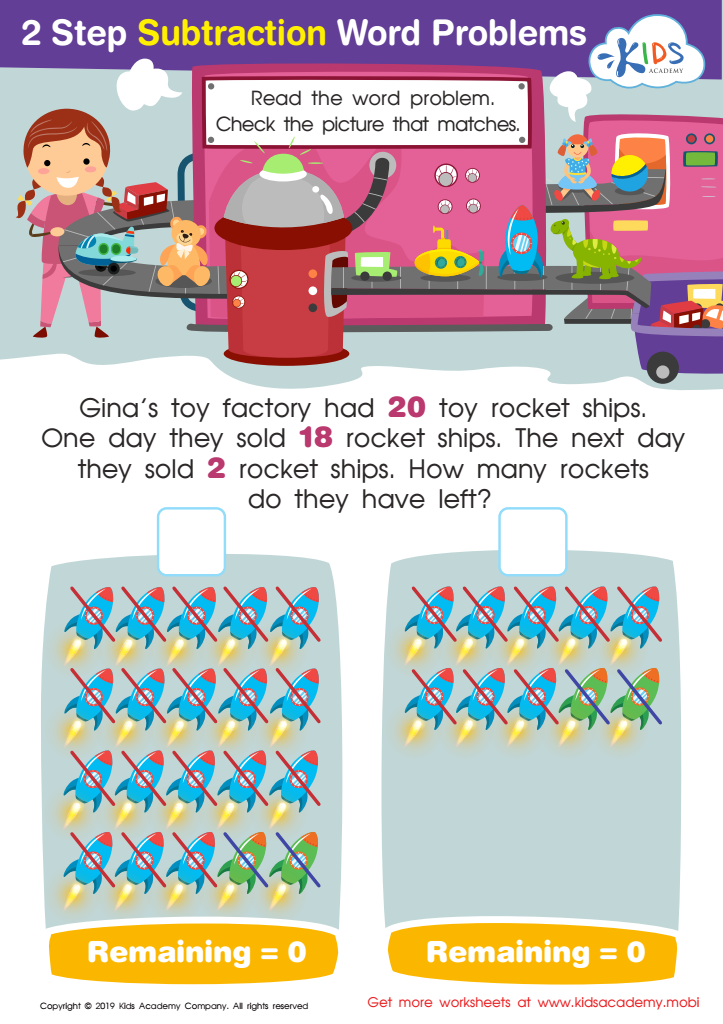
Step Subtraction Word Problems Worksheet
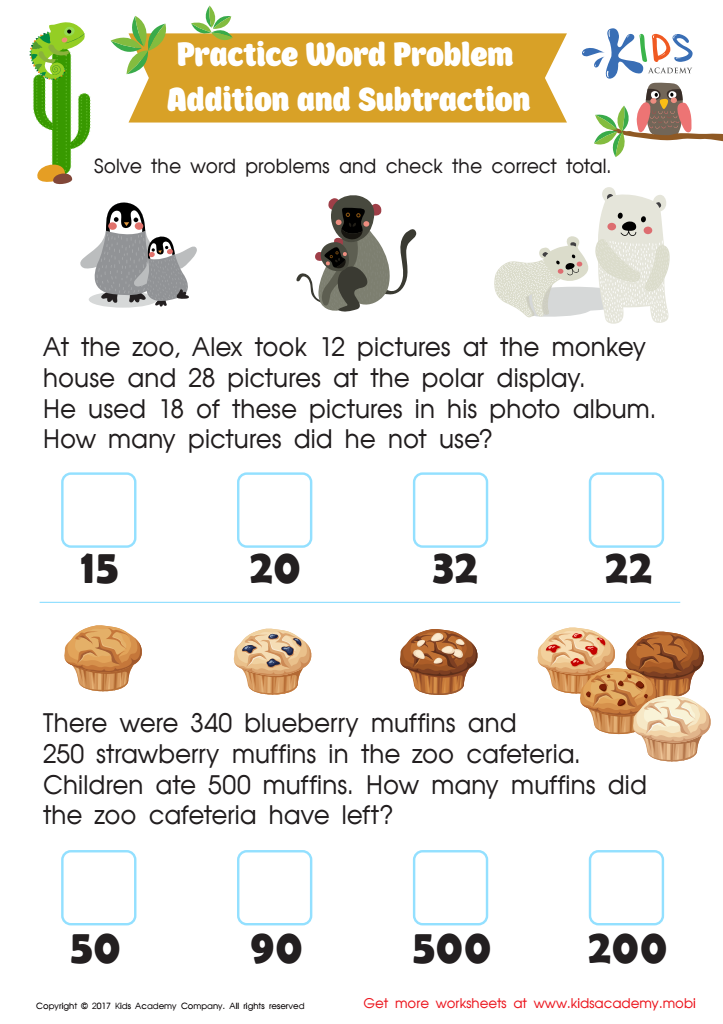
Addition and Subtraction: Word Problems Worksheet



Reading comprehension and grasping two-step word problems at an early age greatly benefit a child's educational development. For parents and teachers, focusing on these skills—particularly in 5-year-olds—is crucial because it lays the groundwork for future academic success.
Reading comprehension is the ability to understand and interpret text, enabling children to grasp essential information, follow instructions, and answer questions accurately. At age five, children are just beginning to learn to decode words and sentences, so introducing them to word problems in a supportive and engaging way enhances their literacy skills significantly.
Two-step word problems further contribute to cognitive development by challenging young minds to go beyond simple, single-step solutions. These problems require children to analyze, reason through sequential steps, and apply basic math operations. This dual focus not only improves mathematical abilities but also strengthens critical thinking and problem-solving skills.
Overall, embedding these skills early pays long-term dividends. Children who master reading comprehension and two-step word problems tend to perform better academically, exhibit stronger analytical abilities, and feel more confident in their learning journey. Therefore, a proactive approach in nurturing these skills provides children the robust intellectual foundation needed for future academic endeavors.