Reading comprehension Normal Reading Fiction Worksheets for 5-Year-Olds - Page 2
27 filtered results
-
From - To
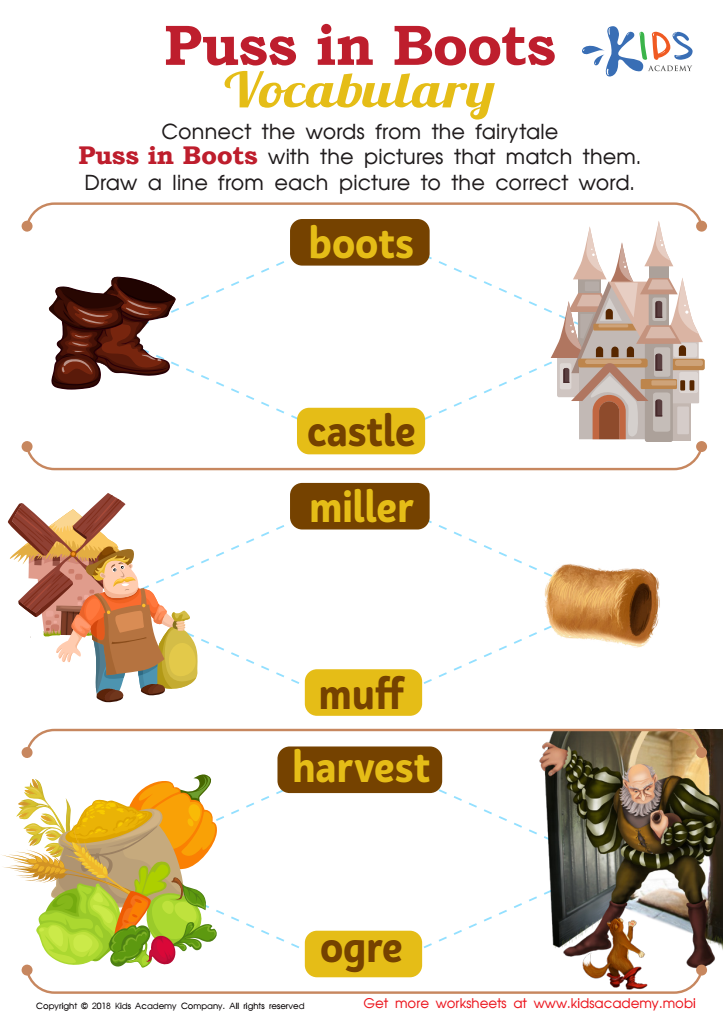
Puss in Boots Vocabulary Worksheet
 Assign to My Students
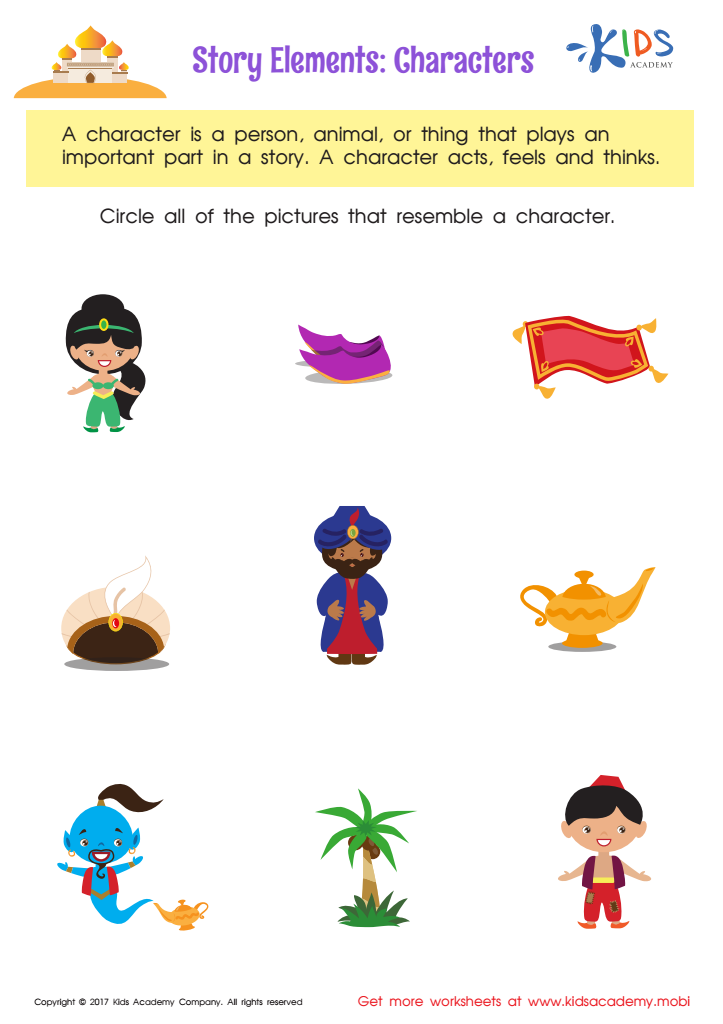
Story Elements Printable
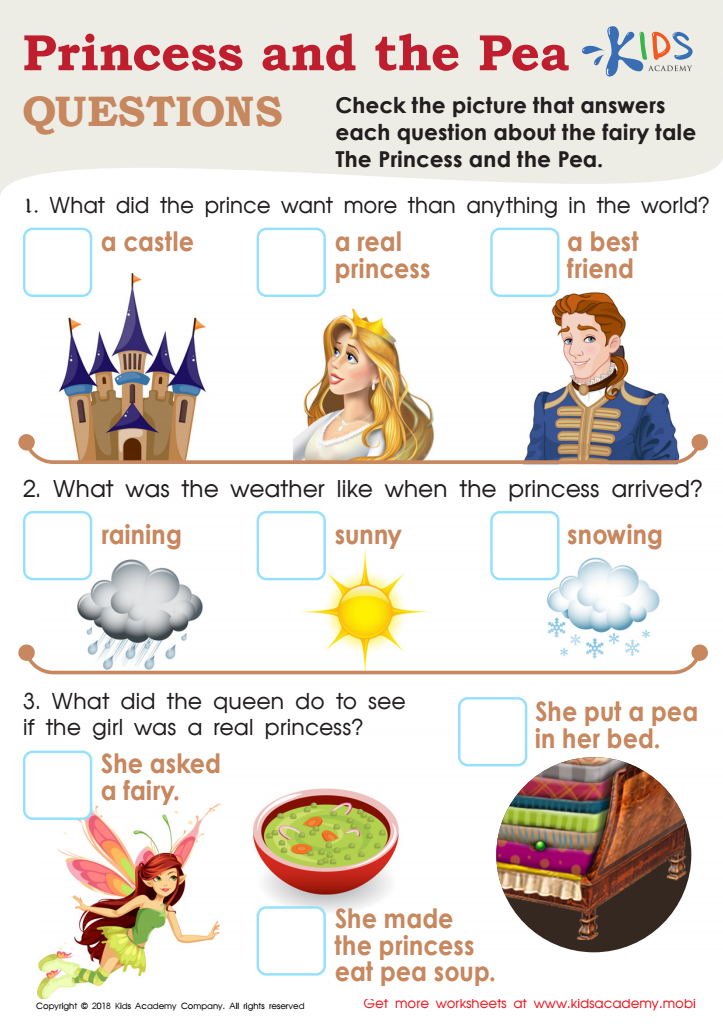
Princess and the Pea Questions Worksheet



.jpg)


Reading comprehension is a fundamental skill that lays the groundwork for future academic success, particularly in early childhood education. For 5-year-olds, engaging with fiction not only enhances their reading comprehension but also stimulates imagination and creativity. When parents and teachers emphasize comprehension in reading fiction, they help children make connections between the story and their own experiences, fostering critical thinking skills and deeper understanding.
Understanding narratives helps build vocabulary, enhances listening and speaking skills, and encourages an appreciation for storytelling. As children explore characters, settings, and various plots, they learn to predict outcomes, identify emotions, and even consider different perspectives. This vital engagement equips them to tackle more complex texts as they progress in their learning journey.
Additionally, reading fiction offers valuable themes, moral lessons, and cultural insights, augmenting children's social and emotional development. When educators and caregivers prioritize reading comprehension in young learners, they support not just academic achievement but holistic growth. Fostering a love for reading in this crucial period can ignite lifelong learning habits, reinforcing the idea that reading is an enjoyable and essential activity. Ultimately, the investment in comprehension skills at this young age enriches lives far beyond the classroom.







