
Story comprehension Normal Reading Fiction Worksheets for 5-Year-Olds
3 filtered results
Difficulty Level
Grade
Age
-
From - To
Subject
Activity
Standards
Explore our engaging Story Comprehension Normal Reading Fiction Worksheets designed specifically for 5-year-olds! These worksheets are perfect for young learners, helping them enhance their reading skills while fostering a love for storytelling. Each activity encourages children to think critically about the narratives they encounter, promoting understanding of characters, plot, and main ideas. Through fun and interactive exercises, kids will develop essential comprehension skills in a playful and supportive environment. Our resource is not just educational; it's also an enjoyable way for children to connect with stories and boost their confidence in reading. Discover the joy of reading comprehension today!
Favorites
With answer key
Interactive
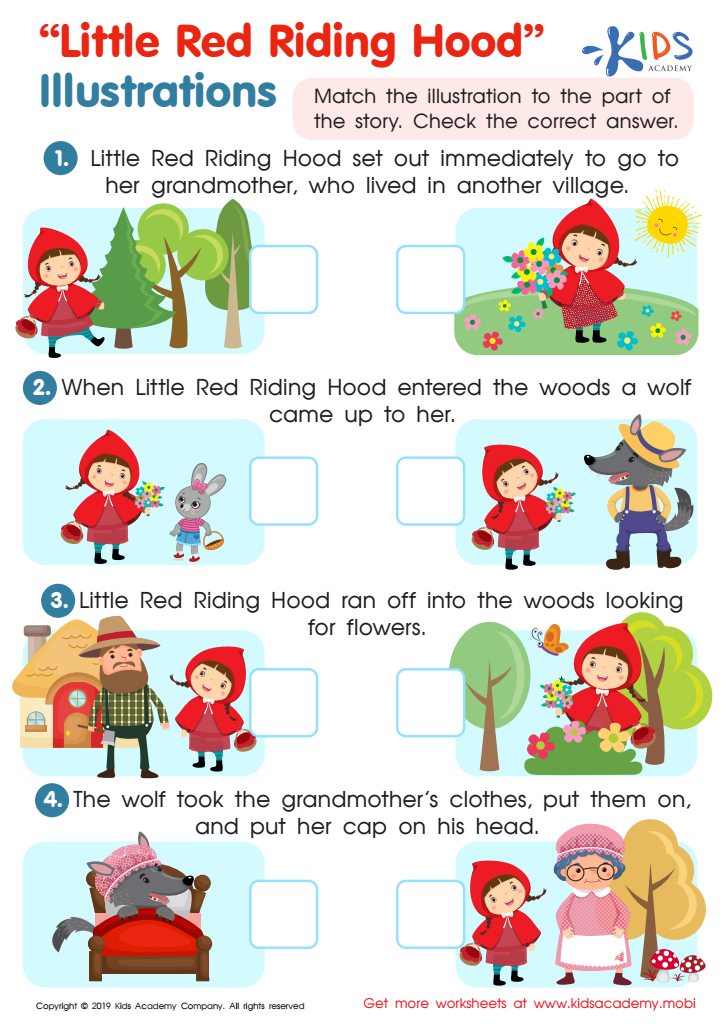
Little Red Riding Hood: Illustrations Worksheet
Comprehension is improved by having young readers recall and retell stories. This worksheet uses colorful illustrations of the fairytale Little Red Riding Hood. Children use their comprehension skills and strategy to match illustrations to the story parts, check off the appropriate boxes and use the pictures as clues.
Little Red Riding Hood: Illustrations Worksheet
Worksheet
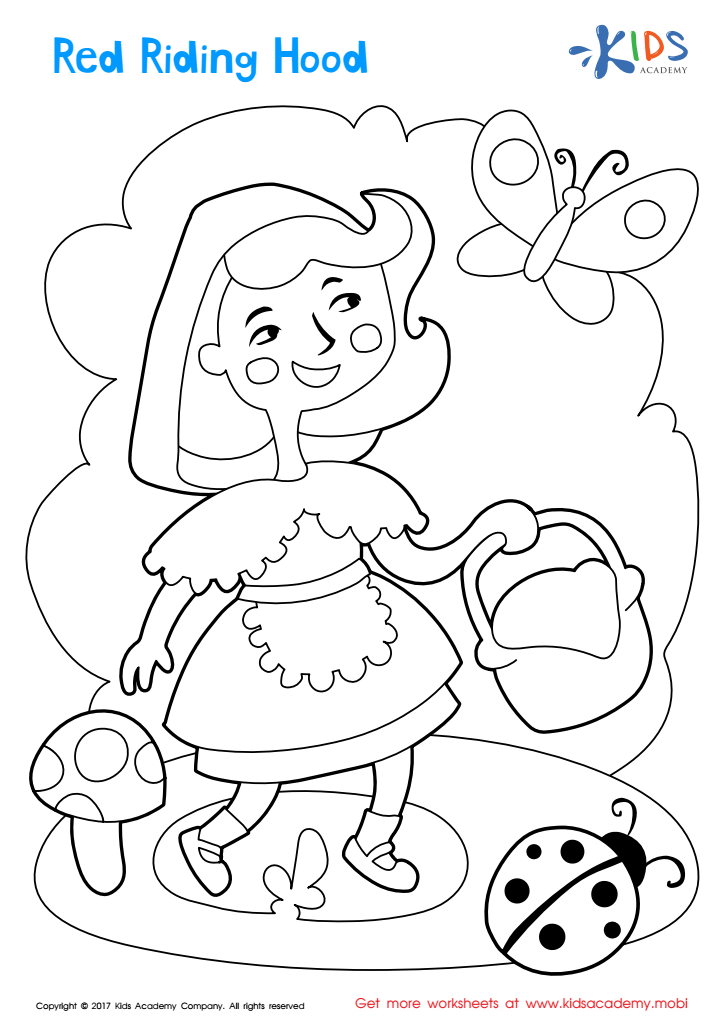
Red Riding Hood Coloring Page
Red Riding Hood awaits in the woods, with a butterfly, mushroom, and ladybug around her. Let your child bring the story to life with this magical printable coloring page. Fairytale fun for all!
Download (PDF)
 Assign to My Students
Assign to My Students
Red Riding Hood Coloring Page
Worksheet
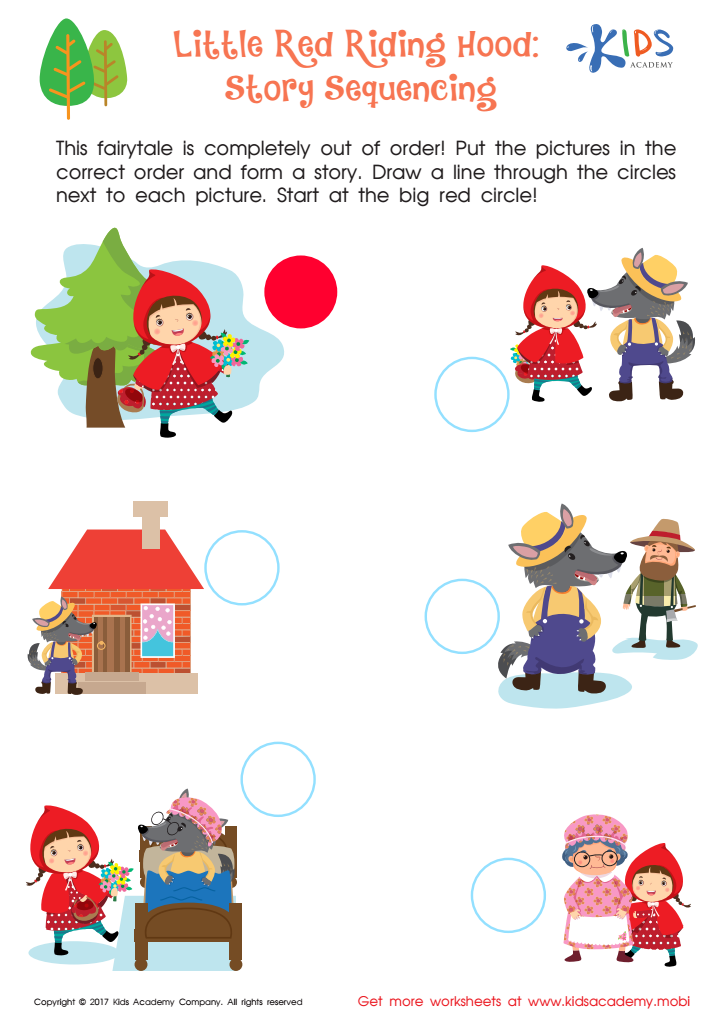
Story Sequencing Printable
Children must identify story events in sequential order to build a better understanding of plot.
Help your child learn how to understand plot with this fun comprehension worksheet: Little Red Riding Hood! Guide them to identify story events and order them correctly to boost their reading skills.
Story Sequencing Printable
Worksheet
Join Kids Academy for Free
Who is primarily going to use this learning content?







.jpg)
Story comprehension in 5-year-olds plays a crucial role in their overall development, making it essential for parents and teachers to prioritize it. At this age, children are remarkably impressionable and begin to develop literacy skills that form the foundation for their future learning. Engaging with fiction stories helps enhance their vocabulary, understanding of sentence structure, and overall language skills.
Moreover, storytelling offers children a chance to connect emotionally with characters and situations, fostering empathy as they navigate different perspectives. Comprehension goes beyond simply recalling what happened; it encourages critical thinking as children learn to make predictions, identify conflicts, and derive moral lessons from narratives.
In an educational setting, reinforcing comprehension through discussions about the story can help children articulate their thoughts and ask questions, which nurtures their curiosity. For parents, participating in storytime or discussing stories boosts their child's confidence and strengthens their bond, making learning a shared journey.
Ultimately, focusing on story comprehension in early childhood not only enhances literacy skills but also supports social-emotional growth, preparing children for academic success and helping them thrive in social interactions. By prioritizing this aspect of early learning, parents and teachers can lay a solid groundwork for lifelong learning and development.







