Animal Classification Normal Animals Worksheets for 5-Year-Olds
4 filtered results
-
From - To
Welcome to our "Animal Classification Normal Animals Worksheets" designed specifically for 5-year-olds! These engaging worksheets offer young learners the opportunity to explore the fascinating world of animals while developing essential classification skills. Each worksheet features vibrant images and simple activities that introduce various animal types, such as mammals, birds, reptiles, and more. Children will enjoy sorting, matching, and identifying animals, enhancing their critical thinking and comprehension. These activities not only make learning fun but also instill curiosity about nature. Perfect for at-home education or classroom use, our worksheets will ignite a lifelong interest in the animal kingdom! Download and start exploring today!
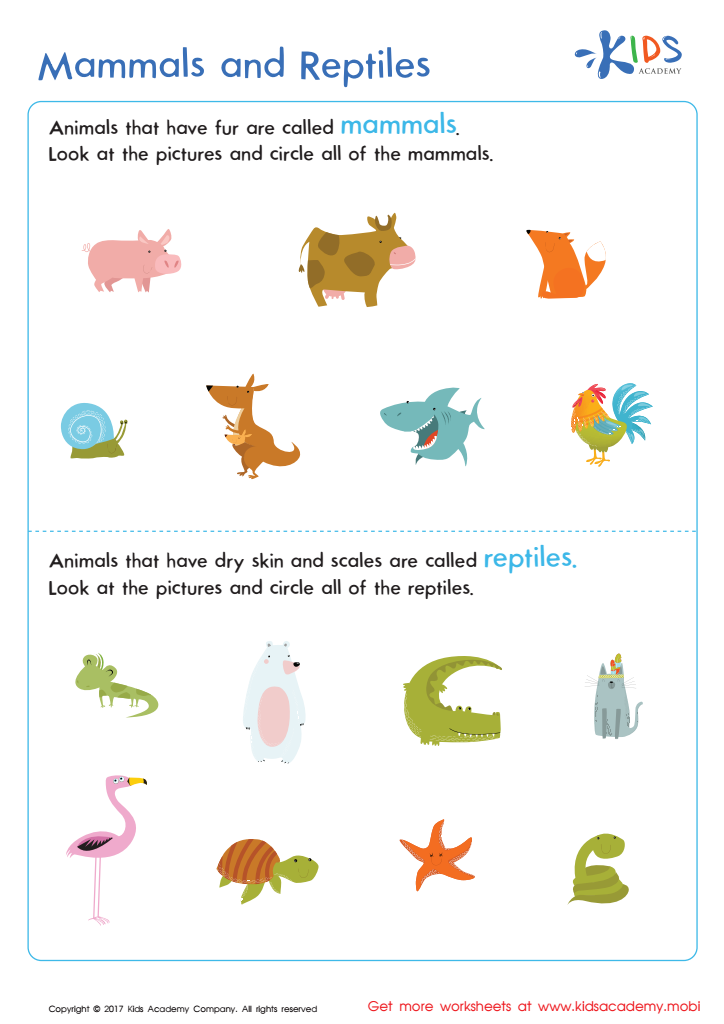
Mammals and Reptiles Worksheet
 Assign to My Students
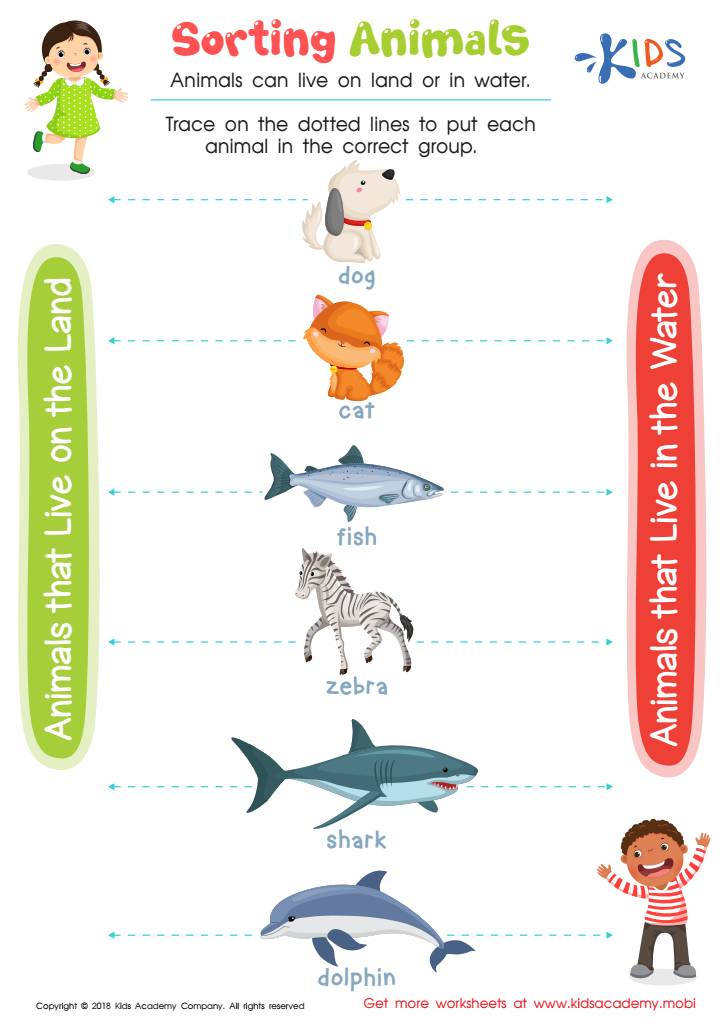
Sorting Animals Worksheet
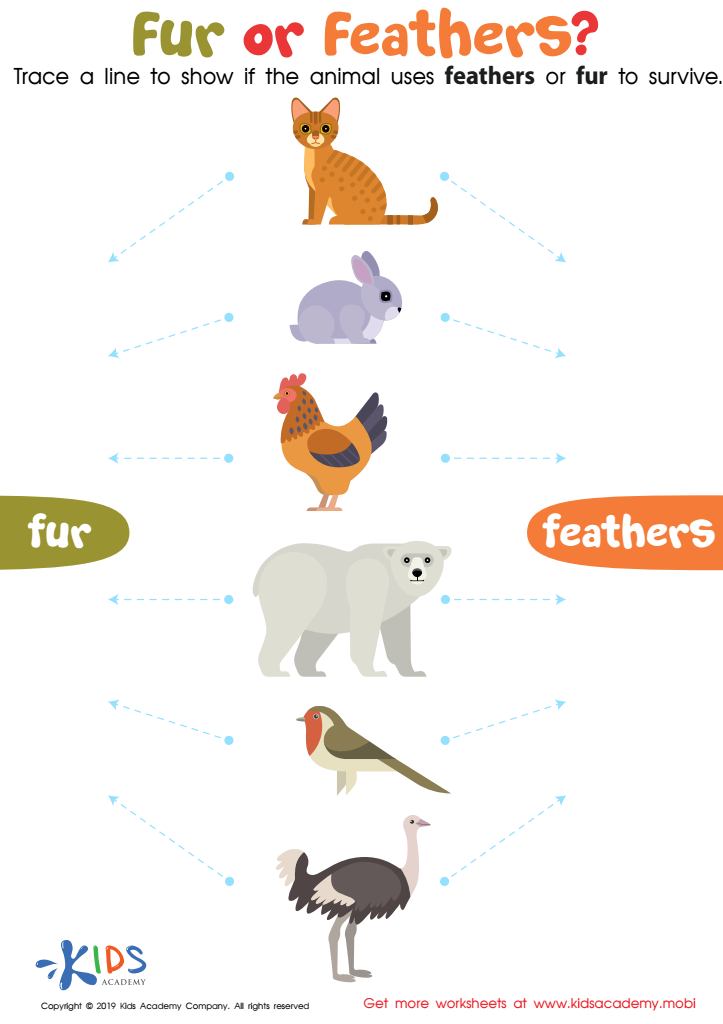
Fur or Feathers? Worksheet
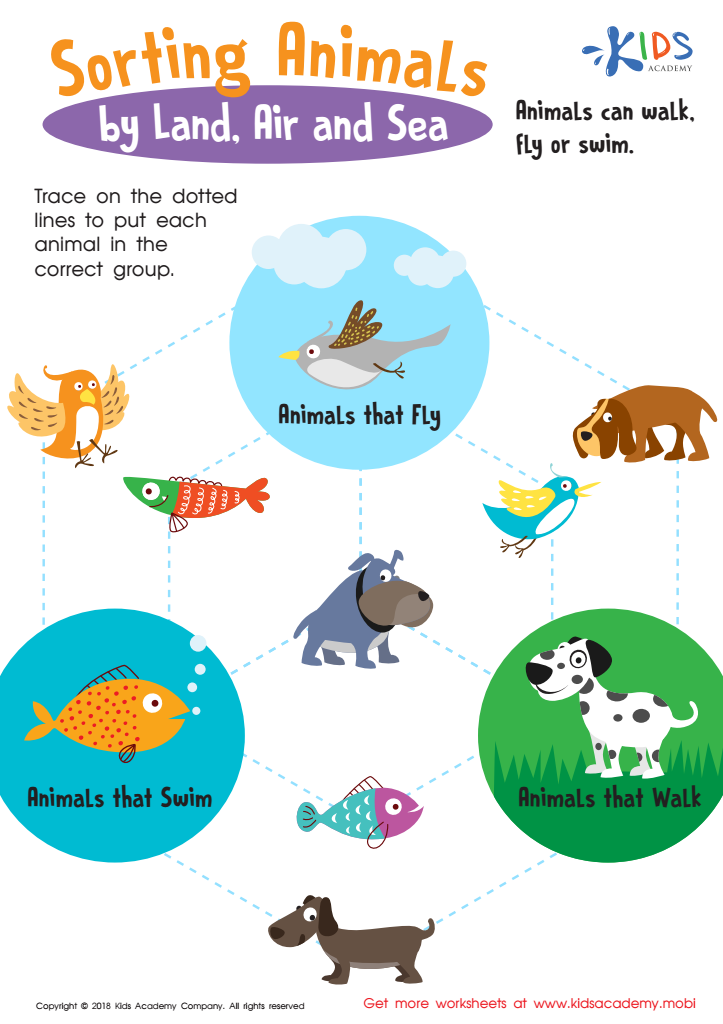
Sorting Animals by Land, Air and Sea Worksheet




%20(1).jpg)



Animal classification is an exciting and essential concept that 5-year-olds can grasp, making it crucial for parents and teachers to engage with this theme. Understanding the basics of how animals are classified into groups such as mammals, birds, reptiles, fish, and insects sparks curiosity and encourages young learners to explore their world.
Firstly, animal classification introduces children to scientific thinking and organization. It provides them with a simple framework to group creatures based on shared characteristics. This creates a sense of order and promotes critical thinking skills as they observe and categorize different species.
Secondly, knowing about animals helps foster empathy and respect for living beings. By learning about diverse animals and their habitats, children develop an appreciation for biodiversity, which can lead to a commitment to conservation efforts as they grow older.
Additionally, incorporating animal classification into play and learning strengthens language and vocabulary development. Children enthusiastically engage with stories, songs, and activities related to animals, making learning more enjoyable.
Overall, by focusing on animal classification, parents and teachers not only enrich children's understanding of the natural world, but also promote essential cognitive, social, and emotional skills that lay the groundwork for lifelong learning.








