
Animal recognition Normal Science Worksheets for 5-Year-Olds
3 filtered results
Difficulty Level
Grade
Age
-
From - To
Subject
Activity
Standards
Discover our engaging Animal Recognition Normal Science Worksheets designed specifically for 5-year-olds! These worksheets provide young learners with the opportunity to explore various animal species while enhancing their observational skills. With vibrant illustrations and simple activities, children will identify animals, learn their names, and understand their habitats. These worksheets foster a love for nature and promote early science education, making learning fun and interactive. Ideal for at-home learning or classroom activities, our resources also support cognitive development and critical thinking. Join us in enriching your child's learning experience with our animal recognition worksheets today! Explore, identify, and learn!
Favorites
With answer key
Interactive
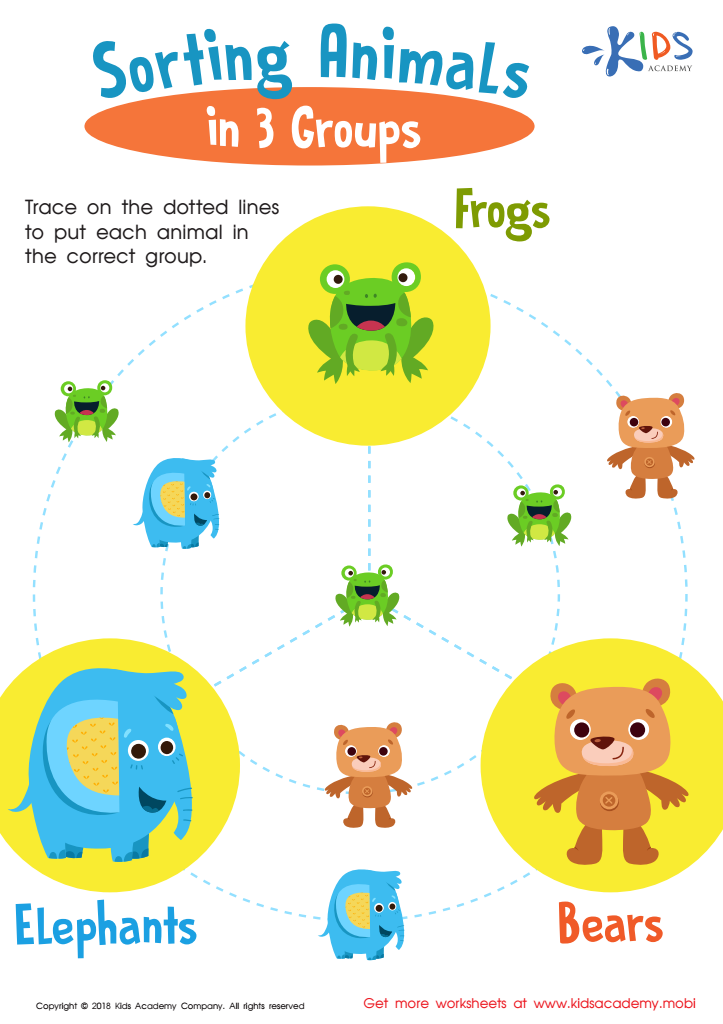
Sorting Animals in 3 Groups Worksheet
Let your kids practice and build skills for future Venn Diagrams with this PDF worksheet. They'll trace lines to match and group animals, and learn the differences and similarities of animals by categorizing with pictures and words. Plus, it's a great way to develop fine motor skills.
 Assign to My Students
Sorting Animals in 3 Groups Worksheet
Worksheet
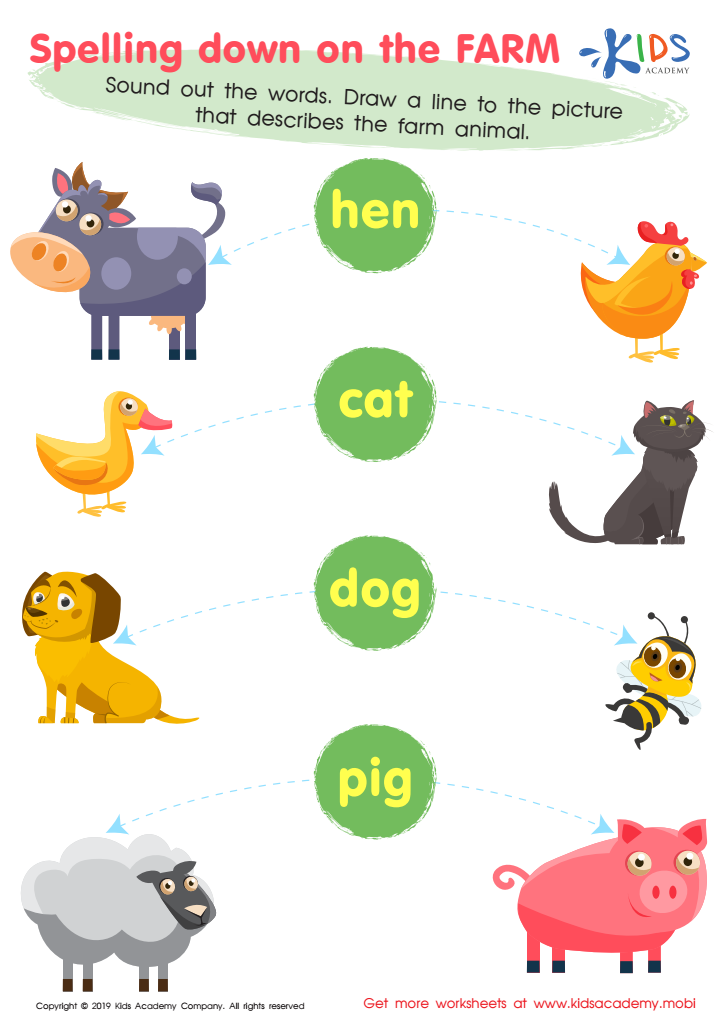
Spelling Down on the Farm Worksheet
Want to help your kids nail their spelling? Introduce them to this farm animal worksheet! Get them to look at the animals in the tracing sheet, name them and then sound out the words. Have them draw a line to the picture that describes it. You'll be surprised at how quickly their skills improve.
Spelling Down on the Farm Worksheet
Worksheet
Join Kids Academy for Free
Who is primarily going to use this learning content?








Animal recognition in early education is crucial for developing children's cognitive, social, and emotional skills. At the age of 5, children are naturally curious and eager to explore their environment, making it an ideal time to introduce science concepts related to animals. Understanding different animals fosters curiosity and encourages observation, which are key elements of scientific inquiry. Through recognizing various animals, children enhance their cognitive abilities by categorizing species, learning names, and understanding characteristics, which lays the groundwork for critical thinking.
Animal recognition also promotes empathy and compassion. When children learn about different species, habitats, and behaviors, they develop a connection to the natural world, fostering a sense of responsibility towards the environment and its inhabitants. Furthermore, engaging with animal recognition activities can support language development, as children expand their vocabulary by describing animals and discussing their features.
For parents and teachers, incorporating Animal recognition in their educational practices creates opportunities for interactive learning through games, storytelling, and hands-on experiences. This approach not only makes learning enjoyable but also cultivates a child's enthusiasm for science and the world around them, ultimately guiding them toward becoming knowledgeable, caring individuals.







