Understanding directions Normal Science Worksheets for 5-Year-Olds
3 filtered results
-
From - To
Discover our "Understanding Directions Normal Science Worksheets for 5-Year-Olds" that make learning interactive and fun! Tailored for young learners, these worksheets focus on helping children develop essential skills in following and understanding directions through engaging science themes. From simple instructions to hands-on activities, these resources encourage kids to think critically and improve their spatial awareness. Designed to complement early science education, these worksheets are perfect for in-class learning or at-home practice. Explore colorful visuals and age-appropriate tasks that stimulate curiosity and foster a love for science. Start your child’s journey into the world of exploration and discovery today!
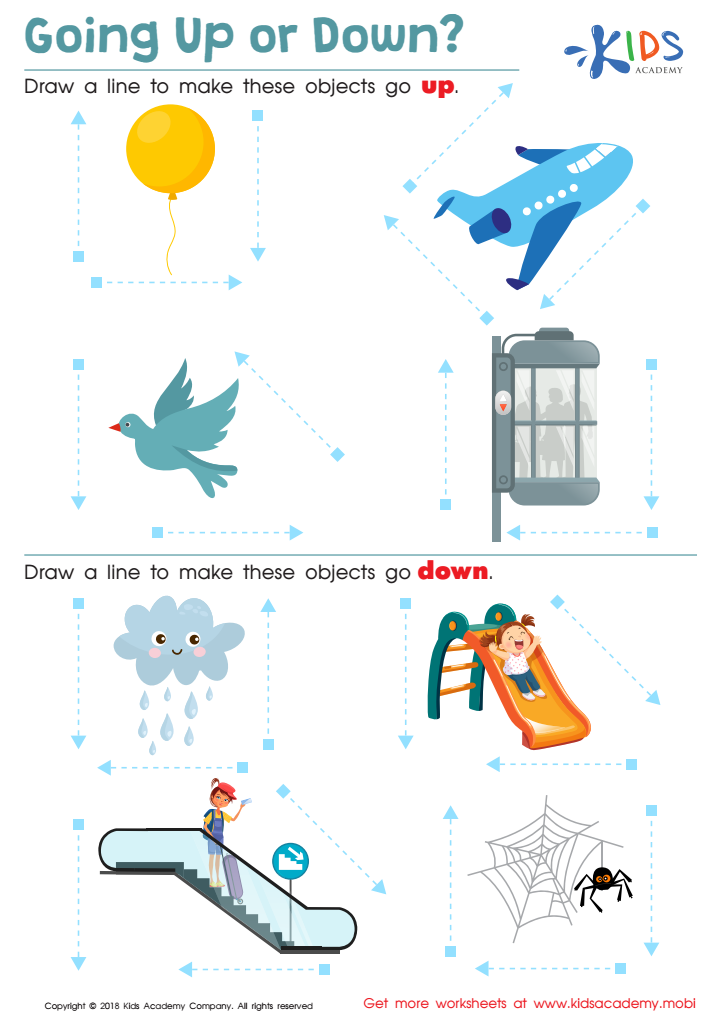
Going up or Down? Worksheet
 Assign to My Students
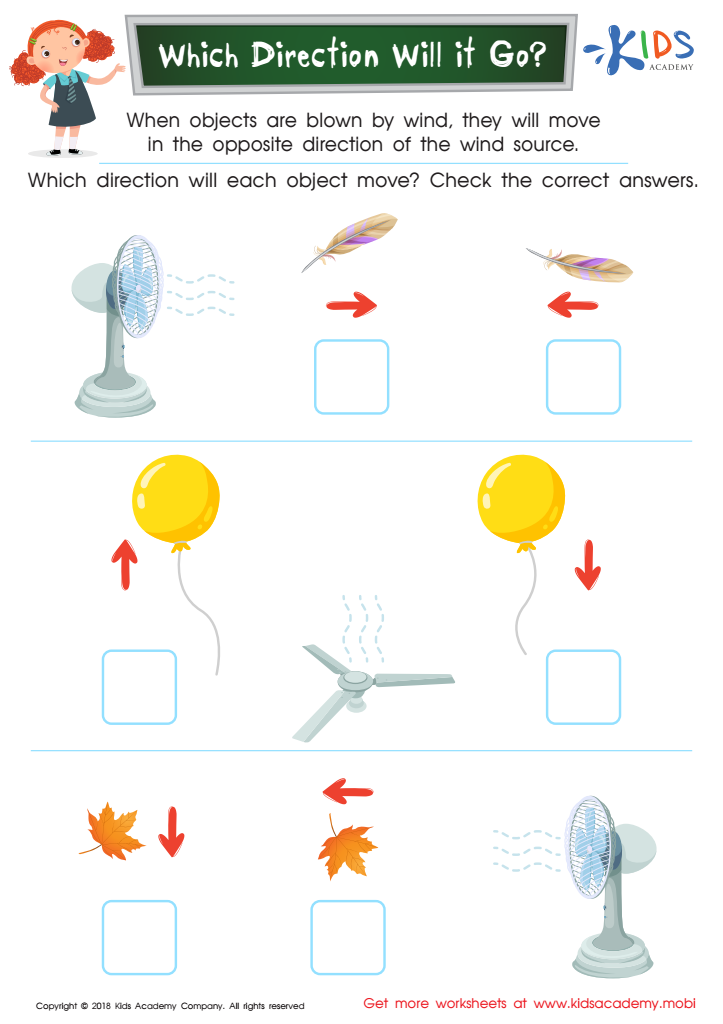
Which Direction Will it Go? Worksheet
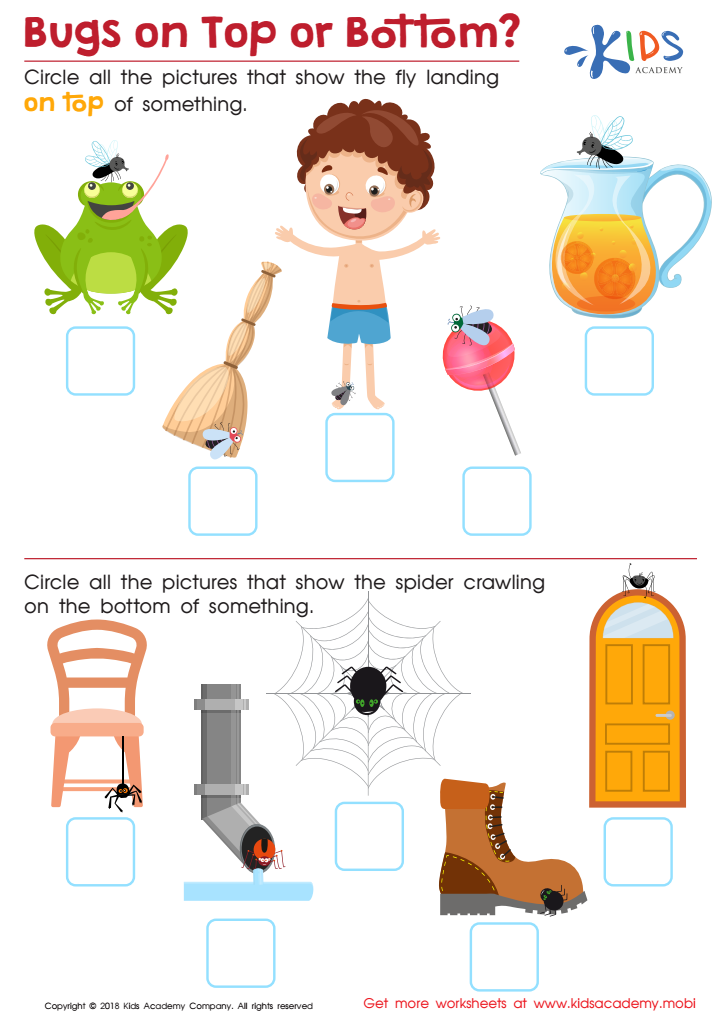
Bugs on Top or Bottom? Worksheet







Understanding directions in Normal Science is crucial for parents and teachers of 5-year-olds as it lays the foundational skills for critical thinking, problem-solving, and communication. At this age, children are naturally curious and eager to explore the world around them. Introducing them to the scientific method through simple and engaging activities helps develop their inquiry skills, allowing them to ask questions, make observations, and draw conclusions.
By focusing on everyday phenomena, such as plants growing or weather changes, caregivers can guide children to make connections between their observations and scientific concepts. This nurtures not only their cognitive abilities but also fosters their creativity.
Moreover, understanding directions related to Normal Science enhances children's ability to follow instructions—an essential skill for effective learning. This ability also boosts their confidence; as they comprehend tasks and execute them successfully, they build a sense of mastery.
Ultimately, by promoting scientific understanding at an early age, parents and teachers instill a love for learning, prepare children for future academic challenges, and encourage responsible citizenship in a world increasingly influenced by science and technology. Investing in science education at this stage sets the groundwork for lifelong curiosity and exploration.







