Color Identification Normal Social Studies Worksheets for 5-Year-Olds
3 filtered results
Difficulty Level
Grade
Age
-
From - To
Subject
Activity
Standards
Discover our engaging Color Identification Normal Social Studies Worksheets designed for 5-year-olds! These worksheets provide a fun and interactive way for young learners to explore and understand colors while connecting them to everyday social experiences. Each worksheet features vibrant illustrations and age-appropriate activities, helping children recognize and identify colors in context. With a focus on enhancing cognitive skills, creativity, and social awareness, these materials make learning enjoyable. Perfect for homeschool settings or classroom integration, our worksheets encourage kids to express their understanding through color, enriching their educational journey. Download and watch your child's learning bloom with our colorful resources!
Favorites
With answer key
Interactive
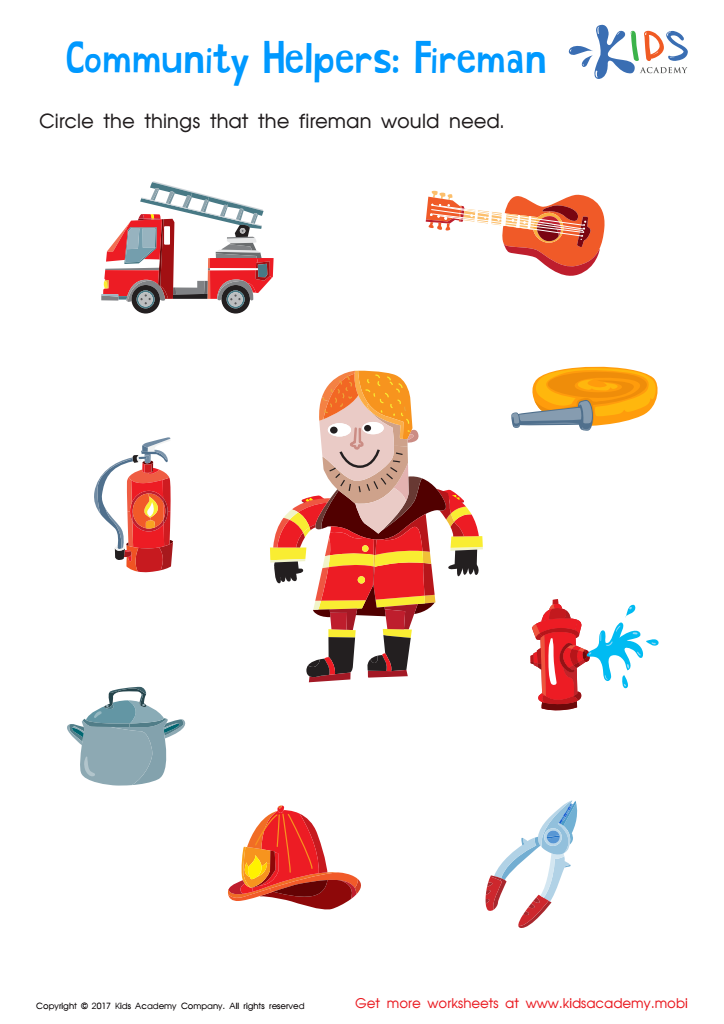
Fireman Worksheet
Kids love firemen and their big fire engines! Inspire your child to learn about their duties with this fun fireman worksheet. It'll help your child understand the role of firemen, as well as develop matching and problem solving skills. Get your kid started on understanding a key role in society and have fun too!
 Assign to My Students
Fireman Worksheet
Worksheet
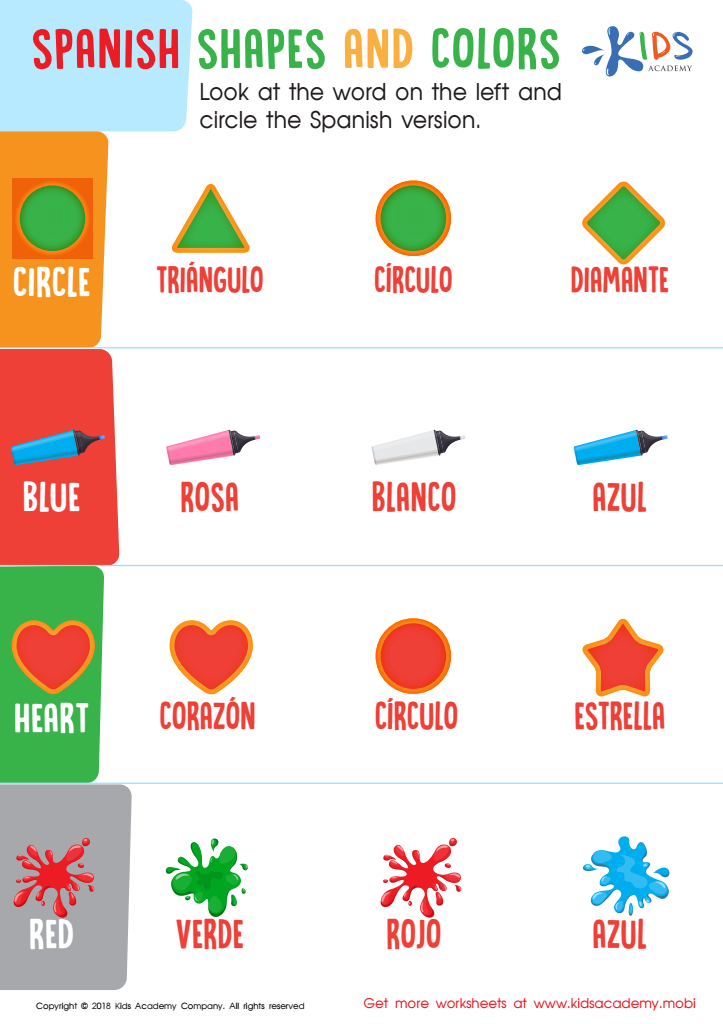
Spanish Shapes and Colors Worksheet
Encourage your children to learn another language from an early age. For example, Spanish - use a worksheet to help with the basics. Point to the English word and ask them to identify and circle the corresponding Spanish word on the right. This way, your kids will grow up with familiarity of the language.
Spanish Shapes and Colors Worksheet
Worksheet
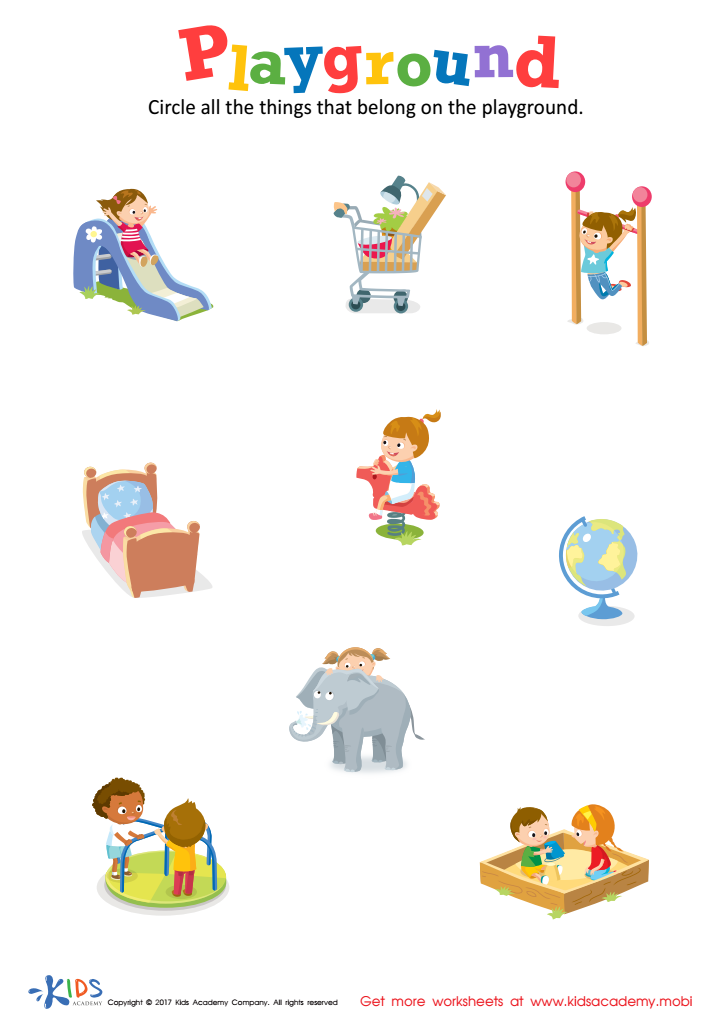
Playground Worksheet
Head to the park with this playground worksheet! It strengthens sorting and cognitive skills while encouraging problem solving. Plus, it's fun-filled and engaging! When finished, head out to the park to see what items your child finds in the playground!
Playground Worksheet
Worksheet
Join Kids Academy for Free
Who is primarily going to use this learning content?








Color identification is an essential part of social studies for 5-year-olds, intertwining their understanding of the world with crucial developmental skills. At this age, children are not just learning colors; they are also making connections between their environment and social concepts. Colors can signify emotions, cultural identities, and societal symbols—a rainbow in a community mural represents unity, while a flag's colors can embody national pride.
Additionally, color identification fosters cognitive skills such as categorization, pattern recognition, and critical thinking. As children learn to identify and name colors, they enhance their language skills and vocabulary, enabling them to express their thoughts and feelings more effectively. Engaging activities like group projects or neighborhood explorations provide windows into diverse cultures and experiences, promoting empathy and cooperation among peers.
Moreover, discussions surrounding colors lead to deeper conversations about diversity and inclusion, reinforcing the importance of appreciating differences in people. By integrating color identification into social studies, parents and teachers are nurturing curiosity and creativity in young minds, setting the stage for informed and compassionate citizenship in the future. Emphasizing the significance of colors in daily life encourages children to explore, ask questions, and build a more vibrant understanding of the world around them.