Phonics Skills Normal Consonant Blends Worksheets for Ages 6-7
4 filtered results
-
From - To
Discover engaging and educational "Phonics Skills Normal Consonant Blends Worksheets" designed specifically for ages 6-7. Our worksheets help young learners master essential phonics skills by combining regular consonant sounds. Through fun activities and exercises, children will enhance their reading and writing abilities, improving their understanding of blended sounds like 'bl,' 'cr,' and 'st.' Perfect for early readers, these worksheets support foundational literacy development, ensuring kids build strong reading fluency and comprehension. Whether used at home or in the classroom, these phonics worksheets make learning interactive and enjoyable. Download now and promote confident, independent reading in your child!
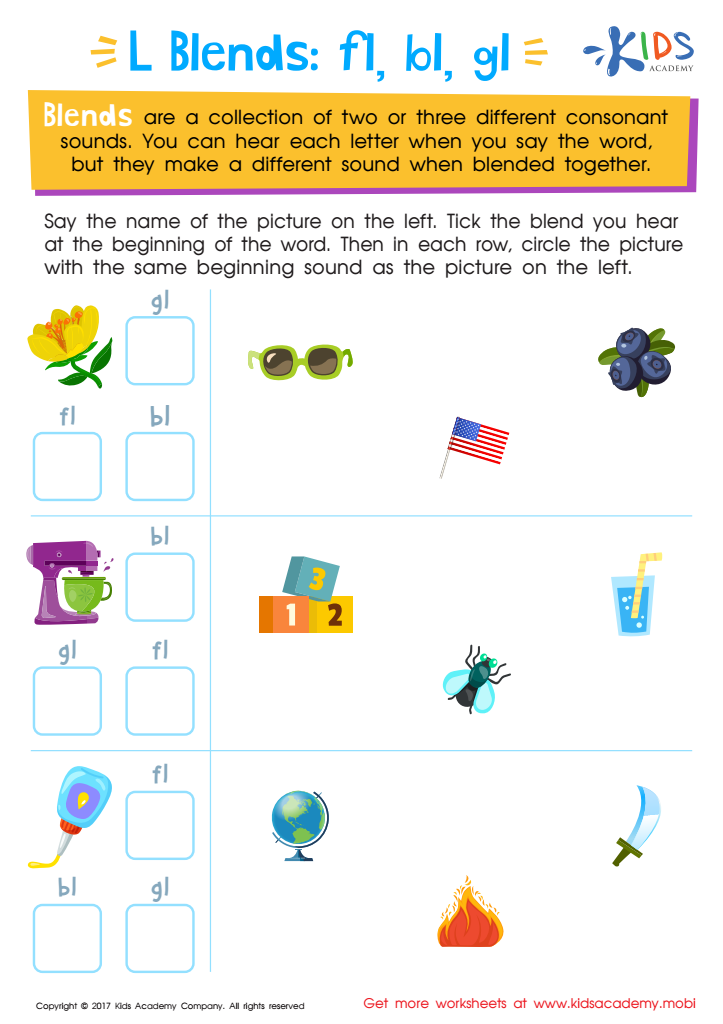
Blending Consonants: "Fl", "Bl" and "Gl" Printable
 Assign to My Students
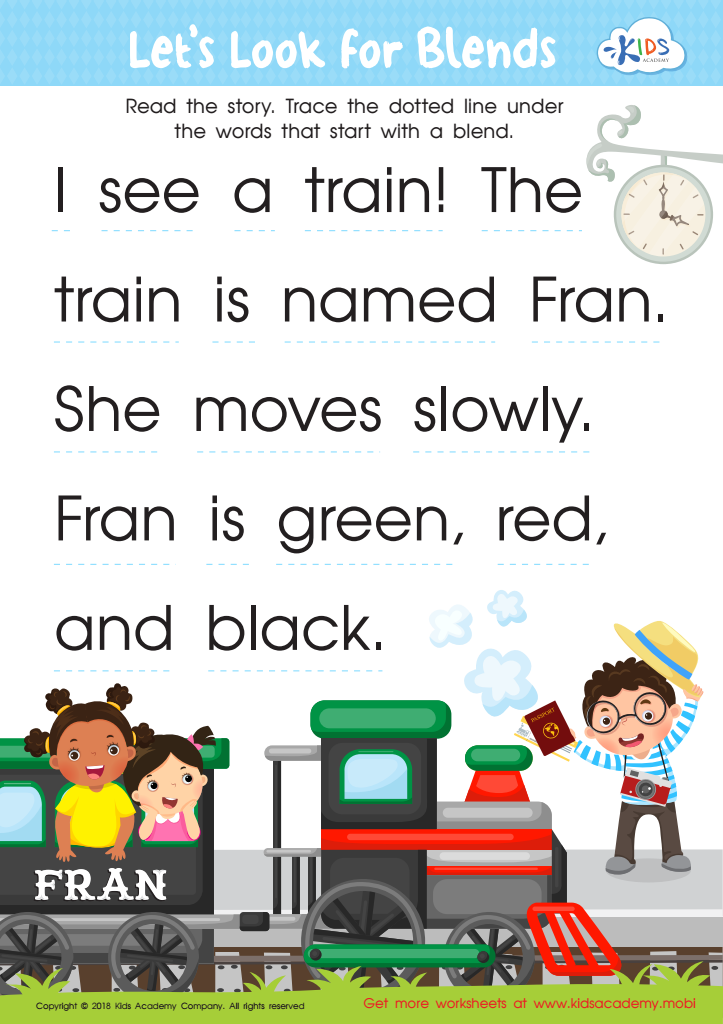
Let's Look for Blends Worksheet
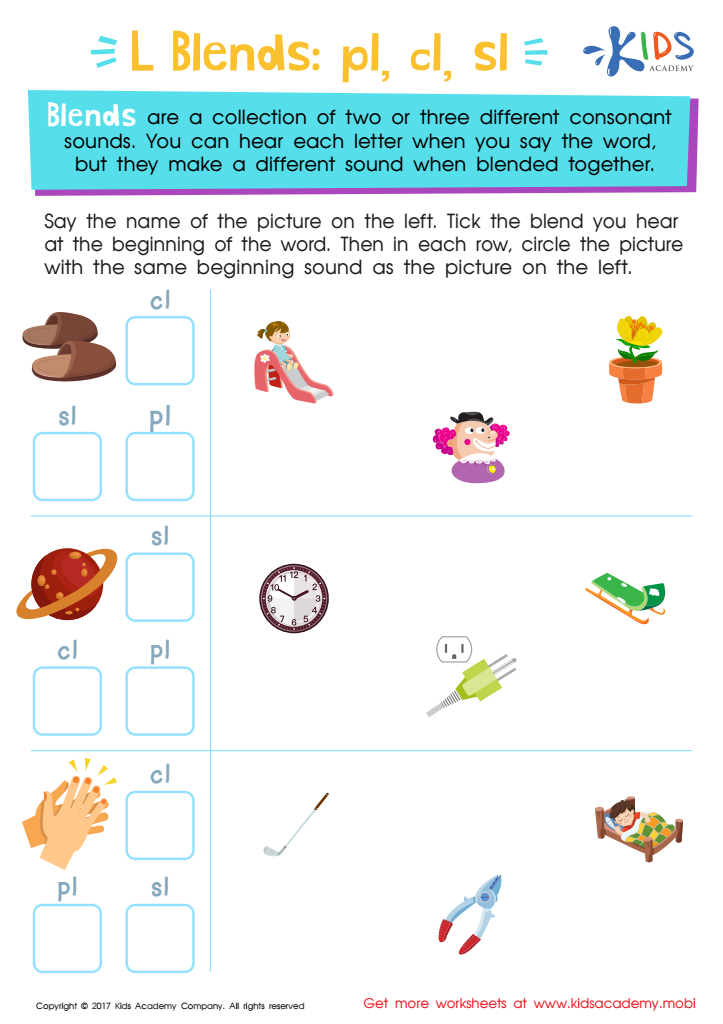
L Blends: "Pl", "Cl" and "Sl" Printable
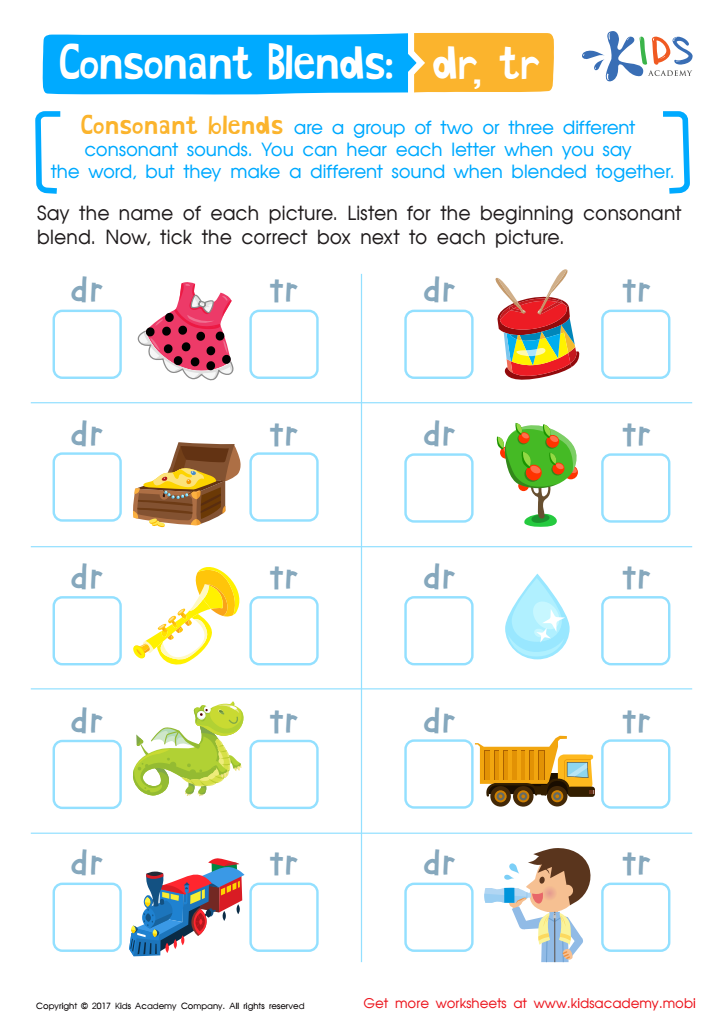
Consonant Blends: "Dr" and "Tr" Printable





Phonics skills, especially the understanding of normal consonant blends, are foundational to a child's reading development and literacy skills. For children aged 6-7, this is a critical period where they transition from simple decoding of sounds to more complex word recognition and reading fluency. Consonant blends, which are groups of two or three consonants where each letter's sound is heard (as in "bl" in "black" or "str" in "street"), play a crucial role in this process.
Firstly, mastering consonant blends enhances a child's ability to decode unfamiliar words more successfully. This knowledge empowers children to break down words into manageable parts, improving their reading accuracy and fostering self-correction and independent reading.
Secondly, a strong grasp of consonant blends contributes to better spelling ability. Children start to recognize patterns and common letter combinations, making it easier for them to write words correctly.
Additionally, phonics skills help with pronunciation, contributing to clearer and more confident verbal communication. As children become proficient readers, their overall academic performance improves, enhancing vocabulary and comprehension across all subjects.
Parents and teachers who prioritize teaching consonant blends provide a stepping stone towards ongoing literacy. This, in turn, supports lifelong learning and a love for reading, crucial for personal and educational development.