Sound Association Normal Consonants Worksheets for Ages 6-7
3 filtered results
-
From - To
Unlock your child's linguistic potential with our Sound Association Normal Consonants Worksheets designed for ages 6-7! These engaging and interactive worksheets help young learners develop essential phonetic skills by connecting consonant sounds to familiar words and images. Each activity encourages fun learning experiences, promoting sound recognition, vocabulary building, and reading readiness. Tailored to complement phonics instruction, our worksheets offer a playful approach to mastering consonants while enhancing cognitive skills. Perfect for home practice or classroom use, these resources foster confidence and a love for language. Download and watch your child thrive in their early literacy journey!
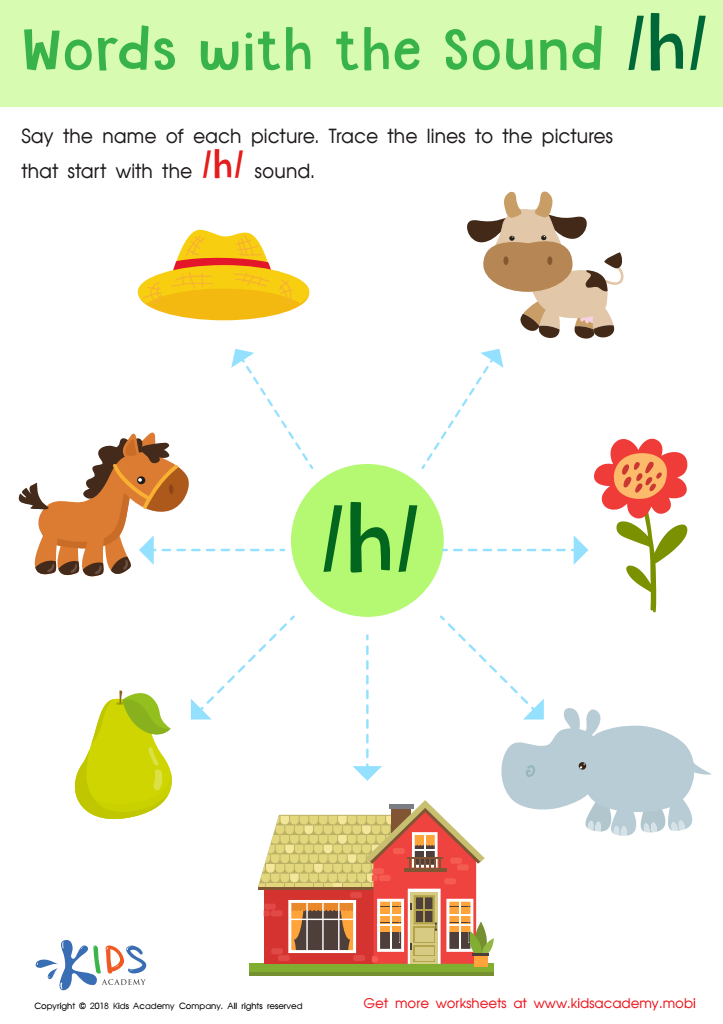
Words with sound h Reading Worksheet
 Assign to My Students
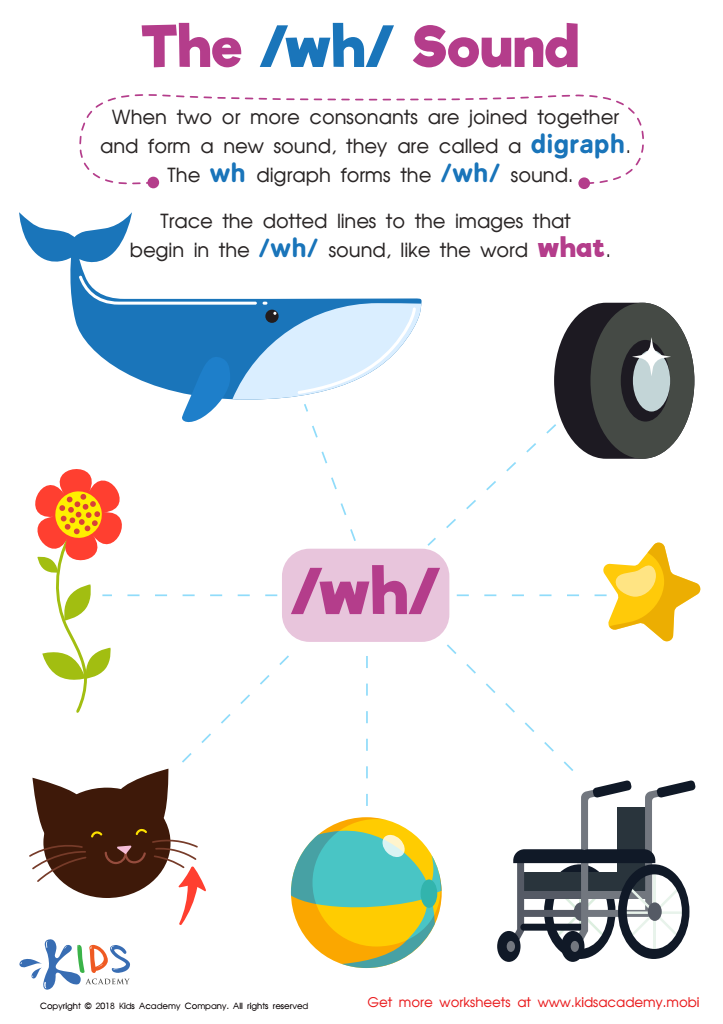
The /wh/ Sound Worksheet
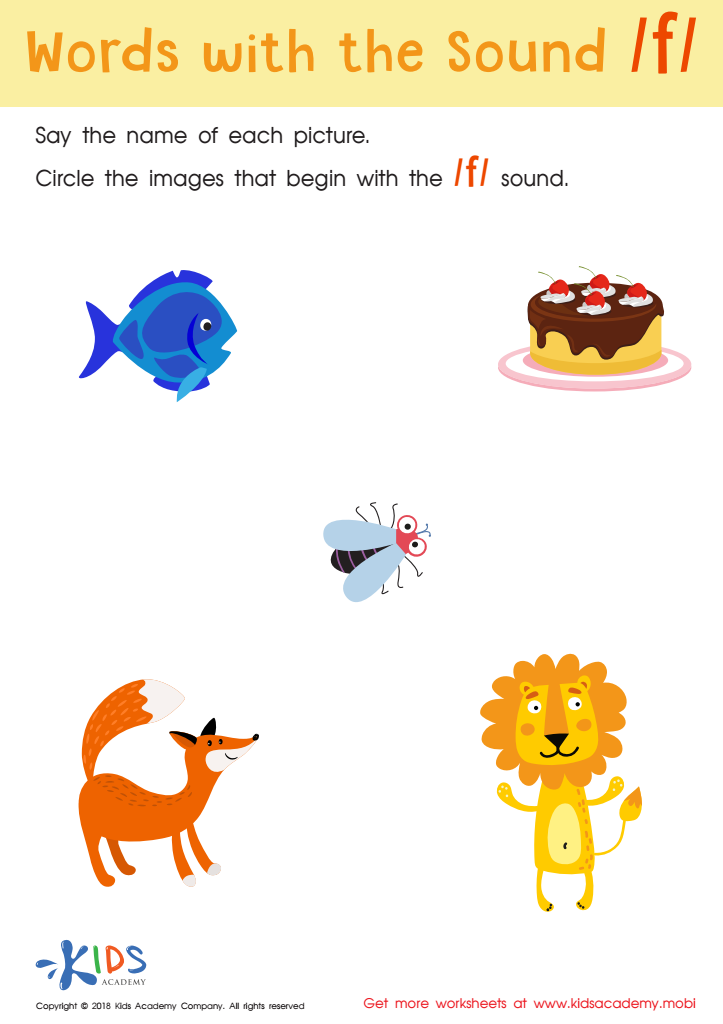
Words with sound f Reading Worksheet



Sound Association with normal consonants is crucial for children aged 6-7 as it forms the foundation for their literacy development. At this age, children are beginning to read and write independently, and understanding consonant sounds helps them decode words effectively. By associating sounds with letters, children enhance their phonemic awareness, a vital skill necessary for reading fluency and comprehension.
Teachers and parents play a pivotal role in supporting this learning process. When adults engage children in activities that promote sound recognition—such as phonics games, rhymes, and interactive reading—they reinforce the connection between sound and letter, facilitating a much richer reading experience. Mastery of consonant sounds also aids in spelling and vocabulary development, empowering children to express their thoughts confidently in writing.
Furthermore, an understanding of normal consonants can help to identify potential dyslexia or related learning difficulties early on, allowing for timely intervention. Ultimately, fostering strong sound associations leads to improved academic outcomes, self-esteem, and a lifelong love of reading. Encouraging sound associations in this formative period ensures children are well-equipped to tackle more complex language concepts in later grades. Therefore, investing effort in this area benefits both children’s immediate educational and long-term growth.






