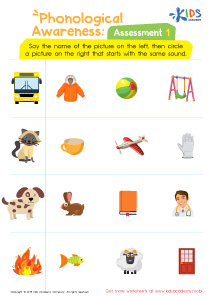
Sound recognition Normal Consonants Worksheets for Ages 6-7
3 filtered results
-
From - To
Explore our engaging Sound Recognition Normal Consonants Worksheets designed specifically for children ages 6-7! These interactive and educational resources help young learners develop essential phonemic awareness by focusing on consonant sounds. Each worksheet features vibrant illustrations and fun activities that promote recognition and pronunciation of normal consonants, enhancing vocabulary and literacy skills. Perfect for at-home learning or classroom use, these worksheets empower kids to confidently identify consonant sounds in words. Foster a love for reading and language with our thoughtfully created materials that make learning phonics enjoyable and effective. Start your child's literacy journey today with our sound recognition worksheets!
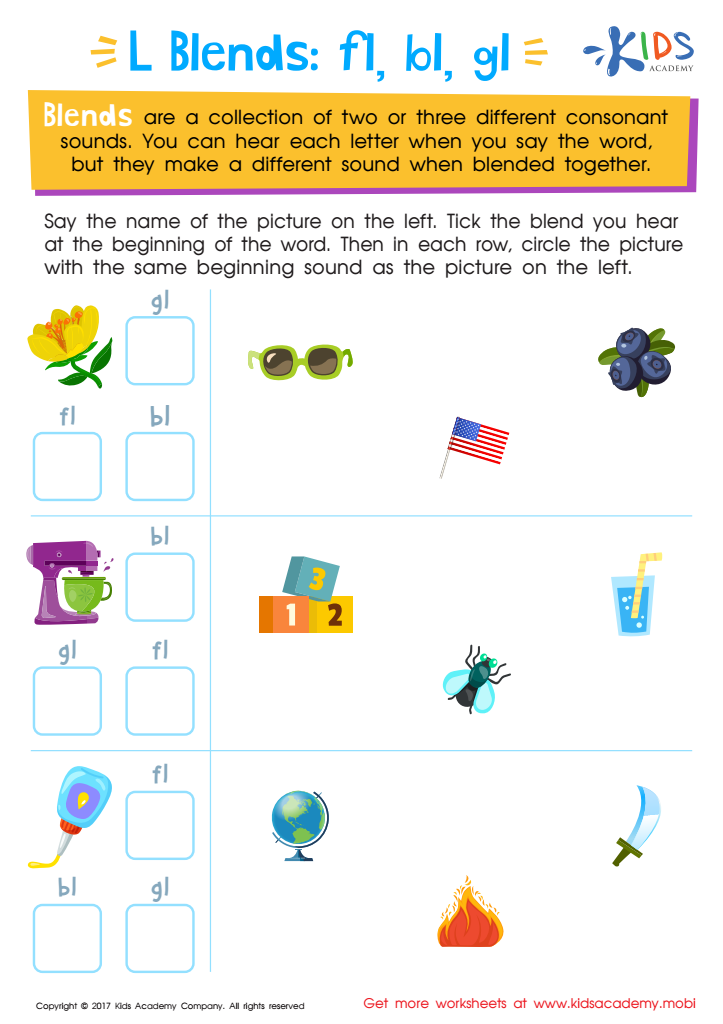
Blending Consonants: "Fl", "Bl" and "Gl" Printable
 Assign to My Students
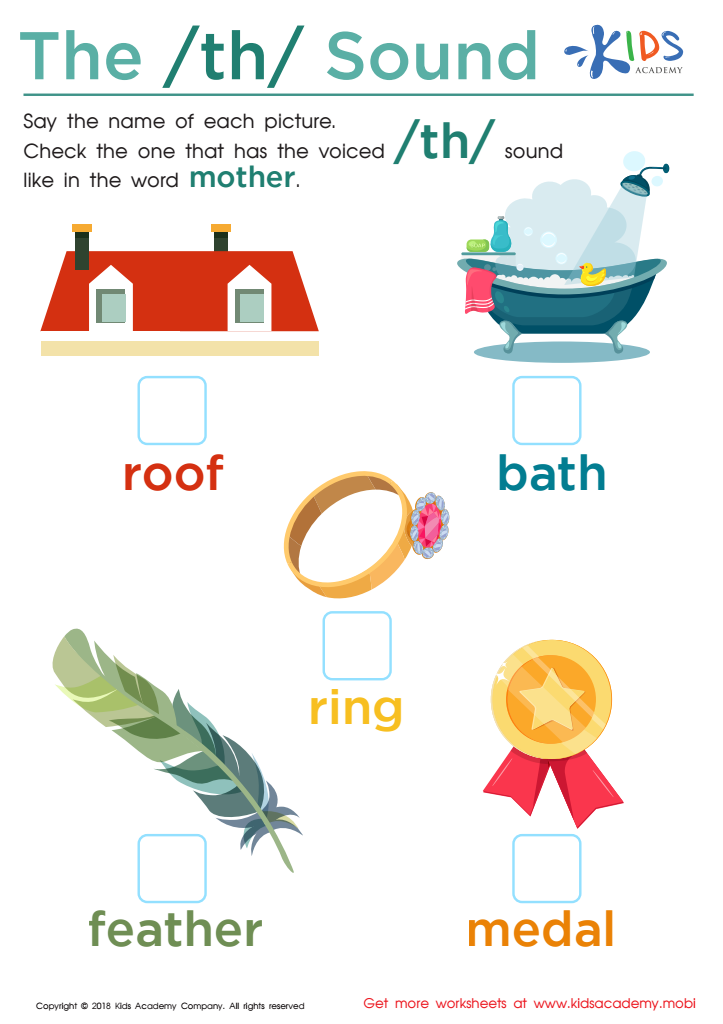
The /th/ Sound Worksheet
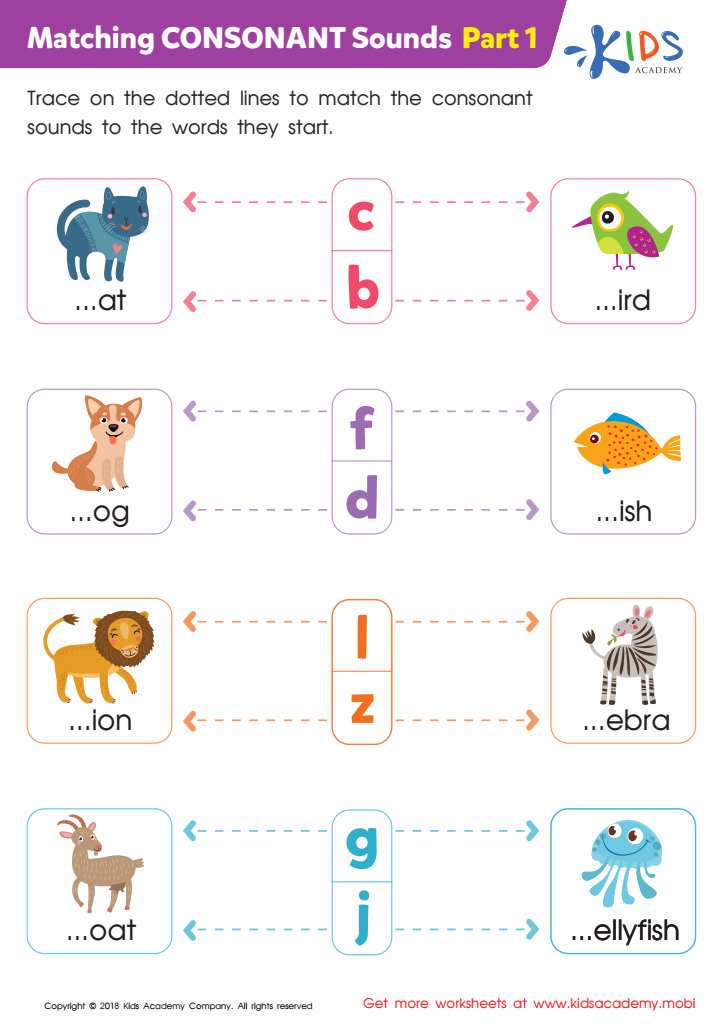
Matching Consonant Sounds: Part 1 Worksheet



Sound recognition of normal consonants is a critical skill for children aged 6-7 as they continue to develop their reading and writing abilities. This age group marks a pivotal time in literacy acquisition, where mastering the sounds associated with consonants significantly influences a child's ability to decode words. Teachers and parents should care about this foundational skill for several reasons.
Firstly, consonant sound recognition helps children grasp phonics principles, allowing them to sound out unfamiliar words independently. This enhances their confidence in reading aloud and contributes to overall literacy development. Secondly, strong sound recognition skills facilitate better spelling, as children learn to connect sounds to their corresponding letters. This connection boosts writing proficiency and encourages creative expression.
Furthermore, sound recognition impact extends beyond academic achievement; it instills a love for language and reading. By fostering an environment where consonant sounds are practiced through fun activities, parents and teachers can inspire a positive attitude toward learning. Engaging in games, storytelling, or rhyming can enrich children's language experiences, preparing them not just for linguistic success but for a lifelong appreciation of literacy. As such, prioritizing normal consonant sound recognition in early education is an investment in a child's future communication skills and academic journey.