Filters

7 filtered results

Clear all filters
Favorites
With answer key
Interactive

7 filtered results

Difficulty Level

Grade


Introduce your child to the fascinating world of letters with our Letter Recognition Normal Phonics Worksheets, specially designed for ages 6-7. These engaging, educational worksheets help young learners confidently identify and understand letters through visually stimulating activities. With a focus on building strong phonics foundations, our worksheets offer a variety of exercises that make learning fun and interactive. Perfect for both classroom and home use, these resources support the development of essential literacy skills, ensuring your child can progress at their own pace while enjoying the journey of learning to read and write. Dive in today!

Check out this FREE Trial Lesson on Phonics for age 6-7!

Distinguish between Long U and Short U

Favorites
With answer key
Interactive
  • 6-7
  • Letter recognition
  • Phonics
  • Normal
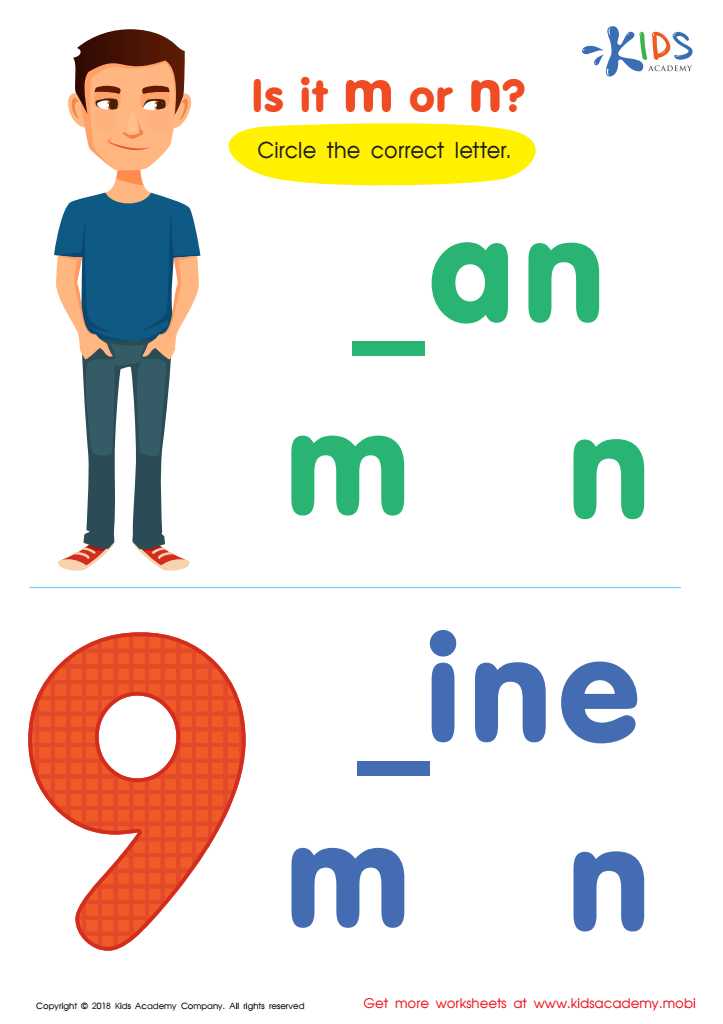
Is It m or n? Worksheet

Is It m or n? Worksheet

Help your child circle the letter that begins the words "man" and "nine" in the picture. This is a great way for them to learn the alphabet.
Is It m or n? Worksheet
Worksheet
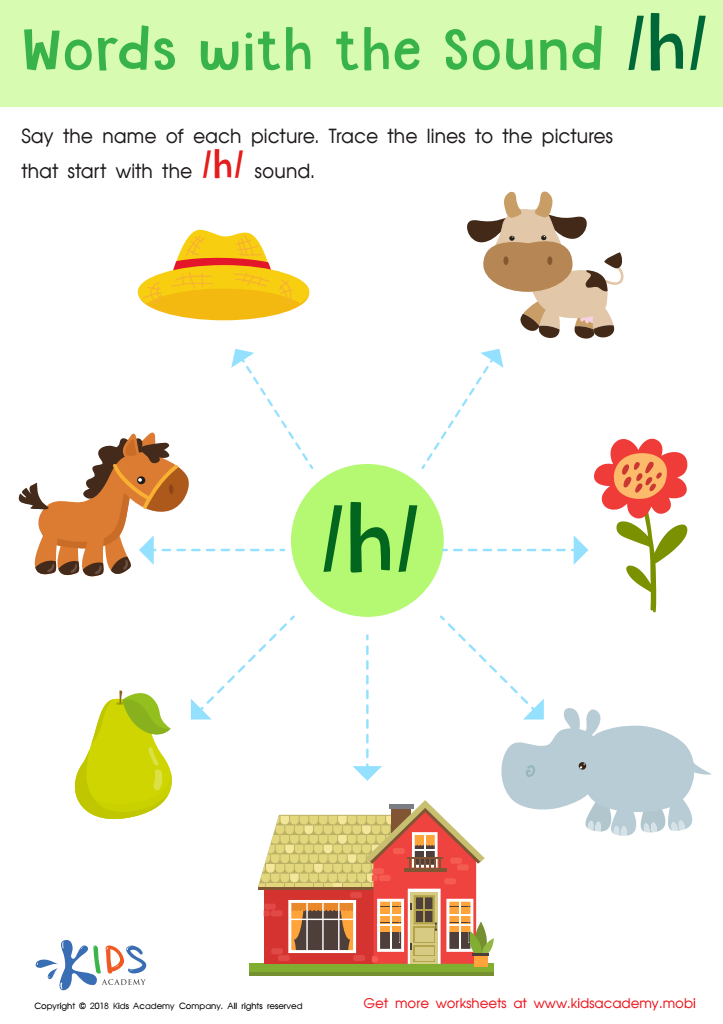
Words with sound h Reading Worksheet

Words with sound h Reading Worksheet

The letter H can often be heard in words! Check your child's knowledge with an engaging worksheet from Kids Academy. Ask them to go around a circle and name each image aloud. Listen for the starting sound and trace the line from the middle letter to the images with the sound. This is a great way to practice phonics!
Words with sound h Reading Worksheet
Worksheet
Beginning Sound «n» Worksheet

Beginning Sound «n» Worksheet

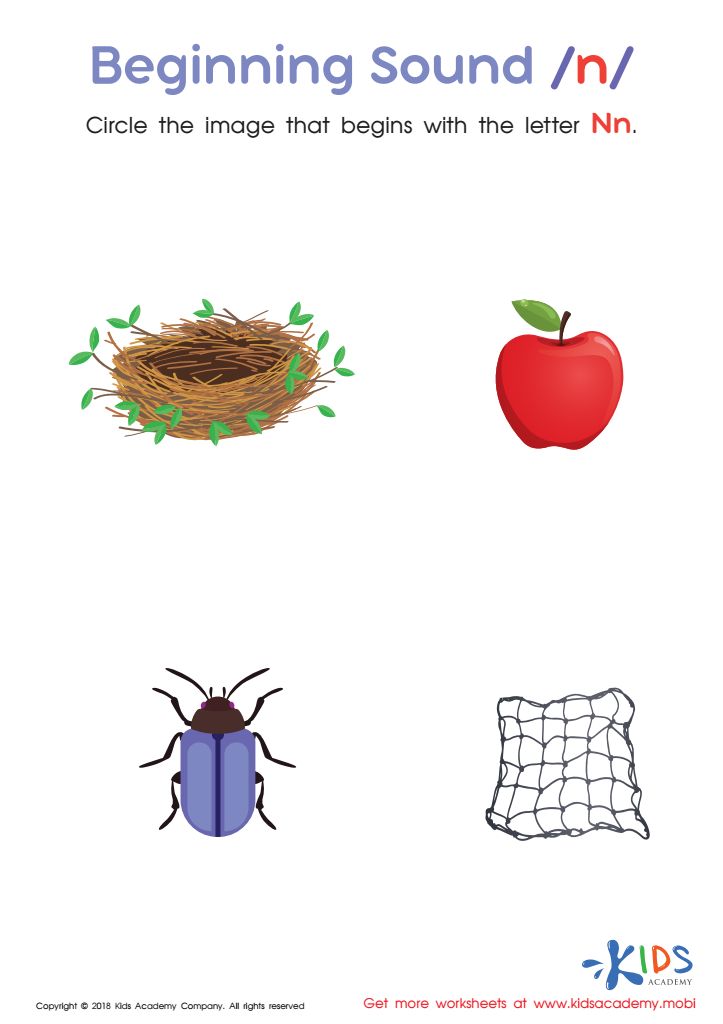
Help your emerging reader learn the initial «n» sound with this free PDF worksheet! Strengthen fine motor skills by tracing circles around words beginning with «n». Pictures are clear and engaging, giving beginning Phonics learners the right amount of practice and the confidence to succeed.
Beginning Sound «n» Worksheet
Worksheet
Is it b, p or d? Worksheet

Is it b, p or d? Worksheet

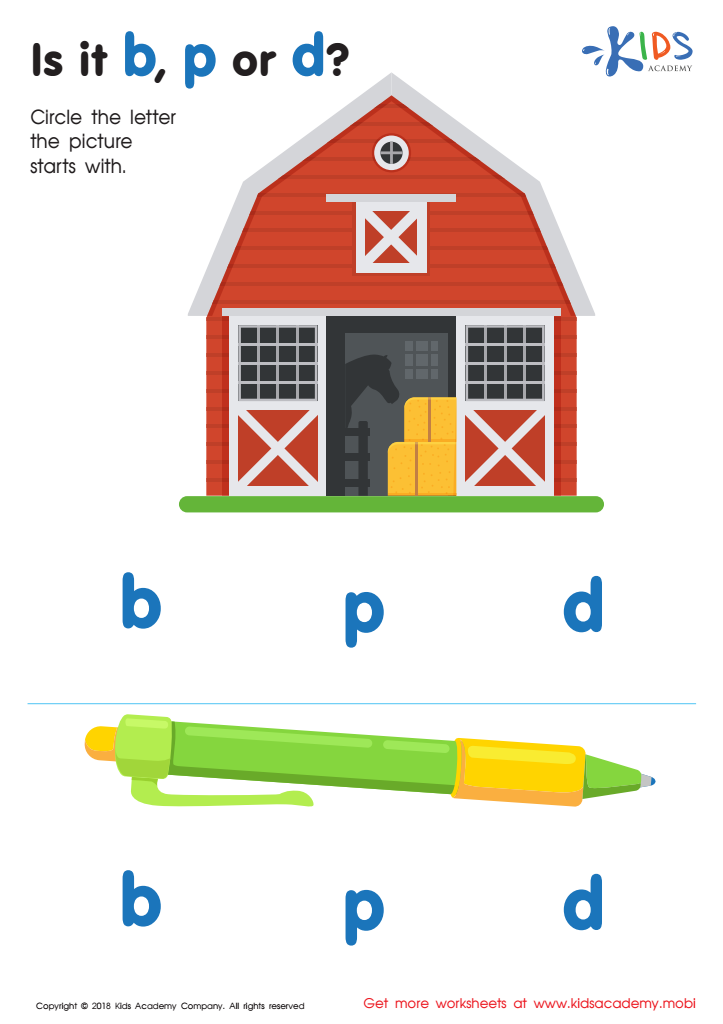
Test your child's identification skills with this worksheet. They must identify the image and then circle the letter it begins with: 'b', 'p', or 'd' (e.g. an image of the sun would mean they circle 's').
Is it b, p or d? Worksheet
Worksheet
Long and Short U Worksheet

Long and Short U Worksheet

Revised: Spice up your lesson on long and short vowels with this fun printout! Kids read the words "tube" and "tub," then reinforce the sound by coloring in the words and pictures. It's a great way to make phonics class enjoyable!
Download (PDF)
Assign to My Students
Long and Short U Worksheet
Worksheet
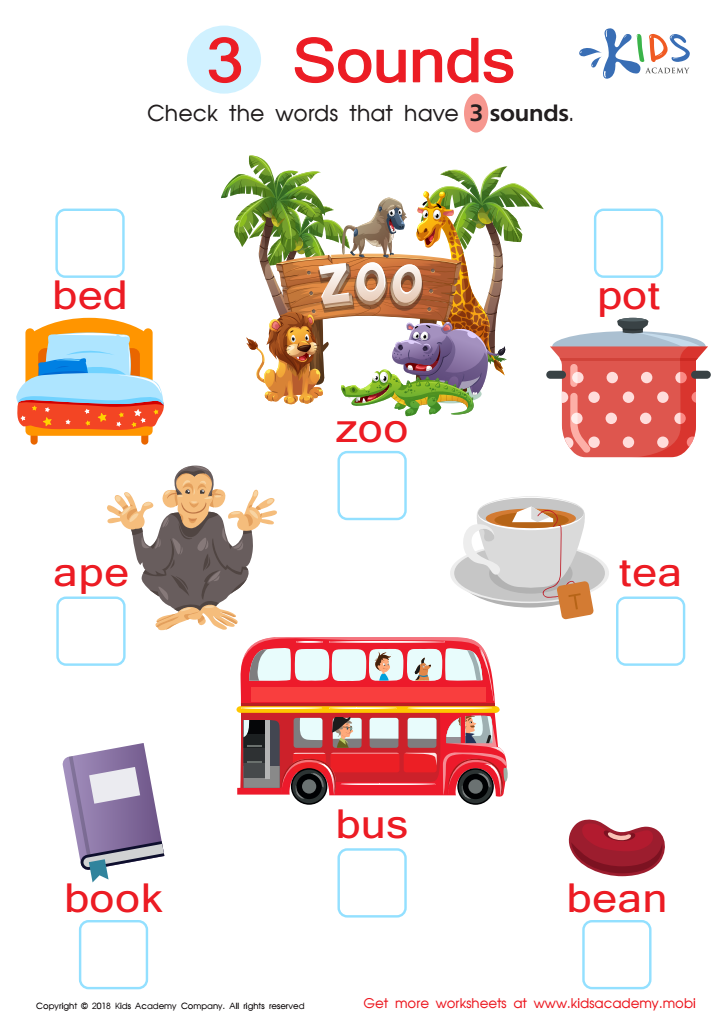
3 Sounds Worksheet
3 Sounds Worksheet

3 Sounds Worksheet

Kids will love learning with this free, colorful worksheet. It's full of familiar words they can name and sound out with three distinct sounds. This helps build decoding skills, plus they get to check off words they read. It's a fun way to teach children to identify and use sounds.
3 Sounds Worksheet
Worksheet
Long and Short E Worksheet

Long and Short E Worksheet

This fun printout makes learning phonics enjoyable for Grade 3 students. Get them to read the words “tree” and “bed” to recognize the different sounds of the letter “E”. After hearing the words they can color the words and the pictures to understand differences between long and short vowels.
Download (PDF)
Assign to My Students
Long and Short E Worksheet
Worksheet


Letter recognition and phonics are foundational skills in early literacy that parents and teachers should carefully nurture in children ages 6-7. At this pivotal stage in their development, children transition from being able to recognize individual letters to understanding how letters combine to form sounds and words. Letter recognition—the skill of identifying the letters and knowing their corresponding sounds—is crucial for word recognition and fluent reading. This bridges the gap between seeing written symbols and comprehending their meaning in spoken language.

Phonics, on the other hand, involves teaching children the relationships between letters and sounds systematically. By understanding phonics, children learn to decode words, improving their ability to read unfamiliar texts. Strong skills in these areas foster confidence and enjoyment in reading, which motivates children to read more frequently. This, in turn, allows them to practice and refine their reading skills, expanding their vocabulary and comprehension.

For both parents and teachers, promoting letter recognition and phonics is an investment in children's academic success. Early literacy proficiency correlates with better performance in all academic areas, as reading is vital for learning across the curriculum. By ensuring children master these skills, parents and teachers are laying the groundwork for a lifelong love of reading and learning.