
Reading skills improvement Normal Phonics Worksheets for Ages 6-7
6 filtered results
Difficulty Level
Grade
Age
-
From - To
Subject
Activity
Standards
Enhance your child's reading abilities with our engaging Normal Phonics Worksheets designed specifically for ages 6-7! These worksheets provide a fun and interactive way to develop essential phonics skills, including letter recognition, sound blending, and word formation. Tailored to support young learners, our resources promote phonetic awareness and boost reading confidence. With colorful illustrations and varied activities, children will enjoy practicing reading in an exciting format. Perfect for at-home learning or classroom use, these worksheets are easy to integrate into daily routines, helping to foster a love for reading while improving comprehension skills. Start your child's reading journey today!
Favorites
With answer key
Interactive
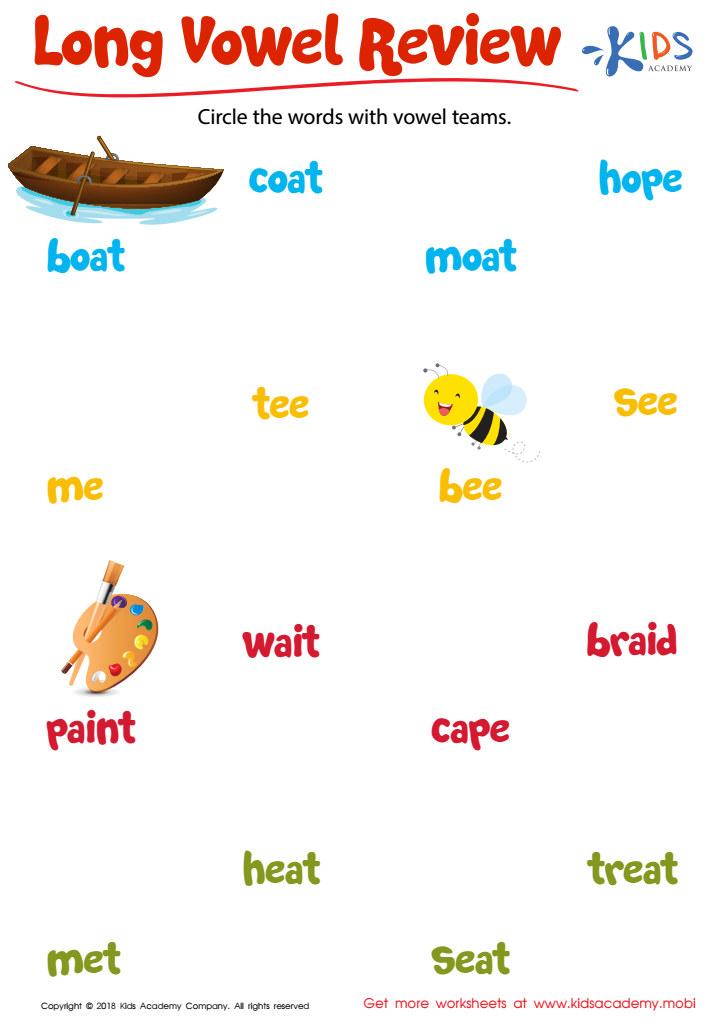
Long Vowel Review Worksheet
Vowel teams like "ea" and "ai" help us make words, and understanding these patterns aids emerging readers in becoming more fluent. This review worksheet has students finding words with vowel teams that make the long vowel sound, and helps them recognize high-frequency words.
 Assign to My Students
Long Vowel Review Worksheet
Worksheet
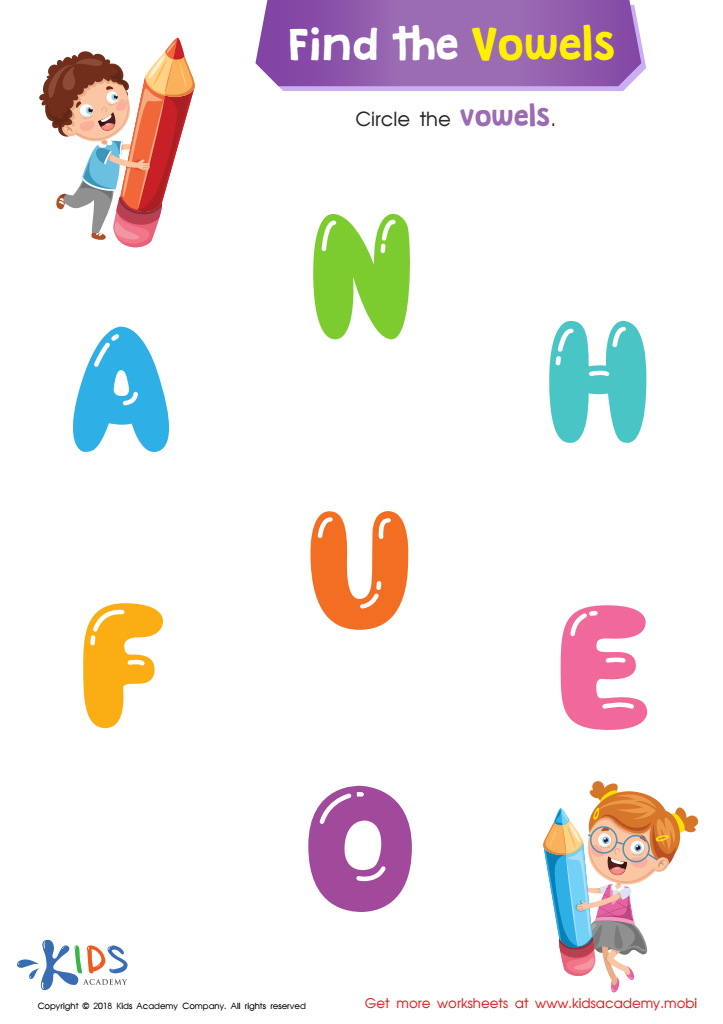
Find the Vowels Reading Worksheet
This worksheet helps kids identify vowels with bright colors and engaging activities to strengthen their visual discrimination and fine motor skills. Young learners will find it easy to succeed and be excited to keep reading!
Find the Vowels Reading Worksheet
Worksheet
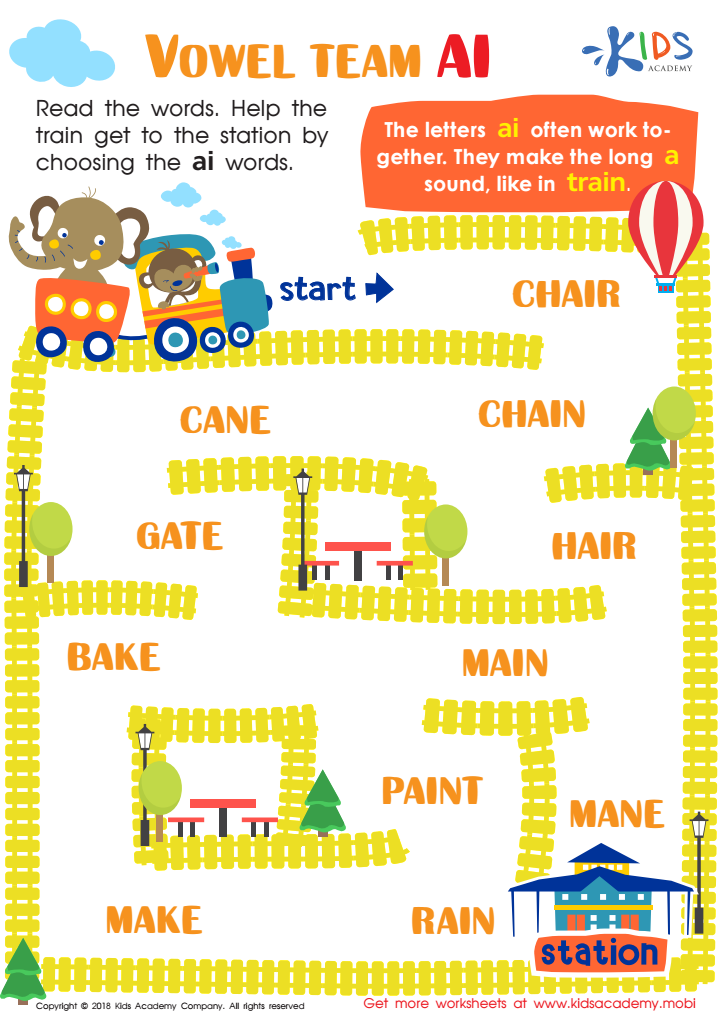
Vowel team ai Worksheet
Kids will have a blast learning about the -ai digraph with this fun worksheet. They'll read words with it and practice their motor skills as they help the animal duo get back to the train station. With success, they'll smile and enjoy the activity!
Vowel team ai Worksheet
Worksheet
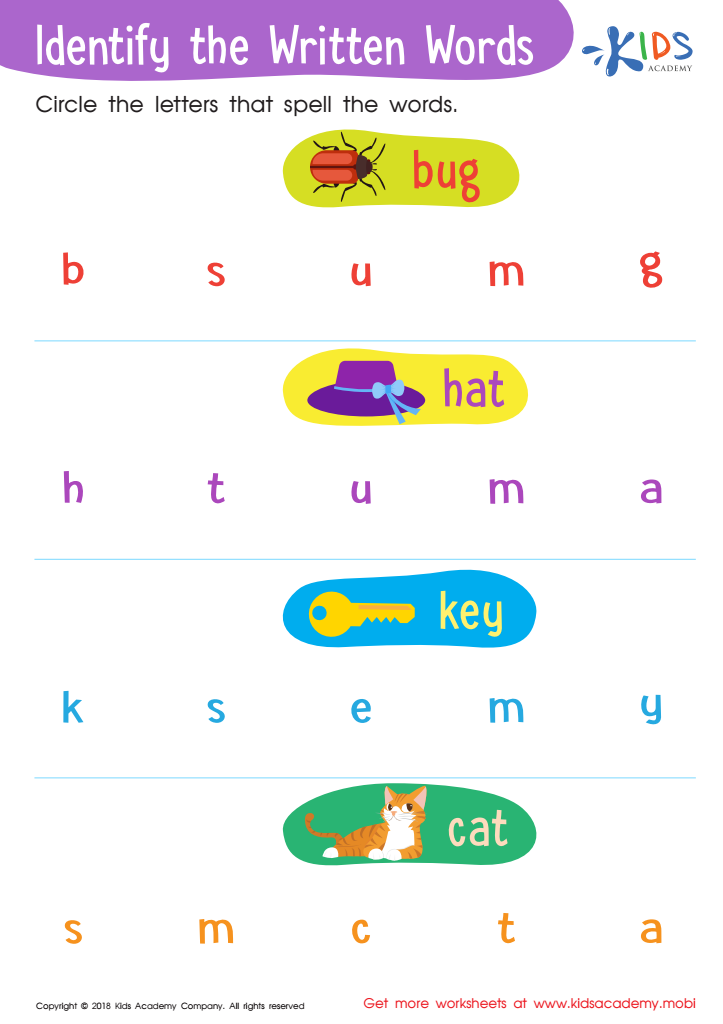
Identify the Written Words Worksheet
Have your students identify the objects on the printout, then spell the words. If they already know how to spell, this exercise should be easy. Help them circle the correct letters from the set to spell out the words. This is a great way to reinforce reading and spelling skills. Max 80 words.
Identify the Written Words Worksheet
Worksheet
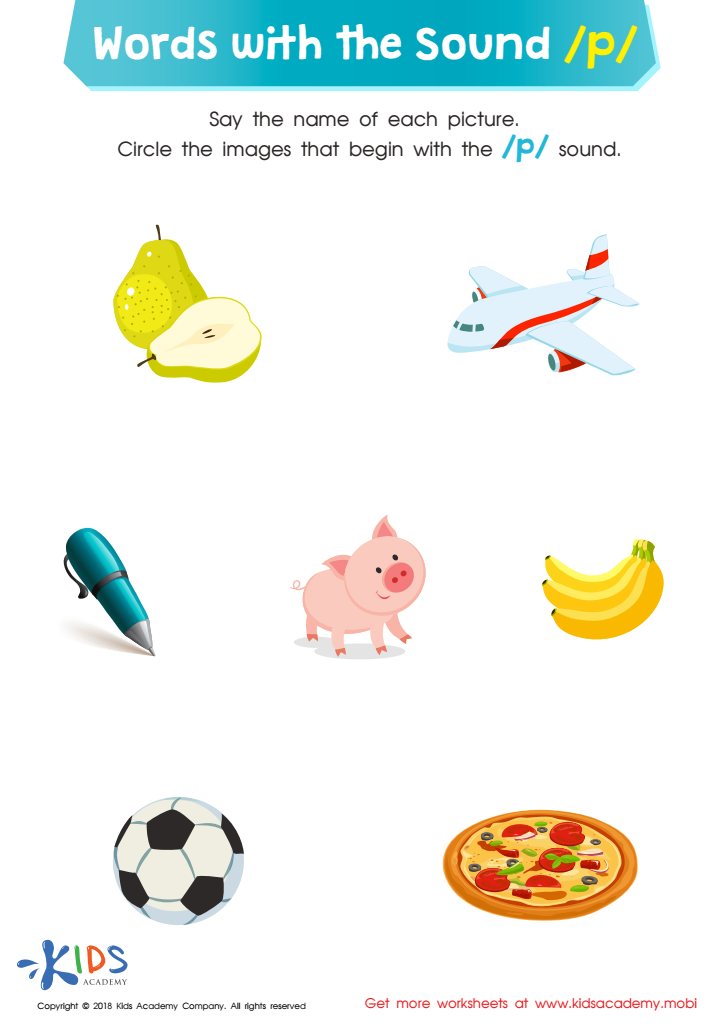
Words with sound p Reading Worksheet
Working on this fun worksheet? Name each picture aloud and listen carefully before circling those that start with the letter «p»! Pizza, pig, plane, or banana - practice phonics to help your child recognize the letter «p» sound for successful early reading and decoding!
Words with sound p Reading Worksheet
Worksheet
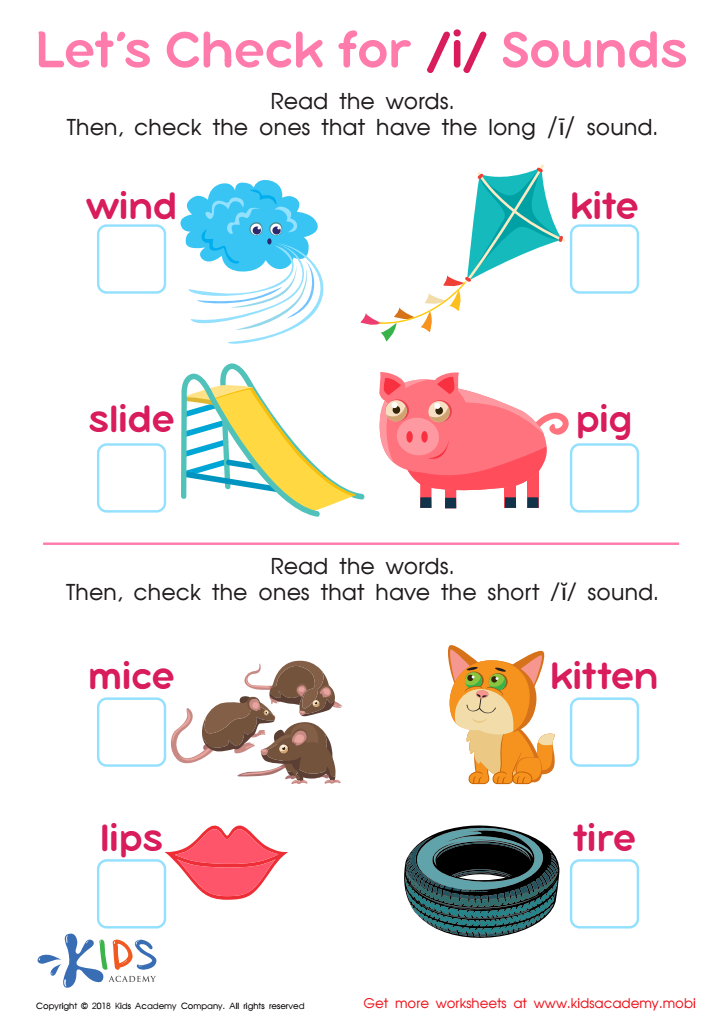
Let's Check for «i» Sounds Worksheet
This fun worksheet with pictures boosts phonics skills - differentiating between long «ī» and short «i» sounds in 1- and 2-syllable words. Kids use picture clues to read words, then check off the correct ones. It's a great way for new readers to practice early reading skills and find success on their own.
Let's Check for «i» Sounds Worksheet
Worksheet
Join Kids Academy for Free
Who is primarily going to use this learning content?








Reading skills are crucial for children aged 6-7, as this stage is foundational for their academic success and lifelong learning. Normal phonics instruction helps children understand the relationship between letters and sounds, essential for decoding words. When parents or teachers prioritize phonics improvement, they equip children with the tools needed to read independently, enhancing their confidence and motivation in literacy.
Children who develop strong phonics skills early are more likely to excel in reading fluency, comprehension, and overall language development. This competence not only supports their performance across various subjects but also fosters a love for reading that can influence their personal growth and creativity.
Moreover, children with solid reading skills tend to experience greater engagement in classroom activities, building important social skills and enhancing their ability to communicate effectively. Furthermore, phonics intervention can aid struggling readers, reducing frustration and providing them with equal opportunities to thrive academically.
By investing time and resources into improving reading skills through normal phonics methods, parents and teachers play a pivotal role in shaping children’s educational journeys and future prospects. This commitment ensures that all children have a strong literacy foundation, preparing them for the challenges and opportunities that lie ahead.







