Rhyming skills development Normal Phonics Worksheets for Ages 6-7
4 filtered results
-
From - To
Enhance your child's literacy with our Rhyming Skills Development worksheets, specially designed for ages 6-7. These engaging phonics worksheets focus on fostering rhyming recognition, a fundamental aspect of early reading skills. Each worksheet offers vibrant illustrations and imaginative activities that make learning exciting. Children will practice identifying and matching rhyming words, building the foundation for phonetic awareness while improving their vocabulary. Perfect for classroom or home use, these worksheets cater to diverse learning styles, ensuring that young learners develop confidence and comprehension. Encourage a love for language and creativity with our carefully crafted materials that promote phonics mastery through fun and interactive play!
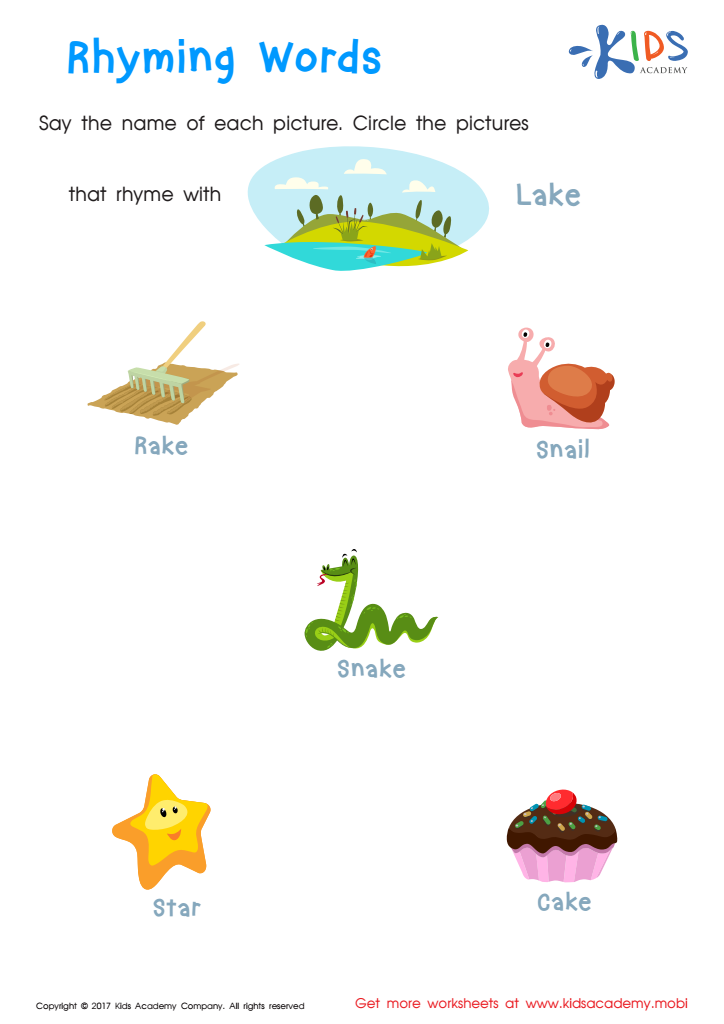
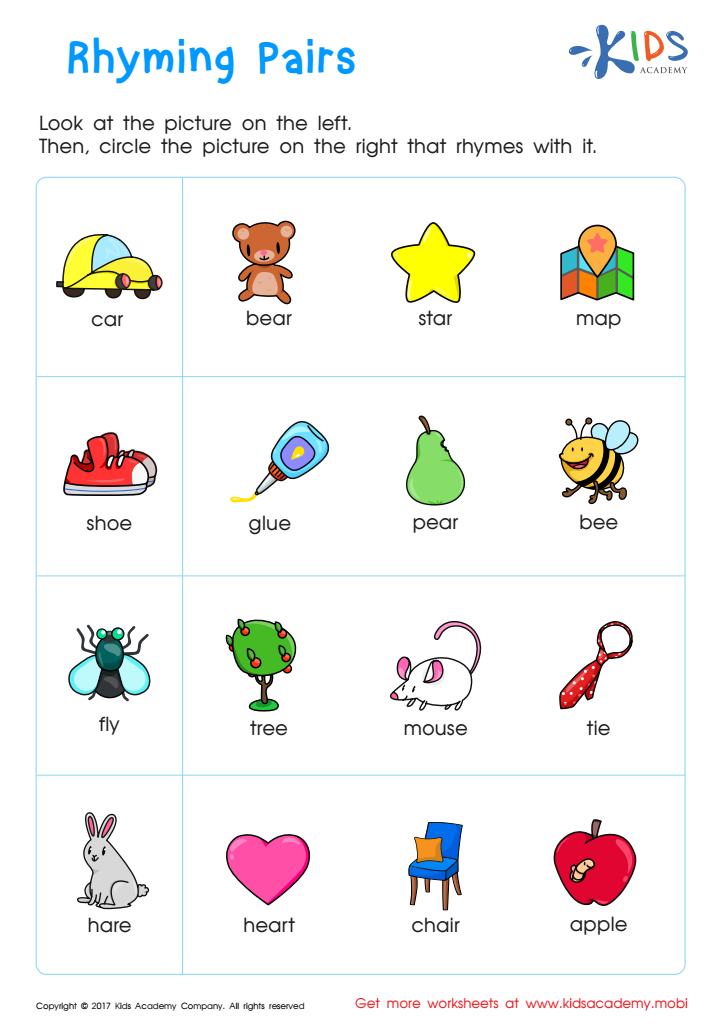
Rhyming Words Rhyming Worksheet
 Assign to My Students
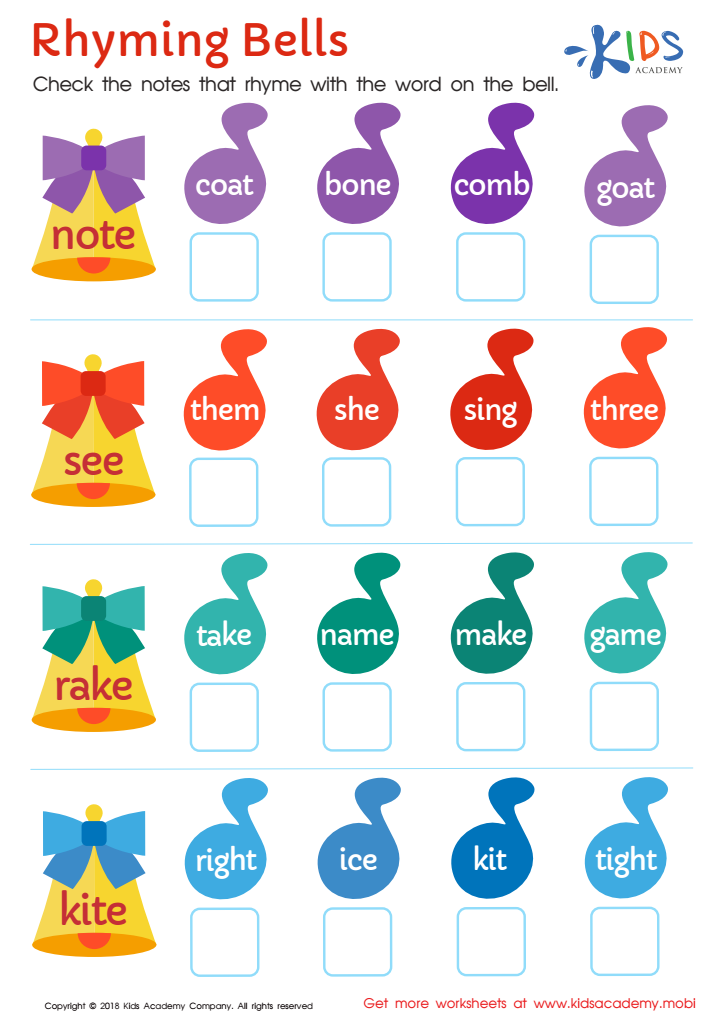
Rhyming Bells Worksheet
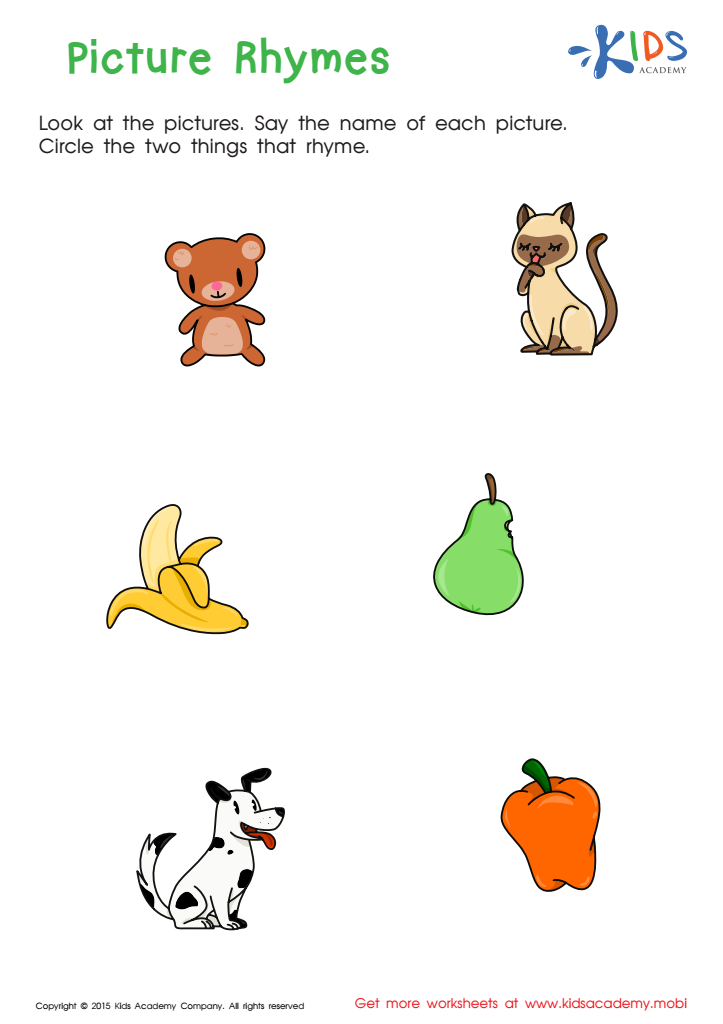
First Words: Picture Rhymes Worksheet








Rhyming skills and phonics development are crucial for children aged 6-7 as they form the foundation for reading and writing proficiency. At this age, children are transitioning from learning to read to reading to learn, making it essential to enhance their phonemic awareness—the ability to recognize, manipulate, and work with sounds. Rhyming serves as a playful yet powerful tool in this process. It helps kids recognize similarities and differences in sounds, which strengthens their phonological awareness, a critical precursor to effective reading strategies.
Additionally, engaging in rhyming activities can bolster vocabulary development and improve spelling skills. When children understand sounds and their corresponding letters, they gain the confidence to decode unfamiliar words independently. This skill is particularly applicable in typical phonics instruction, where decoding skills are examined to with simple and complex words using Letter and Sound correspondences.
Moreover, fun rhyming games and songs create an enjoyable learning environment that fuels motivation and enthusiasm. This intrinsic interest fosters a love for language and literature, encouraging children to become lifelong readers and learners. Therefore, parents and teachers should prioritize rhyming and phonics development, as they are essential for literacy and overall academic success.







