Sound differentiation Normal Phonics Worksheets for Ages 6-7
3 filtered results
-
From - To
Boost your child’s reading skills with our Sound Differentiation Normal Phonics Worksheets, specifically designed for ages 6-7. These engaging and educational worksheets help children differentiate between various sounds, fostering strong phonics foundations. Through fun exercises, young learners will practice identifying, matching, and distinguishing sounds, enhancing their phonemic awareness. Ideal for early graders, the worksheets align with educational standards, ensuring comprehensive support in sound recognition. Parents and teachers will find these resources invaluable for reinforcing classroom learning at home, aiding in smooth, confident reading development. Empower your child to master the magic of phonics with these reliable and interactive worksheets.
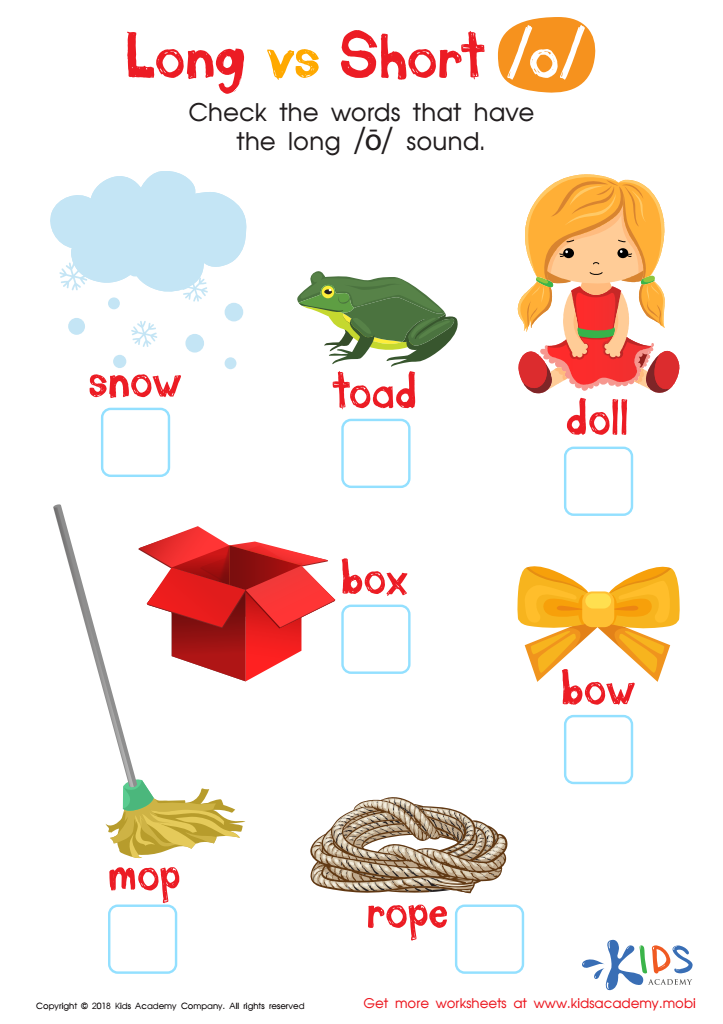
Long vs Short O Reading Worksheet
 Assign to My Students
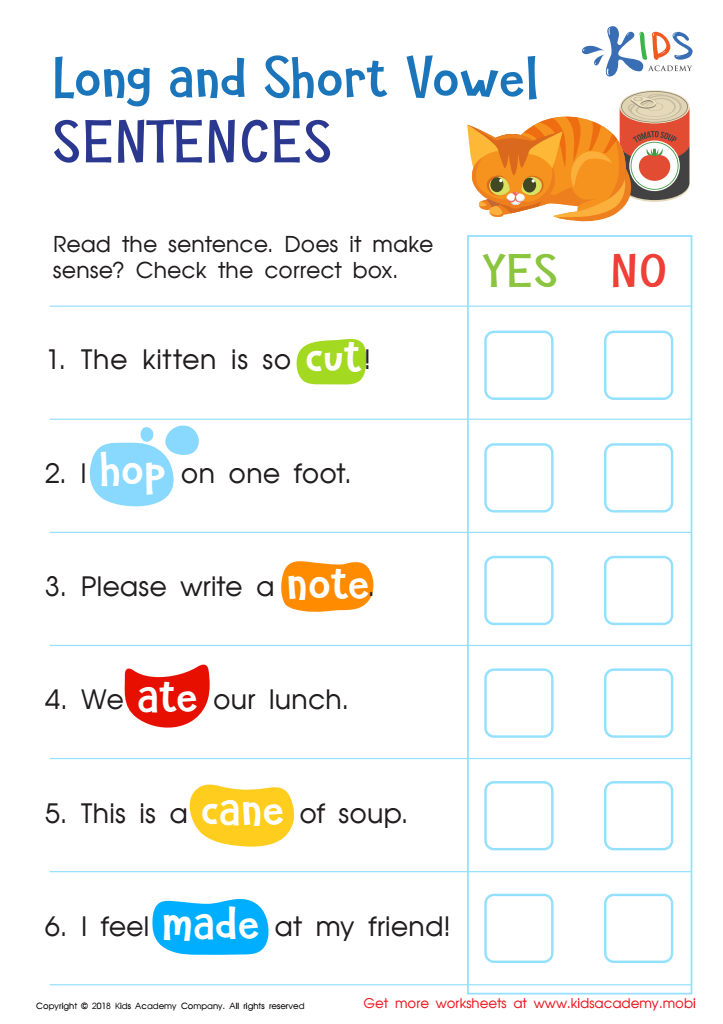
Long and Short Vowel Sentences: Assessment Worksheet
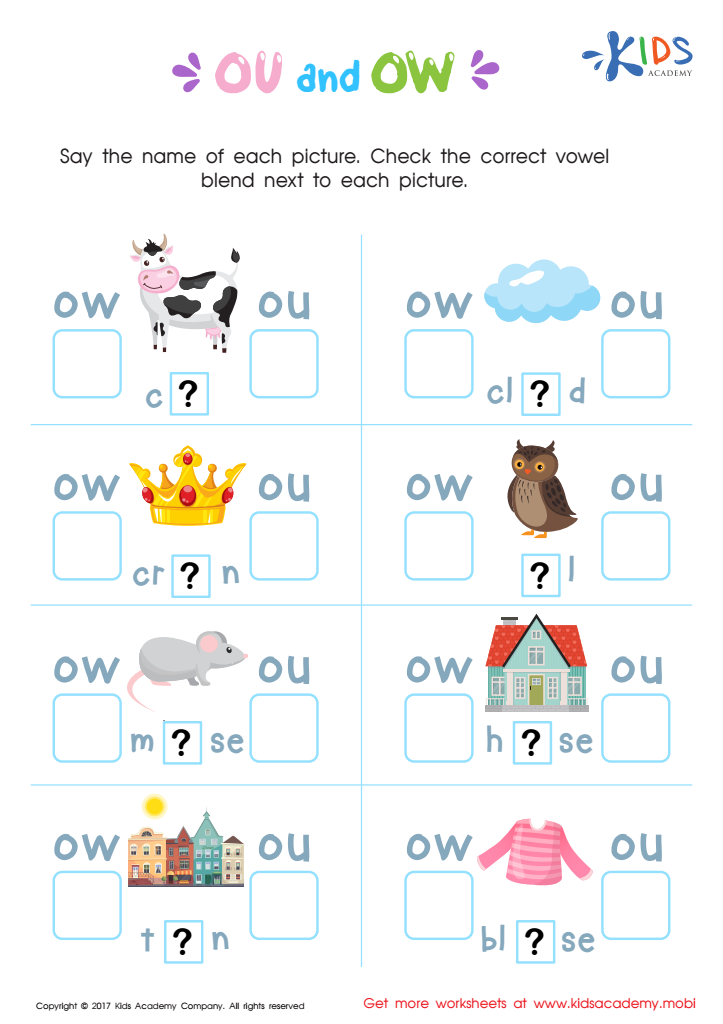
OU and OW Words Worksheet








Sound differentiation, a fundamental aspect of normal phonics instruction, is crucial for children aged 6-7 because it lays the groundwork for effective reading and writing skills. During this critical developmental period, children are transitioning from recognizing letters to interpreting the sounds these letters and combinations of letters make. This ability to discern subtle differences in sounds (phonemes) enhances their listening skills and linguistic comprehension.
When parents and teachers prioritize sound differentiation, they are equipping children with the tools needed to decode words by sounding them out. Such skills are foundational for successful literacy development. Recognizing and distinguishing between similar sounds (like "b" and "d" or short and long vowels) enables children to spell words more accurately and to read fluently.
Additionally, strong phonemic awareness positively impacts vocabulary acquisition, sentence structuring, and comprehension skills. This confident foundation also boosts children's enthusiasm for independent reading, illuminating their educational journey with curiosity and adventure.
Ultimately, focusing on sound differentiation from an early age sets up a lifelong love and proficiency in reading and writing, which are indispensable skills in both academic and personal contexts. By fostering these abilities, parents and teachers significantly contribute to a child’s cognitive development and overall learning success.







