Vocabulary enhancement Normal Short Vowels Worksheets for Ages 6-7
3 filtered results
-
From - To
Enhance your child’s vocabulary with our engaging Normal Short Vowels Worksheets, specifically designed for ages 6-7! These worksheets aim to improve short vowel recognition and phonics through fun activities, making learning a delightful experience. Your child will explore a variety of interactive exercises that help connect words with their meanings while reinforcing vocabulary skills. From filling in missing vowels to matching words with images, our resources provide ample practice. Perfect for classroom use or at-home learning, these worksheets encourage a strong foundation in language, ensuring your child excels in reading and comprehension. Explore our collection today and watch their vocabulary flourish!
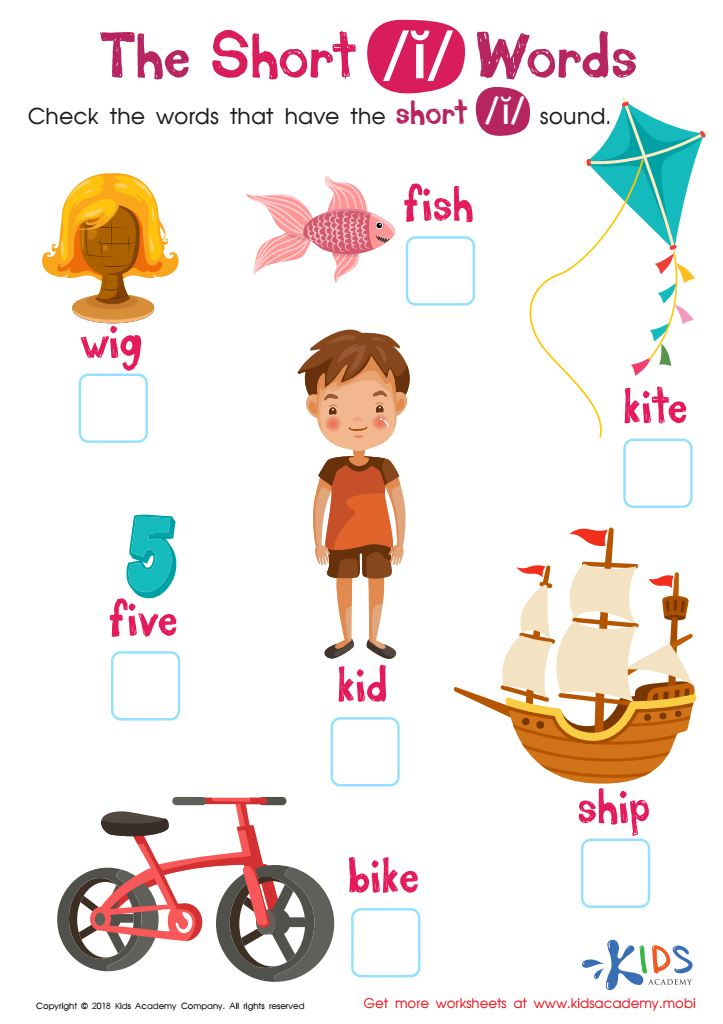
The Short I Words Reading Worksheet
 Assign to My Students
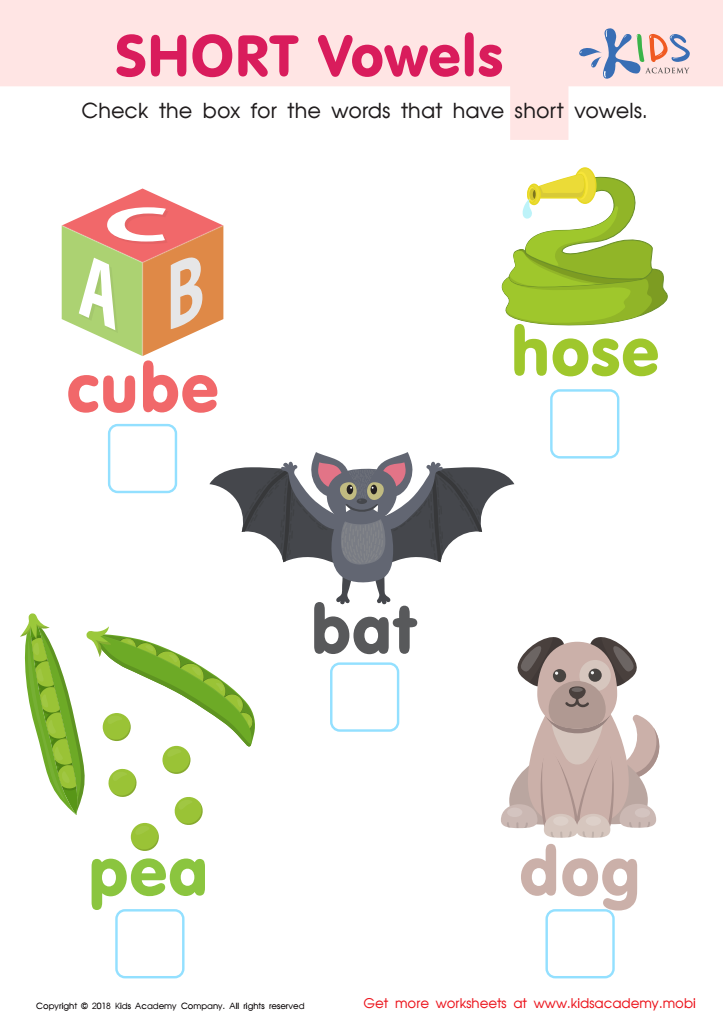
short vowels Worksheet
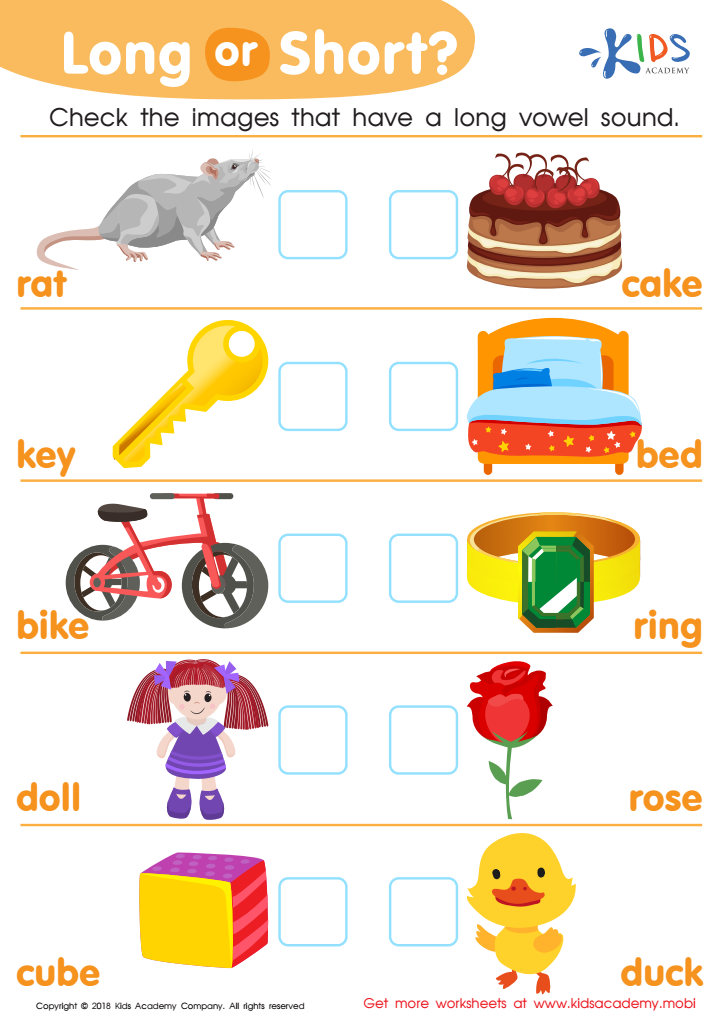
Long or Short Reading Worksheet



Vocabulary enhancement, particularly involving normal short vowels, is crucial for children aged 6-7, as this age marks a pivotal time in their language development. At this stage, children are transitioning from learning to read to reading to learn. Recognizing and correctly pronouncing short vowel sounds helps them decode words, laying the foundation for reading fluency and comprehension.
Parents and teachers should care about encouraging vocabulary growth in this area for several reasons. First, mastery of short vowel sounds unlocks a vast array of words, increasing a child's lexicon and boosting their confidence in both speaking and writing. Strong phonetic skills also improve spelling, as short vowels play key roles in forming many common words.
Additionally, a robust vocabulary supports academic achievement; children with a wider range of words can better express their thoughts and understand concepts across subjects. Finally, engaging with vocabulary enhancement through games, storytelling, and interactive activities cultivates a love for learning. By prioritizing vocabulary skills, parents and teachers can empower children to communicate effectively, fostering their overall cognitive and social development.