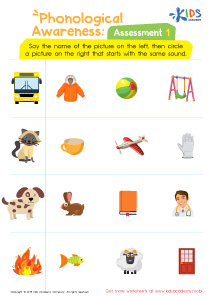
Word Recognition Normal Two Letter Phonics Worksheets for Ages 6-7
5 filtered results
-
From - To
Boost your child's reading skills with our engaging "Word Recognition Normal Two Letter Phonics Worksheets" designed for ages 6-7! These worksheets provide a fun and interactive way for young learners to enhance their phonics knowledge through word recognition. Each activity focuses on building vocabulary with easy-to-understand, two-letter phonics words, making reading approachable and enjoyable. Tailored for early grade learners, the worksheets promote essential skills while fostering confidence in young readers. Ideal for home or classroom use, these resources support literacy development and help your child pave the way for a successful reading journey. Get ready to watch them shine!
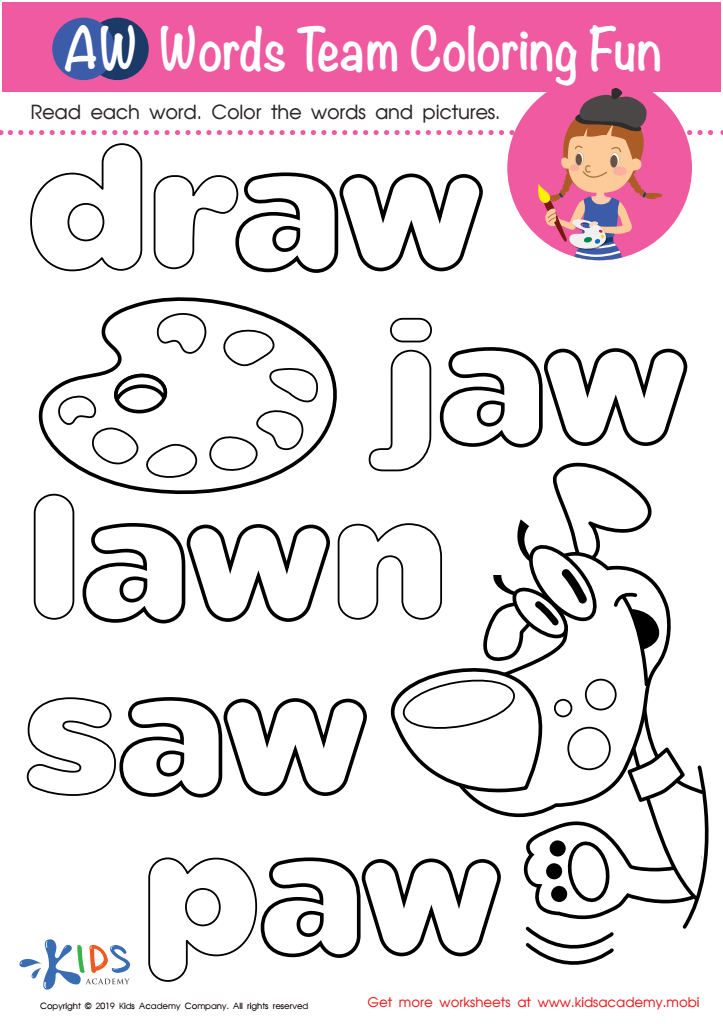
AW Words Team Coloring Fun Worksheet
 Assign to My Students
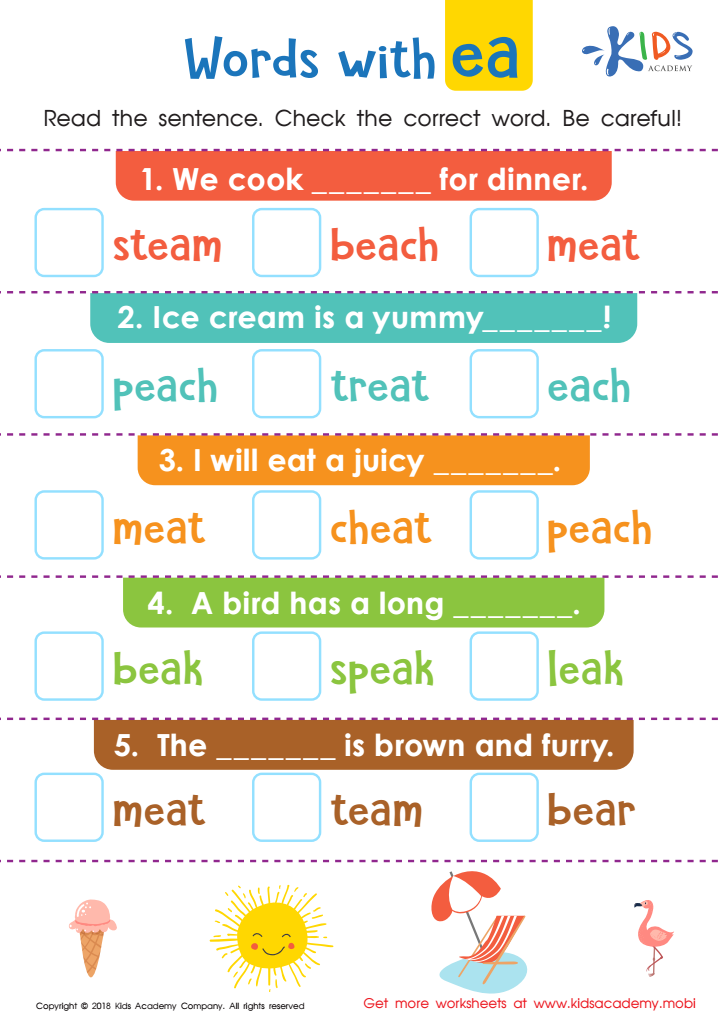
Words with ea Worksheet
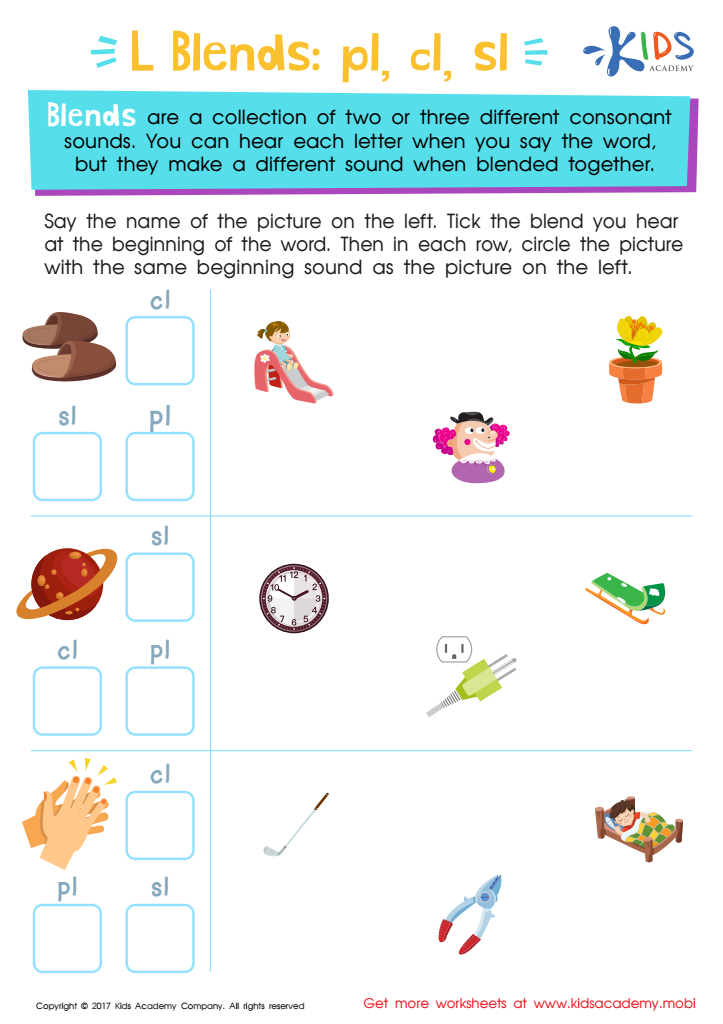
L Blends: "Pl", "Cl" and "Sl" Printable
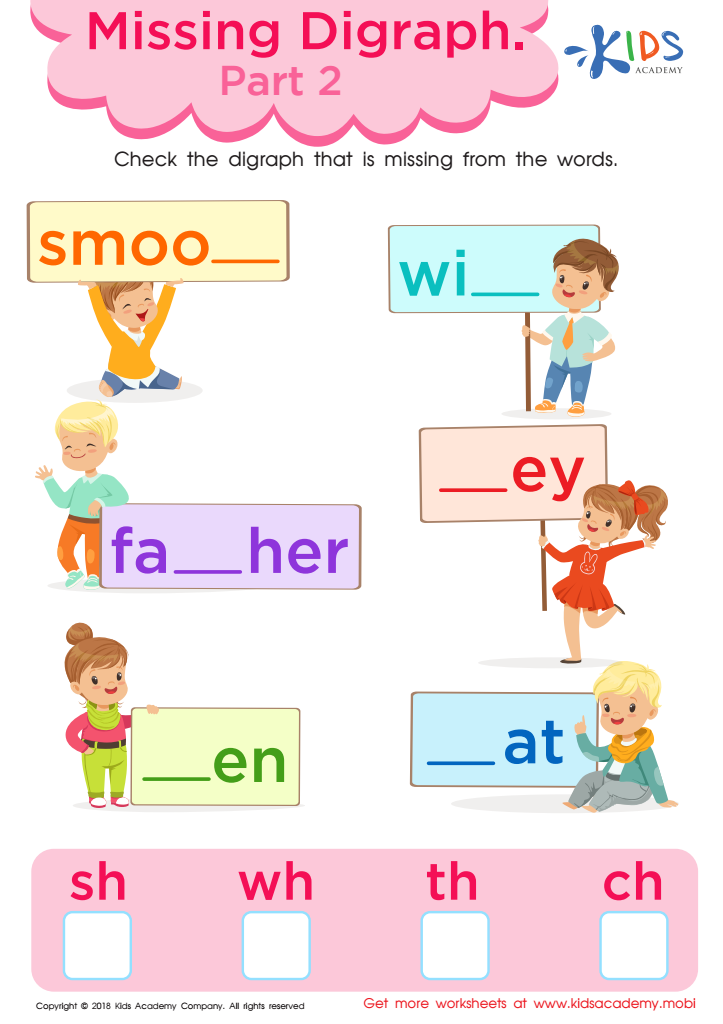
Missing Digraph: Part 2 Worksheet
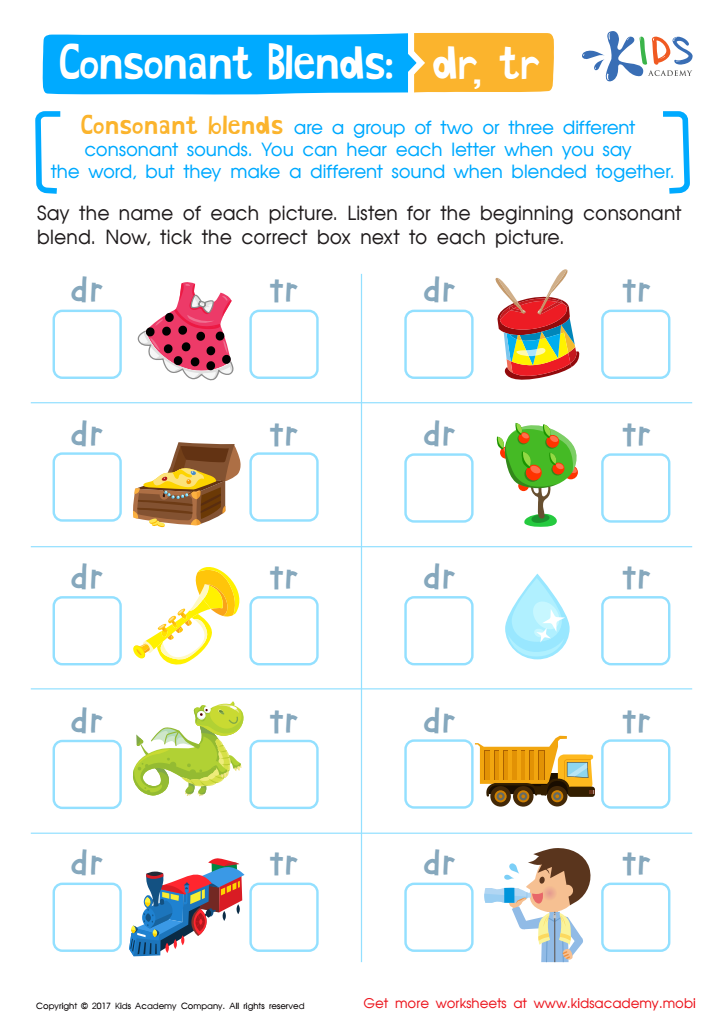
Consonant Blends: "Dr" and "Tr" Printable



Word recognition and phonics are foundational skills crucial for literacy development in children aged 6-7. Normal two-letter phonics involves understanding how pairs of letters work together to formulate sounds and words. For parents and teachers, fostering these skills is essential for several reasons.
Firstly, developing strong word recognition skills enhances reading fluency, allowing children to decode text more rapidly and accurately. This boosts their overall confidence and engagement with reading materials, instilling a love for literature early on.
Secondly, mastery of two-letter phonics aids in expanding vocabulary. As children learn to recognize sounds and patterns, they can tackle more complex words as they progress, ultimately leading to greater comprehension in both reading and writing tasks.
Moreover, focusing on phonics encourages strong communication skills. Children who grasp sound-letter relationships can better express themselves in writing, a vital skill in both academic and social scenarios.
Finally, early intervention in word recognition and phonics creates lifelong learners. By equipping children with robust phonetic skills, parents and teachers set the stage for ongoing literacy success, cultivating critical thinking skills needed for future academic pursuits. Overall, supporting word recognition normal two-letter phonics is key to laying the groundwork for a child's educational journey.