Lowercase identification Normal Upper & Lowercase Letters Worksheets for Ages 6-7
4 filtered results
-
From - To
Enhance your child's literacy skills with our Lowercase Identification Worksheets designed specifically for ages 6-7. Our engaging and colorful activities feature both normal uppercase and lowercase letters, helping young learners recognize and differentiate between them effortlessly. These worksheets aim to build foundational reading and writing skills through fun exercises that encourage active participation. Ideal for classroom settings or at-home practice, each worksheet nurtures confidence in letter recognition and lays the groundwork for effective communication. Give your child the tools they need for academic success while making learning enjoyable. Explore our comprehensive resources and watch their reading abilities flourish!
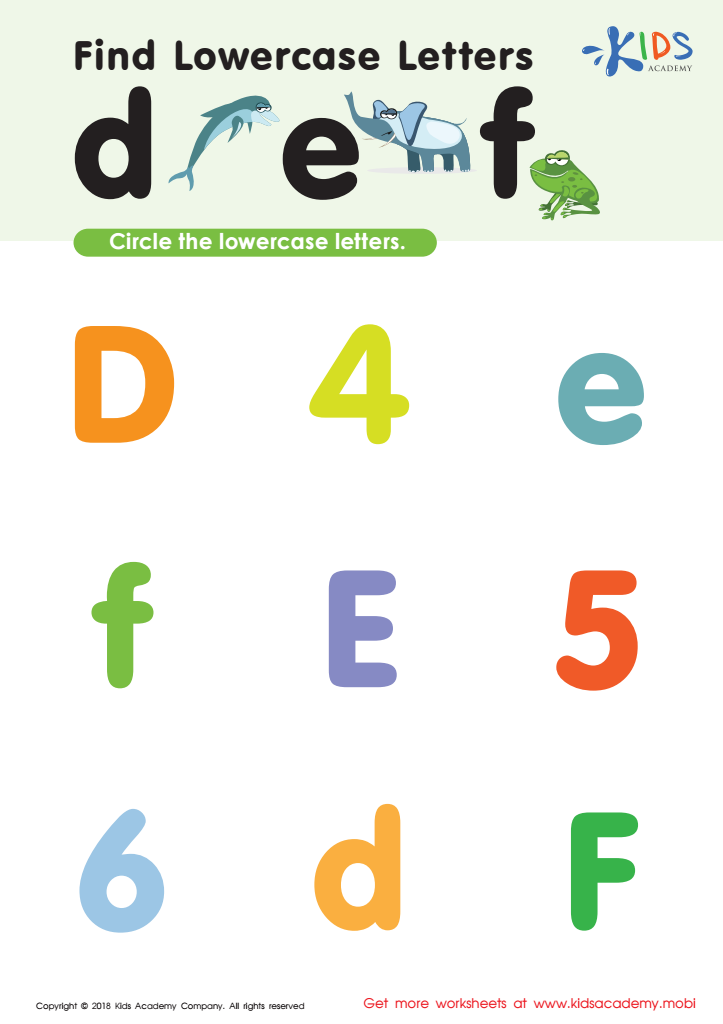
Find Lowercase Letters d e f Worksheet
 Assign to My Students

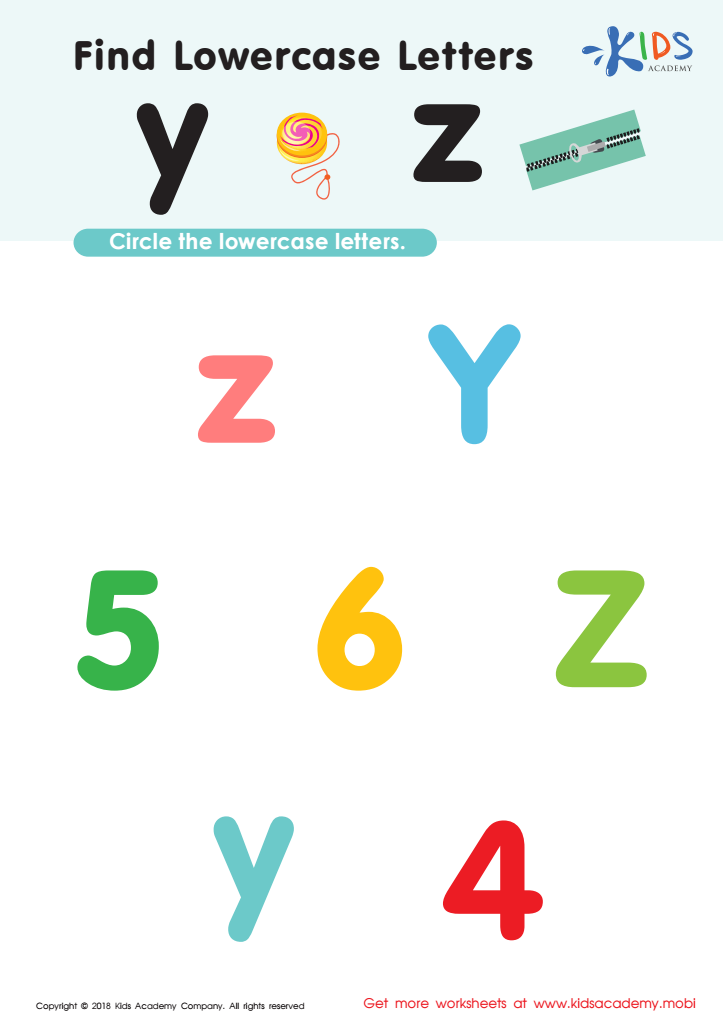
Find Lowercase Letters y z Worksheet

Find lowercase letters a b c Worksheet

Find Lowercase Letters v w x Worksheet






Lowercase letter identification is crucial for children aged 6-7, as it significantly impacts their reading and writing skills. During this stage of development, children are transitioning from learning the alphabet to reading and composing sentences, making it essential for them to recognize both uppercase and lowercase letters. Lowercase letters account for about 90% of letters used in everyday text and understanding them is vital for fluent reading.
When parents and teachers prioritize lowercase letter identification, they equip children with the tools they need to decode words and comprehend texts. This enhances their literacy skills, fostering confidence and encouraging a love for reading. Furthermore, mastering lowercase letters helps with handwriting development, ensuring that children can express themselves clearly and effectively.
Engaging children through playful activities like letter-matching games, storybooks, or interactive apps can reinforce this learning in a fun and meaningful way. Teachers and parents can collaborate to provide an enriched environment that supports letter recognition and promotes literacy at home and in the classroom. Ultimately, understanding lowercase letters not only lays the groundwork for reading proficiency but also enhances communication skills vital for academic success. This foundation prepares children for a future of learning and exploration.







