
Reading skills improvement Normal Vowels Worksheets for Ages 6-7
4 filtered results
Difficulty Level
Grade
Age
-
From - To
Subject
Activity
Standards
Enhance your child's reading skills with our engaging Normal Vowels Worksheets, designed for ages 6-7. Perfect for early learners, these worksheets focus on recognizing, identifying, and practicing short and long vowel sounds through interactive, fun activities. Each worksheet encourages children to develop essential reading fluency and comprehension skills, fostering a love for reading. Our user-friendly resources are ideal for both classroom and home use, making learning enjoyable and effective. Help your child become a confident reader while mastering essential vowel concepts with our comprehensive collection of worksheets tailored to support literacy development and reading skills improvement. Start your journey today!
Favorites
With answer key
Interactive
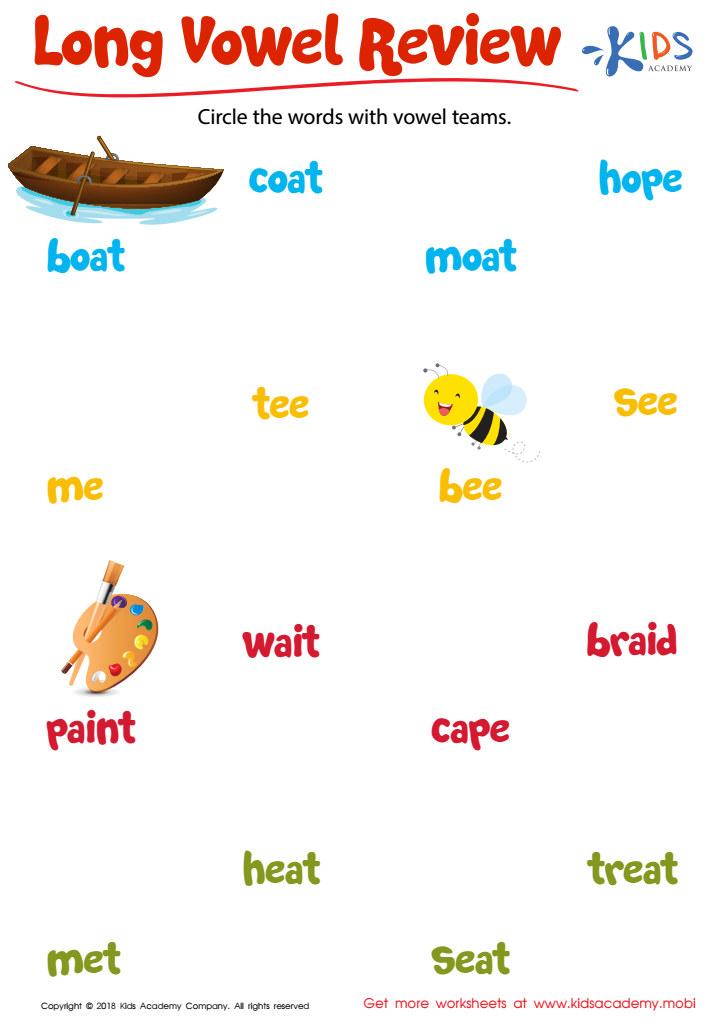
Long Vowel Review Worksheet
Vowel teams like "ea" and "ai" help us make words, and understanding these patterns aids emerging readers in becoming more fluent. This review worksheet has students finding words with vowel teams that make the long vowel sound, and helps them recognize high-frequency words.
 Assign to My Students
Long Vowel Review Worksheet
Worksheet
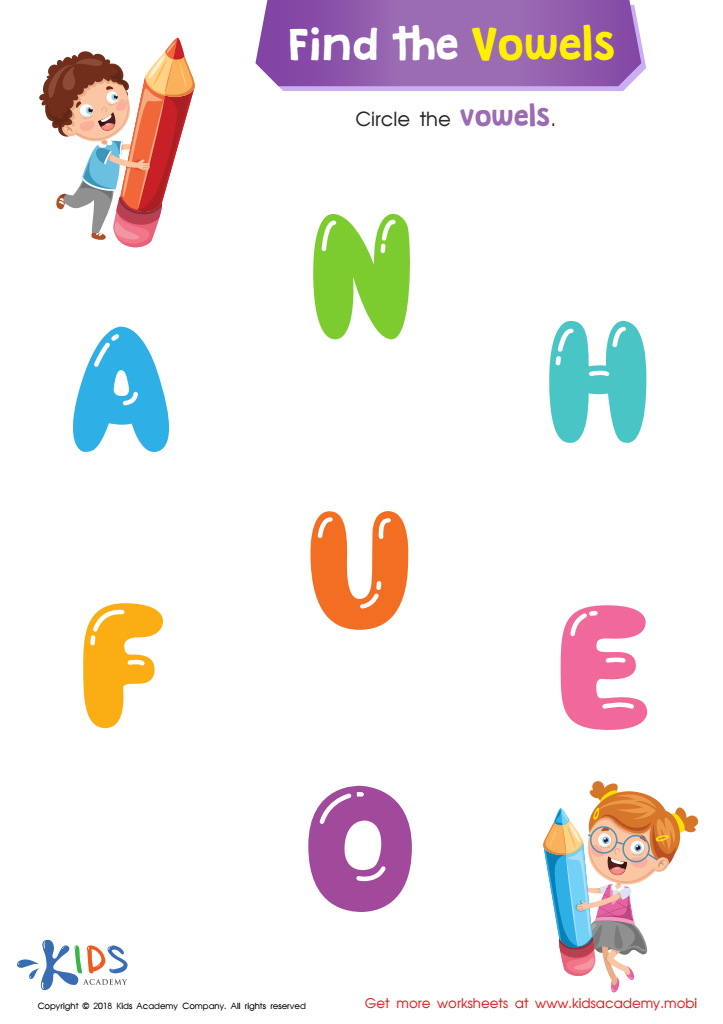
Find the Vowels Reading Worksheet
This worksheet helps kids identify vowels with bright colors and engaging activities to strengthen their visual discrimination and fine motor skills. Young learners will find it easy to succeed and be excited to keep reading!
Find the Vowels Reading Worksheet
Worksheet
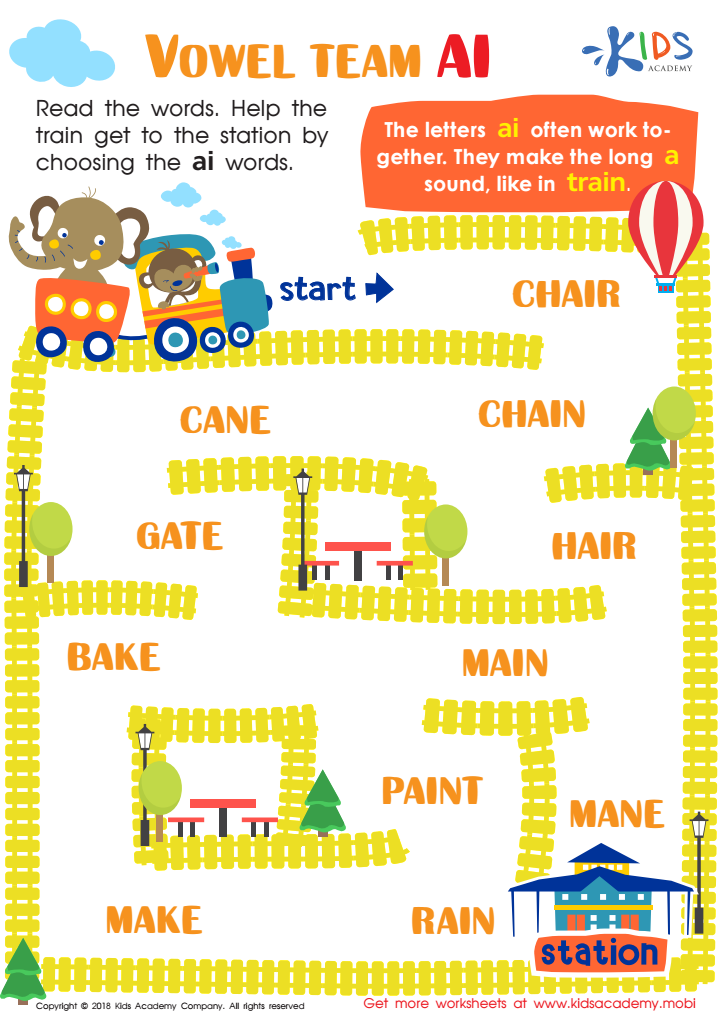
Vowel team ai Worksheet
Kids will have a blast learning about the -ai digraph with this fun worksheet. They'll read words with it and practice their motor skills as they help the animal duo get back to the train station. With success, they'll smile and enjoy the activity!
Vowel team ai Worksheet
Worksheet
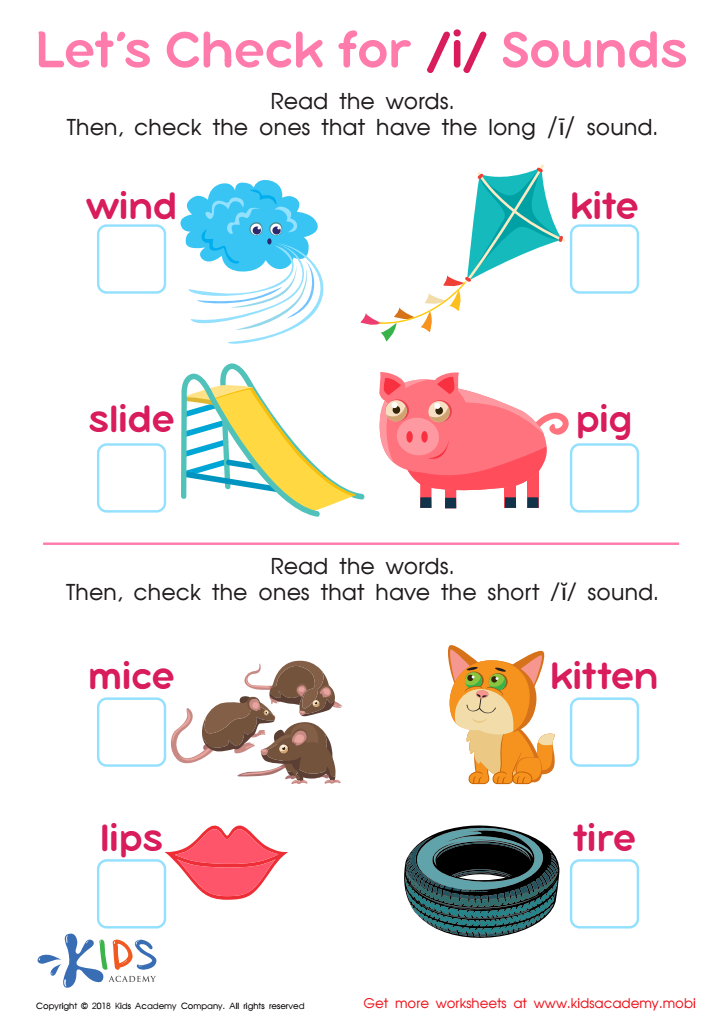
Let's Check for «i» Sounds Worksheet
This fun worksheet with pictures boosts phonics skills - differentiating between long «ī» and short «i» sounds in 1- and 2-syllable words. Kids use picture clues to read words, then check off the correct ones. It's a great way for new readers to practice early reading skills and find success on their own.
Let's Check for «i» Sounds Worksheet
Worksheet
Join Kids Academy for Free
Who is primarily going to use this learning content?





Parents and teachers play a crucial role in developing reading skills, especially for children aged 6-7, as they form the foundation for future academic success. During this stage, children are learning to decode words, comprehend texts, and build vocabulary. Focusing on normal vowels—A, E, I, O, U—is essential since these sounds are foundational to word recognition and pronunciation.
Improving reading skills at this age leads to enhanced literacy, which directly impacts children’s confidence and academic performance. Strong reading skills enable children to engage with various subjects, fostering creativity and critical thinking. When children master normal vowels, they can blend sounds to form simple words, paving the way for more complex reading tasks in the future.
Furthermore, early intervention in reading develops a love for books, making reading enjoyable. Encouraging parents and teachers to create engaging literacy experiences can stimulate interest in stories and learning. Understanding the importance of vowels equips adults to support their children's reading journey through techniques such as phonics games and read-aloud sessions.
Investing time in improving reading skills fosters a lifelong appreciation for reading, ultimately benefiting children's intellectual growth and well-being. In essence, nurturing early reading skills sets the stage for a brighter, more informed future.






