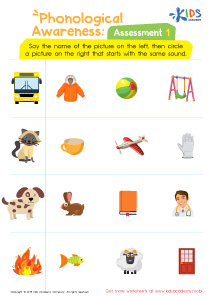
Sound differentiation Normal Vowels Worksheets for Ages 6-7
3 filtered results
Difficulty Level
Grade
Age
-
From - To
Subject
Activity
Standards
Enhance your child's phonetic skills with our "Sound Differentiation Normal Vowels Worksheets" designed specifically for ages 6-7. These engaging worksheets focus on helping early learners differentiate between vowel sounds, a key component in reading and literacy development. Every worksheet promotes auditory discrimination through fun activities and interactive lessons, making learning enjoyable and effective. Children will practice identifying, isolating, and categorizing vowel sounds in various engaging contexts. Perfect for classroom use or at-home practice, these worksheets are a valuable resource to build confidence and foundational reading skills. Explore and download our colorful and creative worksheets to support your child's learning journey today!
Favorites
With answer key
Interactive
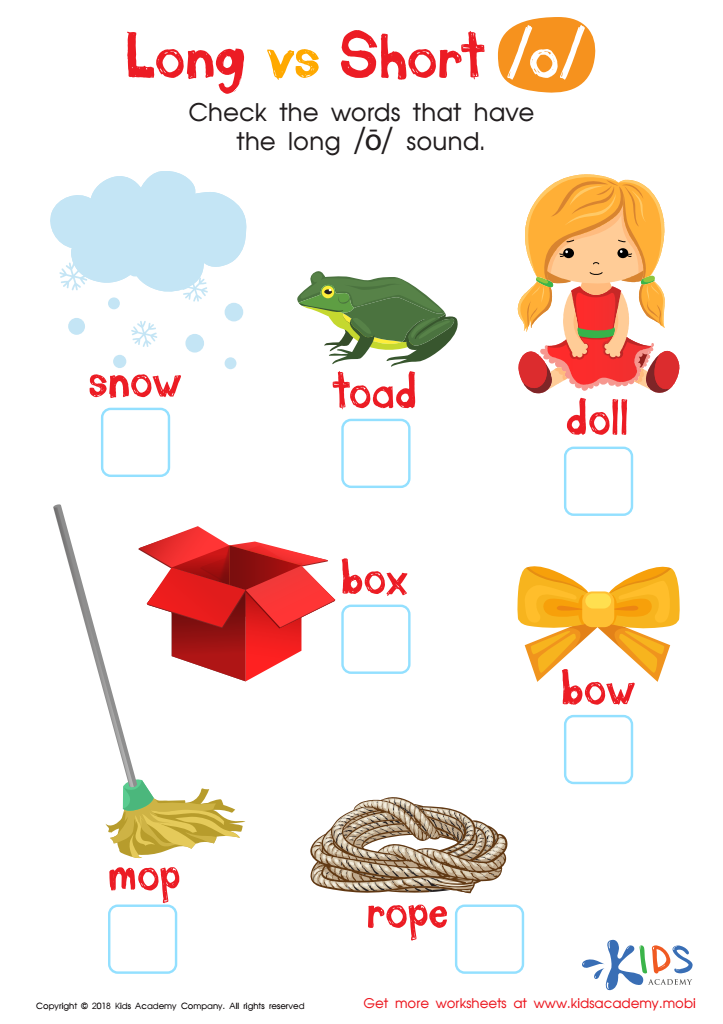
Long vs Short O Reading Worksheet
Help your child learn to identify the long and short «o» sound with this colourful worksheet. Guide them as they spot words with the long or short «o» sound. With practice, your child will find it easier to tell the difference between the two.
 Assign to My Students
Long vs Short O Reading Worksheet
Worksheet
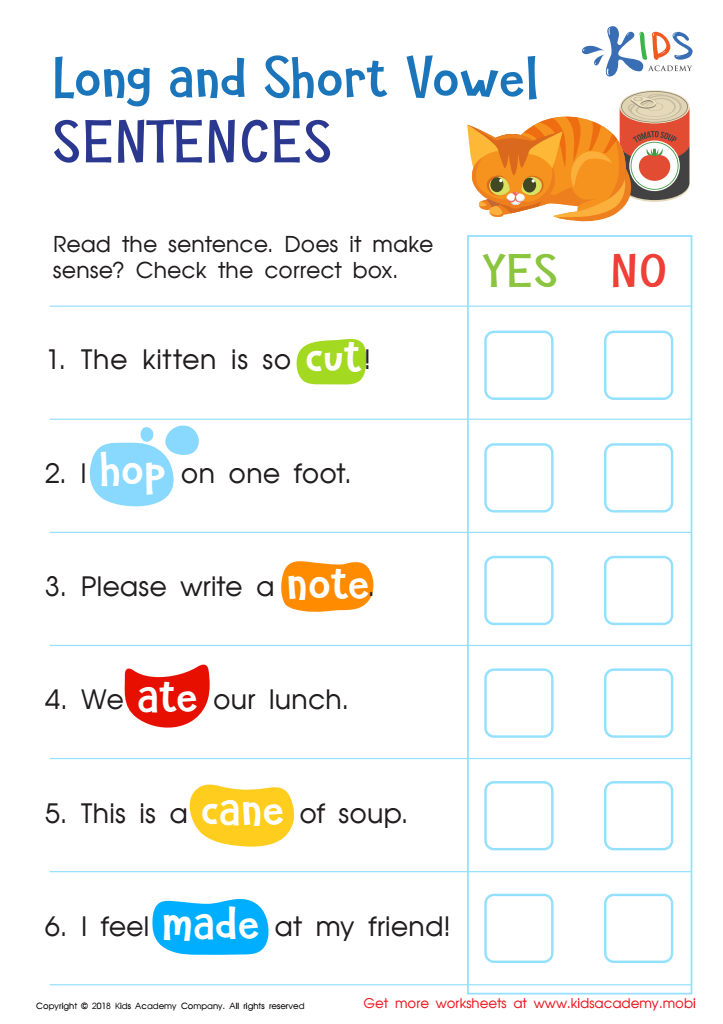
Long and Short Vowel Sentences: Assessment Worksheet
This printable worksheet helps kids practice differentiating between short and long vowel sounds. They'll use context clues to figure out which words make sense in simple sentences. A great way to build reading and writing skills!
Long and Short Vowel Sentences: Assessment Worksheet
Worksheet
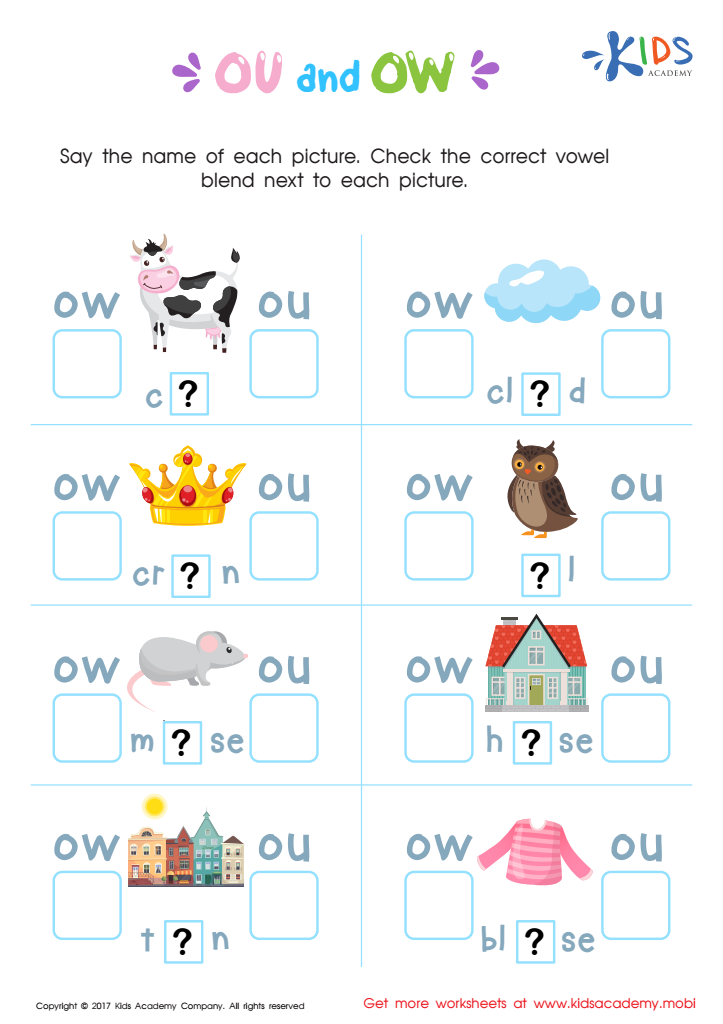
OU and OW Words Worksheet
Enhance your child's reading and spelling with this ou and ow words worksheet! Fun pictures and common words make mastering the diphthongs ou and ow easy and enjoyable.
OU and OW Words Worksheet
Worksheet
Join Kids Academy for Free
Who is primarily going to use this learning content?





Parents and teachers should prioritize sound differentiation, specifically with normal vowels, for children aged 6-7 because it is fundamental to literacy development. At this age, children are at a critical stage for acquiring phonemic awareness, which is the ability to hear, identify, and manipulate phonemes in spoken words. Mastering normal vowels helps children decode words and improves their spelling and reading fluency.
Difficulties with vowel sounds can lead to challenges in reading and writing, which might cause frustration and decreased confidence. By focusing on sound differentiation, educators can enhance students' listening skills and vocabulary, making learning more engaging and effective. When children can differentiate between vowel sounds such as "a," "e," "i," "o," and "u," they gain important tools to tackle new phonetic structures, helping them become more independent readers.
Additionally, engaging parents in this process encourages at-home practice, creating a supportive learning environment. Fun activities like rhyming games, singing, and phonics-based exercises can make sound differentiation enjoyable. Overall, fostering normal vowel differentiation lays a strong foundation for a child's ongoing literacy journey and academic success, leading to increased confidence and a lifelong love for reading.