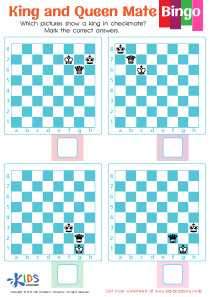
Chess strategy understanding Normal Chess Worksheets for Ages 6-7
3 filtered results
-
From - To
Unlock the world of chess with our engaging "Chess Strategy Understanding Worksheets" tailored for ages 6-7! Designed to make learning fun, these worksheets introduce young learners to essential chess strategies while enhancing their problem-solving skills. Kids will explore concepts like piece movement, basic tactics, and board control, all presented in a clear and captivating format. Perfect for home or classroom use, these resources foster critical thinking and concentration. By incorporating playful activities and engaging illustrations, our worksheets keep children motivated and excited about chess. Equip your child with strategic thinking skills that will benefit them both on and off the board!
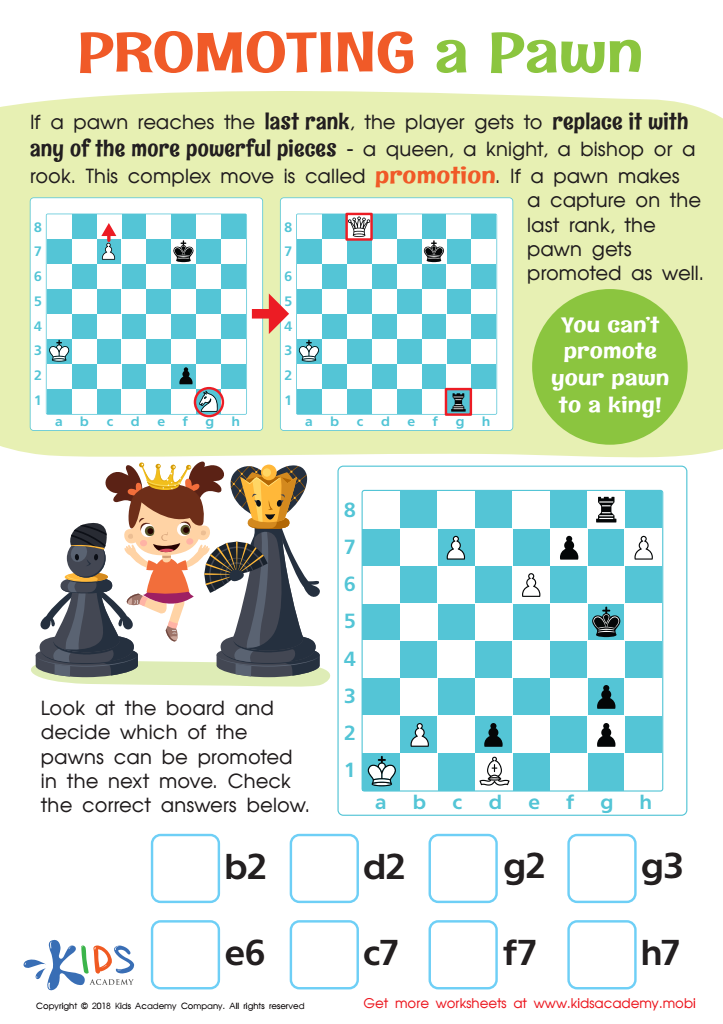
Promoting a Pawn Worksheet
 Assign to My Students
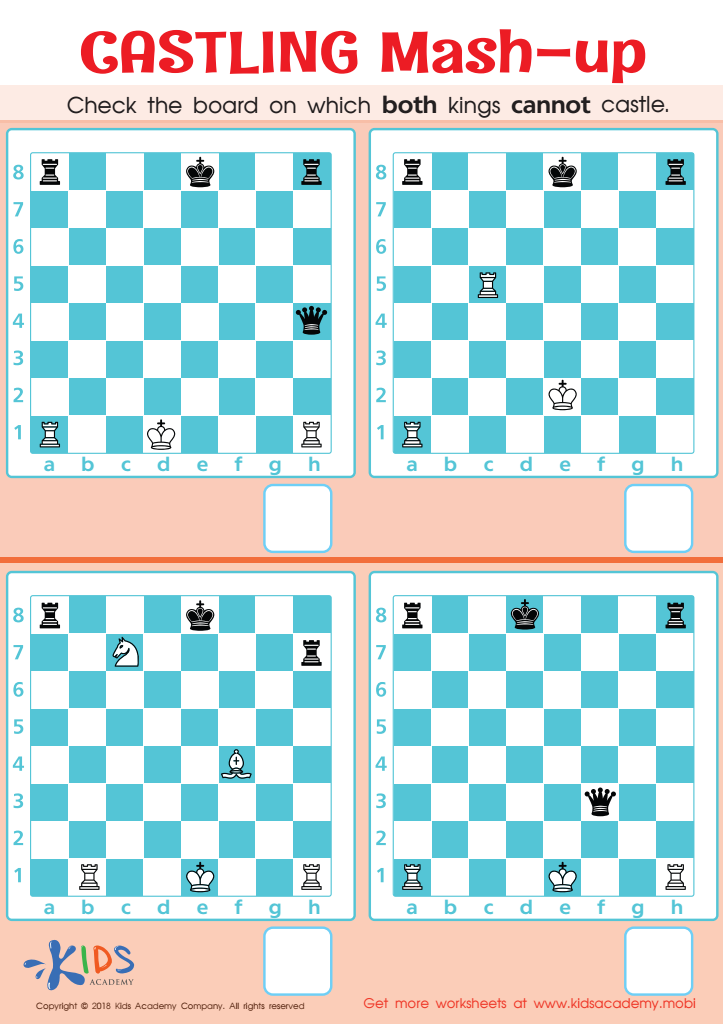
Castling Mash–up Worksheet
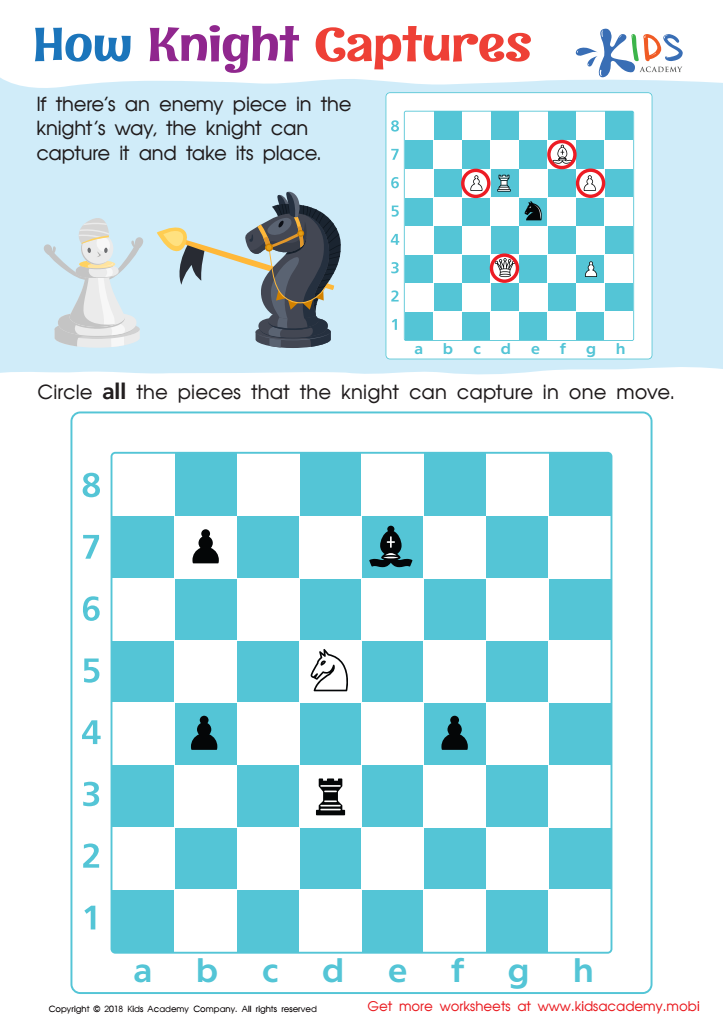
How Knight Captures Worksheet








Understanding chess strategy at an early age, particularly for children aged 6-7, is crucial for their cognitive development and personal growth. Engaging young learners in chess helps enhance critical thinking, problem-solving skills, and patience. As they navigate the game's complexities, children learn to anticipate their opponent's moves, develop foresight, and make strategic decisions. This thought process translates beyond the chessboard into everyday situations, aiding in academics and social interactions.
Furthermore, chess encourages creativity, as players invent strategies and adapt to dynamic scenarios. This imagination is vital in fostering innovation and flexibility in young minds. Chess also teaches the importance of sportsmanship and resilience; children experience winning and losing graciously, which builds emotional intelligence.
For parents and teachers, promoting chess aligns with educational goals by cultivating a love for learning and instilling discipline. As children routinely practice chess, they enhance focus and concentration—skills invaluable not only in other subjects but also in daily life.
In summary, investing time in understanding chess strategy at a young age equips children with essential life skills, encourages social interaction, and supports their overall academic progress, making it an activity well worth pursuing.