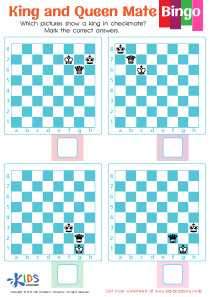
Memory enhancement Normal Chess Worksheets for Ages 6-7
3 filtered results
-
From - To
Unlock the full potential of your child's memory with our Memory Enhancement Normal Chess Worksheets designed for ages 6-7! These engaging and educational worksheets are perfect for young chess enthusiasts looking to sharpen their cognitive skills. With fun puzzles and challenges, your child will not only improve their memory but also develop critical thinking, concentration, and problem-solving abilities. Whether they are just starting to learn chess or have some experience, our worksheets provide an excellent foundation and boost intellectual growth. At Kid’s Academy, our goal is to make learning enjoyable and effective. Start your child's memory enhancement journey today!
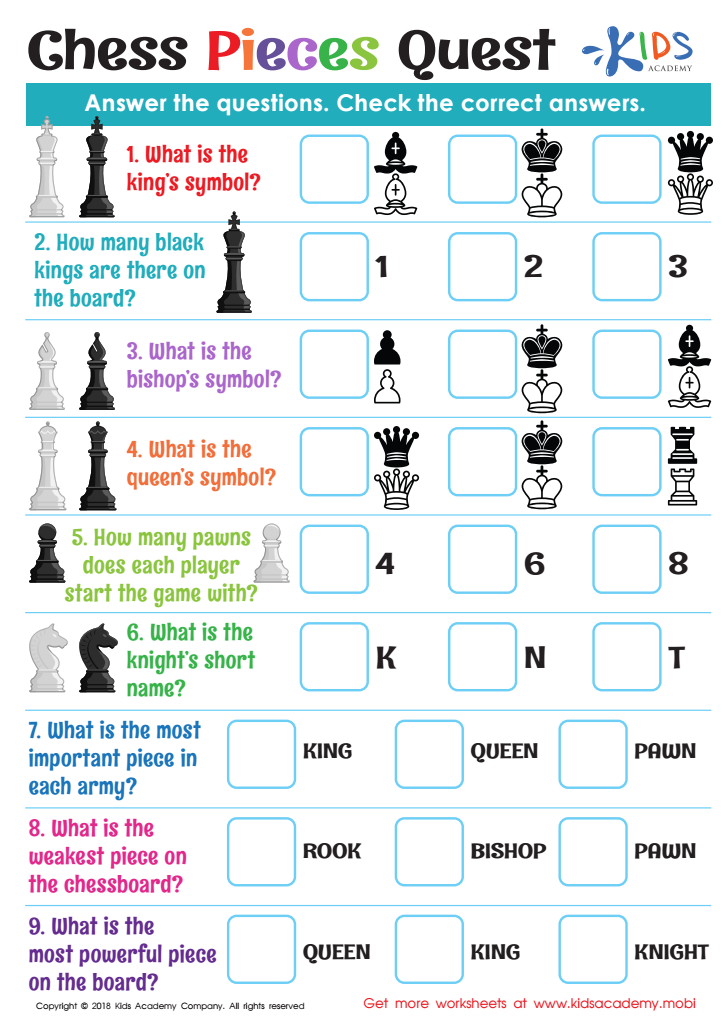
Chess Pieces Quest Worksheet
 Assign to My Students
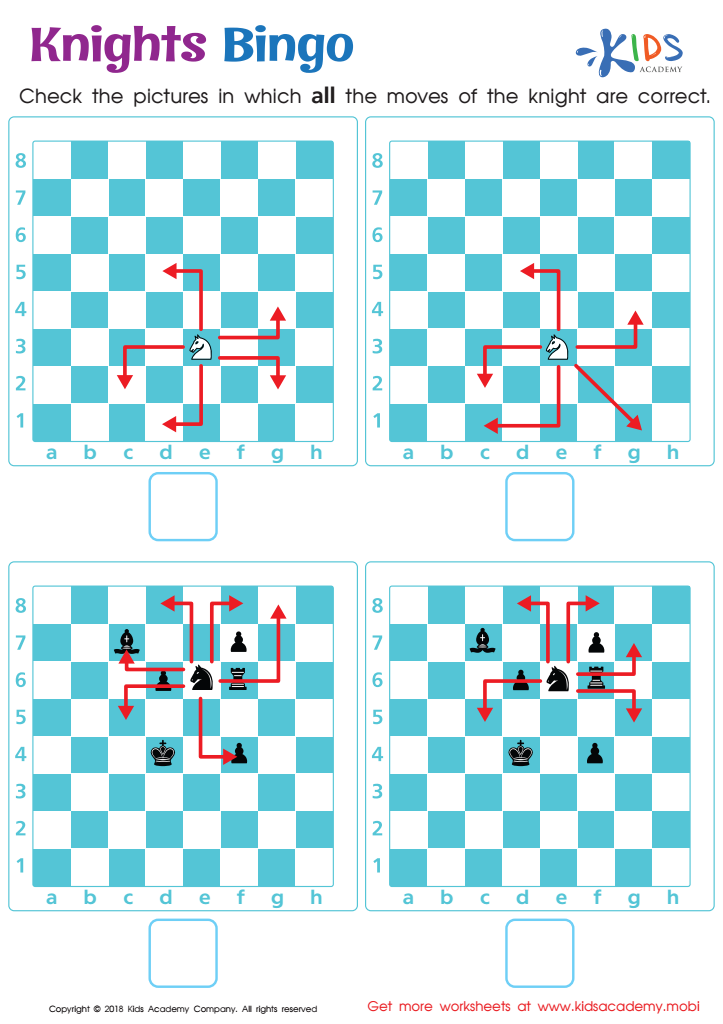
Knights Bingo Worksheet
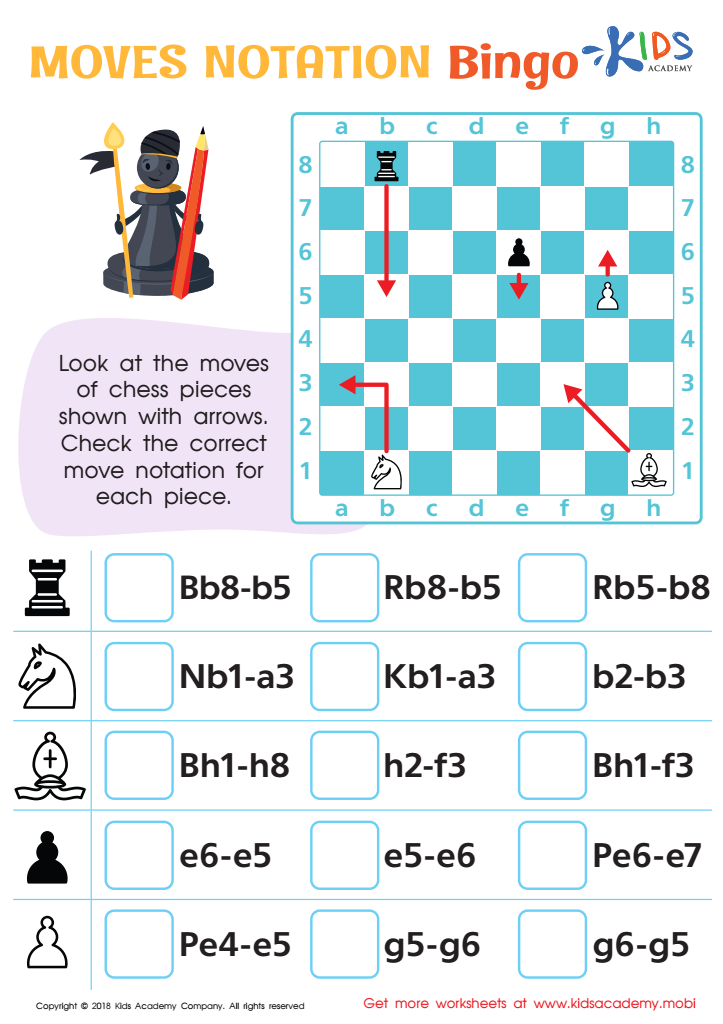
Moves Notation Bingo Worksheet






Memory enhancement Normal Chess specifically designed for children ages 6-7 is a remarkable tool that parents and teachers should care about due to its numerous developmental benefits. At this stage, children are rapidly developing cognitively, and memory-enhancing activities play a crucial role in shaping their cognitive abilities.
This version of chess helps children improve their short-term and long-term memory by requiring them to remember the positions of pieces, learn and recall possible moves, and think several steps ahead. Such activities directly enhance their ability to focus and retain information, skills essential for academic success.
Moreover, playing chess promotes problem-solving skills and critical thinking. Children learn to strategize, anticipate opponents' moves, and understand cause-and-effect relationships, all while enjoying a game that keeps them engaged. It also boosts spatial reasoning and mathematical thinking by requiring children to visualize the chessboard and plan their moves accordingly.
Furthermore, chess encourages patience and discipline, as students must think carefully before making a move and learn from their mistakes without immediate frustration. This logical framework sets a foundation for self-regulation and resilience.
Incorporating Memory enhancement Normal Chess into a child’s routine aids in the holistic development of cognitive, emotional, and social skills, making it an invaluable addition to both classroom and home environments.