
Analytical thinking Normal Worksheets for Ages 6-7
6 filtered results
Difficulty Level
Grade
Age
-
From - To
Subject
Activity
Standards
Discover our engaging Analytical Thinking Worksheets tailored for children aged 6-7! Designed to boost critical reasoning, these printable resources encourage young learners to analyze various scenarios and solve problems creatively. With a mix of fun puzzles, games, and thought-provoking questions, each worksheet promotes cognitive development while ensuring enjoyable learning experiences. Children will enhance their observation skills, pattern recognition, and logical reasoning with our thoughtfully crafted activities. Perfect for use at home or in the classroom, these worksheets are an excellent tool for fostering analytical skills essential for lifelong learning. Explore our collection today and support your child's growth in analytical thinking!
Favorites
With answer key
Interactive
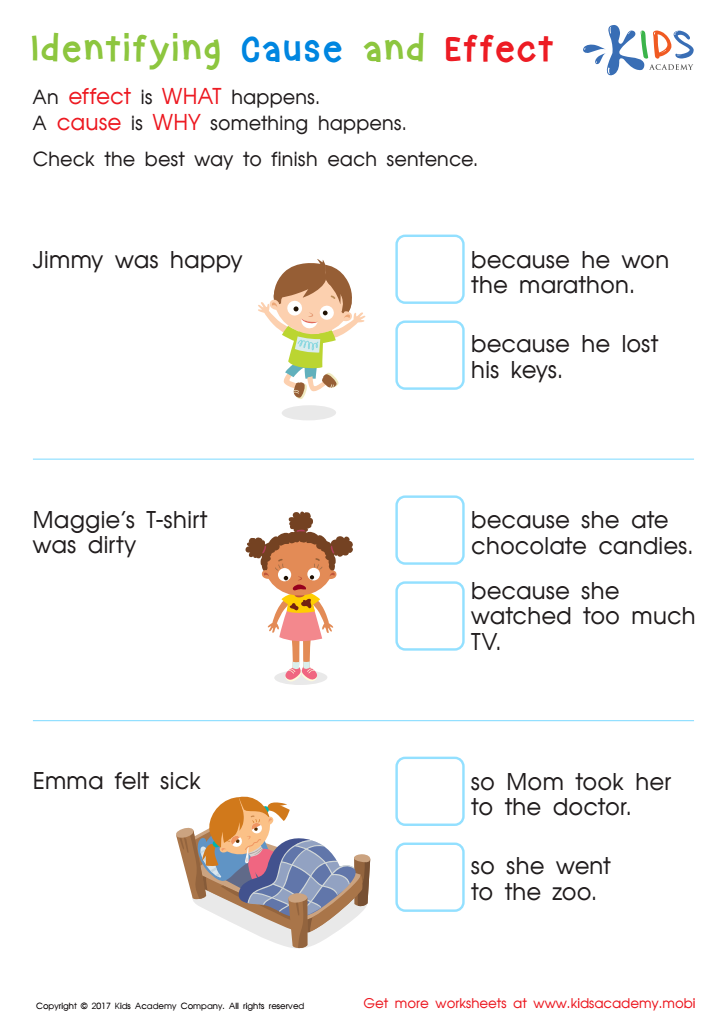
Indentifying Cause and Effect Worksheet
2nd grade cause & effect worksheets give your child practice making connections between events and their results. Fun activities help develop reading and critical thinking skills.
 Assign to My Students
Indentifying Cause and Effect Worksheet
Worksheet
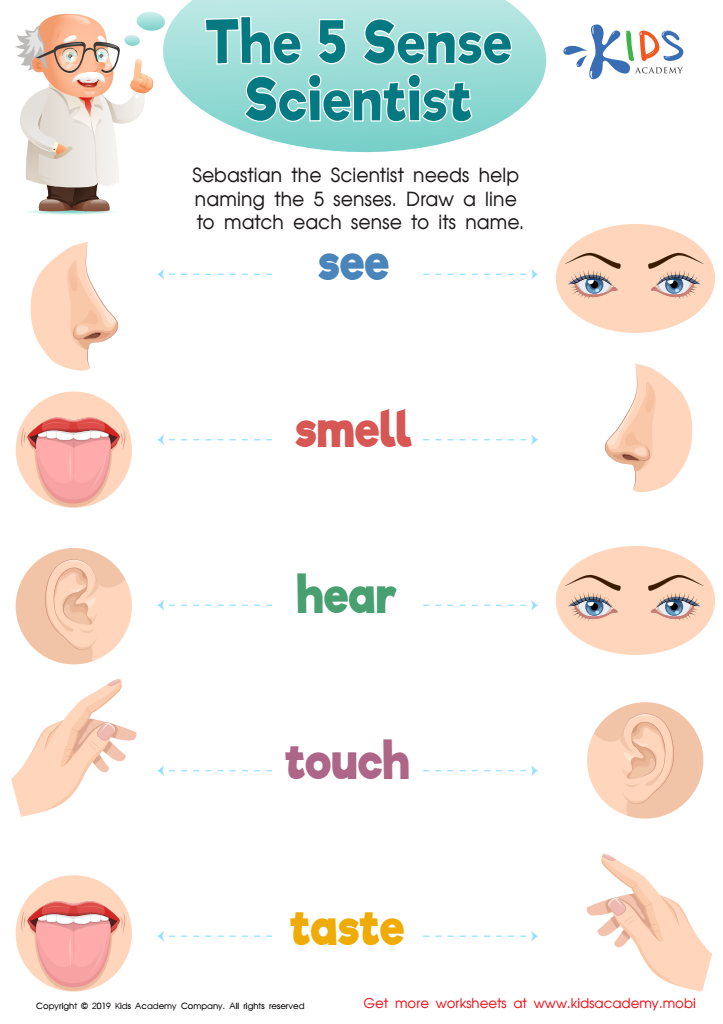
The 5 Sense Scientist Worksheet
Our young children will have fun learning about their five senses with this free Sense Scientist worksheet. Helping Sebastian the Scientist, they'll name the five senses and use traceable lines to connect each picture with its correct sense. Colorful words and pictures will create a memorable picture representation.
The 5 Sense Scientist Worksheet
Worksheet
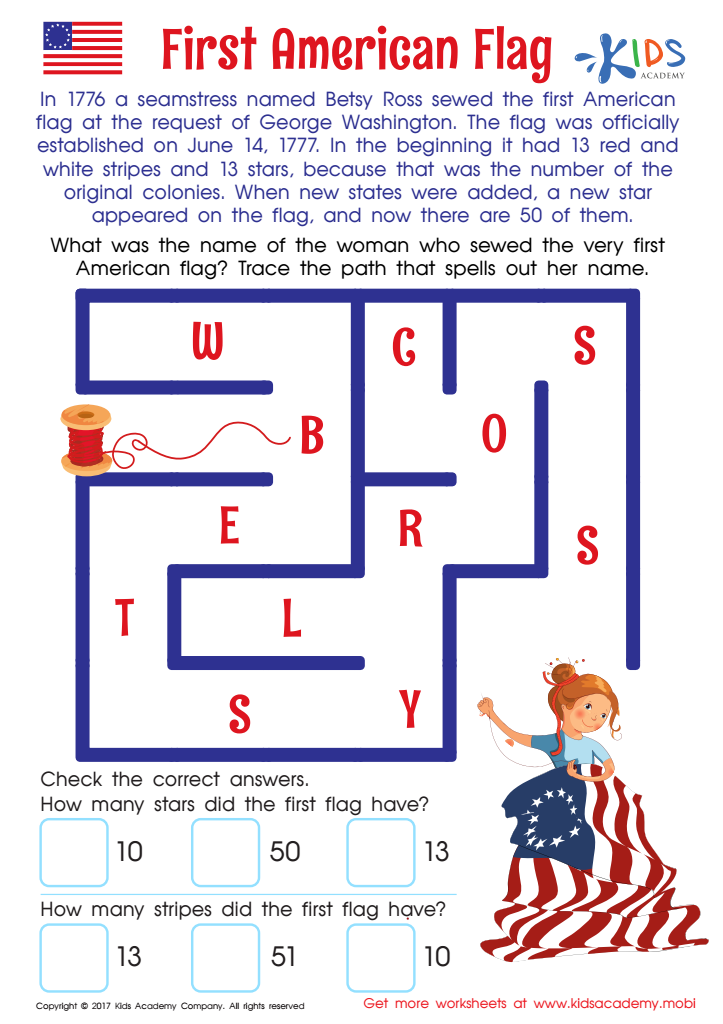
First American Flag Worksheet
Betsy Ross sewed the first American flag at the request of George Washington. This worksheet helps kids learn about this milestone in U.S. history, plus the design and origins of the flag.
First American Flag Worksheet
Worksheet
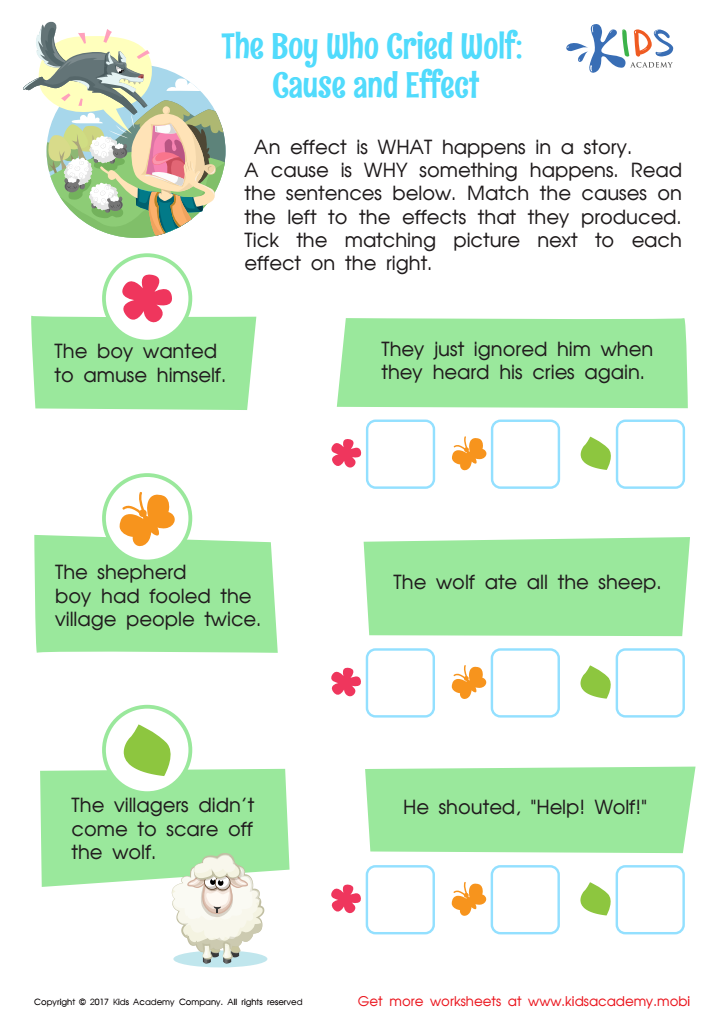
The Boy Who Cried Wolf: Cause and Effect Worksheet
With classic stories and fables, learning reading comprehension is easy - and fun!
The Boy Who Cried Wolf: Cause and Effect Worksheet
Worksheet
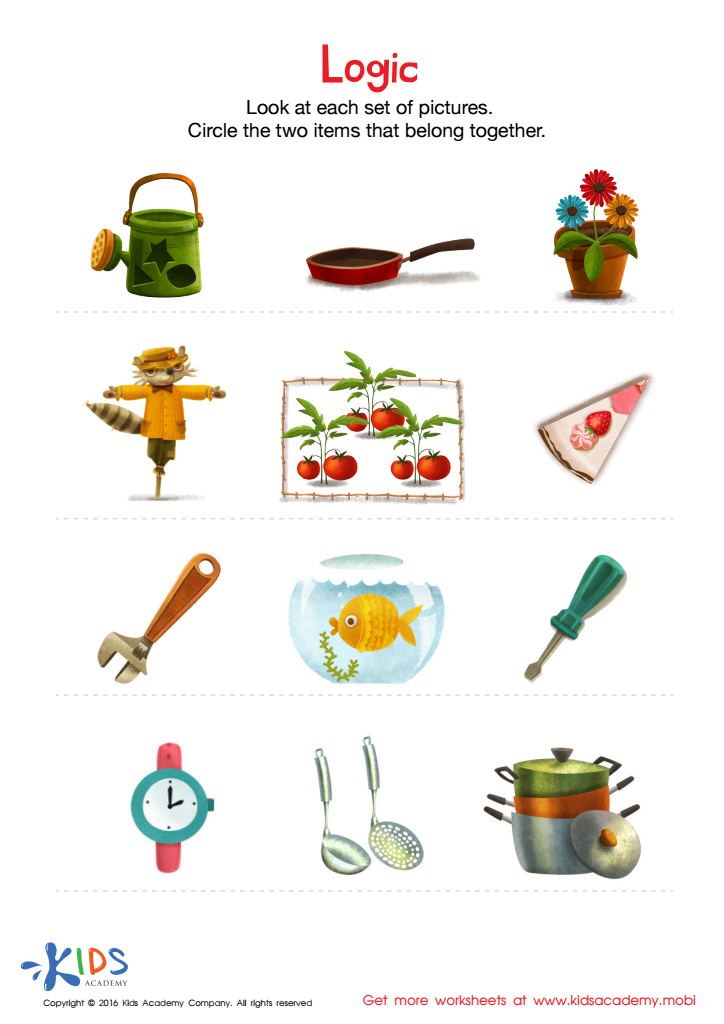
Logic Game Sorting Worksheet
Start your child's logic and reasoning development early with this fun matching worksheet! Through cute images and simple conversations, your little one can learn problem-solving, categorization, and matching skills. Plus, it's a great way for children to explore how items are used in real life. Try it and watch them boost skills with ease and fun!
Logic Game Sorting Worksheet
Worksheet
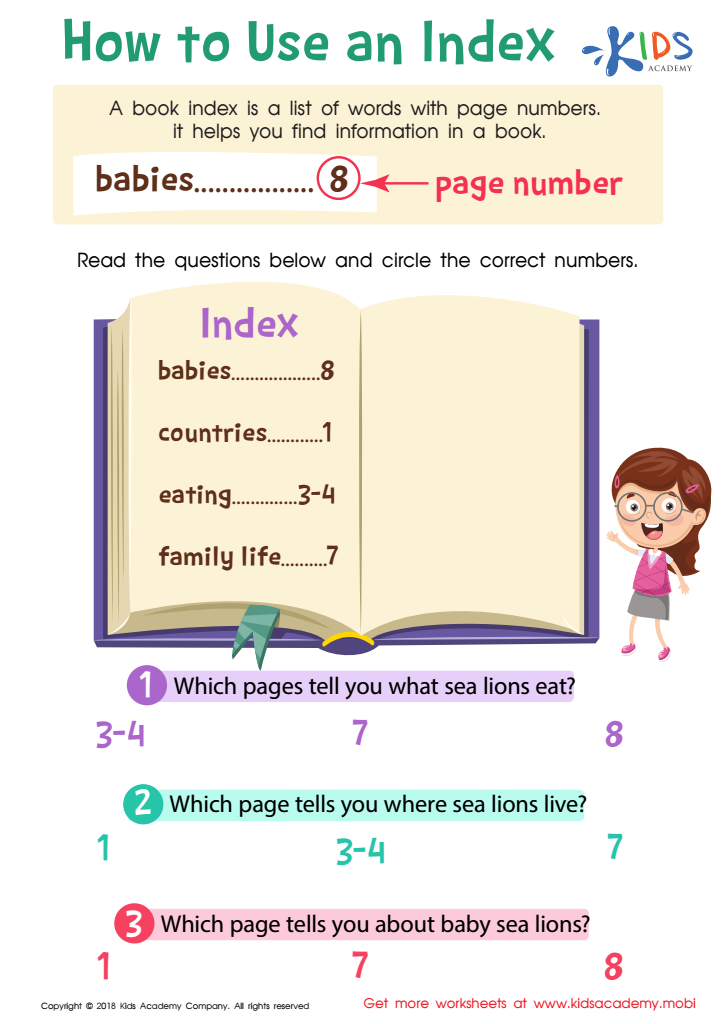
How Use Index Worksheet
Hand your kids a book, point out the index and explain that it's a list of words with page numbers. Ask them to look at the index in the worksheet and circle the correct number to the questions. Every book must have an index to help readers find chapters or information they need.
How Use Index Worksheet
Worksheet
Join Kids Academy for Free
Who is primarily going to use this learning content?








Analytical thinking is crucial for children aged 6-7 as it forms the foundation for problem-solving, decision-making, and critical reasoning skills. At this developmental stage, children begin to transition from concrete thinking to more abstract thought processes, enabling them to understand relationships and draw conclusions. By encouraging analytical thinking, parents and teachers help children develop the ability to assess situations, make connections, and evaluate information, which are essential skills for academic success and everyday life.
Moreover, analytical thinking fosters creativity and independence. Children learn to explore multiple solutions to a problem, enhancing their confidence in tackling challenges. This skill is not only important in academic settings but also in social interactions, as children with strong analytical abilities can navigate friendships and conflicts more effectively.
Incorporating activities that stimulate analytical thinking—such as puzzles, games, and open-ended questions—into daily routines engages children’s natural curiosity. Parents and teachers who prioritize these tools equip students with lifelong skills that will serve them in their personal, academic, and professional pursuits. Ultimately, nurturing analytical thinking now leads to well-rounded, capable individuals who are prepared to thrive in an increasingly complex world.








