Basic measurement concepts Normal Worksheets for Ages 6-7
3 filtered results
-
From - To
Discover our engaging "Basic Measurement Concepts" worksheets designed for ages 6-7, perfect for young learners to grasp essential measurement skills. These printable worksheets introduce foundational concepts such as length, weight, and volume through fun and interactive activities. With colorful visuals and child-friendly instructions, children will enjoy measuring real-life objects, comparing sizes, and solving practical problems. Ideal for homeschooling or classroom use, these resources support early math development and foster a love for learning. Equip your child with critical skills while making measurement an enjoyable experience. Download now and watch their confidence in math grow!
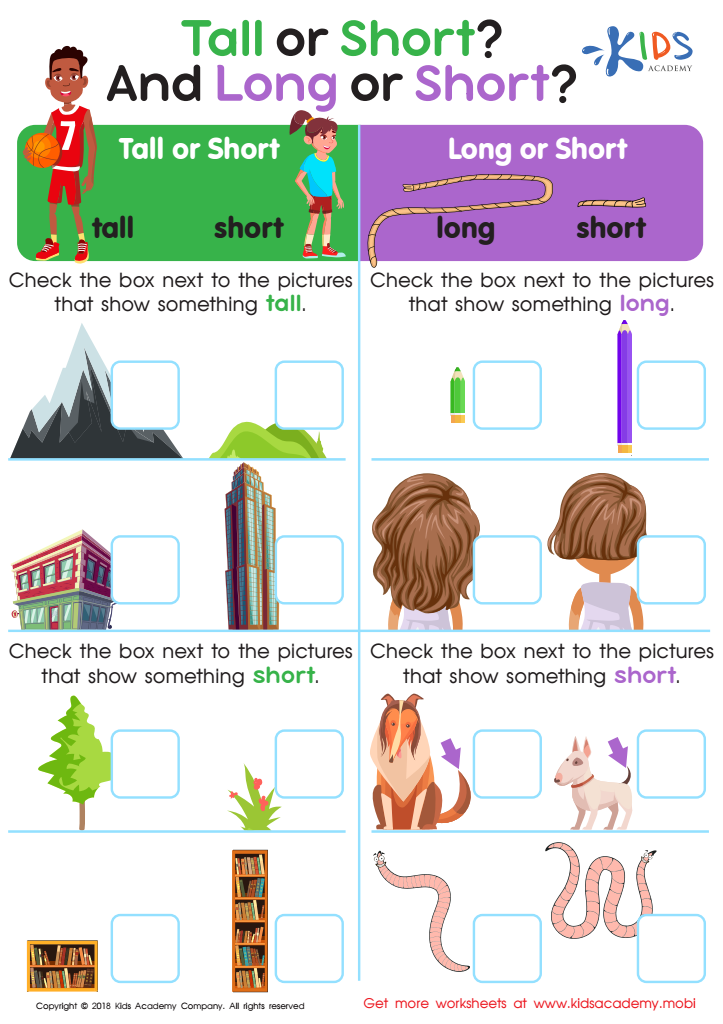
Tall or Short and Long or Short? Worksheet
 Assign to My Students
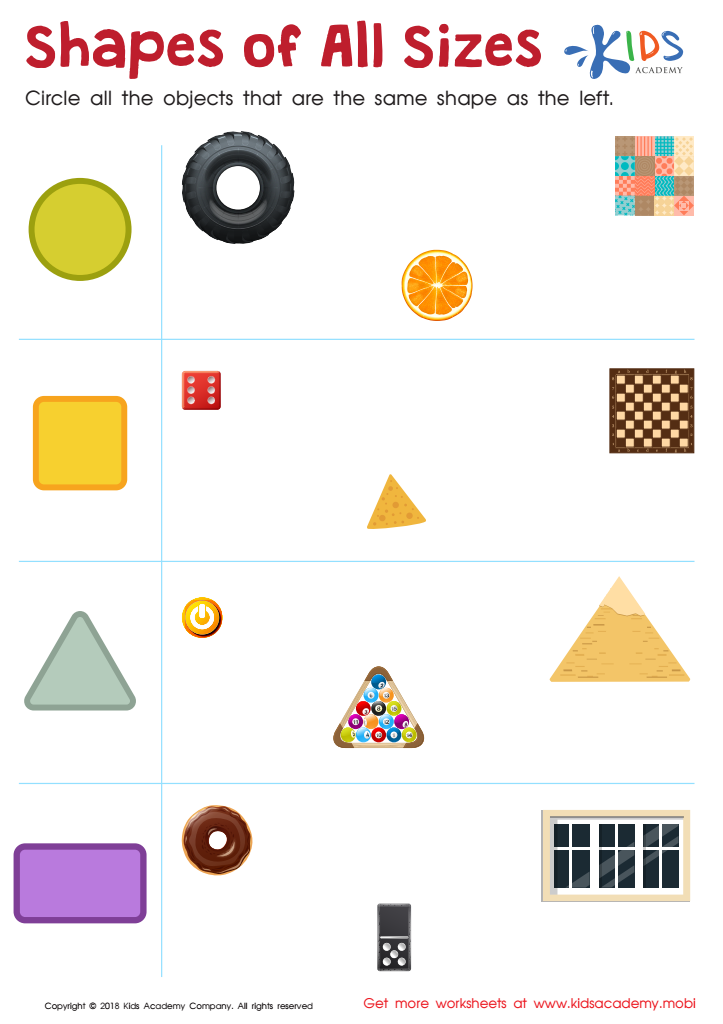
Shapes of All Sizes Worksheet
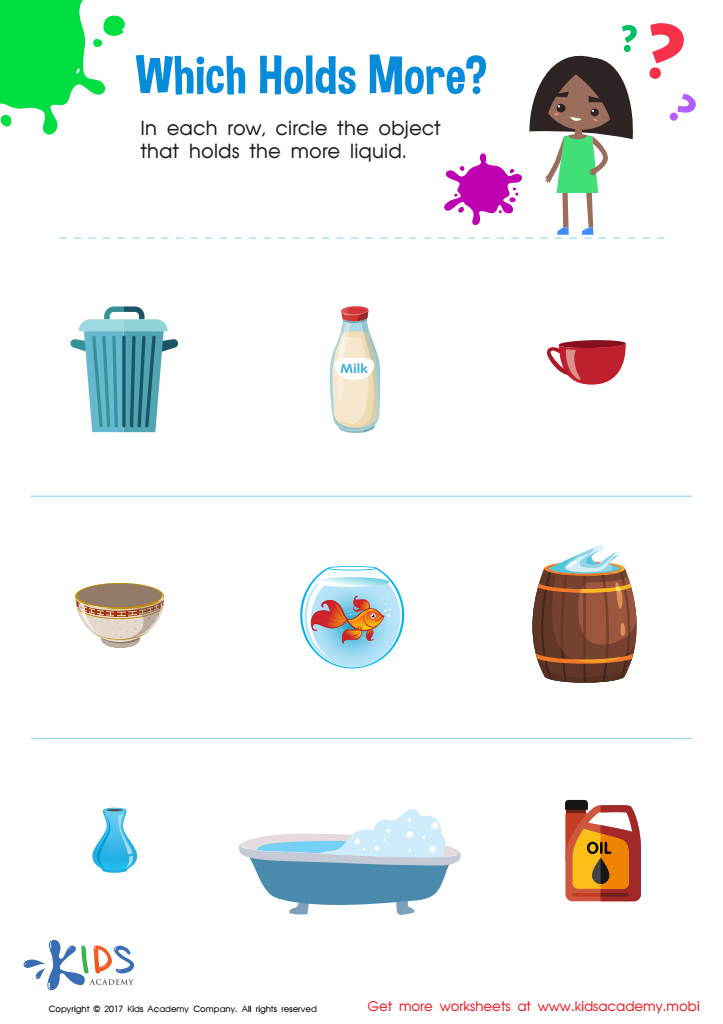
Which Holds More: Capacity Worksheet




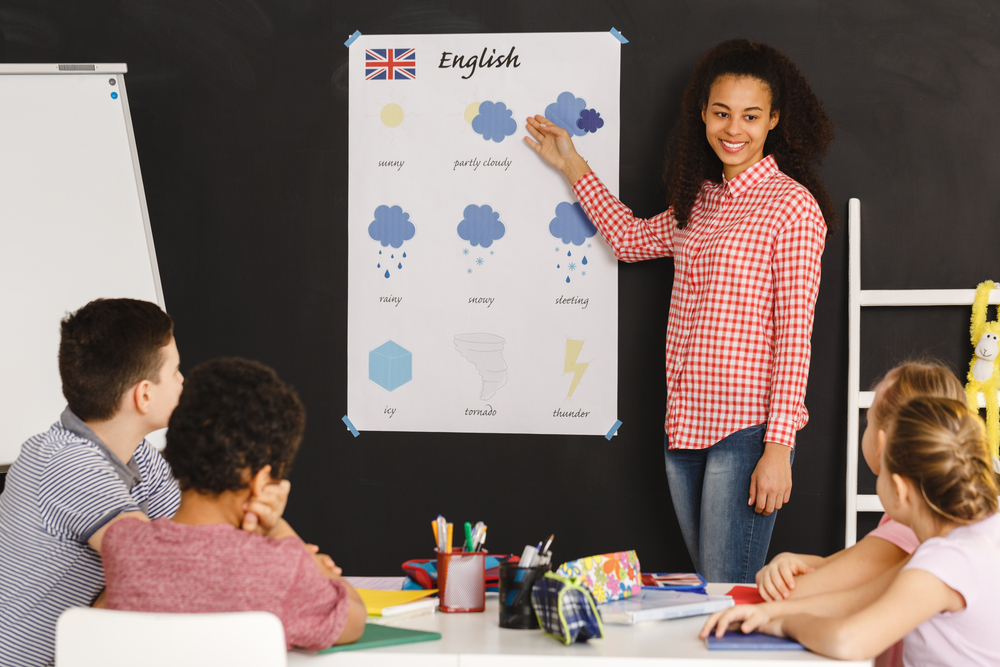


Understanding basic measurement concepts is essential for children aged 6-7, as it lays a crucial foundation for their overall mathematical development. During this developmental stage, young learners begin to grasp fundamental ideas like length, weight, time, and capacity. These concepts are not only academic but also apply to everyday life scenarios, from measuring ingredients for a recipe to understanding time management.
Parents and teachers should care about incorporating measurement concepts into the learning environment because they enhance critical thinking and problem-solving skills. When children engage in hands-on activities that involve measuring—like building projects or cooking—they learn to make observations, compare differences, and gain a sense of scale.
Additionally, familiarizing children with measurement fosters confidence as they see practical applications of math in their lives. It also encourages communication, as children describe their measurements and reasoning. Furthermore, these skills are directly linked to later mathematical proficiency and success in STEM subjects, making them a vital area of focus in the early grades. Ultimately, a strong introduction to measurement helps nurture a child's curiosity and equips them with valuable tools for their academic journey and beyond.








