Moral lesson understanding Normal Worksheets for Ages 6-7
3 filtered results
-
From - To
Unlock the power of moral lessons with our "Moral Lesson Understanding Worksheets" for ages 6-7! Designed to foster essential values, these engaging resources help young learners explore important concepts like kindness, honesty, and empathy. With colorful illustrations and age-appropriate activities, children will enjoy learning through stories and real-life scenarios that encourage critical thinking. Each worksheet promotes discussion and reflection, making moral learning interactive and enjoyable. Ideal for both classroom and home use, these worksheets support your child's emotional development while building a strong foundation for character education. Download and inspire the young minds in your life to embrace good morals today!
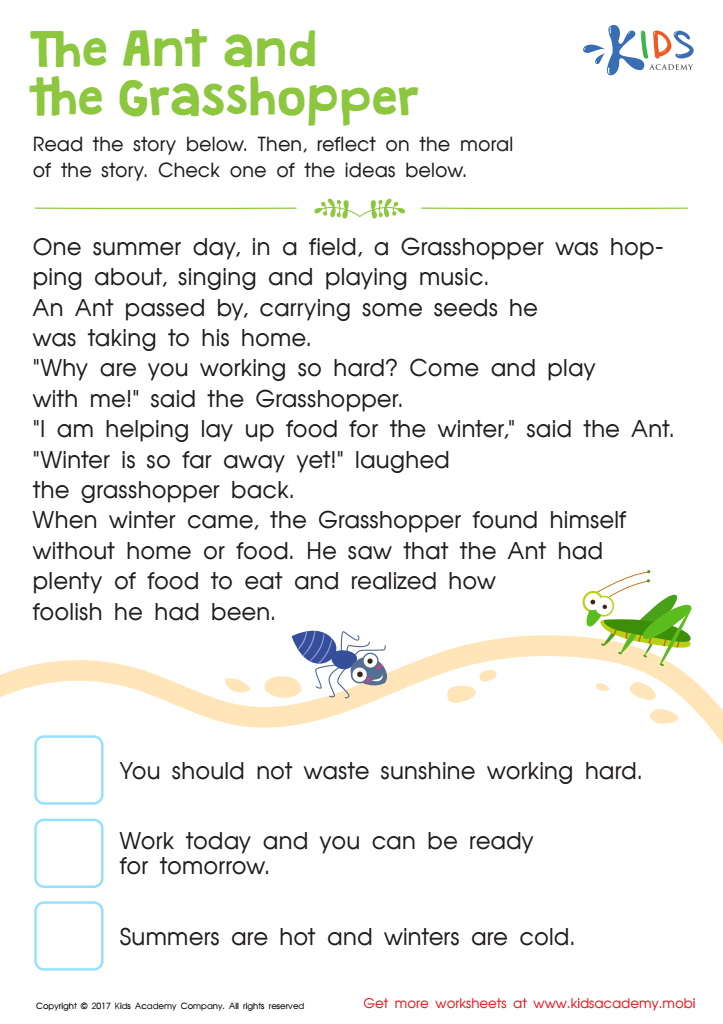
The Ant and The Grasshopper Printable
 Assign to My Students
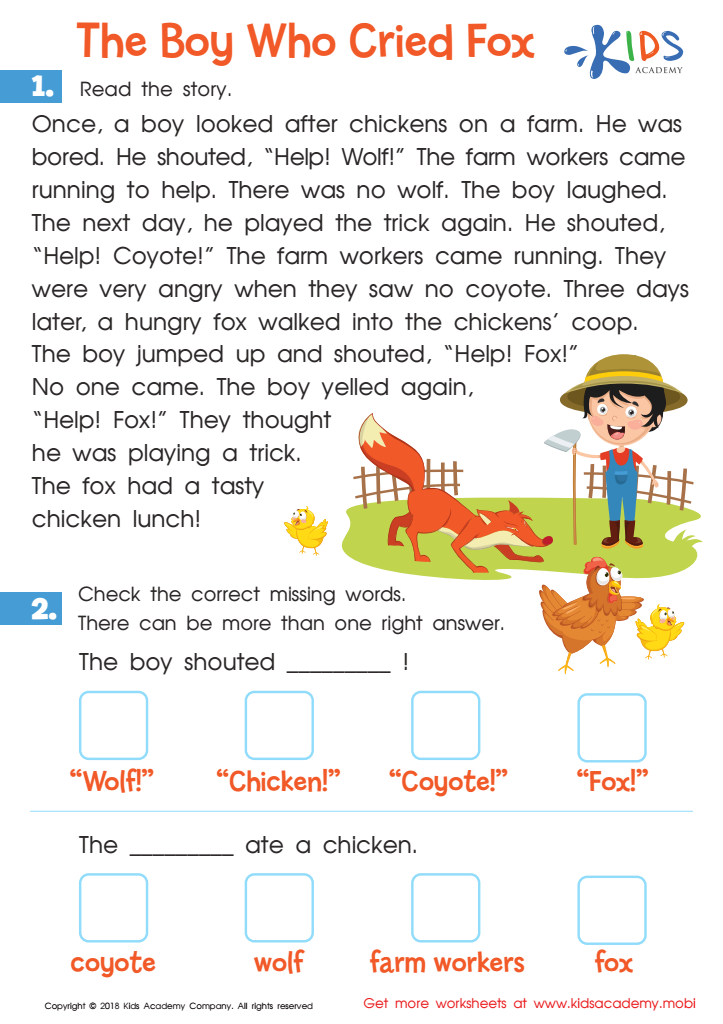
The Boy Who Cried Fox Worksheet
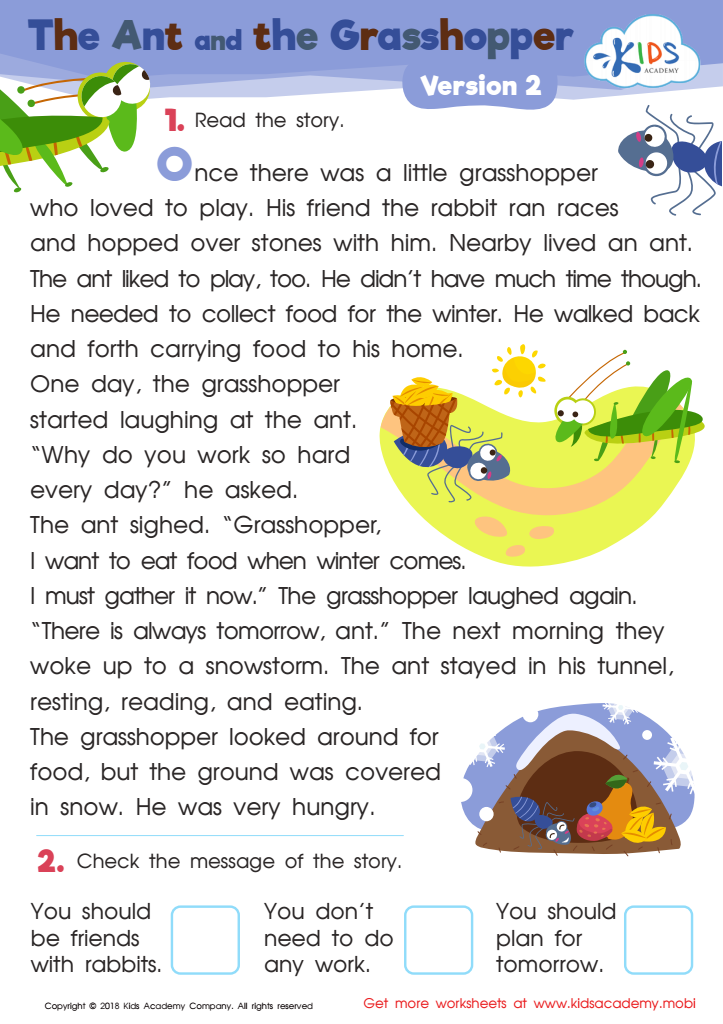
The Ant and The Grasshopper Version 2 Worksheet







Understanding moral lessons is crucial for children ages 6-7 because it lays the foundation for their emotional and social development. At this age, children begin to comprehend concepts like fairness, empathy, and respect. By teaching moral lessons, parents and teachers can help children navigate their interactions with peers, fostering important skills such as cooperation and understanding different perspectives.
Moral education encourages children to think about their actions and the consequences they may have on others. This encourages accountability and helps them build character, essential for forming healthy relationships throughout their lives. Furthermore, children who grasp moral lessons are better equipped to handle conflicts and make ethical decisions, enhancing their overall social skills.
Additionally, understanding moral lessons promotes emotional regulation. Children learn to manage feelings such as anger or jealousy, leading to more harmonious environments at home and school. For parents and teachers, integrating these lessons into everyday situations makes learning relatable and engaging.
Ultimately, nurturing moral understanding in young children not only prepares them to be compassionate and responsible individuals but also contributes to creating a more respectful and empathetic society as they grow older.








