Reading analog clocks Normal Worksheets for Ages 6-7
3 filtered results
-
From - To
Introducing our "Reading Analog Clocks Normal Worksheets for Ages 6-7", specially designed to enhance your child's time-telling skills! These engaging worksheets break down the complexities of reading hour and minute hands, making learning intuitive and fun. Perfectly suited for first and second graders, each printable sheet offers a variety of clock-based activities that solidify the concept of telling time. Our vibrant and clear designs ensure young learners stay motivated while they practice this essential life skill. Introduce your child to the joy and importance of reading analog clocks with our expertly crafted worksheets.
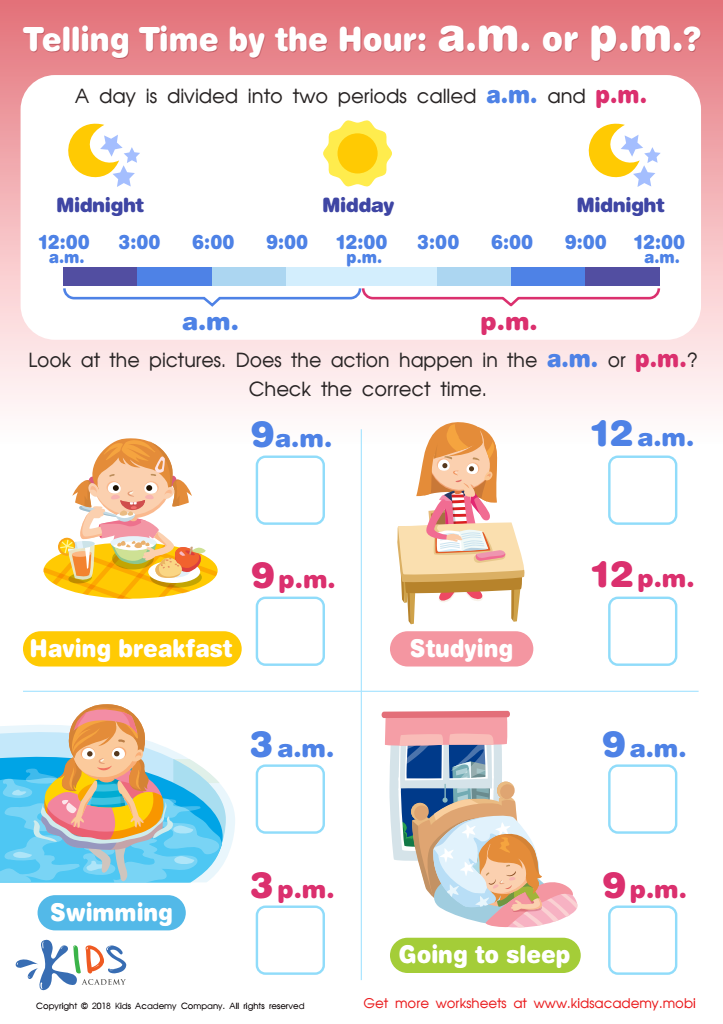
Tilling Time by the Hour: a.m. or p.m.? Worksheet
 Assign to My Students
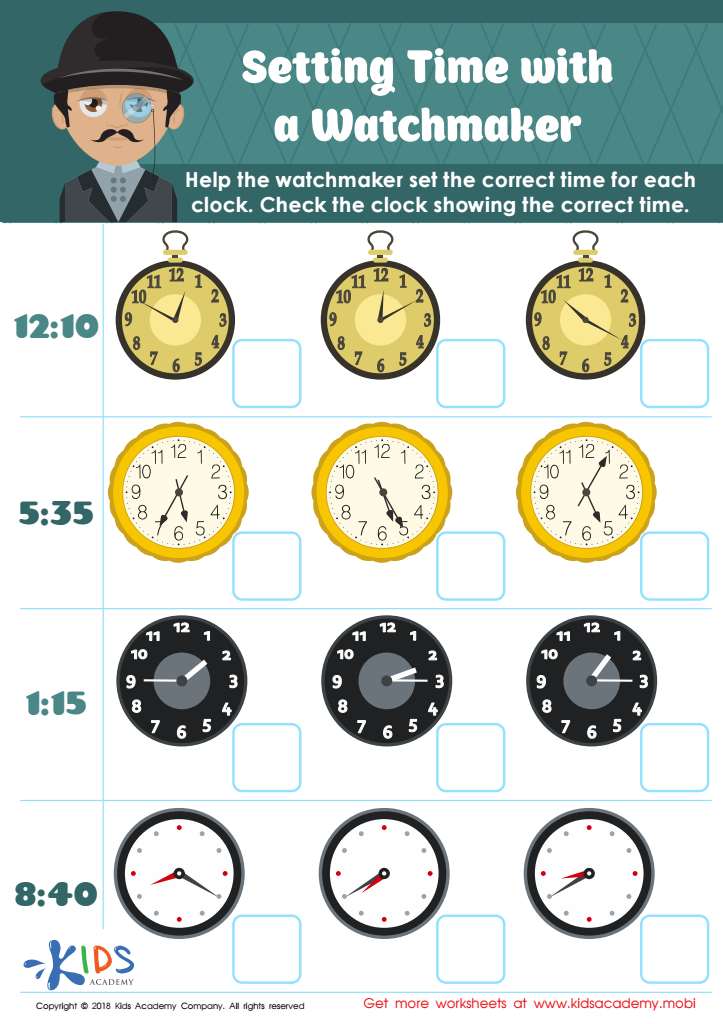
Setting Time with Watchmaker Worksheet
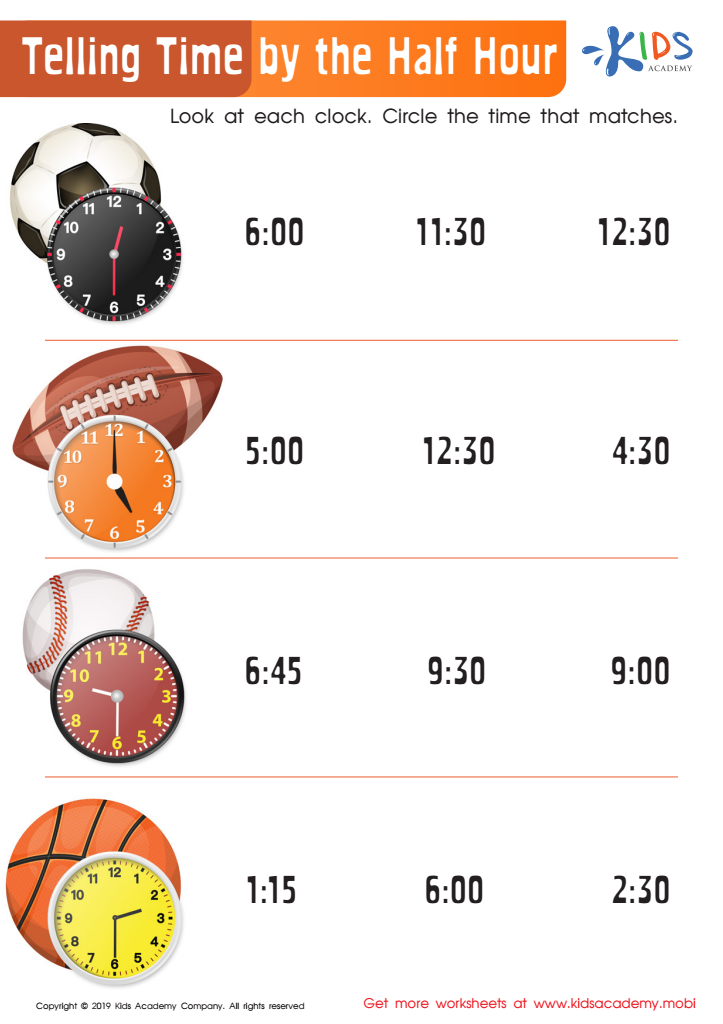
Telling Time by the Half Hour Worksheet







Teaching young children to read analog clocks is crucial as it fosters several key developmental and academic skills. For children ages 6-7, understanding how to read an analog clock enhances their ability to grasp the concept of time, which is abstract and can be challenging for their developing minds. This skill is foundational for time management, helping children plan their day and comprehend daily schedules, thus promoting responsibility and independence.
Reading analog clocks also strengthens cognitive abilities, such as recognizing patterns and developing number sense as children learn to associate numbers with specific time intervals. Analog clocks visually represent the passage of time, supporting a better understanding of fractions and the movement of the hour and minute hands reinforces skip counting by fives, an essential math skill at this age.
Moreover, teaching this skill cultivates attention to detail and patience. Analog clocks require children to look closely to figure out the time, which enhances focus and concentration. As children progress, telling time becomes a social skill, allowing them to engage meaningfully in activities and conversations about schedules and events, and thus helping with social development and operating comfortably in environments that mix digital and analog time representations.
Overall, parents and teachers should prioritize teaching children to read analog clocks for these cognitive, academic, and practical life reasons, supporting a well-rounded early education.








