Recognizing Patterns Normal Worksheets for Ages 6-7
6 filtered results
-
From - To
Discover our unique "Recognizing Patterns" worksheets tailor-made for children aged 6-7. Designed to develop essential early learning skills, these activities help kids identify, understand, and create patterns while having fun. Each worksheet offers engaging exercises that encourage logical thinking and problem-solving. Through vibrant visuals and interactive tasks, children learn to recognize sequences, shapes, and colors, laying a strong foundation for future math and reading proficiency. Our worksheets are perfect for both classroom and at-home learning, making education a delightful experience for young learners. Explore these exceptional resources to nurture your child’s critical thinking skills today!
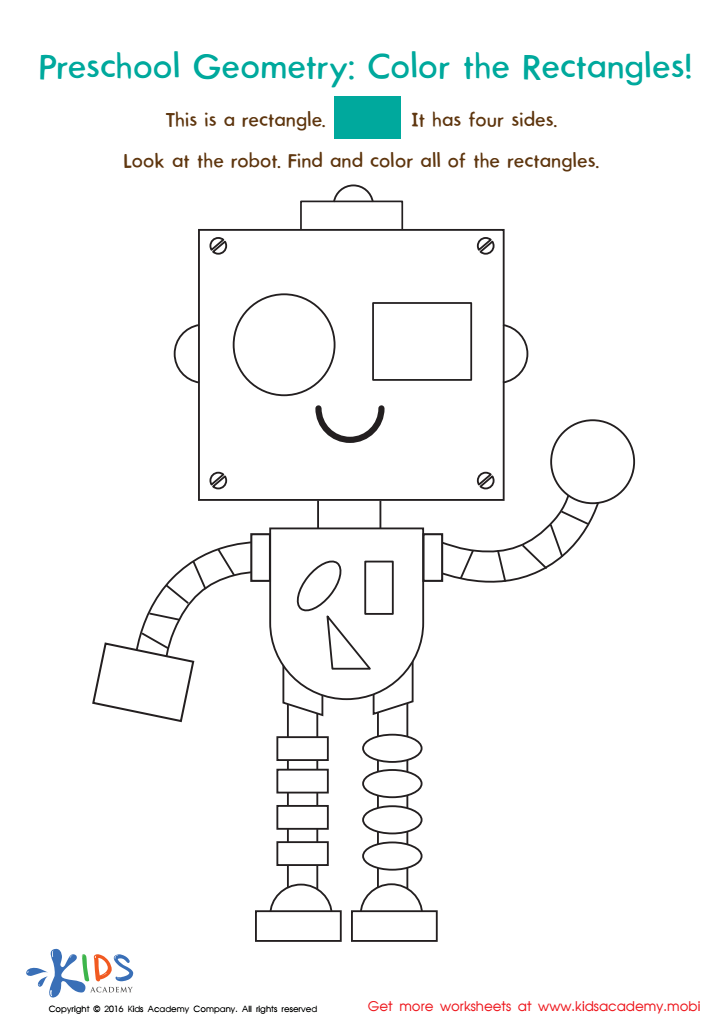
Geometry Worksheet
 Assign to My Students
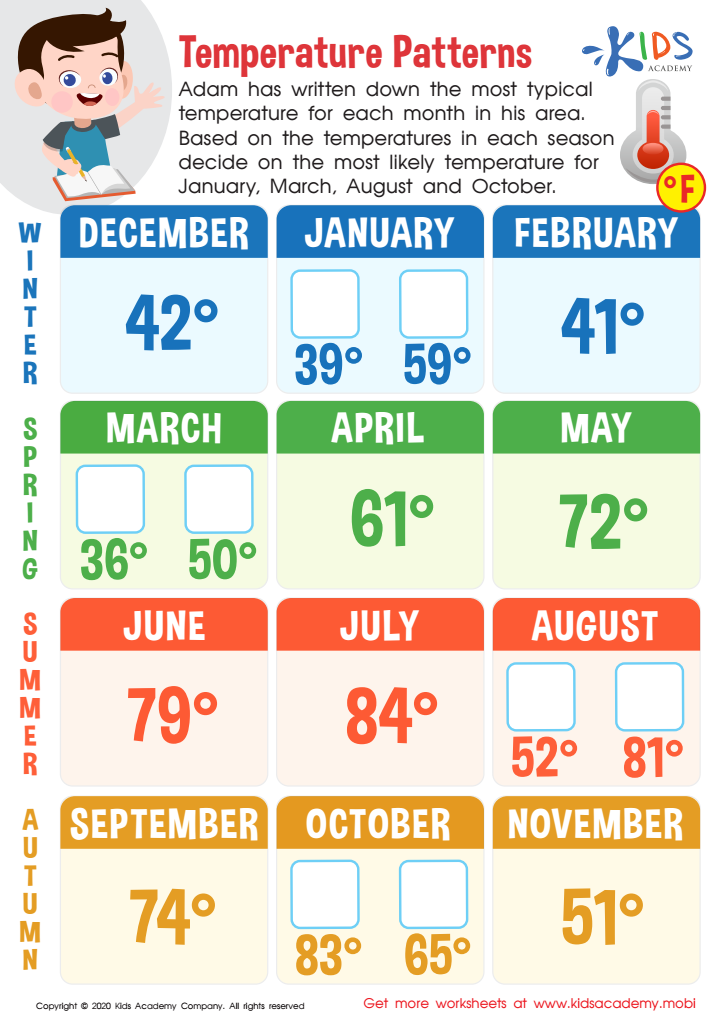
Temperature Patterns Worksheet
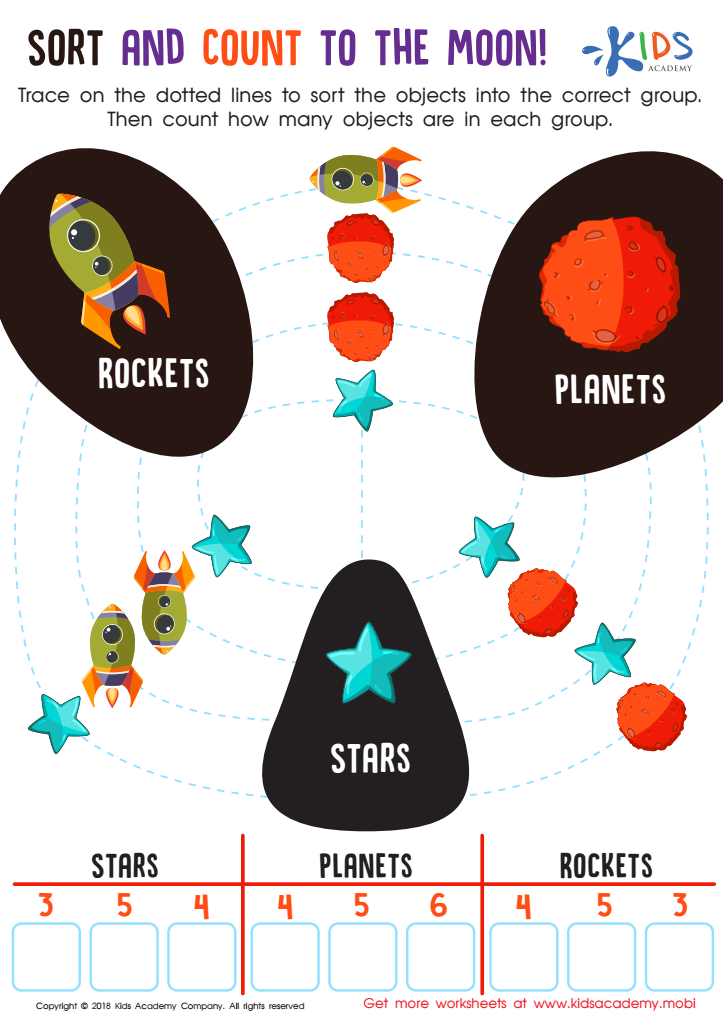
Sort and Count to the Moon Worksheet
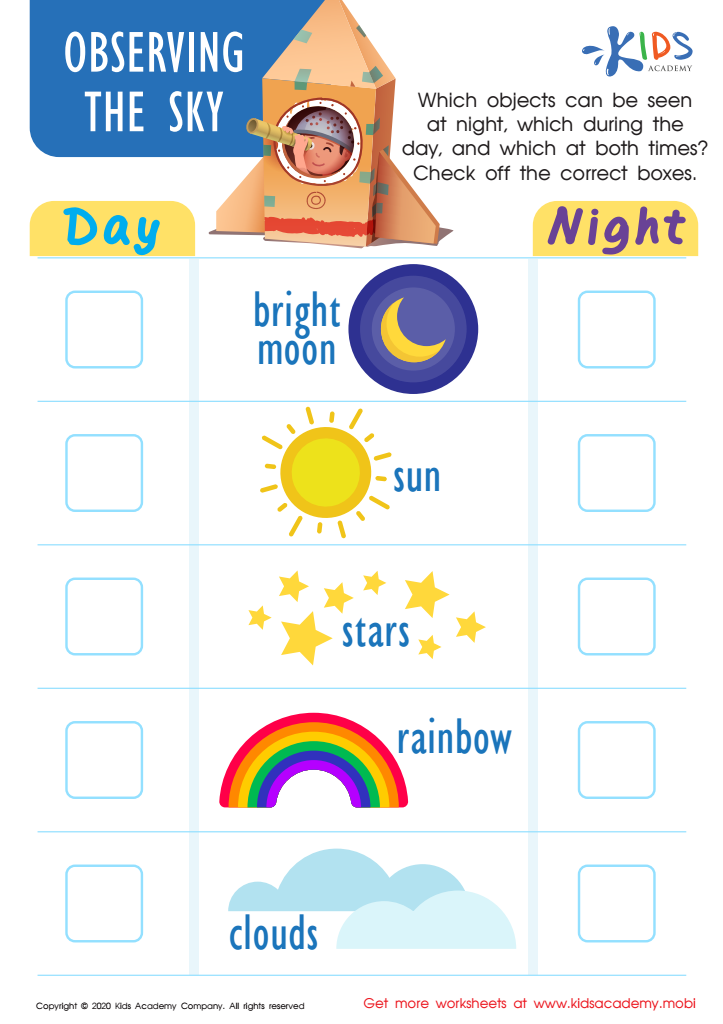
Observing the Sky Worksheet
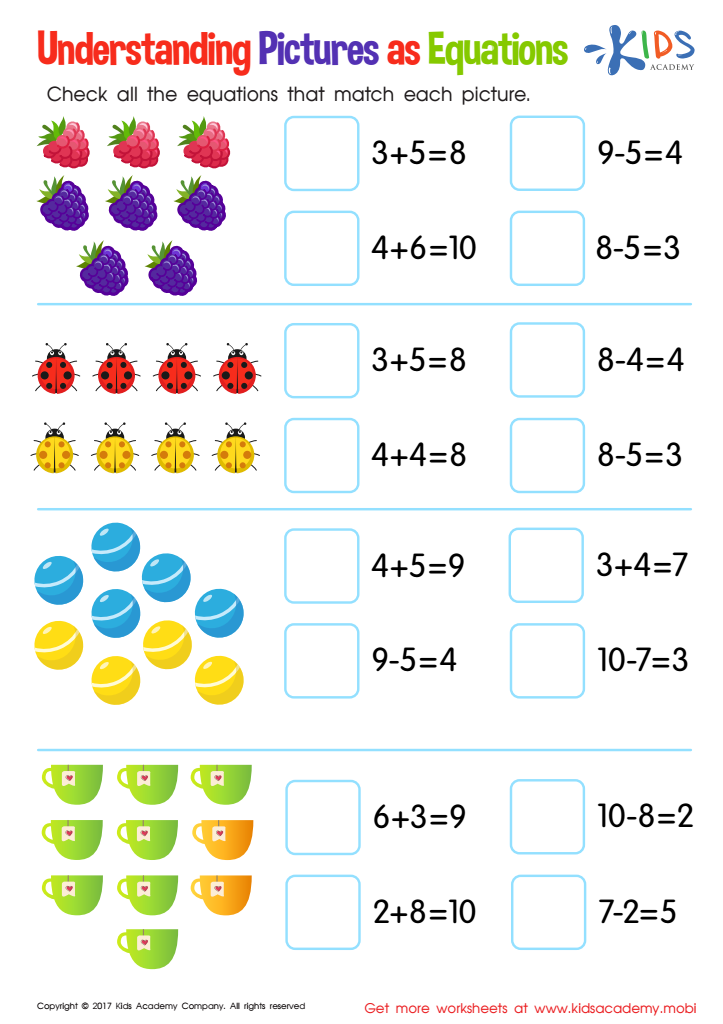
Understanding Pictures as Equations Worksheet
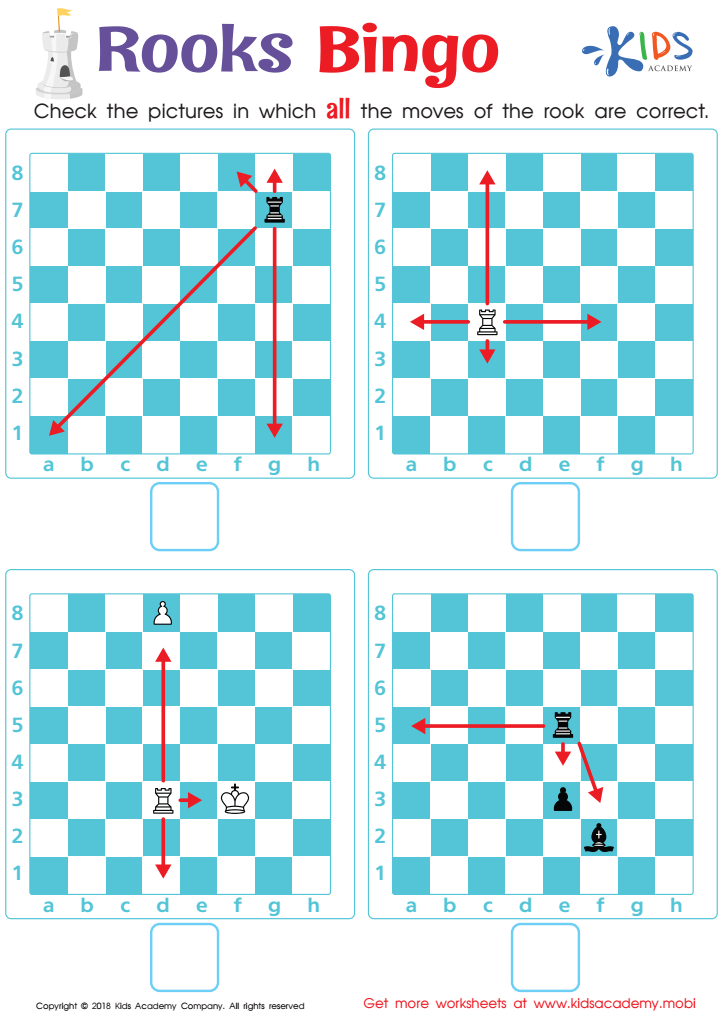
Rooks Bingo Worksheet








Recognizing patterns is a critical skill for children aged 6-7, as it forms the foundation for mathematical reasoning, literacy development, and problem-solving abilities. At this age, children's brains are particularly receptive to grasping patterns, which helps them make sense of the world around them. Identifying patterns allows them to predict what comes next, fostering a sense of order and sequence. This is not only vital for subjects like mathematics, where they learn about numbers, shapes, and colors but also for reading and writing. Understanding letter patterns helps in deciphering new words and comprehending sentences, boosting literacy skills.
Moreover, pattern recognition aids in cognitive development by enhancing memory, attention to detail, and logical thinking. For parents and teachers, fostering this skill supports academic growth and confidence in young learners, laying a strong groundwork for future learning. Emotional and social development is also linked to recognizing patterns, as children start seeing patterns in behavior and social interactions, which helps them better understand their surroundings and relationships. Therefore, recognizing patterns isn't just about academic performance; it's about nurturing an all-rounded growth and giving children tools to decode the complexities of their environment. Encouraging this skill prepares children to become better learners and problem-solvers as they move forward in their educational journey.








