Science knowledge Normal Worksheets for Ages 6-7
5 filtered results
-
From - To
Unlock the wonders of science for your child with our Science Knowledge Normal Worksheets, specially designed for ages 6-7. These engaging and educational worksheets cover essential science topics, fostering curiosity and enhancing critical thinking skills. Each worksheet is tailored to suit young minds, introducing concepts like plant life, animal habitats, weather, and basic physics in a fun and interactive manner. Perfect for home or classroom use, they provide a strong foundation in scientific reasoning and inquiry. With colorful visuals and simple explanations, learning science has never been this enjoyable and effective. Start the adventure of discovery today!
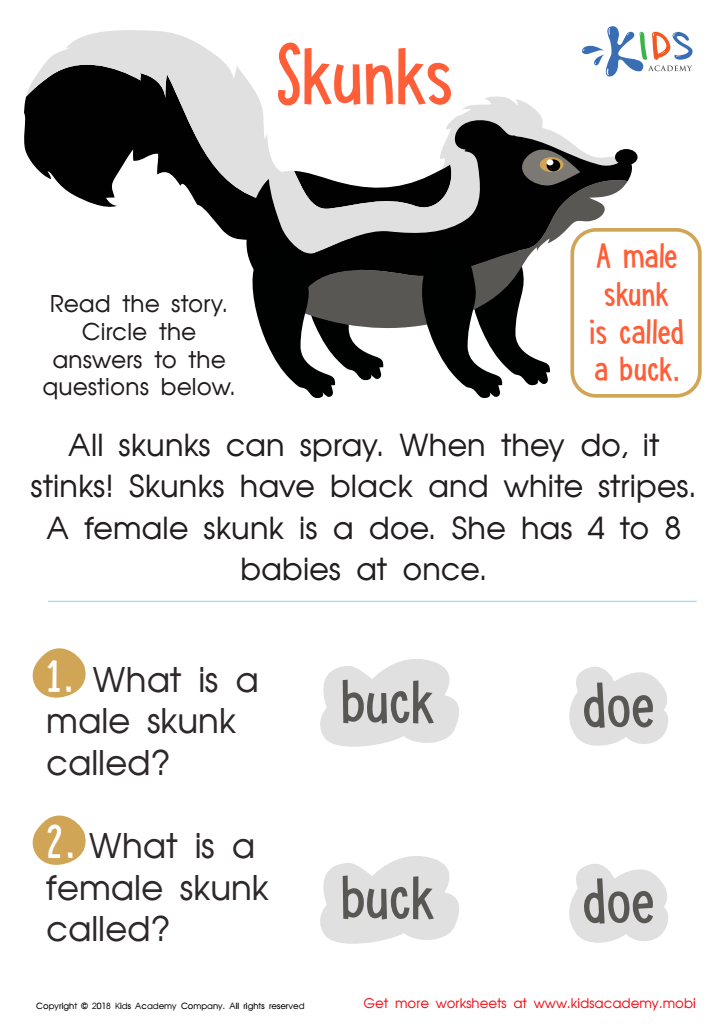
Skunks Worksheet
 Assign to My Students
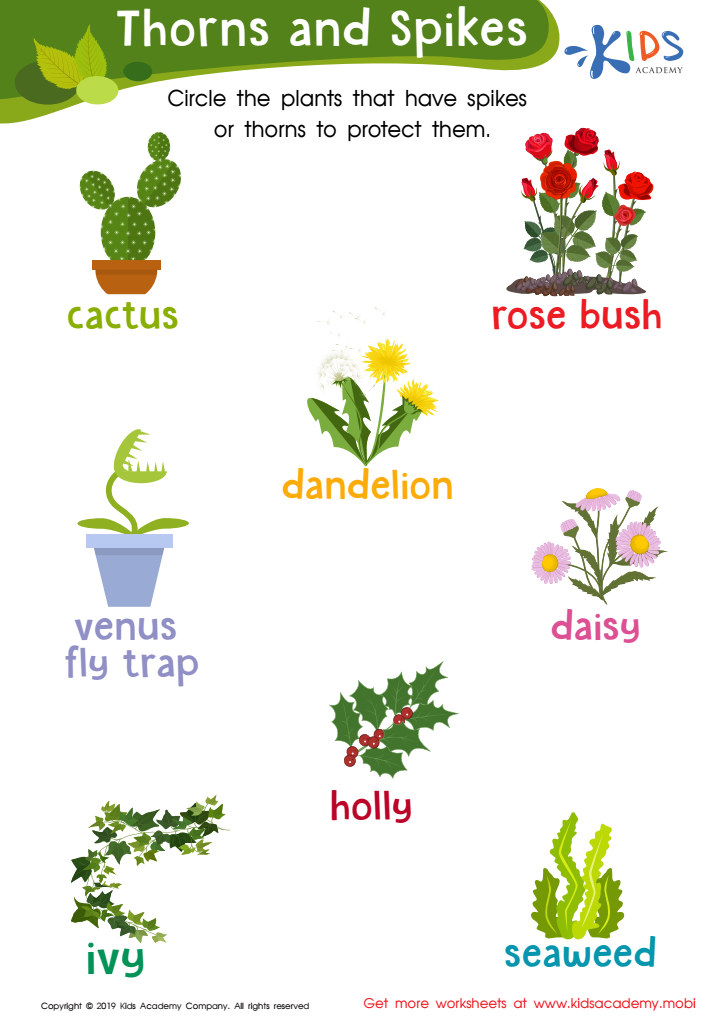
Thorns and Spikes Worksheet
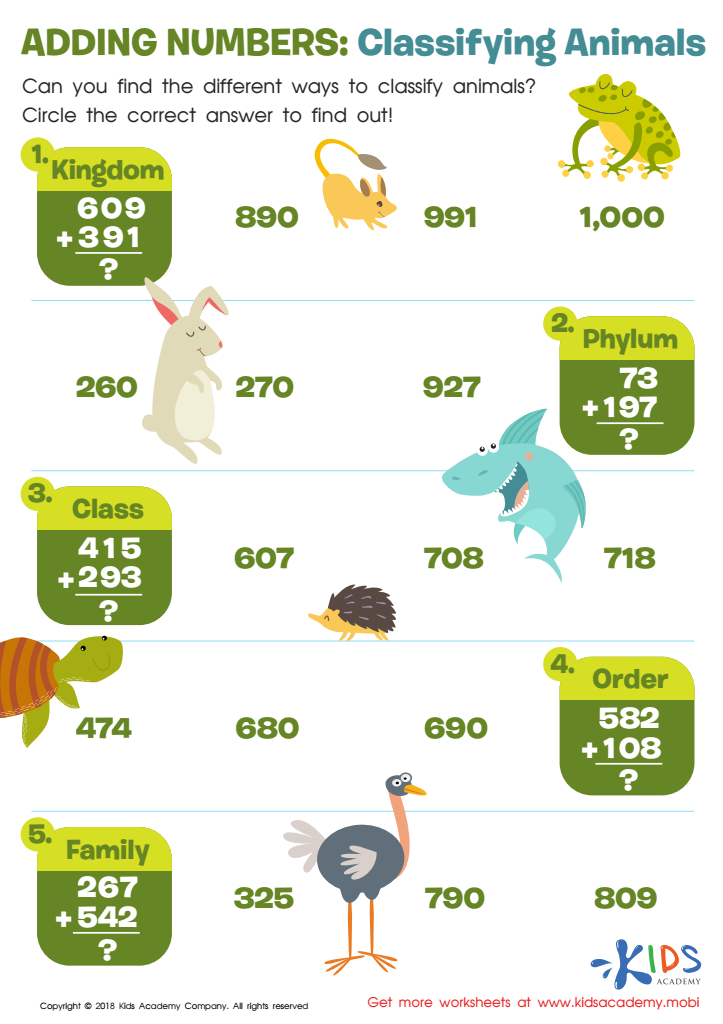
Adding Numbers: Classifying Animals Worksheet
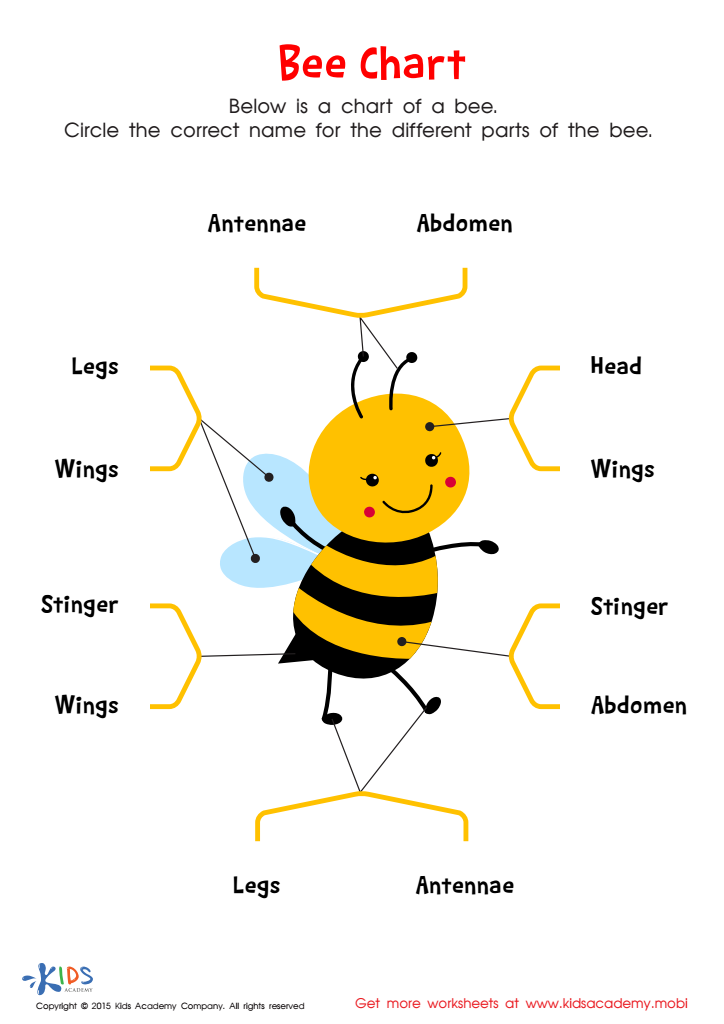
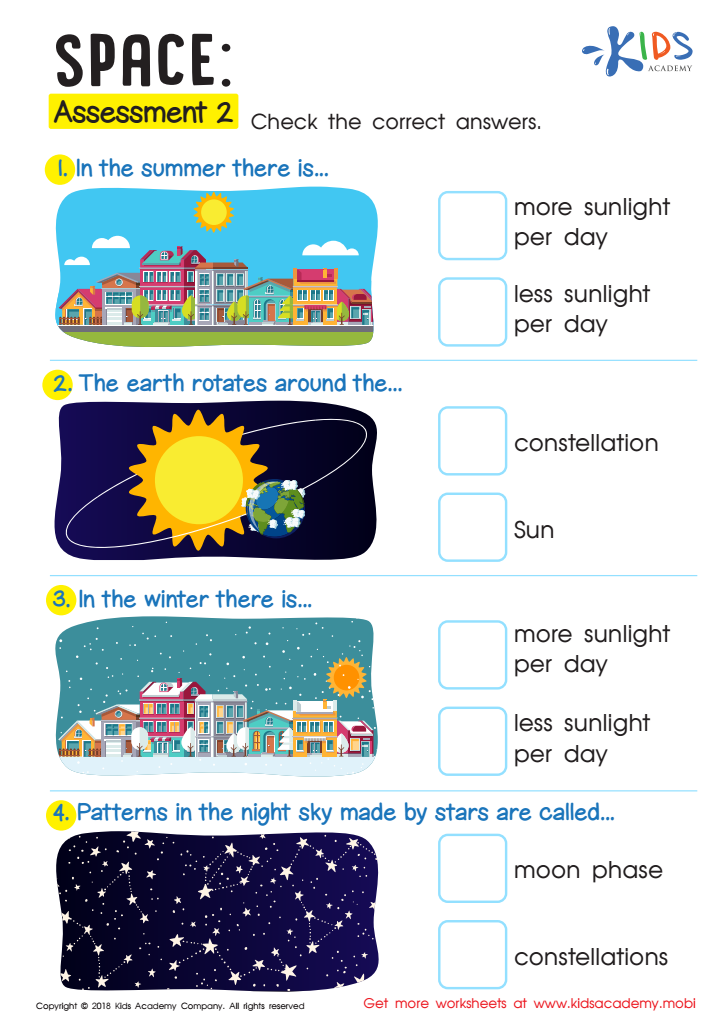
Space: Assessment 2 Worksheet





.jpg)


Science knowledge is crucial for young children aged 6-7 because it lays the foundation for critical thinking and curiosity. At this age, kids are naturally inquisitive, constantly asking "why" and exploring their environment. Science education transforms this natural curiosity into structured learning, guiding them to make observations, ask questions, and draw conclusions—a practice that enhances their problem-solving skills.
Understanding basic scientific concepts also helps children make sense of the world around them. It introduces them to essential vocabulary and principles, from understanding weather patterns to grasping the concept of simple machines. Early exposure to science nurtures a mindset that appreciates evidence, fostering lifelong learning and intellectual resilience.
Furthermore, science education promotes numeracy and literacy. For example, measuring plant growth can involve both math skills and recording observations can boost writing abilities. Hands-on activities in science allow children to engage in learning actively, which is often more memorable and impactful than passive learning methods.
Critical collaboration and communication skills are also developed when children conduct experiments or discuss scientific ideas. Parents and teachers who emphasize the importance of science can inspire children, potentially sparking a lasting interest that might eventually lead to future careers in science, technology, engineering, or mathematics (STEM). Overall, fostering a love for science at an early age is instrumental in developing well-rounded, knowledgeable, and thoughtful individuals.








