Sorting skills Normal Worksheets for Ages 6-7
4 filtered results
-
From - To
Discover our engaging Sorting Skills Normal Worksheets designed specifically for children aged 6-7! These printable activities foster critical thinking and categorization abilities, helping young learners organize objects, build comparisons, and enhance their cognitive skills. Through fun illustrations and interactive tasks, kids will learn to group items based on size, color, shape, and more. Our thoughtfully created worksheets not only boost educational development but also make learning enjoyable. Perfect for classroom use or at-home practice, these resources provide an excellent way for children to enhance their sorting skills while developing a love for learning! Start exploring our worksheets today!
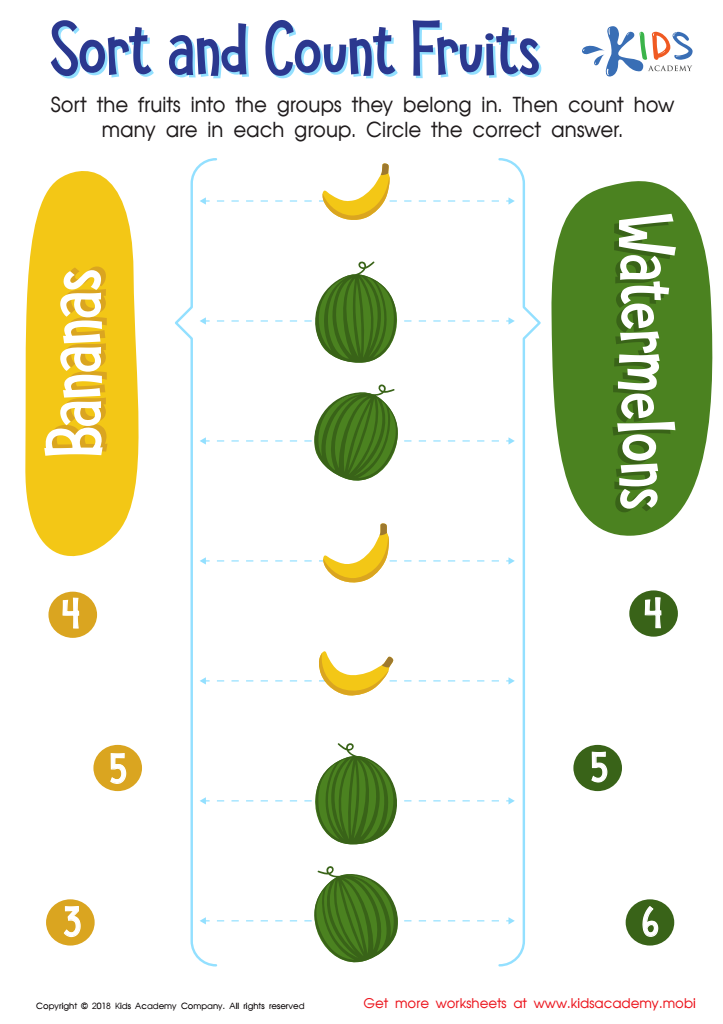
Sort and Count Fruits Worksheet
 Assign to My Students
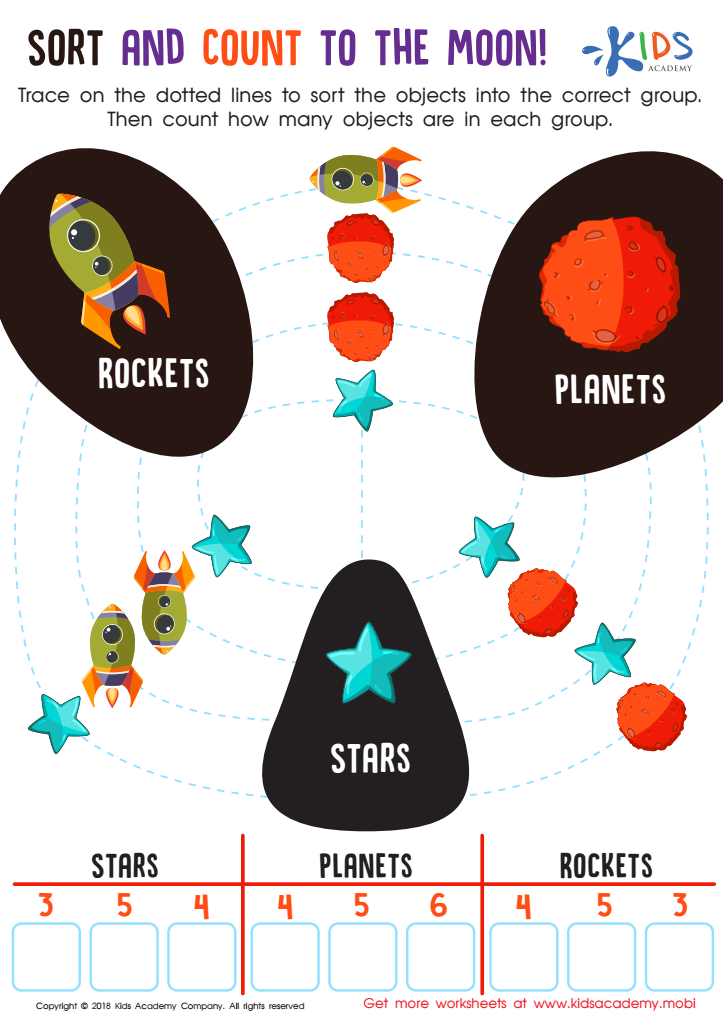
Sort and Count to the Moon Worksheet
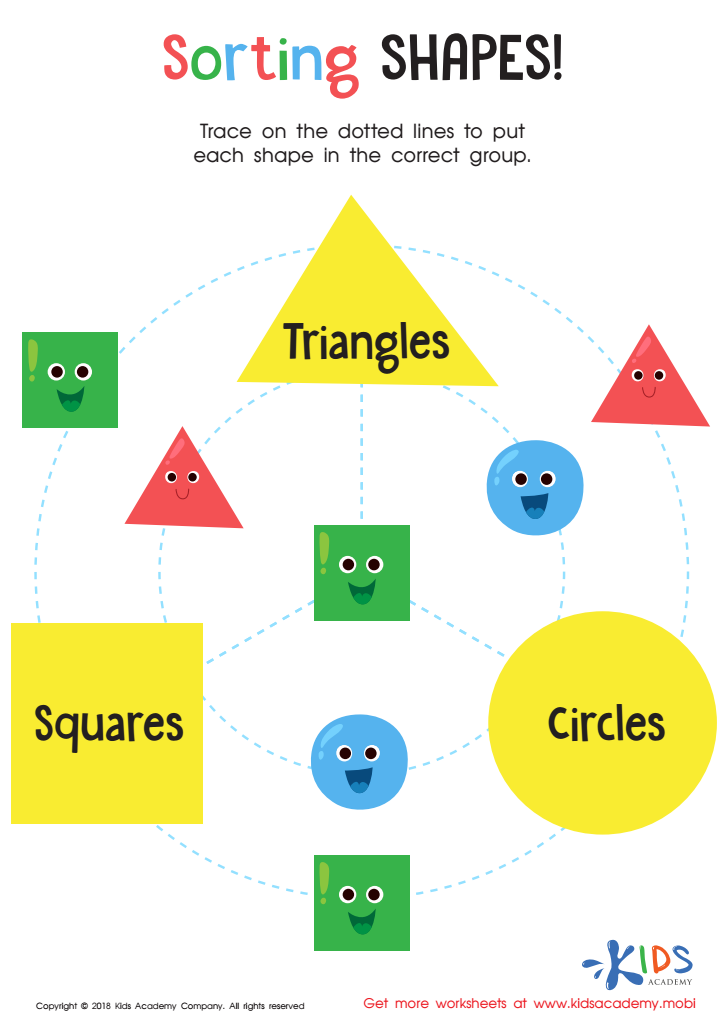
Sorting Shapes - Part 3 Worksheet








Sorting skills are crucial for children aged 6-7 as they lay the foundation for critical thinking and cognitive development. At this age, children begin to grasp abstract concepts, and sorting helps them differentiate between various categories, promoting logical reasoning. Sorting activities encourage them to classify objects based on attributes such as size, color, shape, or function, bolstering their analytical skills.
Parents and teachers should care about developing these skills because sorting activities foster independence and decision-making. Children learn to categorize information, which aids in memory retention and aids their understanding of the world around them. Moreover, sorting is a precursor to more complex math skills, as it involves organizing and classifying that can turn into understanding grouping in addition and subtraction.
Furthermore, sorting activities can enhance language development. While sorting, children learn new vocabulary words and concepts, improving their communication skills. Engaging in these activities also encourages cooperation and social interaction, especially in group settings, where they learn to share responsibilities and ideas.
Overall, cultivating sorting skills at this developmental stage supports a child's emotional and social growth in addition to their academic success, making it essential for parents and educators to engage children in these learning experiences.








