Sound discrimination Normal Worksheets for Ages 6-7
3 filtered results
-
From - To
Introducing our "Sound Discrimination Normal Worksheets for Ages 6-7", designed to enhance auditory discrimination skills in children. These engaging worksheets help kids identify and differentiate various sounds, a fundamental step in developing reading and language abilities. Featuring fun activities like matching, listening games, and sound identification exercises, our worksheets make learning an enjoyable and effective experience. Tailored specifically for 6 and 7-year-olds, they foster critical listening skills while keeping young learners motivated. Download now from Kids Academy to give your child the auditory edge they need to excel in their educational journey!
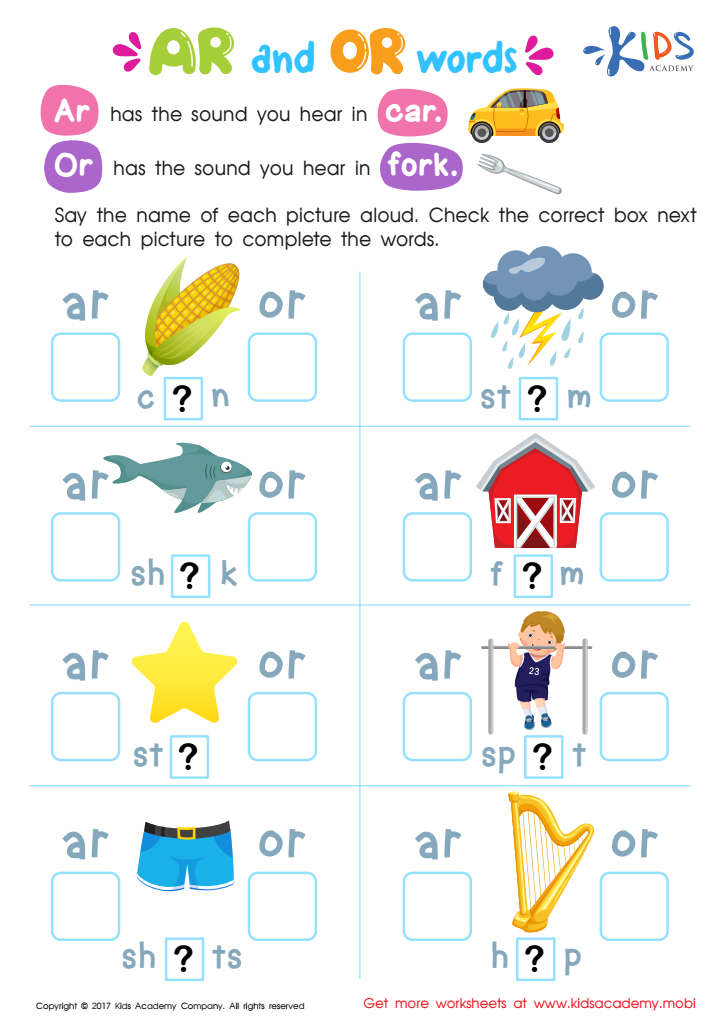
Ar and Or Words Phonics Worksheet
 Assign to My Students
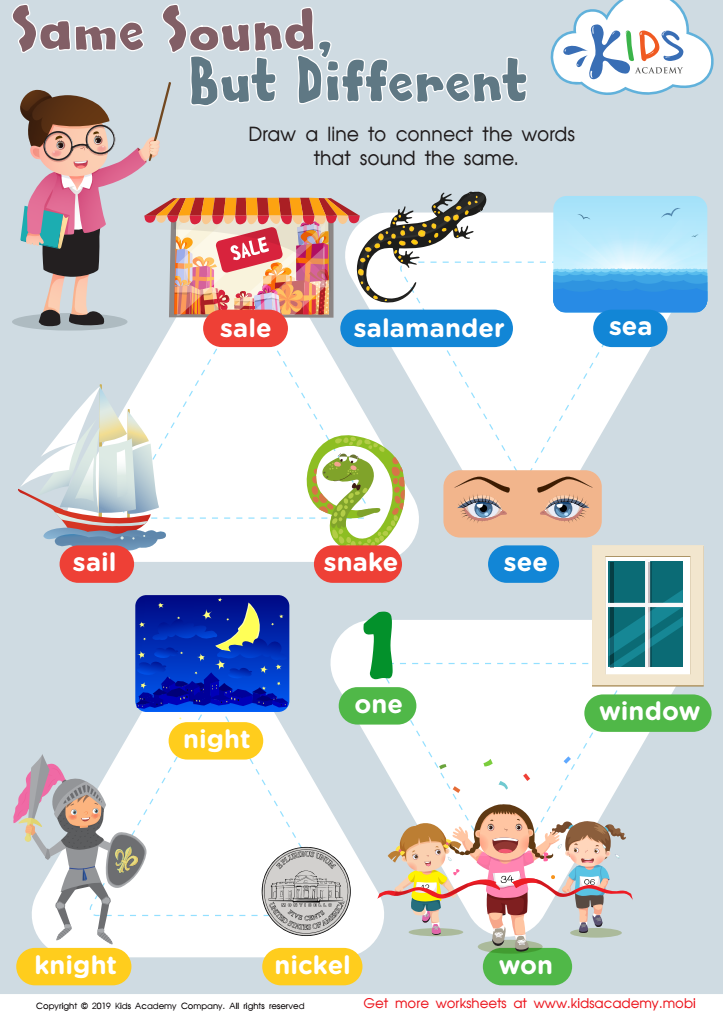
Sound Different Worksheet
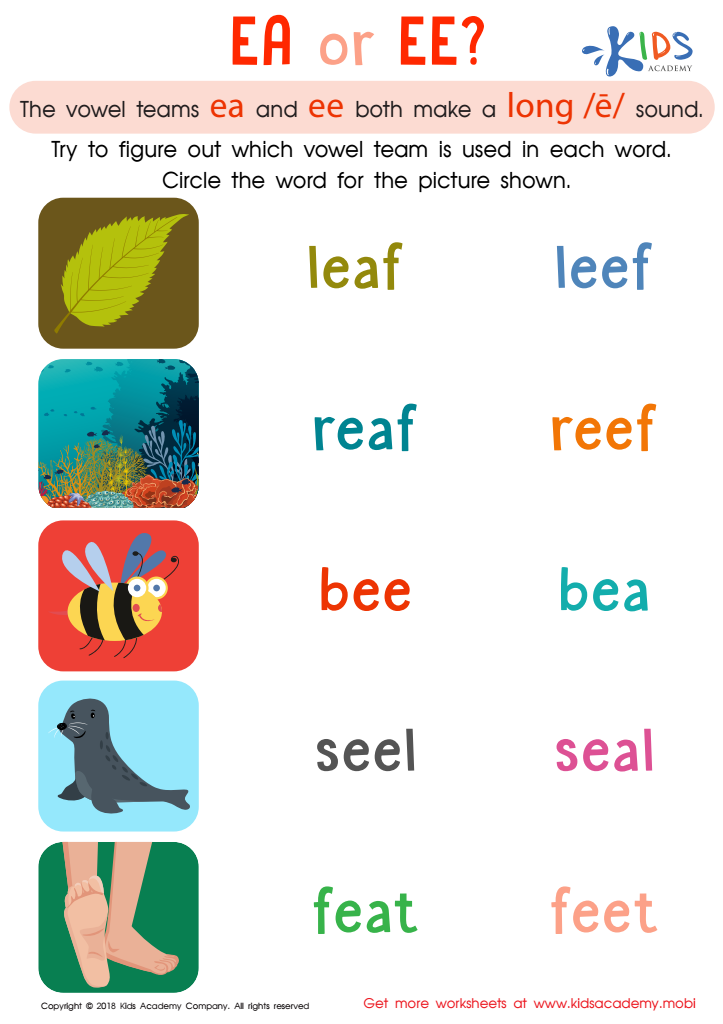
Reading: EA and EE Worksheet








Sound discrimination, or the ability to distinguish between different sounds, is crucial for children aged 6-7 as it significantly impacts their language and reading development. At this age, children are in a critical period for phonemic awareness, which is essential for decoding words when learning to read. If children struggle with sound discrimination, they may not be able to differentiate between similar phonemes, like “b” and “d” or “p” and “q,” leading to reading and writing difficulties.
Teachers and parents should prioritize sound discrimination because it directly influences a child's ability to recognize rhyming sounds, understand verbal instructions, and engage in social communication. Good sound discrimination skills also contribute to spelling proficiency, as accurately identifying the sounds within words enables correct spelling. Simple activities such as playing rhyming games, reading aloud, and interactive sound-matching exercises can help strengthen these skills.
Furthermore, early identification and intervention in sound discrimination problems can prevent more significant learning challenges in later years. By supporting and fostering strong auditory discrimination skills, parents and teachers equip children with the foundational tools necessary for academic success and effective communication, placing them on a clear path for lifelong learning and literacy.








