Spatial understanding Normal Worksheets for Ages 6-7
3 filtered results
-
From - To
Enhance your child's spatial understanding skills with our engaging worksheets designed specifically for ages 6-7. These activities promote critical thinking and problem-solving while introducing essential concepts such as shapes, direction, and mapping. Each worksheet is crafted to be fun and interactive, allowing young learners to explore geometrical relationships and develop their cognitive abilities. Perfect for use at home or in the classroom, our spatial understanding worksheets help build a strong foundation for future math and science learning. Click to access a variety of printable worksheets that will make learning enjoyable and effective for your child!
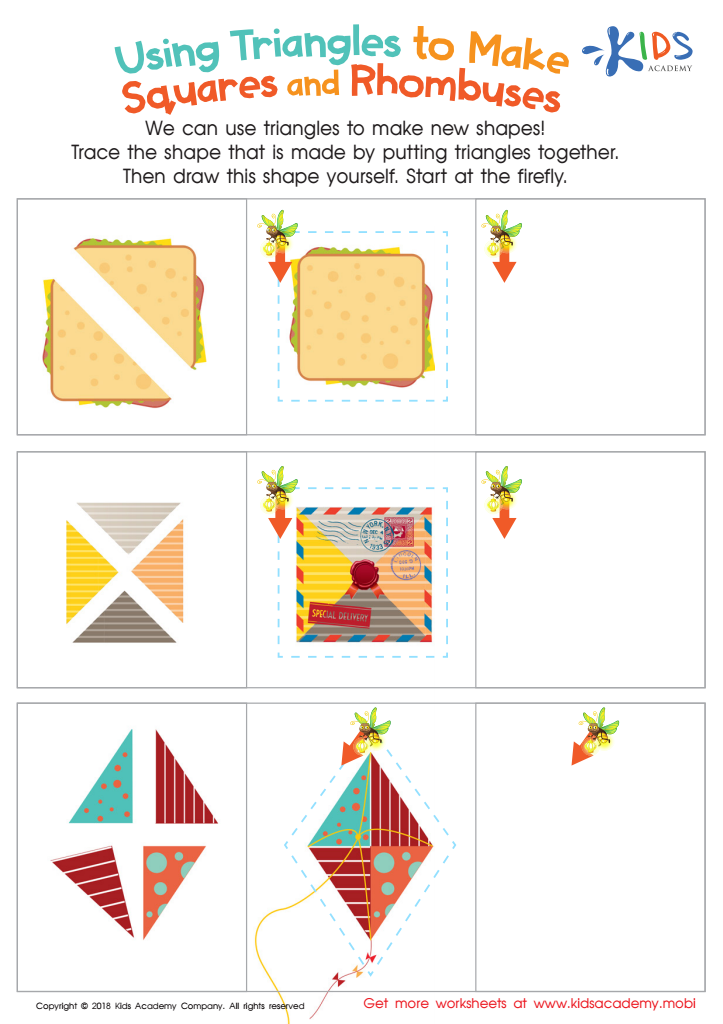
Using Triangles to Make Squares and Rhombuses Worksheet
 Assign to My Students
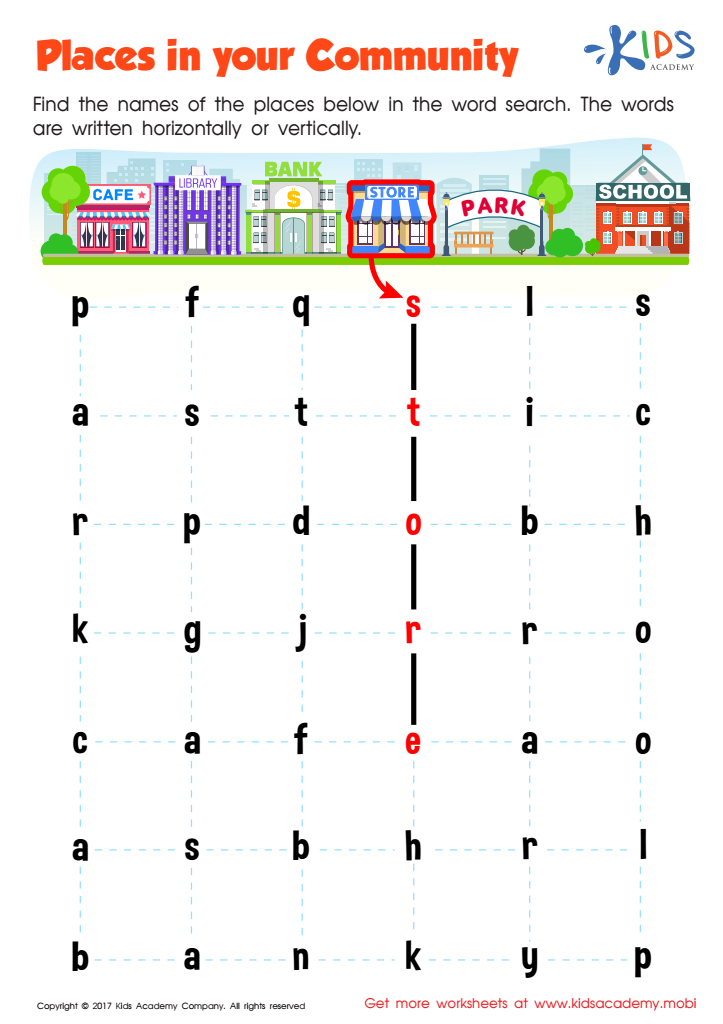
Places in Your Community Worksheet
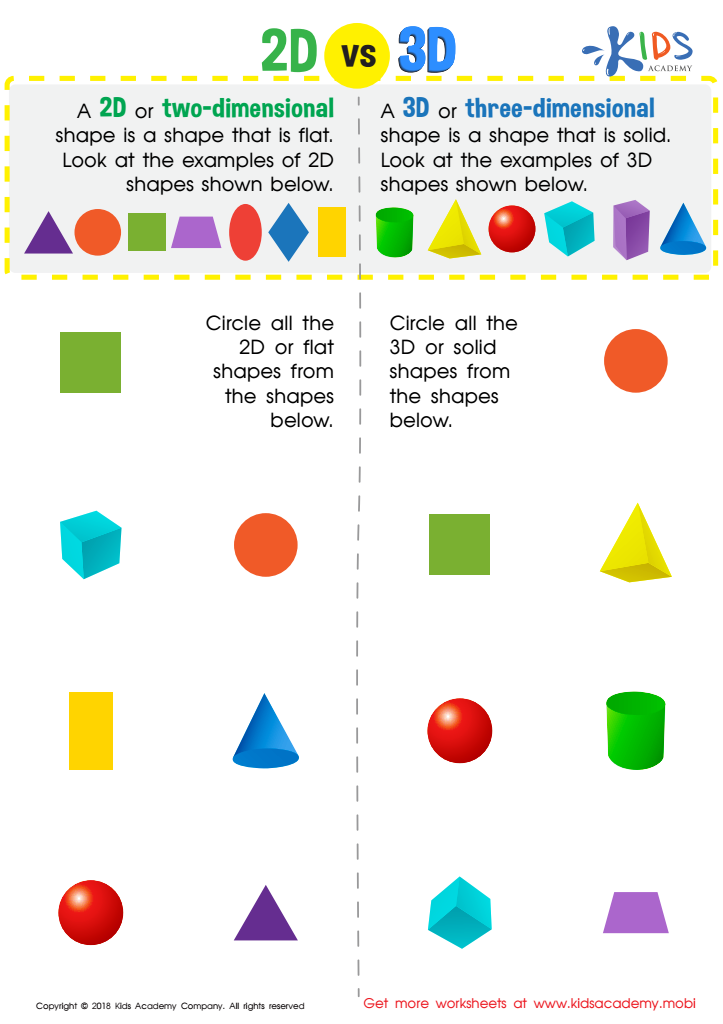
2D vs 3D Shapes Worksheet






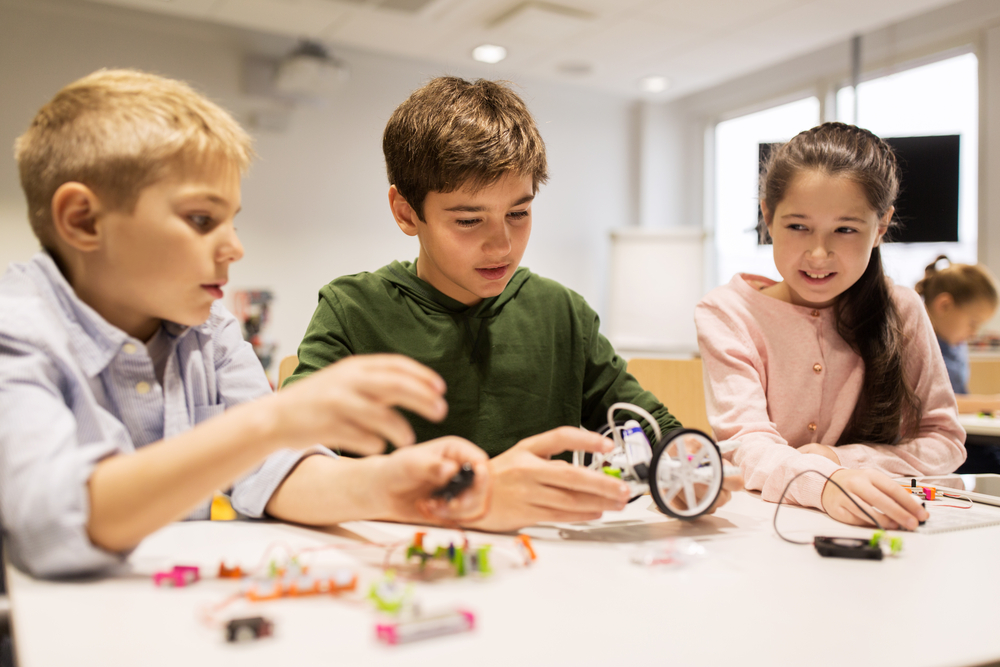

Spatial understanding is crucial for children aged 6-7 as it lays the foundation for a variety of cognitive skills needed throughout their education and life. This developmental stage involves recognizing how objects relate to each other in space, including their size, shape, and position. With strong spatial reasoning, children can better comprehend mathematical concepts, such as geometry and measurement, both of which are integral to later learning.
Moreover, spatial skills enhance problem-solving abilities, critical thinking, and creative thinking. In tangible terms, children may excel in subjects that require 3D visualization, such as science and engineering. Beyond academics, spatial understanding contributes to daily activities, from navigating through environments to engaging in sports, as children learn to coordinate their movements in relation to objects around them.
Parents and teachers play a vital role in nurturing these skills through interactive activities, such as puzzles, block play, and map reading. By fostering spatial awareness, caregivers not only prepare children for a successful educational journey but also for practical life challenges. Ultimately, prioritizing spatial understanding equips children with tools necessary for holistic development and prepares them for an increasingly complex world where these skills are essential.








