Syllable identification Normal Worksheets for Ages 6-7
3 filtered results
-
From - To
Enhance your child's reading and phonemic awareness with our Syllable Identification Normal Worksheets for Ages 6-7. These engaging and interactive worksheets are designed to help young learners master the skill of syllable identification through fun activities and exercises. Kids will explore breaking down words into syllables, recognizing syllable patterns, and enhancing their pronunciation. Our worksheets promote vital literacy skills foundational for reading success. Ideal for classroom use or at-home practice, these resources align with educational standards and make learning enjoyable. Encourage your child to become a confident reader with our thoughtfully crafted syllable identification worksheets! Start exploring today!
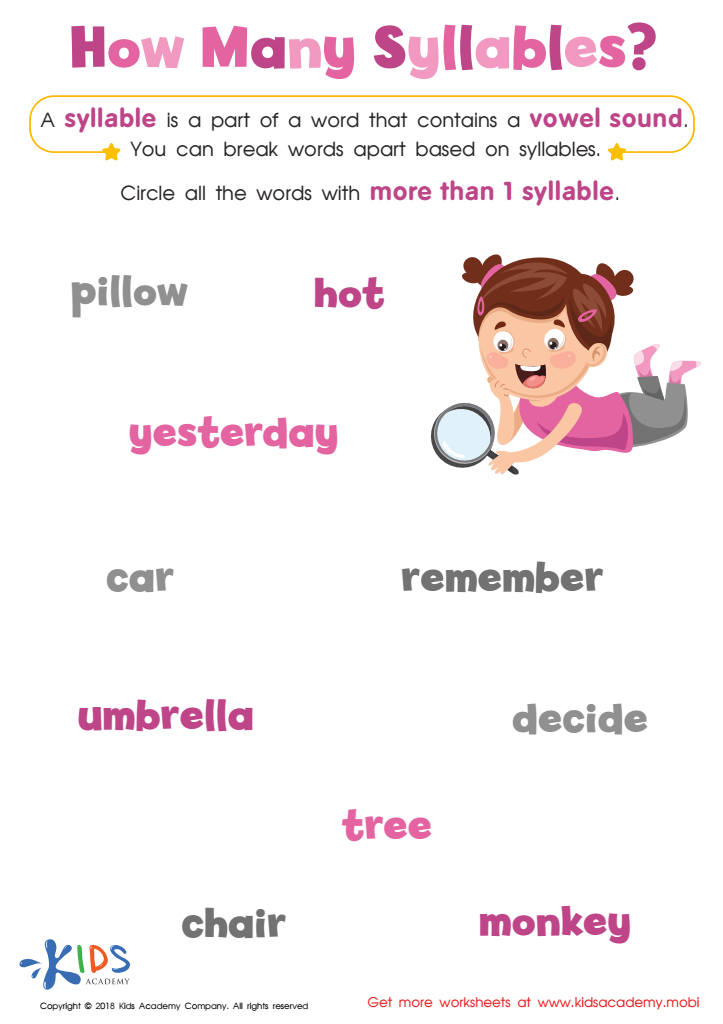
Reading: How Many Syllables Worksheet
 Assign to My Students
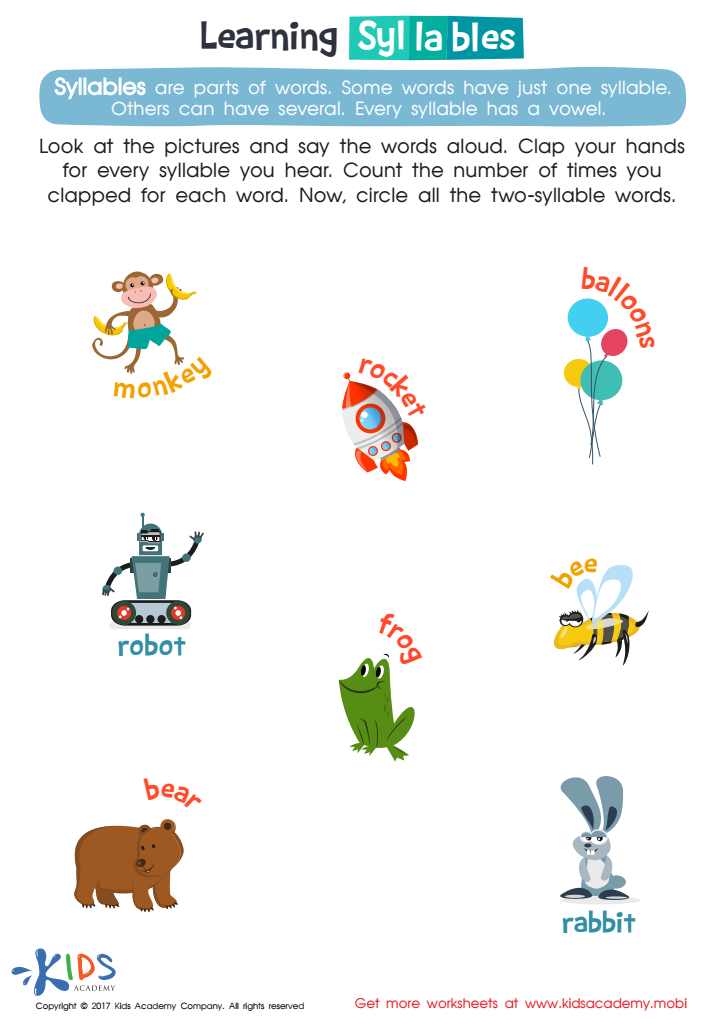
Learning Syllables Word Structure Worksheet
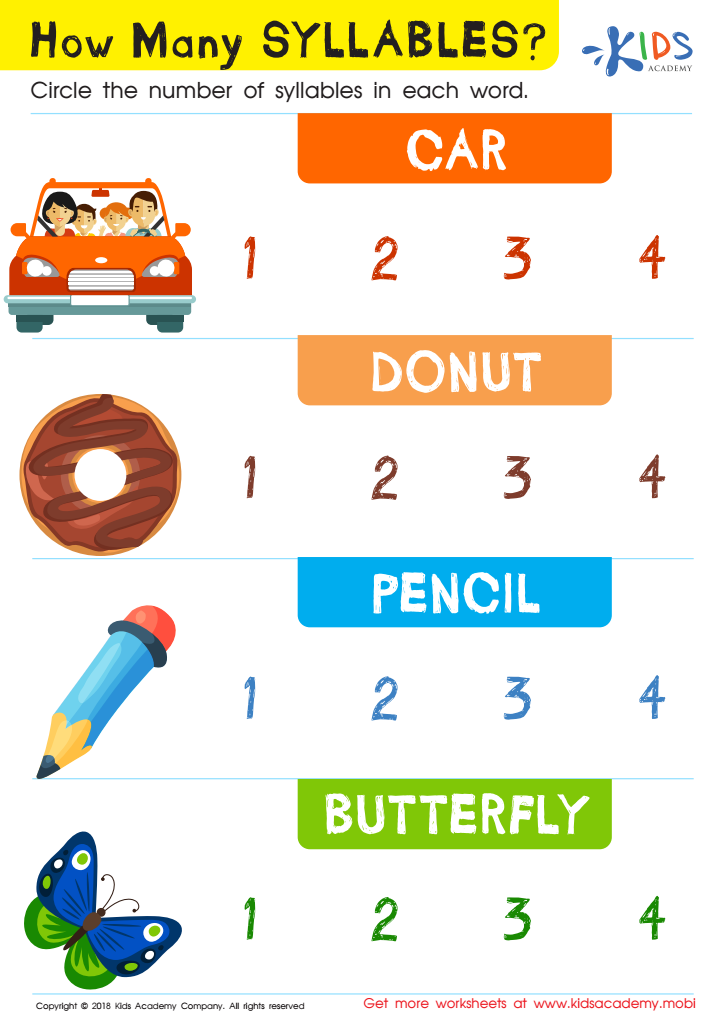
How Many Syllables? Worksheet







Syllable identification is a crucial skill for children aged 6-7, as it lays the foundation for effective reading and writing. At this stage, children are beginning to transition from learning to read to reading to learn. Understanding syllables helps them decode words better, improving their reading fluency and comprehension. When children can identify syllables, they develop skills that assist in spelling, pronunciation, and vocabulary acquisition, all of which are vital for language development.
Parents and teachers should prioritize syllable identification because it enhances phonemic awareness, a key component of literacy development. Activities centered around syllable counting and segmentation engage children in playful learning, fostering their confidence in language use. Additionally, awareness of syllables enables children to break down complex words, making them less daunting.
Supporting syllable identification also encourages collaboration between home and school. When parents are involved, they can reinforce skills through fun games and activities, creating a supportive literacy environment. As children master syllable identification, they build a stronger foundation for future learning, enhancing their overall academic success and love for reading. Ensuring children become proficient in this skill is an investment in their communication abilities that will benefit them throughout their education and beyond.








